Platform Scope

Global multi-brand ecosystems
Multi-region deployments
Franchise & distributed organizations

Architecture Models

  • Drupal Multisite
  • Shared Codebase with Split Config
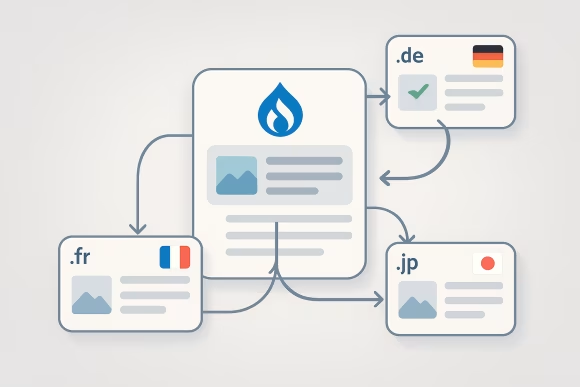
  • Multi-domain / Multi-language setups

Governance Focus

  • Centralized security
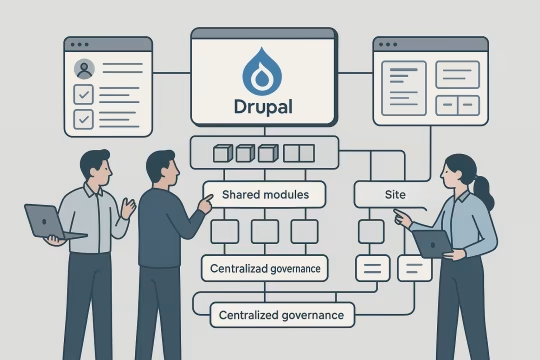
  • Shared components
  • Controlled editorial workflows

Scalability

  • Horizontal scaling
  • Cloud-native deployments
  • CI/CD automation

Why Multisite Platforms Become Complex & Fragile

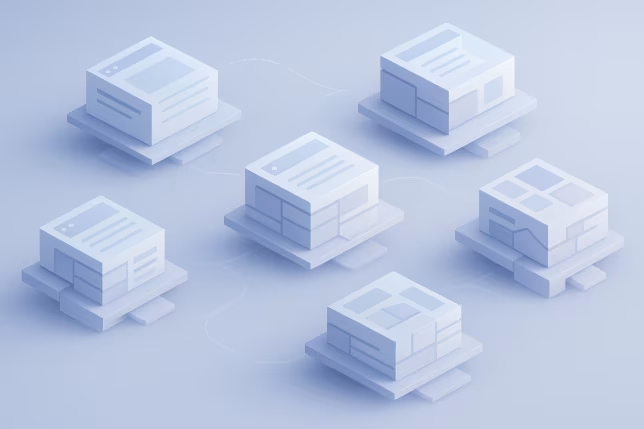
As organizations grow, they often launch multiple websites for regions, campaigns, brands, or departments. Without a clear multisite strategy, this leads to duplicated codebases, inconsistent governance, rising maintenance costs, and security risks.

Over time, technical debt accumulates. Updates become difficult, content structures diverge, and innovation slows down. Teams struggle to maintain brand consistency while preserving local flexibility.

A properly designed Drupal multisite architecture solves these challenges by creating a structured, scalable ecosystem instead of a collection of disconnected websites.

Our Multisite Strategy Approach

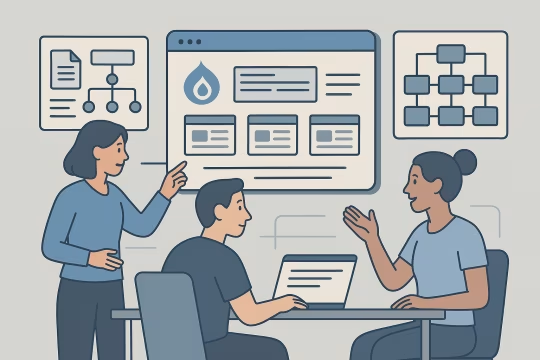
Platform Discovery & Mapping

We analyze your existing site landscape, business structure, and governance model.

Architecture Blueprint

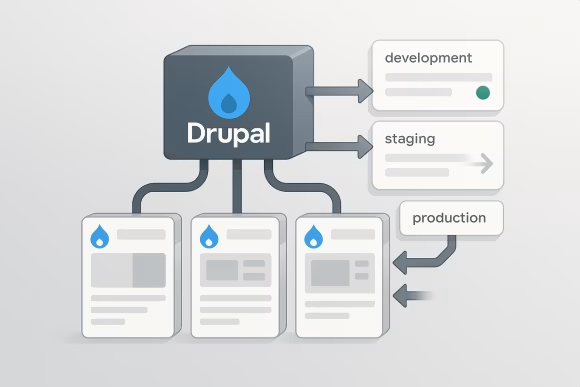
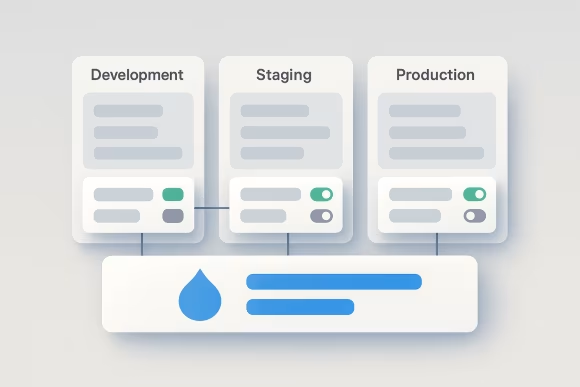
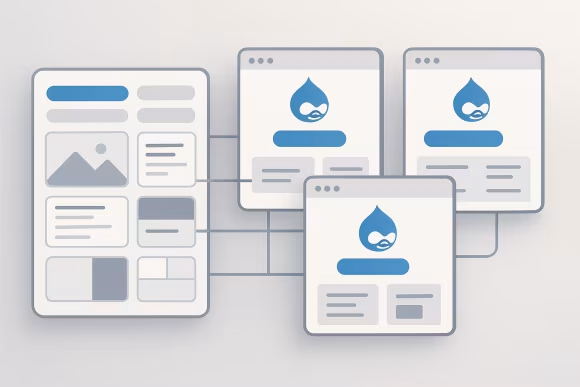
Design shared modules, components, config splits, and environment strategy.

Governance Framework

Define roles, workflows, publishing permissions, and security layers.

Reusable Component Library

Build standardized design system components usable across all sites.

CI/CD & DevOps Automation

Automated deployments for consistent updates across environments.

Scalability Planning

Ensure the platform supports future brands and acquisitions.

Core Multisite Capabilities

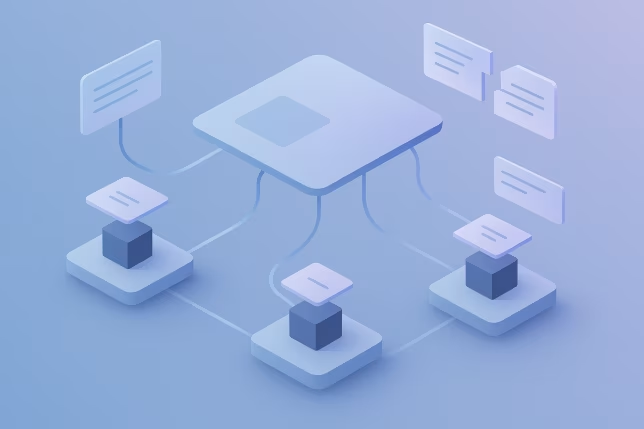
Drupal Multisite Strategy establishes a unified architectural foundation that powers multiple brands, regions, and domains from a single controlled codebase. The approach combines structured configuration management, centralized security governance, multilingual readiness, and shared design systems to ensure consistency without limiting local flexibility. Environment-aware deployment strategies preserve production stability while enabling market-specific adaptations. Performance tuning per site ensures regional scalability without fragmenting the overall platform. This creates a controlled yet adaptable multisite ecosystem designed for long-term enterprise growth.

What We Deliver
  • Enterprise Drupal multisite architecture
  • Platform standardization
  • Reusable component libraries
  • Centralized governance models
  • Cloud-native deployment pipelines
  • Long-term platform evolution strategy
Who This Is For
  • Global brands managing multiple websites
  • Organizations with regional subsidiaries
  • Franchise-based business models
  • Universities & public institutions
  • Enterprises consolidating legacy sites
Technology Ecosystem
  • Drupal 10 / 11 / 12
  • Config Split
  • Domain Access / Multisite setups
  • Next.js (Hybrid Frontend)
  • AWS / Acquia / Platform.sh
  • Docker / CI/CD pipelines

How We Deliver

Our Drupal Multisite Strategy delivery model transforms fragmented digital ecosystems into a unified, scalable platform. We combine architectural assessment, governance design, and structured implementation to create a sustainable multisite foundation that supports multiple brands, regions, and business units without increasing operational complexity. From blueprint design to implementation, security hardening, and long-term support, each phase is engineered to reduce duplication, centralize governance, and improve deployment efficiency. The result is a controlled, future-ready platform that enables consistent brand experiences while allowing flexibility for local growth and innovation.

Delivery card for Architecture Audit[01]

Architecture Audit

Comprehensive assessment of your current multisite landscape, including codebase structure, hosting topology, governance model, and content architecture. We identify duplication, inconsistencies, security risks, and scalability bottlenecks across brands and regions.

Delivery card for Technical Blueprint[02]

Technical Blueprint

Creation of a documented, scalable multisite architecture aligned with business growth. Includes shared modules strategy, configuration management model, brand theming layers, deployment workflow, and governance framework.

Delivery card for Implementation & Refactoring[03]

Implementation & Refactoring

Consolidation or migration of distributed sites into a unified multisite platform. Refactoring of custom modules, configuration alignment, theme standardization, and elimination of legacy technical debt.

Delivery card for Security Hardening[04]

Security Hardening

Implementation of centralized update strategy, patch management workflows, role-based access governance, and environment isolation. Ensures consistent security posture across all site instances.

Delivery card for Documentation & Training[05]

Documentation & Training

Structured documentation of platform standards, deployment processes, editorial workflows, and governance policies. Includes training sessions to empower internal teams for long-term platform sustainability.

Delivery card for Ongoing Platform Support[06]

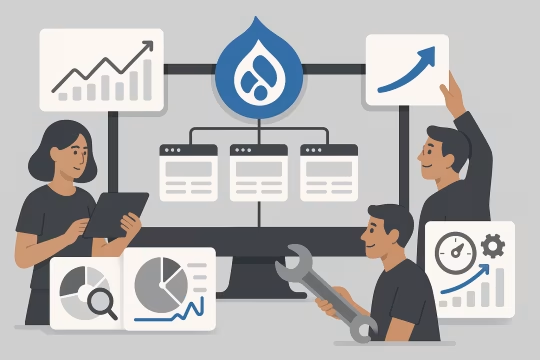
Ongoing Platform Support

Continuous monitoring, performance optimization, module updates, and architectural evolution to support new brands, markets, and digital initiatives as your multisite ecosystem grows.

Business Impact

A structured multisite strategy significantly reduces duplication across brands and regions, lowering maintenance and infrastructure costs over time. New markets, microsites, or acquisitions can be launched faster using an established architectural blueprint rather than rebuilding from scratch. Centralized governance strengthens compliance, security consistency, and brand alignment across global operations. Operational complexity is reduced through shared tooling, streamlined updates, and unified deployment workflows. For executive leadership, this results in scalable digital expansion with predictable cost control and reduced technical fragmentation.

Reduced Maintenance Costs

A shared codebase and centralized updates eliminate duplicated effort across sites, reducing long-term operational and infrastructure overhead.

Faster Launch of New Sites

New brands, regions, or campaign microsites can be deployed quickly using predefined architectural and design patterns.

Improved Brand Consistency

Centralized design systems and governance ensure cohesive digital identity across global markets while allowing controlled local adaptation.

Better Security & Compliance

Unified patch management and governance policies reduce vulnerability exposure and support enterprise audit requirements.

Scalable Growth

The architecture supports expansion, acquisitions, and regional growth without restructuring the platform foundation.

Operational Simplicity

Consolidated deployment workflows and configuration management reduce complexity, enabling IT and digital teams to operate more efficiently.

Related Projects

What Our Clients Say

Ready to Build a Scalable Drupal Multisite Platform?

Let’s design a structured, secure, and future-proof multisite architecture tailored to your organization’s growth strategy.

Oleksiy (Oly) Kalinichenko

Oleksiy (Oly) Kalinichenko

CTO at PathToProject

Do you want to start a project?