Technologies

Drupal DXP
React Admin Zone
Pattern Lab (Design System)
Role-Based Access Control
Multilingual Content Workflows (ES / PT)
PHPUnit Test Suite
React Component Testing

Industry

Healthcare / Medical Imaging

Regions

  • Germany (EU / DACH)
  • Latin America (LATAM)

Team Composition

  • 1 Frontend / React Developer
  • 2 Backend / Drupal Developers
  • 1 QA Engineer

Delivery Focus

  • Secure content distribution for HCP and Non-HCP audiences
  • Country-based visibility governance
  • Editor-friendly administration workflows
  • Design system consistency and extensibility

The challenge

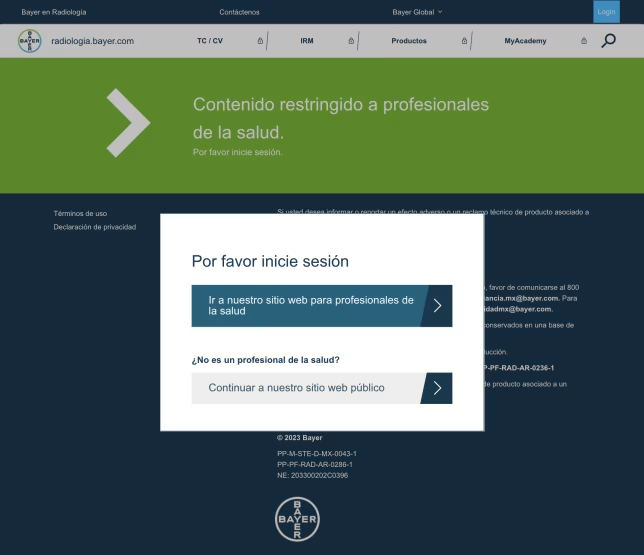
The key challenge was to deliver a secure, scalable platform for healthcare professionals with strict content governance requirements — effectively a secure HCP collaboration Drupal case study scenario. The system needed to support different audiences (HCP and non-HCP) with country-based restrictions for regulated or sensitive materials, while keeping the experience intuitive and efficient.

The platform also had to reuse Bayer’s existing design system and UI standards to ensure consistency across products. At the same time, the team needed new components and custom workflows to support collaboration, advanced content discovery, and admin-controlled visibility rules.

Finally, the delivery required stable Drupal architecture, predictable rollout, and strong editorial tooling — enabling Bayer staff to manage access policies, multilingual content workflows, and continuously evolve the platform without technical bottlenecks.
The Solution

Drupal Engineering Delivery

PathToProject acted as the Drupal delivery team, implementing the platform’s core features on a maintainable, scalable architecture. We established predictable build and release practices so new functionality could be shipped without destabilizing regulated content areas. The result was a stable foundation that Bayer can evolve over time with lower operational risk.

Design System Reuse + Extension

The platform was built on top of Bayer’s existing design system to ensure consistency with established UI standards. We reused proven patterns and extended the component library where new workflows required new UI building blocks. This kept the experience cohesive while enabling product-specific capabilities without one-off front-end implementations.

Access Governance Admin Zone

We delivered a dedicated React-based admin zone that centralizes governance controls for internal staff. Administrators can manage role-based access (HCP vs. non-HCP) and apply country-specific visibility rules for regulated or sensitive materials. This moved critical policy enforcement into clear tooling, reducing reliance on developers for day-to-day governance changes.

Structured Content Model & Information Architecture

We defined a structured content model and information architecture tailored to knowledge sharing and collaboration use cases. Content types, fields, and relationships were designed to support consistent reuse, filtering, and controlled distribution across audiences. This structure made the CMS easier to operate and reduced content drift as the platform scales.

Advanced Content Discovery & Filtering

We implemented content discovery patterns that help users find relevant materials efficiently across a growing library. Filtering and navigation were aligned to the underlying content structure so results remain accurate and predictable. This improved usability for professionals while keeping governance constraints intact.

Multilingual LATAM Support

The platform supports Spanish and Portuguese operations with editor-friendly multilingual workflows. We ensured content structure and UI components behave consistently across languages, reducing duplication and translation friction. This enables regional teams to publish and maintain content without breaking governance or UX standards.

Quality Engineering & Automated Testing

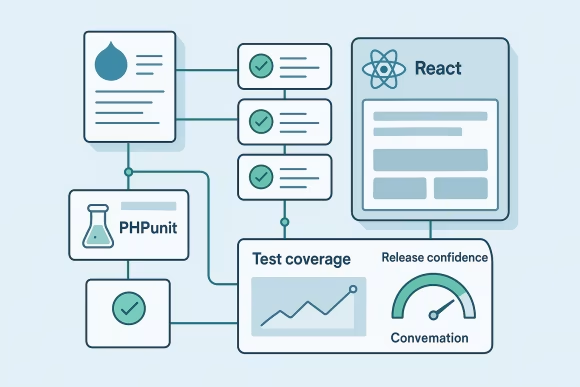
We introduced automated testing to protect critical governance and publishing flows as the platform evolves. The implementation achieved ~82% PHPUnit coverage for custom Drupal code and ~70% coverage for the React-based admin zone. This improved release confidence and reduced regression risk in regulated areas.

Content Governance & Editorial Workflows

We designed editorial workflows and governance rules that reflect how regulated healthcare content must be reviewed, published, and restricted. Permissions, states, and operational guidelines were aligned so Bayer teams can manage complex visibility policies through the CMS. This enabled scalable content operations without creating ongoing technical bottlenecks.

Core Features

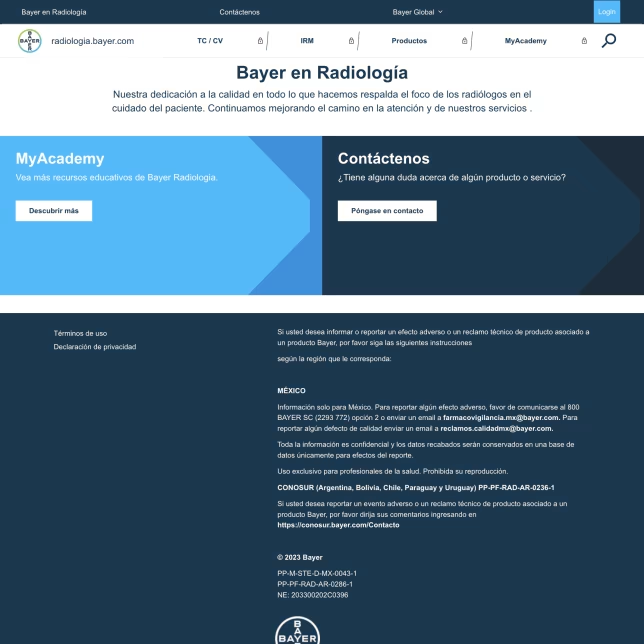
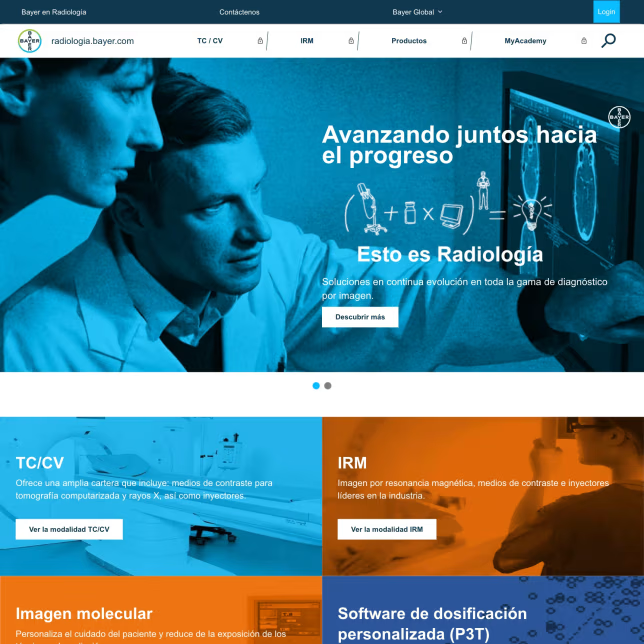
Bayer Radiología LATAM is a healthcare digital experience Drupal platform: a Drupal-based collaboration and knowledge hub built for radiology professionals across Latin America. It combines strict access governance (role- and country-based visibility) with structured content models and editorial workflows that Bayer teams can operate independently. The experience reuses Bayer’s design system while extending the component library to support platform-specific workflows. Multilingual operations (Spanish and Portuguese) and quality engineering practices ensure the platform remains reliable and maintainable over time.

Implementation

PathToProject implemented Bayer Radiología LATAM as a Drupal platform for healthcare collaboration case study, aligned to Bayer’s existing design system and built for long-term maintainability. Delivery focused on secure content governance for regulated materials, including role- and country-based visibility rules managed by administrators. We also established a structured content model and multilingual editorial workflows so Bayer teams could operate and evolve the platform without ongoing developer dependency.

Drupal Architecture & Platform Engineering

We designed and implemented the Drupal architecture to support secure content delivery, extensible features, and predictable long-term maintenance. Core platform building blocks were structured around reusable content types, configuration management, and clear separation of concerns for future enhancements. This foundation reduced delivery risk and ensured the platform could evolve without accumulating fragile customizations.

Access Governance Admin Zone

A dedicated governance-focused admin zone was built to manage role-based access (HCP / Non-HCP) and country-based content restrictions. We implemented the underlying permission model and visibility rules so regulated or sensitive materials could be controlled consistently. This enabled compliance-oriented operations while keeping day-to-day administration practical for non-technical users.

Design System Reuse + Component Delivery

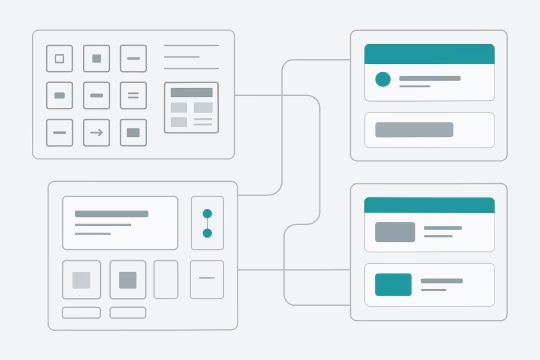
We integrated Bayer’s existing design system and reused established UI patterns to maintain consistency across products. Where platform workflows required new UI, we extended the component library with reusable modules rather than one-off templates. This approach kept the experience coherent for users and simplified ongoing UI maintenance.

Content Model, Governance Rules & Editorial Workflows

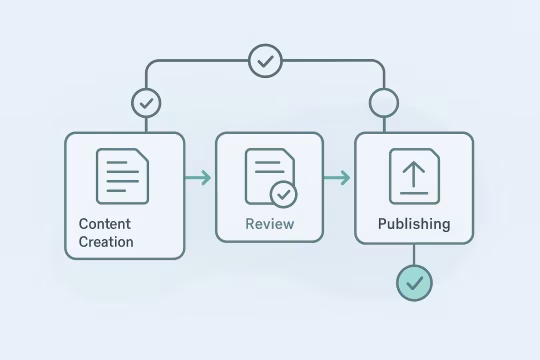
We defined the information architecture and content structure to support discovery, controlled distribution, and scalable publishing. Editorial workflows and governance rules were implemented so content could be created, reviewed, and published with the right constraints and visibility settings. This ensured Bayer owned content operations while the CMS remained structured and reliable as volume grew.

Multilingual LATAM Operations (ES / PT)

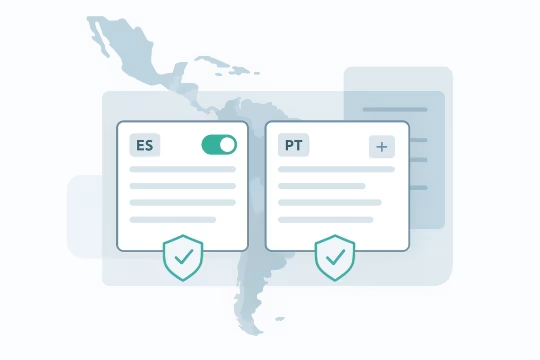
Multilingual capabilities were implemented to support Spanish and Portuguese content operations across LATAM. We configured translation workflows and content structures to keep language variants consistent and manageable for editors. This ensured regional scalability without duplicating effort or introducing governance gaps between locales.

Quality Engineering, Security Hardening & Release Readiness

Automated testing was introduced across key areas, including Drupal/PHP unit coverage and React component testing where applicable. We applied security-focused implementation practices around access control and content visibility to reduce operational risk. This delivery track supported stable releases and a maintainable baseline for future iterations.

Testimonials

Business Outcomes

Bayer Radiología LATAM was delivered as a secure, scalable Drupal platform that enables knowledge sharing and collaboration for radiology professionals across the region. The implementation focused on reducing regulatory and operational risk through strong access governance, while keeping day-to-day content operations efficient for internal teams. By reusing and extending Bayer’s design system and establishing structured editorial workflows, the platform can evolve predictably without creating ongoing technical bottlenecks.
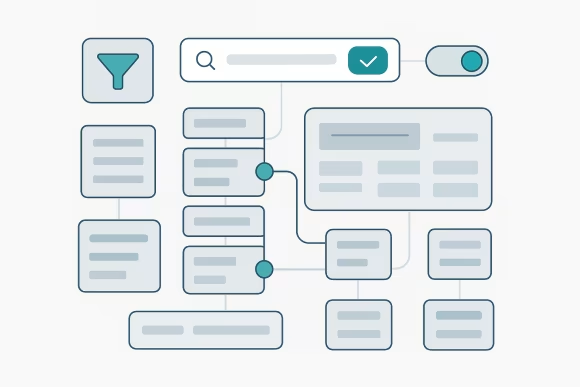
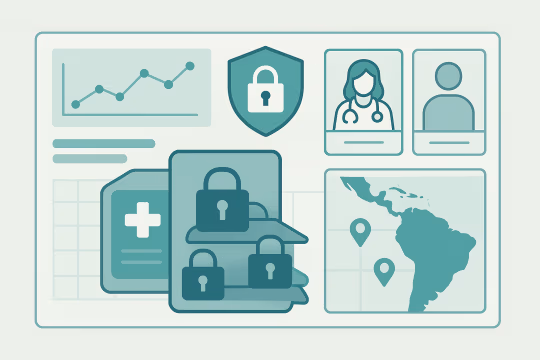
Outcome illustration for Secure Distribution of Regulated Materials[01]

Secure Distribution of Regulated Materials

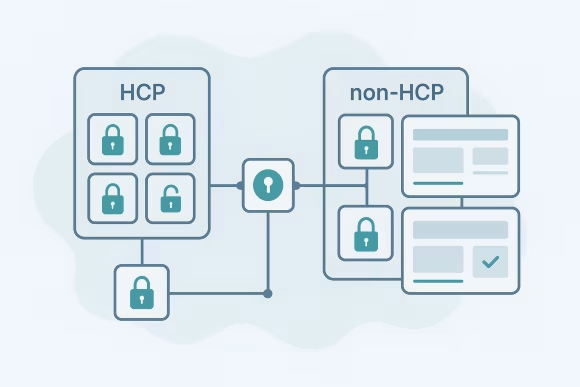
Role-based access control separated HCP and non-HCP experiences to align with healthcare compliance needs. Country-based restrictions ensured sensitive or regulated content could be targeted and withheld appropriately across LATAM markets. This reduced the risk of misdistribution while keeping the user experience straightforward.

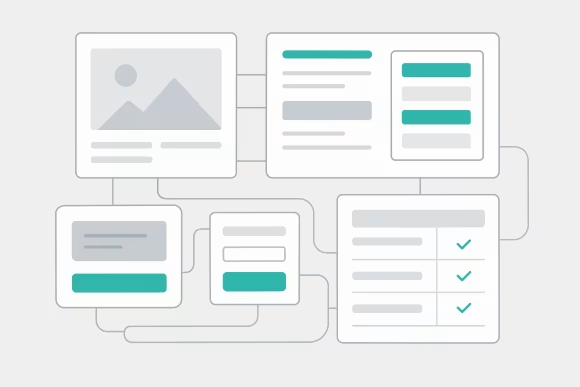
Outcome illustration for Governance-First Administration Without Developer Bottlenecks[02]

Governance-First Administration Without Developer Bottlenecks

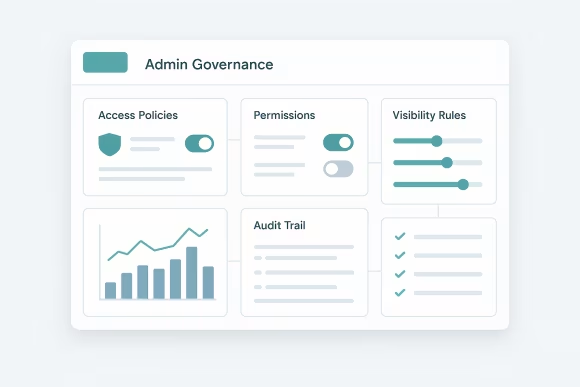
A dedicated admin governance zone enabled Bayer teams to manage permissions, visibility rules, and access policies directly. Operational changes could be handled through controlled tooling rather than ad-hoc development requests. This improved responsiveness to policy updates and reduced ongoing dependency on engineering.

Outcome illustration for Faster, More Reliable Editorial Operations[03]

Faster, More Reliable Editorial Operations

Structured content models and editorial workflows simplified how content is created, reviewed, and published. Governance rules were embedded into the CMS experience so teams could work consistently and avoid manual checks. This supported predictable publishing cycles and easier long-term maintenance.

Outcome illustration for Consistent UX Through Design System Reuse + Extension[04]

Consistent UX Through Design System Reuse + Extension

The platform was built on Bayer’s existing design system to maintain brand and UI consistency across products. New components and modules were added to support platform-specific workflows without fragmenting the component library. This kept delivery efficient while ensuring a coherent experience at scale.

Outcome illustration for Scalable Multilingual LATAM Foundation[05]

Scalable Multilingual LATAM Foundation

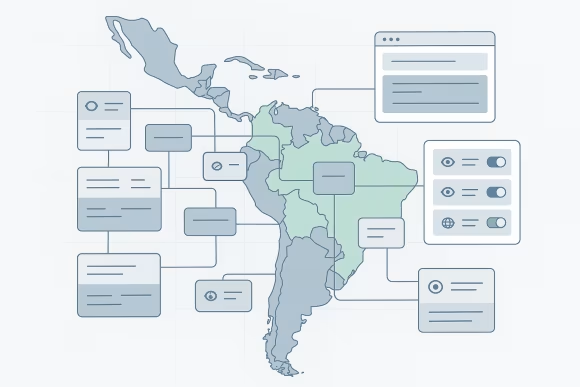
Multilingual workflows were implemented to support Spanish and Portuguese content operations across the region. Editors can manage localized content in a structured way, aligned with governance and access rules. This created a foundation for regional growth without reworking the information architecture.

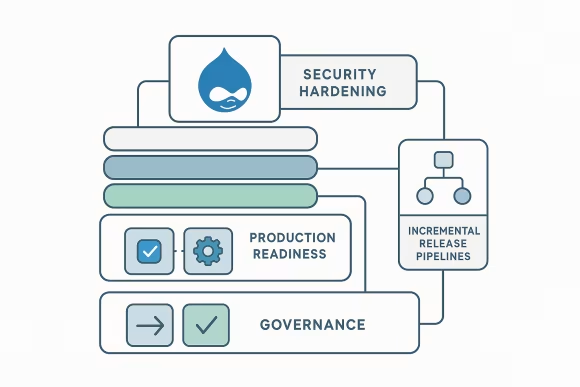
Outcome illustration for Maintainable Drupal Architecture for Long-Term Evolution[06]

Maintainable Drupal Architecture for Long-Term Evolution

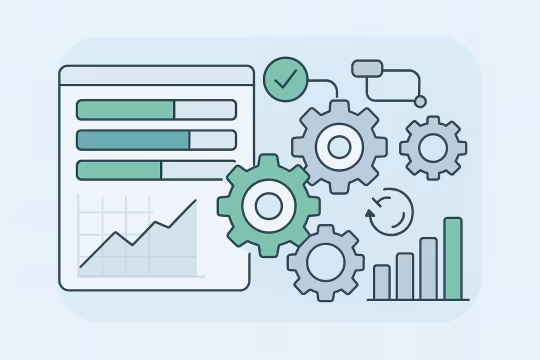
A production-ready Drupal architecture was implemented with maintainability as a core requirement. Automated testing and quality engineering practices supported stable releases and reduced regression risk. The result is a platform that can be extended over time with predictable delivery and lower operational overhead.

Used Services

The project leveraged a comprehensive Drupal architecture and development approach to build a secure, scalable collaboration platform. Key services included Enterprise Drupal Architecture for scalable multisite and headless readiness, Drupal Content Architecture for structured content models and editorial workflows, and Drupal Development for custom module engineering and API integrations. These services ensured consistent brand experience, robust access governance, multilingual support, and maintainable long-term platform evolution aligned with Bayer's business workflows.

Healthcare Drupal Platform Excellence

These case studies highlight advanced Drupal platform delivery in healthcare and related sectors, focusing on secure, scalable architectures and robust content governance. They reinforce themes of performance optimization, editorial workflow enhancement, and integration of complex business workflows within regulated environments. Together, they provide insights into maintaining stability and accelerating delivery in sensitive, content-rich digital ecosystems.

Further reading on Drupal governance and structured platform delivery

These articles expand on the same decisions behind this Bayer platform: choosing Drupal for structured, governed content operations, designing content models that scale, and keeping taxonomy and discovery usable over time. Together they add useful context on platform fit, editorial governance, and the information architecture work needed to support secure access rules, multilingual publishing, and long-term maintainability.

Oleksiy (Oly) Kalinichenko

Oleksiy (Oly) Kalinichenko

CTO at PathToProject

Do you want to start a project?