Technologies

Drupal DXP
Storybook Design System
Drupal Migrate API
GraphQL Headless Delivery
GTM + GA4 (Custom Tracking)
Looker Studio Analytics Dashboard

Industry

International Organization / Environmental Policy

Delivery Model

Full Delivery Ownership (Engineering + DevOps + Migration)

Hosting / Platform

Acquia Cloud

Key Programs

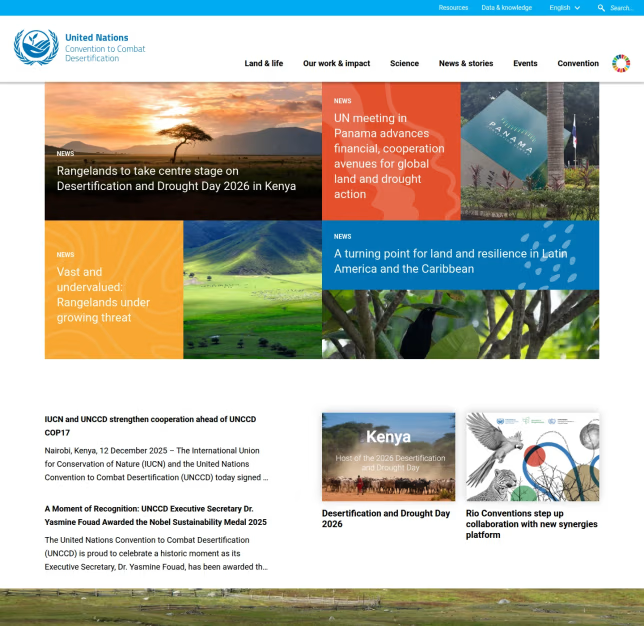
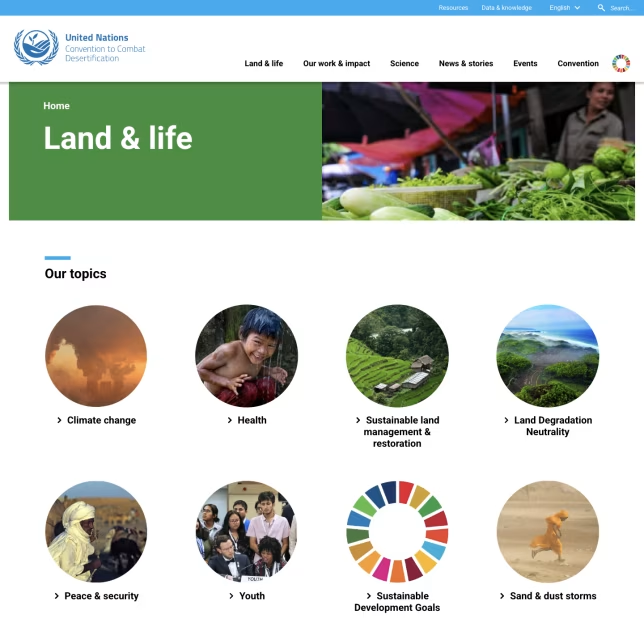
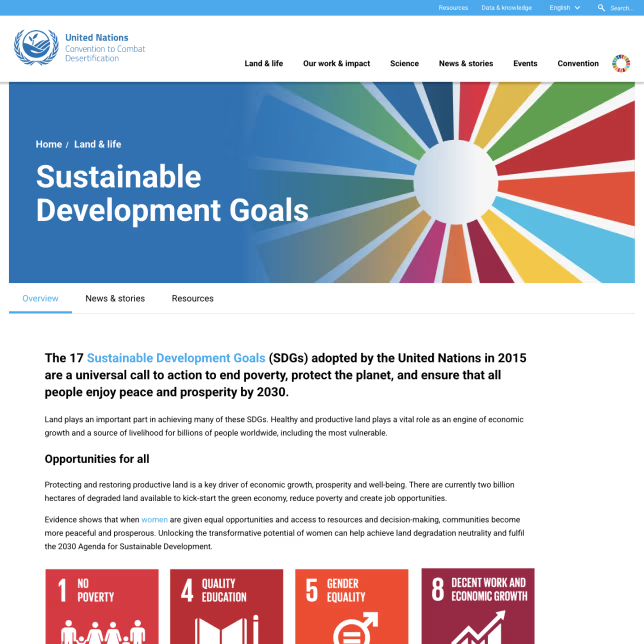
  • Land & Life
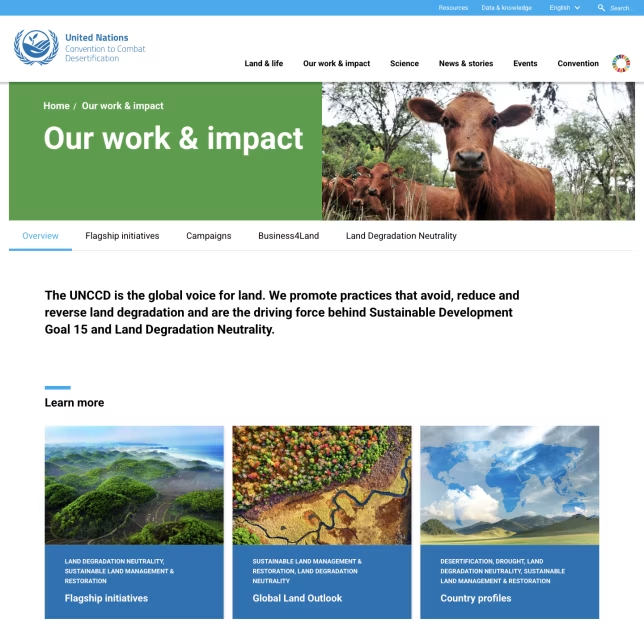
  • Our Work & Impact
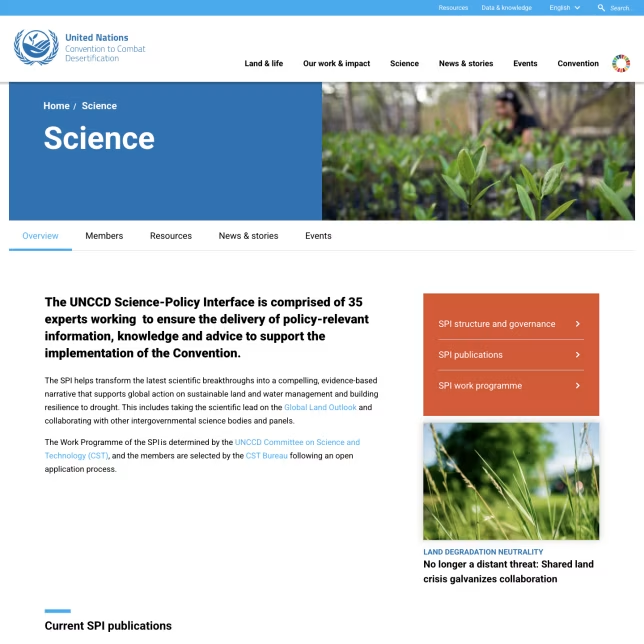
  • Science
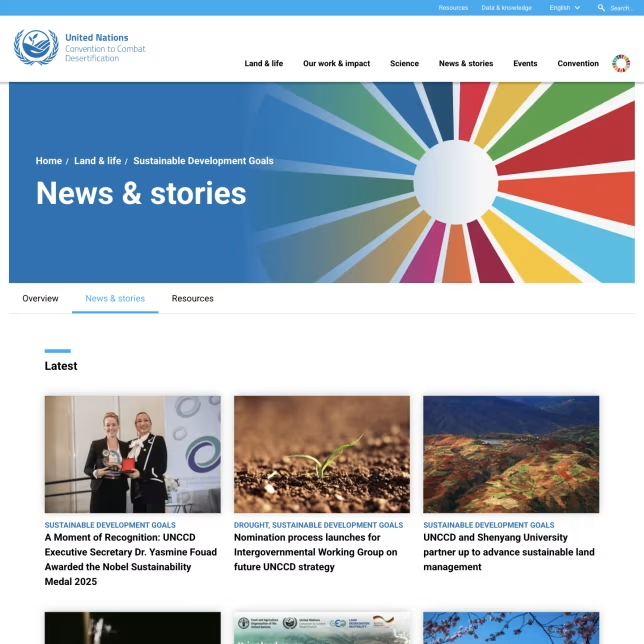
  • News & Stories
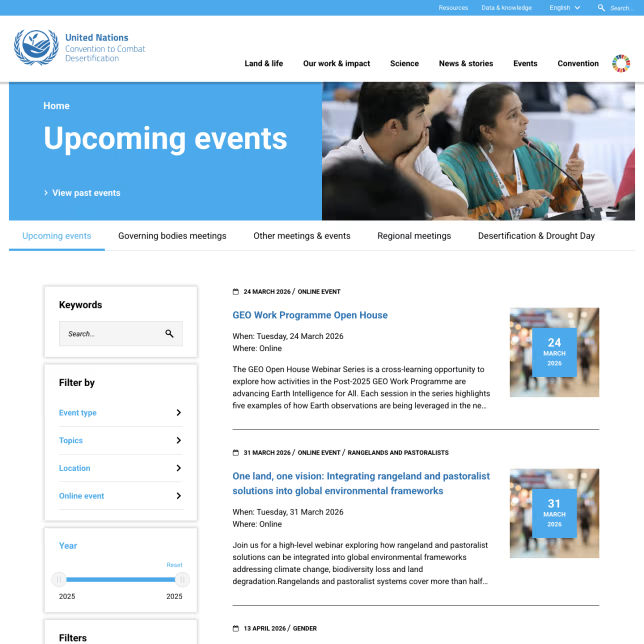
  • Events
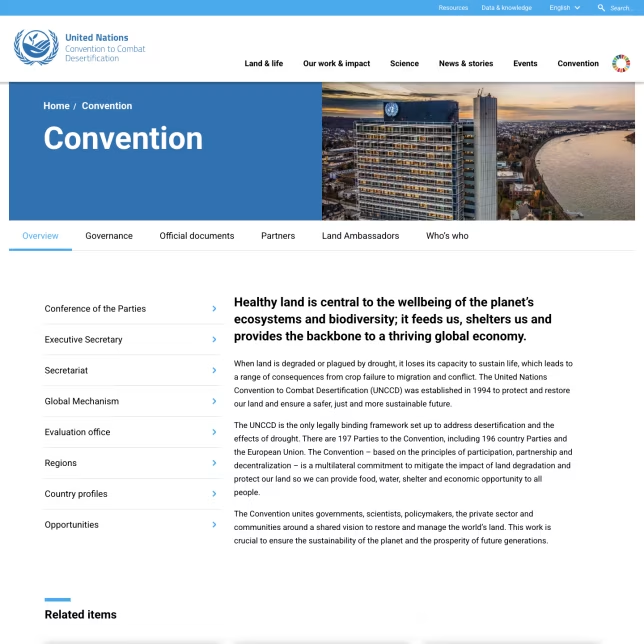
  • Convention

Results

  • 30–40% Content Delivery Cost Reduction (Storybook Component Reuse)
  • Lighthouse Score Improvement: 30–60 → 70–90

The Challenge

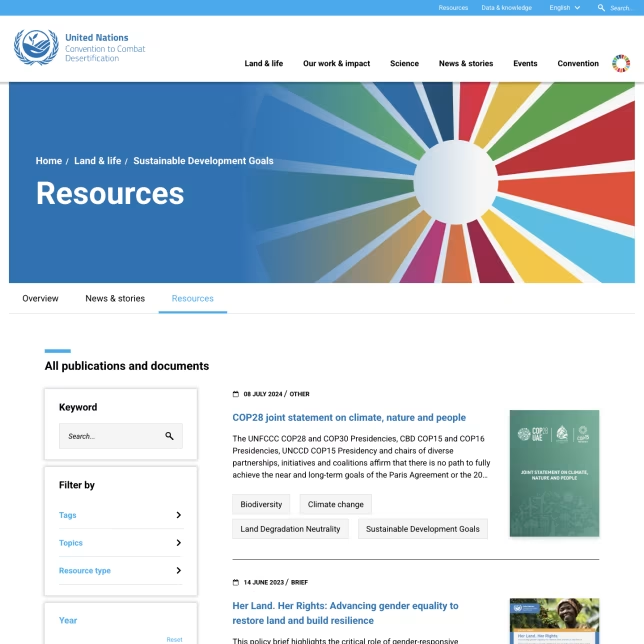
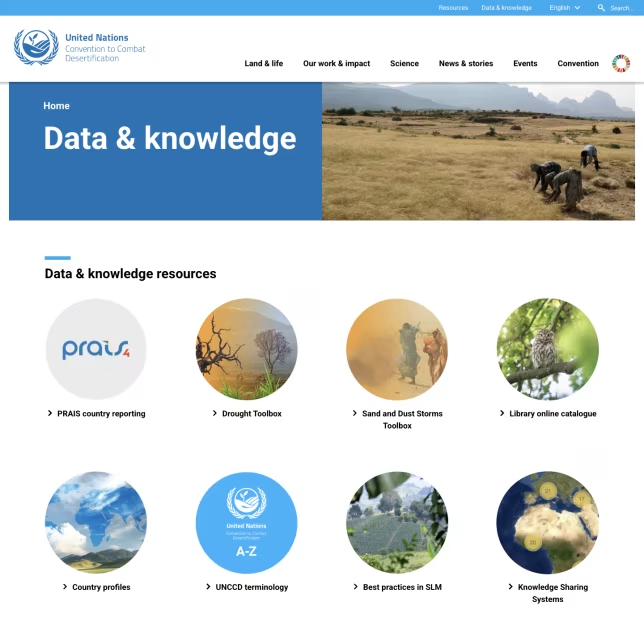
UNCCD’s website infrastructure had evolved into a fragmented multi-site system. Four separate websites were created across different technologies and content standards, resulting in duplicated effort, inconsistent UX, and difficulties with content governance.

  • Four separate platforms (two WordPress + two Drupal 7) with different content structures and editorial practices
  • WordPress pages built using multiple builders (Gutenberg, Elementor, Beaver Builder) with inconsistent markup quality
  • Legacy WordPress content included PHP fragments used to render tables and dynamic content in page sources
  • Multiple editorial teams required independent workflows and review processes per site section
  • Performance challenges and limited observability of content behavior and user interaction

The Solution: Government website migration to Drupal DXP

Unified Drupal DXP Consolidation

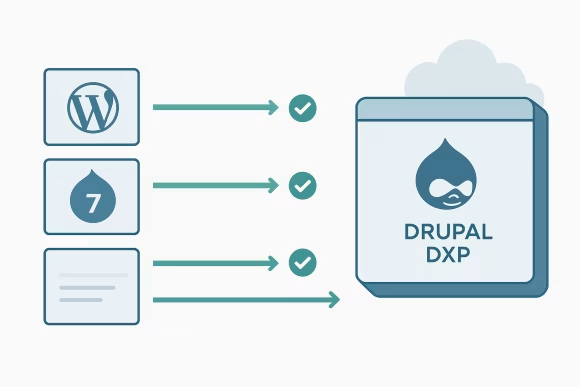
A single Drupal Digital Experience Platform replaced four disconnected WordPress and Drupal sites. Shared theming, a common content model, and centralized configuration created a consistent UX across programs and teams. Consolidation reduced duplicated maintenance work and established a scalable foundation for future site sections and initiatives.

Migration Program With Quality Control

Multi-iteration migrations were executed using a custom Drupal migration module built on the Migrate API. Each run included validation, structured auditing, and content reconciliation to catch mapping issues early and protect editorial continuity. This approach allowed incremental cutovers while steadily improving content quality and completeness.

Builder Content Cleanup & Sanitization Layer

Legacy WordPress pages built with Gutenberg, Elementor, and Beaver Builder were normalized before being converted into structured Drupal content. A sanitization layer with custom cleanup preprocessors removed inconsistent markup, repaired broken structures, and standardized embeds and tables. This reduced long-term technical debt and made component-based rendering reliable.

Secure Replacement of Embedded PHP Fragments

Risky PHP fragments embedded in WordPress content were removed to eliminate security and maintenance hazards. Equivalent functionality was rebuilt as Drupal components with controlled configuration and safe parameters. This preserved required dynamic behavior while ensuring the platform remained supportable and auditable.

Storybook Component Library & Design System

A Storybook-driven component library was implemented to align UI delivery across the consolidated ecosystem. Components were designed to map cleanly to Drupal’s structured fields and editorial patterns, reducing one-off templates. This improved consistency, accelerated iteration, and made future enhancements easier to govern.

Headless Content Delivery via GraphQL

Headless delivery was migrated and extended using GraphQL to support mobile application content needs. The API exposed structured content in a predictable way, reducing coupling to page markup and enabling reuse across channels. This improved integration stability and supported future omnichannel expansion.

Analytics Instrumentation & Operational Reporting

GTM and GA4 tracking were implemented to standardize measurement across the unified platform. Events and page interactions were instrumented consistently to improve observability of content performance and user behavior. Looker Studio dashboards provided ongoing reporting to support optimization and stakeholder visibility.

Core Features

UNCCD’s digital ecosystem was consolidated into a single Drupal Digital Experience Platform designed for long-term governance and scalable delivery. This UNCCD United Nations Drupal platform case study highlights how the platform standardizes content structures and UI components so multiple teams can publish consistently without page-builder drift. Migration tooling and sanitization reduced legacy risk while preserving critical content across iterations. Headless APIs and analytics integrations support mobile consumption and ongoing optimization.

Implementation

UNCCD’s modernization was delivered as a consolidation program that brought four independent sites into a single Drupal Digital Experience Platform. The approach combined platform architecture, iterative migrations, and content cleanup to reduce legacy risk while preserving critical content and editorial continuity. A component-based UI system and structured content model standardized delivery across teams, with governance workflows built into day-to-day publishing. Headless and analytics capabilities were implemented alongside performance and security hardening to support long-term operations and optimization.

Drupal DXP Consolidation & Architecture

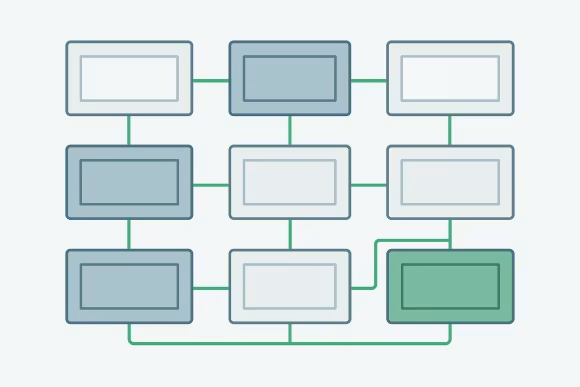
A unified Drupal platform was implemented to replace two WordPress and two Drupal 7 sites operating with different standards and governance. Information architecture and content domains were aligned to support multiple internal teams without duplicating platform work. This consolidation reduced operational complexity and created a single foundation for future program growth.

Iterative Migration Program (WordPress + Drupal 7)

Content was migrated in multiple iterations to validate mappings, preserve editorial intent, and reduce cutover risk. Drupal Migrate API was used to build repeatable pipelines that could be rerun as content changed during delivery. This approach enabled quality control and predictable rollout sequencing across the previously separate sites.

Builder Content Cleanup & Sanitization Layer

Legacy WordPress pages built with Gutenberg, Elementor, and Beaver Builder were normalized to structured Drupal components. Risky embedded PHP fragments and inconsistent markup were removed or transformed to safer equivalents during migration. A dedicated cleanup layer ensured content rendered reliably and reduced security and maintenance exposure.

Component Library & Storybook Design System

A reusable component system was implemented and documented in Storybook to standardize UI patterns across the consolidated ecosystem. Components were designed to support structured content and consistent rendering across templates and page types. This reduced one-off front-end work and made UX changes easier to deliver safely over time.

Editorial Workflows & Governance Enablement

Domain-specific editorial workflows were configured to match how different teams create, review, and publish content. Structured content types and permissions were aligned to reduce ad-hoc publishing and improve consistency. This ensured the platform could scale operationally without relying on manual coordination between teams.

Headless Delivery, Analytics, and Observability

GraphQL-based headless delivery was migrated and extended to support mobile application consumption of content. GTM and GA4 tracking were implemented with custom events to improve visibility into user behavior and content performance. Looker Studio dashboards provided a shared reporting layer for ongoing optimization and stakeholder reporting.

Testimonials

It was my pleasure working with Oleksiy (PathToProject) on a new Drupal website. He is a true full-stack developer—the ideal mix of DevOps expertise, deep front-end knowledge, and the structured thinking of a senior back-end developer.

He is well-organized and never lets anything slip. Oleksiy understands what needs to be done before being asked and can manage a project independently with minimal involvement from clients, product managers, or business analysts.

One of the best consultants I’ve worked with so far.

Photo: Andrei Melis

Andrei Melis

Technical Lead at Eau de Web

Business Outcomes

UNCCD consolidated a fragmented four-site ecosystem into a single Drupal Digital Experience Platform to reduce operational overhead and create a scalable foundation for future programs. Standardized components, structured content, and domain-specific workflows improved governance and made delivery consistent across multiple internal teams. Migration cleanup and security hardening reduced legacy risk while improving reliability. Performance and analytics upgrades increased visibility into user behavior and supported ongoing optimization.

Outcome illustration for Single Unified Digital Platform[01]

Single Unified Digital Platform

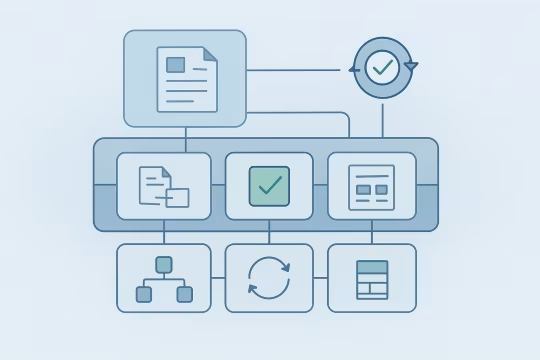
Four disconnected websites (two WordPress and two Drupal) were consolidated into one Drupal DXP. This reduced duplicated maintenance and simplified platform operations across teams. A unified foundation also made it easier to extend the ecosystem as new initiatives and content domains are added.

Outcome illustration for Stronger Content Governance & Editorial Workflows[02]

Stronger Content Governance & Editorial Workflows

Editorial workflows were implemented per content domain to support multiple internal teams with distinct review and publishing needs. Standardized content structures reduced inconsistencies created by different site histories and practices. This improved governance, accountability, and day-to-day publishing reliability.

Outcome illustration for Faster UI Delivery Through Component Reuse[03]

Faster UI Delivery Through Component Reuse

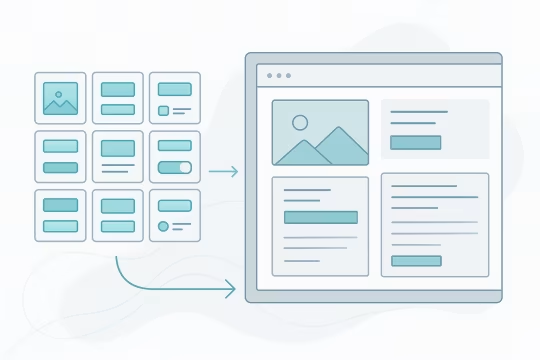
A reusable UI component library was delivered and documented in Storybook to standardize patterns and reduce rework. Teams could assemble pages from approved components rather than rebuilding layouts per site or per builder. This accelerated delivery and improved consistency across the ecosystem.

Outcome illustration for Modernized and Stable Content Migration[04]

Modernized and Stable Content Migration

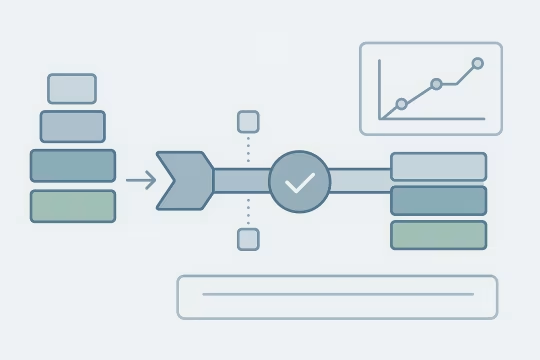
Multi-iteration migrations were executed with validation and quality control to reduce surprises at launch. Builder-generated markup and legacy content were cleaned and normalized to fit the new structured model. The result was more predictable content operations and a platform that is easier to maintain long term.

Outcome illustration for Reduced Security Risk From Legacy Content[05]

Reduced Security Risk From Legacy Content

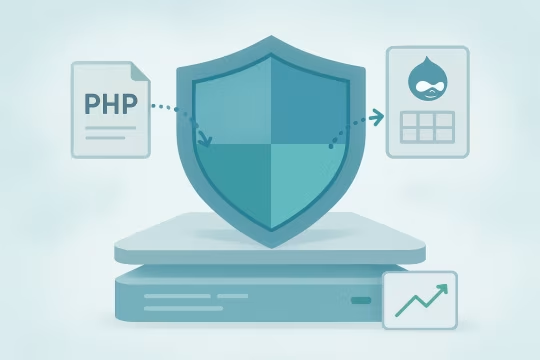
Risky PHP fragments embedded in legacy WordPress content were removed and replaced with secure Drupal components and configuration. This reduced the attack surface and eliminated brittle, hard-to-audit behavior in page sources. The platform is safer to operate and easier to govern over time.

Outcome illustration for Improved Performance and Page Experience[06]

Improved Performance and Page Experience

Performance work improved page experience and overall site responsiveness, supporting better usability for global audiences. Lighthouse scores increased from the 30–60 range to the 70–90 range on key pages. This also provided a stronger baseline for ongoing optimization and content growth.

Used Services

The project leveraged a comprehensive set of Drupal services to modernize and unify the digital ecosystem. Core architecture and content modeling services established a scalable, multisite Drupal platform with structured content and governance. Migration and cleanup services ensured reliable content transition from legacy WordPress and Drupal sites, while integration services connected Drupal with analytics, CDP, and headless delivery systems. Frontend and design system services enabled reusable UI components and Storybook-driven consistency, supporting faster UI delivery and headless integration. Operational services enhanced performance, security, and observability, ensuring a stable and maintainable platform foundation for long-term growth.

Drupal Digital Experience Platform Modernizations for Environmental and International Organizations

These case studies highlight Drupal DXP consolidations and modernizations for organizations with complex multi-site ecosystems and governance needs. They reinforce themes of legacy platform migration, component-based content operations, and scalable editorial workflows in international and environmental contexts. Together, they provide insights into delivering stable, secure, and performance-optimized Drupal platforms for global audiences and strategic programs.

Further reading on Drupal platform consolidation and migration governance

These articles expand on the key decisions behind this UNCCD delivery: consolidating a fragmented WordPress and Drupal estate into a structured Drupal platform, planning migration work as a governance and architecture program, and auditing content models before implementation. They also add useful guidance on governing the GraphQL layer used for headless delivery and managing taxonomy quality across multiple editorial teams.

Oleksiy (Oly) Kalinichenko

Oleksiy (Oly) Kalinichenko

CTO at PathToProject

Do you want to start a project?