Audit Scope

Architecture review
Code quality analysis
Performance profiling
Security assessment
DevOps & CI/CD review

Deliverables

  • Executive summary
  • Risk & impact matrix
  • Technical findings report
  • Prioritized improvement roadmap

Best Fit For

  • Enterprise Drupal sites
  • Multisite platforms
  • Legacy Drupal 7/8/9 environments
  • Teams planning modernization

Why Most Drupal Platforms Need an Audit

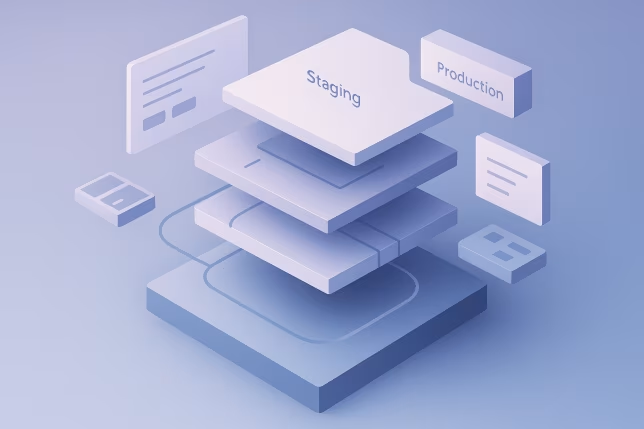
Drupal platforms evolve quickly—new features, integrations, and editorial demands often outpace architectural governance. Over time, teams accumulate custom module complexity, inconsistent configuration management, and environment drift between local, staging, and production. Without a periodic Drupal health check, it becomes difficult to understand which issues are isolated defects versus systemic architectural risk.

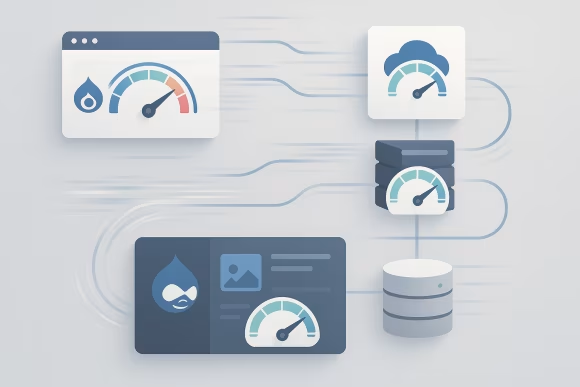
Performance regressions are frequently multi-layered: inefficient queries, misaligned caching, and frontend payload growth can combine into user-visible latency and unpredictable behavior under load. When this happens, teams end up in reactive tuning cycles without a clear baseline for Drupal performance bottleneck analysis or a shared view of where the platform is actually constrained.

Security and compliance exposure can also increase quietly. Outdated dependencies, unclear patching ownership, overly permissive roles, and inconsistent hardening across environments create gaps that are hard to detect through day-to-day delivery work. In parallel, scaling the platform—whether for multisite expansion, higher traffic, or modernization—becomes riskier when the current architecture and infrastructure have not been assessed end-to-end, increasing maintenance overhead and delivery bottlenecks.


Our Drupal Audit Approach

Discovery & Stakeholder Interviews

We align audit scope with business objectives, pain points, and technical constraints.

Architecture & Infrastructure Review

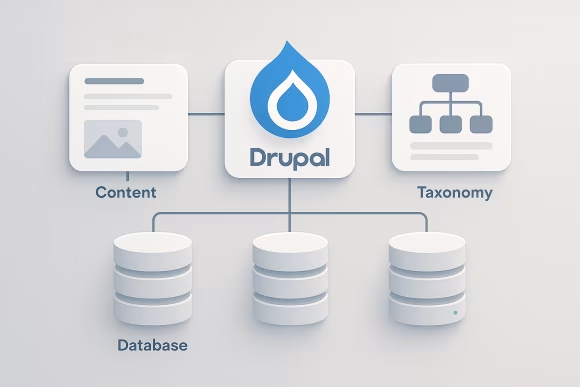
We evaluate hosting setup, caching layers, database structure, and deployment pipelines.

Codebase & Module Analysis

We review custom and contributed modules, coding standards, and dependency health.

Performance Profiling

We analyze response times, caching effectiveness, database queries, and frontend performance.

Security & Compliance Check

We assess permissions, update status, vulnerabilities, and hardening configurations.

Roadmap & Remediation Plan

We provide a prioritized, impact-driven action plan for improvement.

What We Evaluate

This Drupal platform audit applies a structured framework across code, architecture, performance, security, and operations. It combines Drupal code audit practices with Drupal architecture assessment and Drupal infrastructure audit techniques to evaluate maintainability, scalability readiness, and governance. Findings are grounded in evidence from configuration, runtime behavior, and delivery workflows to support reliable modernization and optimization decisions.

Audit Capabilities
  • Drupal 7/8/9/10/11/12 platform review
  • Multisite & enterprise architecture assessment
  • Cloud & containerized infrastructure review
  • Performance & load diagnostics
  • Security hardening evaluation
  • Headless & API architecture review
Who This Is For
  • Enterprises with complex Drupal platforms
  • Organizations planning Drupal migration or modernization
  • Teams experiencing performance or stability issues
  • CTOs seeking independent technical validation
  • Marketing teams dependent on stable content operations
Technology Ecosystem
  • Drupal 7/8/9/10/11
  • PHP 8+
  • MySQL / MariaDB / PostgreSQL
  • Redis / Varnish / CDN
  • Docker / Kubernetes
  • AWS / Acquia / DigitalOcean
  • New Relic / Blackfire / Lighthouse

Audit Deliverables

Delivery follows a clear engineering sequence: scope and discovery, evidence collection across code and environments, analysis of architecture/performance/security, and synthesis into prioritized findings. The engagement is designed to support Drupal technical due diligence (for example, before major upgrades or platform changes) and to produce a roadmap your teams can execute and track over time.

Delivery card for Executive Summary[01]

Executive Summary

A concise, business-focused overview outlining the most critical risks, technical gaps, and strategic opportunities. Designed for leadership stakeholders, it translates complex technical findings into clear, actionable insights that support confident decision-making.

Delivery card for Detailed Technical Report[02]

Detailed Technical Report

Comprehensive documentation covering architecture structure, custom code quality, configuration management, integrations, infrastructure setup, and deployment processes. Every issue is explained with context, impact analysis, and recommended remediation steps.

Delivery card for Risk & Priority Matrix[03]

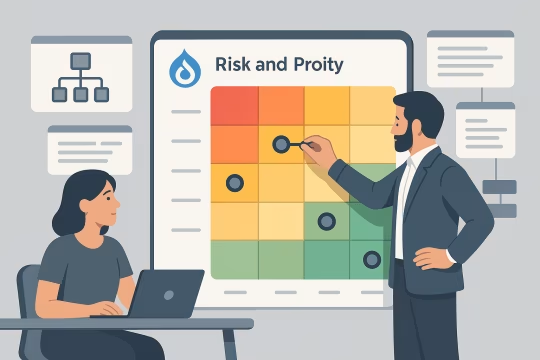
Risk & Priority Matrix

A structured severity-based classification of identified issues, mapping technical risks against business impact and remediation urgency. This prioritization model helps your team focus resources efficiently and address the most critical concerns first.

Delivery card for Performance & Security Findings[04]

Performance & Security Findings

Measured analysis of performance bottlenecks, caching strategies, database efficiency, security posture, update compliance, and vulnerability exposure. Includes benchmark data and concrete recommendations to improve stability, speed, and resilience.

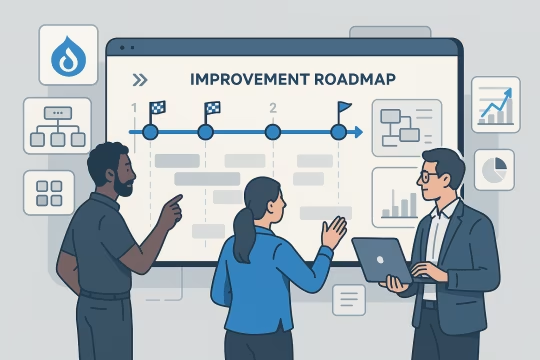
Delivery card for Improvement Roadmap[05]

Improvement Roadmap

A phased execution plan aligned with your budget, internal capacity, and strategic goals. The roadmap defines short-, mid-, and long-term improvements, ensuring systematic modernization rather than reactive fixes.

Delivery card for Optional Implementation Support[06]

Optional Implementation Support

Hands-on technical support to implement recommended improvements. From refactoring and configuration updates to infrastructure optimization and CI/CD enhancements, we can assist your team in executing the roadmap efficiently and safely.

Business Impact

A Drupal platform audit reduces operational risk by making security vulnerabilities, infrastructure gaps, and architectural constraints visible before they cause incidents. It also accelerates decision-making by separating high-impact remediation from lower-value refactoring, especially when performance bottlenecks affect user experience or delivery velocity. For organizations planning change—such as a Drupal audit before migration or a major upgrade—the assessment provides a defensible baseline for scope, cost, and sequencing. The result is clearer governance, lower technical debt growth, and more predictable scalability as the platform evolves.

Reduced Risk

Proactively identify and mitigate security vulnerabilities, architectural weaknesses, and deployment risks before they impact production stability.

Improved Performance

Targeted recommendations address performance bottlenecks, resulting in faster response times and stronger user experience.

Lower Maintenance Costs

Technical debt and structural inefficiencies are identified and prioritized, reducing long-term operational overhead.

Strategic Clarity

Executive teams gain a clear technical baseline and prioritized roadmap aligned with business objectives.

Scalable Growth

Capacity planning and modernization assessment ensure the platform is prepared for expansion, acquisitions, and increased traffic demands.

Operational Transparency

Clear documentation of findings improves governance, accountability, and cross-team alignment on technical priorities.

Frequently Asked Questions

A Drupal platform audit provides structured visibility into architecture quality, performance bottlenecks, security posture, and operational maturity. For enterprise environments, this clarity is essential before modernization, migration, or large-scale feature expansion. These FAQs address the most common strategic, technical, and governance-related questions raised by CTOs, IT Directors, and Product Owners evaluating a comprehensive Drupal technical assessment.

When should an organization conduct a Drupal platform audit?

A Drupal platform audit is recommended before major initiatives such as migration, replatforming, multisite consolidation, performance optimization, or security hardening. It is also critical when teams experience recurring instability, slow delivery cycles, or unclear technical ownership. Many organizations initiate an audit after inheriting legacy codebases or when internal teams lack full architectural visibility. Conducting a structured assessment proactively helps prevent production incidents, compliance exposure, and costly modernization missteps.

What areas are evaluated in a comprehensive Drupal platform audit?

A structured audit evaluates architecture design, content modeling, custom code quality, contributed module health, configuration management, security posture, performance stack, and DevOps workflows. Infrastructure configuration, database efficiency, caching strategies, CI/CD maturity, and environment consistency are also reviewed. The goal is not to list superficial findings but to identify structural weaknesses, technical debt accumulation, and long-term scalability risks across the full stack.

Is the Drupal audit limited to code review?

No. While custom module quality and coding standards are important, enterprise Drupal audits extend beyond source code. Architecture decisions, deployment practices, hosting configuration, and governance processes often introduce greater long-term risk than isolated coding issues. A platform audit evaluates how technical layers interact, how environments are managed, and how operational discipline is maintained. This holistic perspective ensures meaningful recommendations rather than isolated refactoring suggestions.

How long does a Drupal platform audit typically take?

The duration depends on platform complexity, multisite scope, integration landscape, and infrastructure maturity. Smaller environments may require a few weeks, while large enterprise ecosystems demand phased evaluation. Audit timelines are structured to balance depth and operational continuity. Findings are often delivered incrementally, allowing leadership teams to begin prioritization while deeper technical analysis continues.

Does a Drupal platform audit impact live production systems?

A properly conducted audit is non-disruptive. Most analysis is performed through code review, configuration evaluation, log analysis, and controlled performance profiling in staging environments. When production data must be analyzed, read-only and monitored procedures are applied. The objective is diagnostic clarity without introducing risk to business operations or service continuity.

How are findings prioritized within the audit report?

Issues are classified according to technical severity, business impact, and remediation complexity. Security vulnerabilities, architectural blockers, and performance bottlenecks affecting revenue are prioritized over cosmetic improvements. A structured risk and priority matrix helps decision-makers allocate resources effectively. Recommendations are sequenced into short-, mid-, and long-term initiatives aligned with organizational capacity and modernization objectives.

Can a Drupal audit support migration or modernization planning?

Yes. A platform audit provides a technical baseline essential for successful Drupal migration or upgrade initiatives. It clarifies custom module dependencies, deprecated APIs, content model limitations, and infrastructure constraints. Without this visibility, migrations risk unexpected scope expansion and architectural misalignment. The audit ensures that modernization efforts are strategic, controlled, and aligned with long-term maintainability goals.

How does a Drupal platform audit strengthen security and compliance?

Security assessment reviews update compliance, access control configuration, patch management processes, and vulnerability exposure across modules and infrastructure. The audit identifies misconfigured permissions, outdated dependencies, and deployment gaps that could introduce risk. Structured remediation recommendations improve governance discipline, reduce exposure, and align the platform with enterprise compliance expectations.

Is a platform audit relevant only for legacy Drupal versions?

No. Even modern Drupal 10 or 11 environments benefit from periodic technical assessment. Rapid feature expansion, integration growth, and evolving DevOps practices often introduce configuration drift and architectural inconsistencies. An audit ensures that modernization efforts remain sustainable and aligned with best practices, preventing the accumulation of hidden technical debt in newer platforms.

What happens after the Drupal platform audit is completed?

Following delivery of the executive summary and technical findings, organizations can use the prioritized roadmap to guide internal remediation or modernization initiatives. If required, implementation support can be structured into phased execution cycles. The audit serves as a strategic baseline, enabling informed decision-making rather than reactive problem-solving.

Drupal Platform Modernization and Performance Case Studies

These case studies showcase comprehensive Drupal platform assessments and modernization efforts that align closely with the Drupal Platform Audit service. They highlight real-world examples of architecture consolidation, performance optimization, security hardening, and scalable multisite governance, demonstrating measurable improvements in stability, delivery workflows, and operational efficiency.

What Our Clients Say

Further reading on Drupal platform assessment and modernization

These articles expand on the kinds of architecture, governance, migration, and platform standardization issues a Drupal audit is designed to uncover. They help readers connect technical findings to practical decisions around version readiness, multisite governance, dependency mapping, and long-term platform evolution.

Ready for a Drupal Platform Audit?

Get a clear, structured evaluation of your Drupal platform and a prioritized roadmap to improve performance, security, and scalability.

Oleksiy (Oly) Kalinichenko

Oleksiy (Oly) Kalinichenko

CTO at PathToProject

Do you want to start a project?