 [01]
[01]Discovery & architecture alignment
Define scope, constraints, success metrics, and target architecture.
Headless CMS services and composable architecture help teams ship faster, scale across channels, and evolve digital platforms without monolithic constraints. We help organizations design and build an API-first content platform where content, front-end experiences, and enterprise systems stay loosely coupled—but strongly governed.
The result is a platform that supports multi-site growth, consistent brand experiences, and high-performance delivery across web and mobile—while keeping editorial workflows structured and secure. For many teams, this includes a Next.js headless frontend and a composable DXP architecture that can integrate cleanly with CRM, CDP, search, and commerce.
Best For
Architecture
Key Outcomes
Common Integrations
Typical Stack
Many CMS platforms become single points of friction over time: front-end performance is limited by back-end constraints, releases require heavy coordination, and even small updates can trigger high-risk deployments. As organizations scale across brands, regions, and languages, content models often drift, templates multiply, and governance becomes inconsistent—creating operational overhead for both engineering and editorial teams.
In enterprise environments, the problem is rarely just the CMS. Tight coupling between presentation, content, and integrations makes it difficult to change one part of the system without unintended side effects. Teams end up embedding business logic in templates, duplicating components across sites, and relying on brittle plugins or customizations that are hard to test and upgrade. This increases maintenance cost, slows delivery, and raises security and compliance risk.
When multiple channels (web, mobile, portals, kiosks) need the same content, traditional CMS patterns can force duplication and manual coordination. Without an API-first content delivery architecture, integrations with CRM/CDP/search/commerce can become fragile, and performance optimizations are constrained by the monolith—leading to delivery bottlenecks and architectural inconsistency.
A clear target architecture for CMS, front-end apps, integrations, and environments—aligned with your delivery model.
Structured content types, reusable components, workflows, and permissions designed for scalable editorial operations.
Reliable GraphQL/REST patterns, preview flows, and content orchestration for multiple channels.
Clean integration boundaries for CRM/CDP/search/commerce—designed for maintainability and observability.
SSG/ISR/edge caching strategies for predictable speed and Lighthouse-friendly UX.
CI/CD pipelines, environments, and release workflows that reduce risk and speed up iteration.
We build headless CMS foundations that keep content structured, reusable, and governed while enabling independent front-end delivery. Our work emphasizes composable DXP architecture, clear API-first integration boundaries, and scalable content operations across brands and channels. The result is a maintainable platform that supports modern frameworks (including Next. js headless frontend patterns) without sacrificing reliability, security, or editorial control.
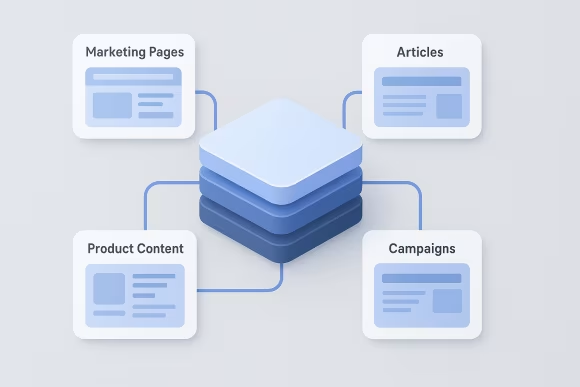
Reusable, scalable content types that support marketing pages, articles, product content, and campaigns.
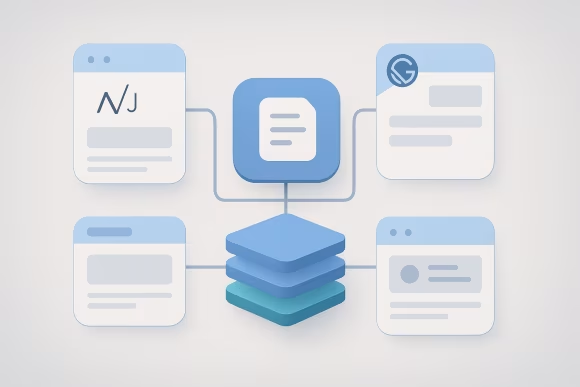
Next.js/Gatsby front-ends designed for modular growth, shared UI patterns, and consistent UX.

Preview flows, validation, and content safeguards so editors can publish faster with fewer regressions.
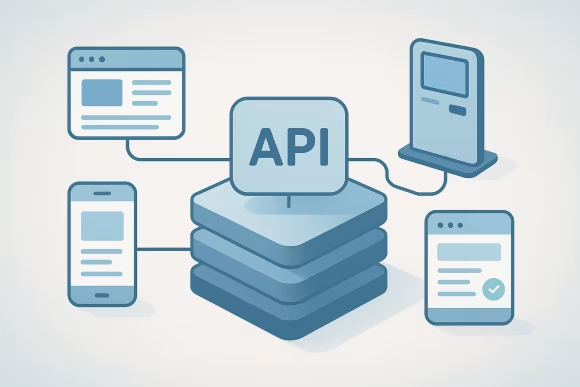
Content delivered via GraphQL/REST to web, mobile apps, kiosks, and partner portals.
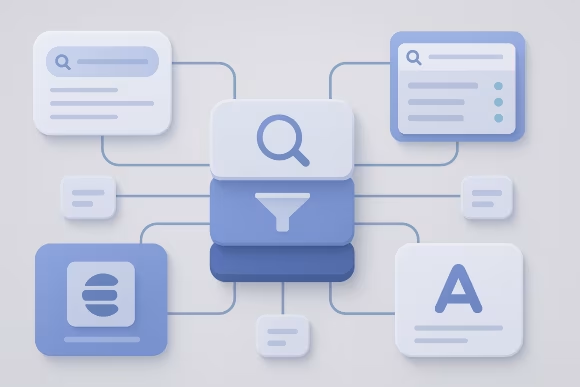
Elastic/Algolia-style search patterns for fast filtering, indexing, and content discovery.
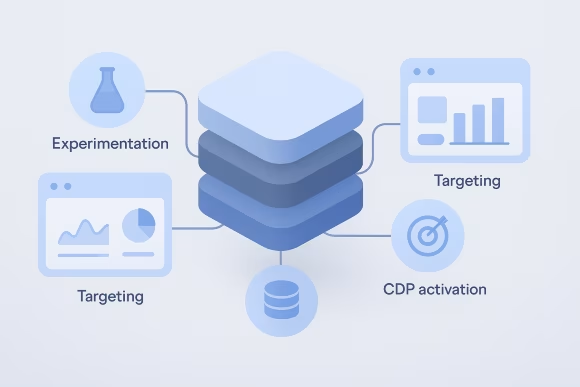
Segmentation-ready architecture to support experimentation, targeting, and CDP activation.
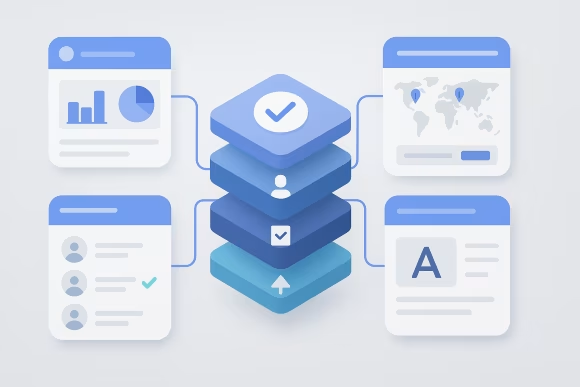
Roles, approvals, and controlled publishing workflows across teams, regions, and brands.
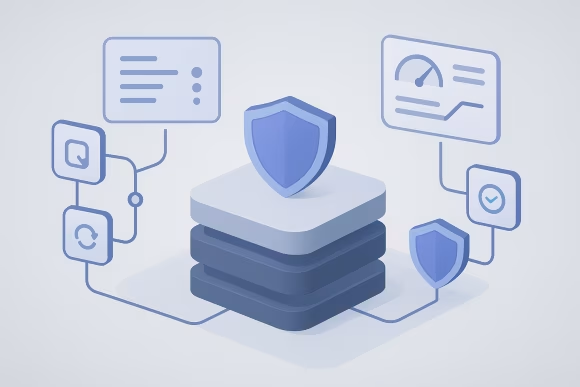
Caching strategies, secure delivery, and integration hardening for enterprise-grade reliability.
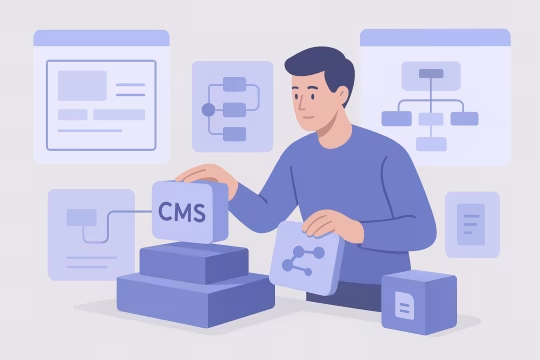
Delivery typically runs from discovery and target-architecture alignment through content modeling, front-end implementation, and API-first integration work. We then harden performance, CI/CD, and release workflows, and support enablement so the platform can evolve safely over time.
[01]Define scope, constraints, success metrics, and target architecture.
 [02]
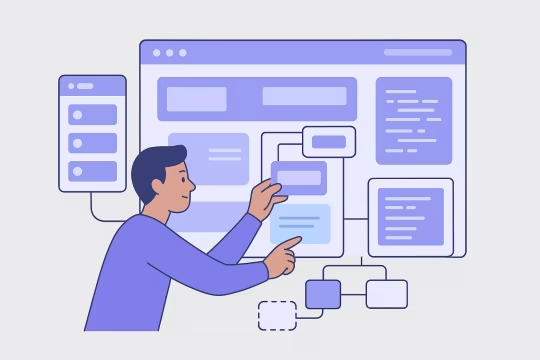
[02]Build scalable content types, components, and editorial workflows.
 [03]
[03]Implement fast pages, component libraries, and reusable patterns.
 [04]
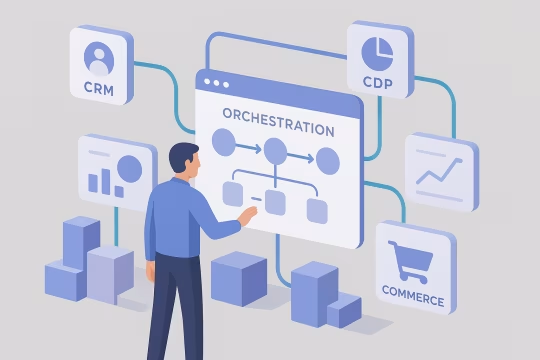
[04]Connect CRM/CDP/search/commerce with stable, observable interfaces.
 [05]
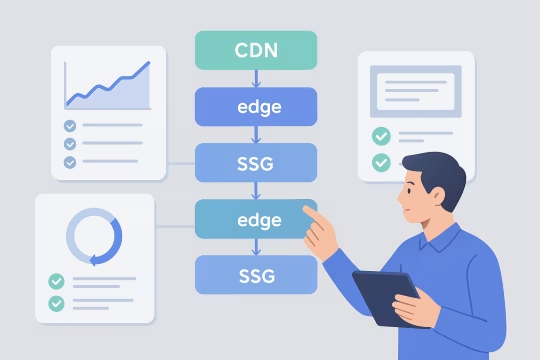
[05]Apply SSG/ISR/edge and CDN patterns for predictable speed.
 [06]
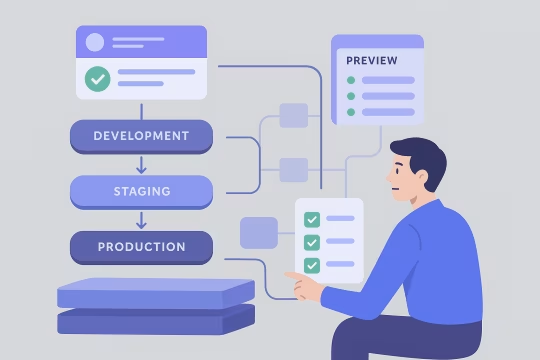
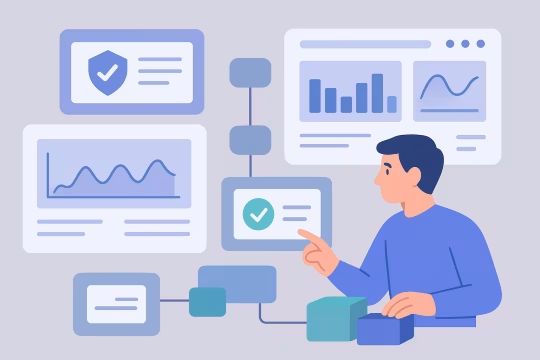
[06]Automate builds, preview environments, validations, and deployments.
 [07]
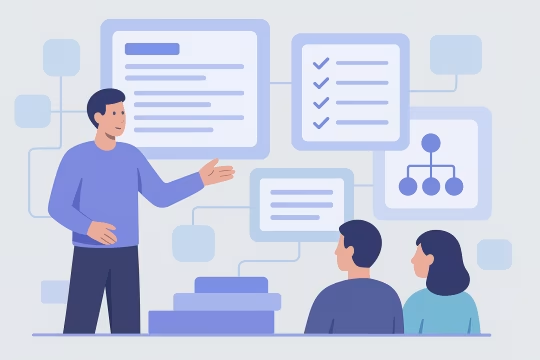
[07]Testing strategy, regression safeguards, monitoring, and iterative hardening.
 [08]
[08]Documentation, team onboarding, and sustainable ownership models.
A well-implemented headless CMS and composable architecture reduces coordination overhead between content, front-end, and integration teams. By standardizing an API-first content platform approach, organizations can ship changes more frequently, improve performance and reliability, and lower regression risk during upgrades. It also supports consistent governance and scalable content operations across multi-site, multi-brand, and multi-region environments.
Decoupled releases enable parallel work across content, front-end, and integrations.
Modern rendering and caching patterns reduce load times and improve engagement.
Composable boundaries avoid fragile hacks and reduce regression risk during updates.
Governed content models and workflows support growth across brands and markets.
Swap or evolve parts of the stack without rebuilding the entire platform.
Clean data flows improve analytics, experimentation, and CDP-driven personalization.
These services extend headless CMS services into adjacent architecture work—API platform design, composable platform patterns, content modeling, migrations, and integration engineering—so the CMS, front-end, and enterprise systems evolve as one coherent platform.
Enterprise API design for scalable, secure foundations
API-first platform design with clear domain boundaries
Composable DXP content architecture and API-first platform design
API-first enterprise headless CMS platform architecture for content delivery
Structured schemas for an API-first content strategy
Enterprise content migration with API-first content delivery
Decoupled Drupal + Next.js migration for modern frontend delivery
Contract-first headless API development for enterprise delivery
Headless CMS API integration, contracts, and integration layer engineering
These case studies showcase practical implementations of headless CMS architectures with API-first content platforms, composable front-end delivery, and enterprise governance. They highlight scalable multi-channel digital experiences using technologies like Contentful, Gatsby. js, Next. js, and Elasticsearch, demonstrating measurable improvements in performance, editorial workflows, and localization. Together, they provide concrete examples of how headless CMS strategies enable faster publishing, consistent brand experiences, and robust integration capabilities.
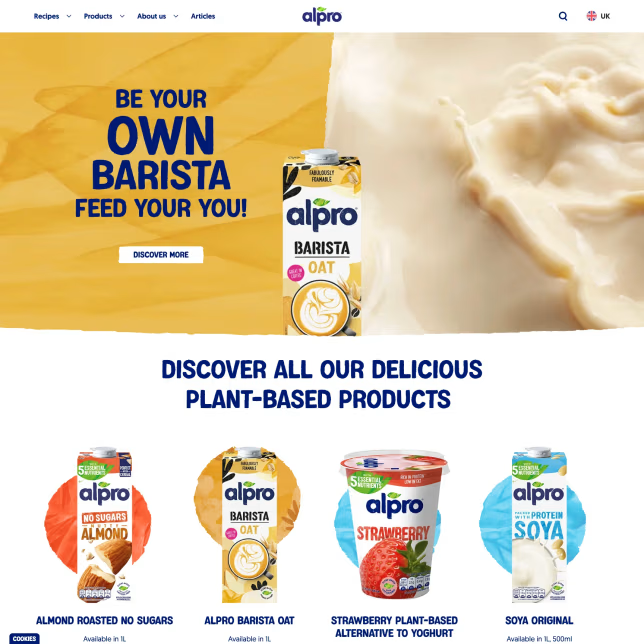
Users were abandoning the website before fully engaging with content due to slow loading times and an overall poor performance experience.
The updated platform significantly improved speed and usability, resulting in higher user engagement, longer session durations, and increased content exploration.
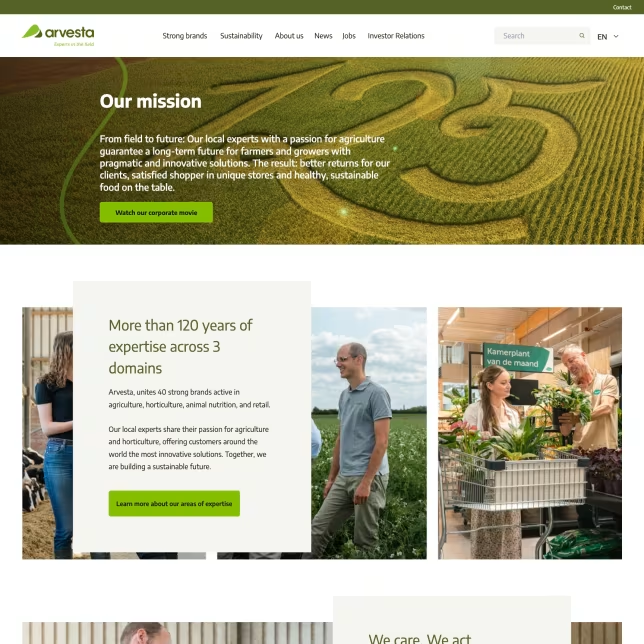
Arvesta required a modern, scalable headless CMS for enterprise corporate marketing—supporting rapid updates, structured content operations, and consistent UI delivery across multiple teams and repositories.
The platform enabled faster delivery of marketing updates, improved UI consistency across pages, and strengthened editorial operations through structured content models and reusable components.
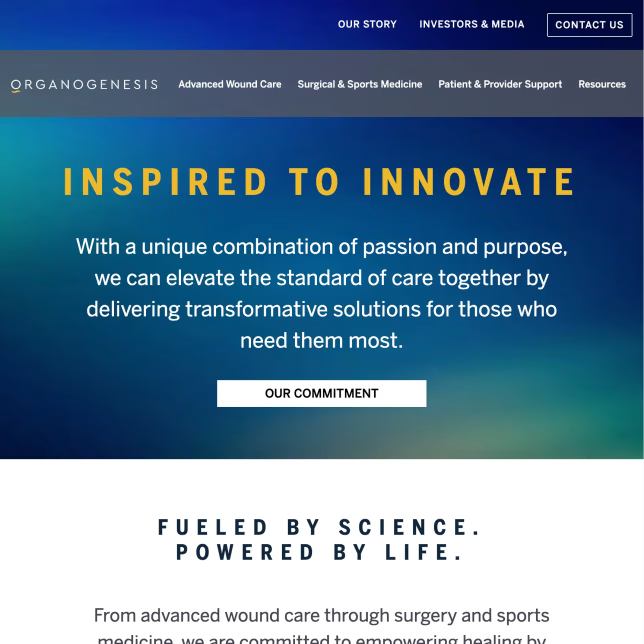
Organogenesis faced operational challenges managing multiple brand websites on outdated platforms, resulting in fragmented workflows, high maintenance costs, and limited scalability across a multi-brand digital presence.
The transformation reduced time-to-deliver marketing updates by 20–25%, improved Lighthouse scores to ~90+, and delivered a scalable multi-brand foundation for long-term growth.
It was my pleasure working with Oleksiy (PathToProject) on a new Drupal website. He is a true full-stack developer—the ideal mix of DevOps expertise, deep front-end knowledge, and the structured thinking of a senior back-end developer.
He is well-organized and never lets anything slip. Oleksiy understands what needs to be done before being asked and can manage a project independently with minimal involvement from clients, product managers, or business analysts.
One of the best consultants I’ve worked with so far.

Andrei Melis
Technical Lead at Eau de Web
Oleksiy (PathToProject) worked with me on a specific project over a period of three months. He took full ownership of the project and successfully led it to completion with minimal initial information.
His technical skills are unquestionably top-tier, and working with him was a pleasure. I would gladly collaborate with Oleksiy again at any opportunity.

Nikolaj Stockholm Nielsen
Strategic Hands-On CTO | E-Commerce Growth
Oleksiy (PathToProject) was the Lead Developer on a number of client projects which I managed. He is highly skilled and incredibly hardworking. When assigning work to him, I could always rely on it being completed to a high quality and on time.
His technical expertise was valued across the team and he was often our 'go to' for technical challenges, which he loved to get stuck into. Oleksiy is proactive and engaged in a professional manner with our clients.
I have no hesitation in recommending him.

Daniela Graf
Senior Project Manager | Change Mgmt Practitioner | Process Improvement Geek
These articles dig into the governance and implementation details that shape successful headless platforms. They cover content modeling, frontend contracts, preview and environment controls, caching, and search patterns that matter when evaluating an API-first content platform.
Tell us what you’re modernizing. We’ll propose a practical architecture and delivery plan—focused on performance, governance, and scalable integrations.