Technologies

Gatsby.js
Contentful (Headless CMS)
Netlify Hosting
ElasticSearch Cloud Search
Storybook Variants
UI Library (System UI Theme Specification)

Industry

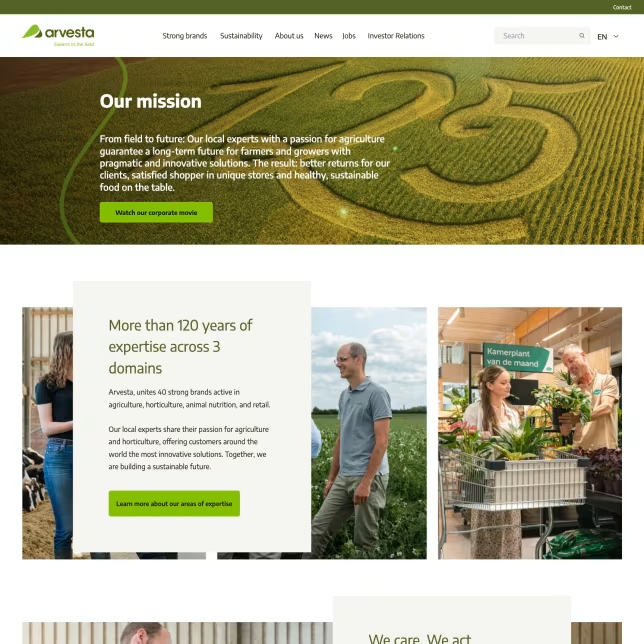
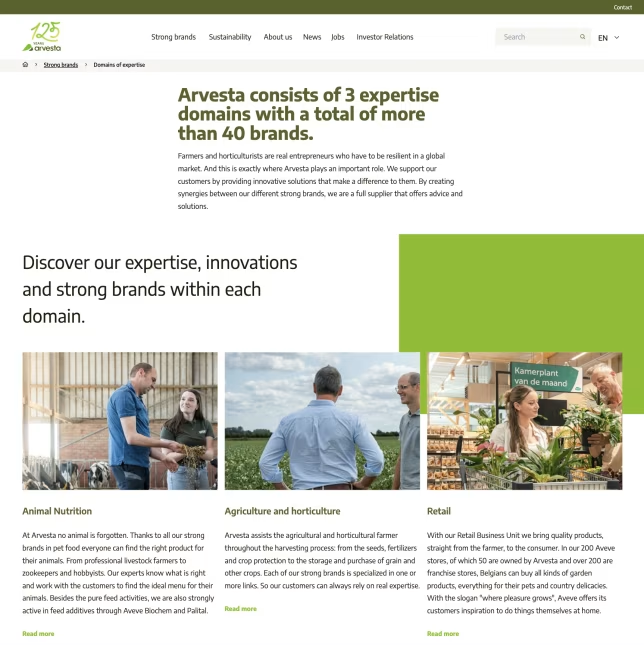
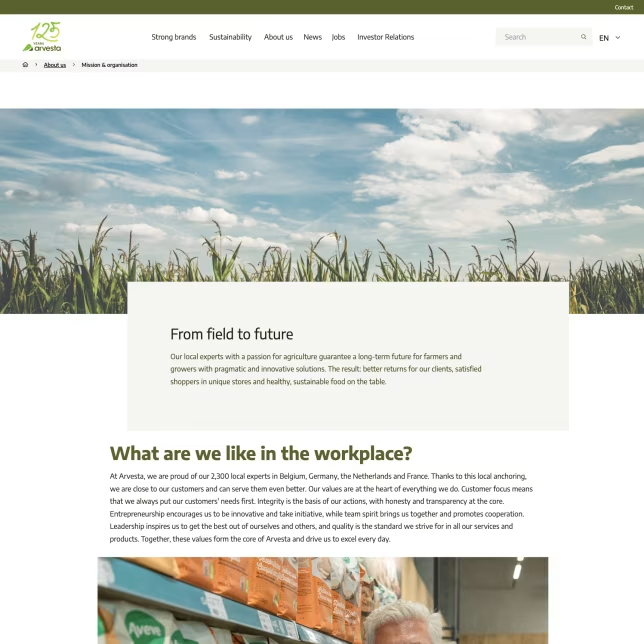
Agriculture / Food / Corporate & Marketing

Team Collaboration

  • Additional Front-End Delivery Team
  • In-House Engineering Team
  • Marketing & Content Teams

Scope

  • Component Variants & UI Library Contributions
  • Contentful Content Strategy & Modeling Support
  • Rapid Marketing Updates & Feature Delivery
  • ElasticSearch Cloud Search Integration

Platform

Design System Driven Platform

The Challenge

Arvesta’s digital platform required continuous corporate and marketing updates while ensuring consistent UI behavior across pages and sections. The architecture included multiple repositories and teams, which introduced coordination and delivery complexity.

The key challenge was to support rapid marketing execution without compromising design consistency, structured content operations, and long-term scalability. The marketing platform also required fast content discovery and filtering for content-heavy areas.

An additional engineering team was needed to accelerate implementation work, reduce delivery pressure on the in-house development team, and ensure that new components and variants aligned with the existing design system strategy.

The Solution (Gatsby + Contentful + Storybook + ElasticSearch)

Component-Driven Delivery With Storybook

A component-driven workflow was established with Storybook as the source of truth for UI patterns and variants. Each component state was documented and reviewed in isolation before being integrated into Gatsby pages. This reduced visual drift across content-heavy templates and made implementation work more predictable across teams and repositories.

Gatsby Front-End for Content-Heavy Pages

A modern Gatsby front end was used to deliver fast, consistent page rendering for corporate and campaign content. The architecture emphasized reusable templates and shared components so new pages could be assembled without bespoke front-end work. This kept performance and UI behavior stable as the volume of content and marketing requirements grew.

Contentful Content Models & Editorial Workflows

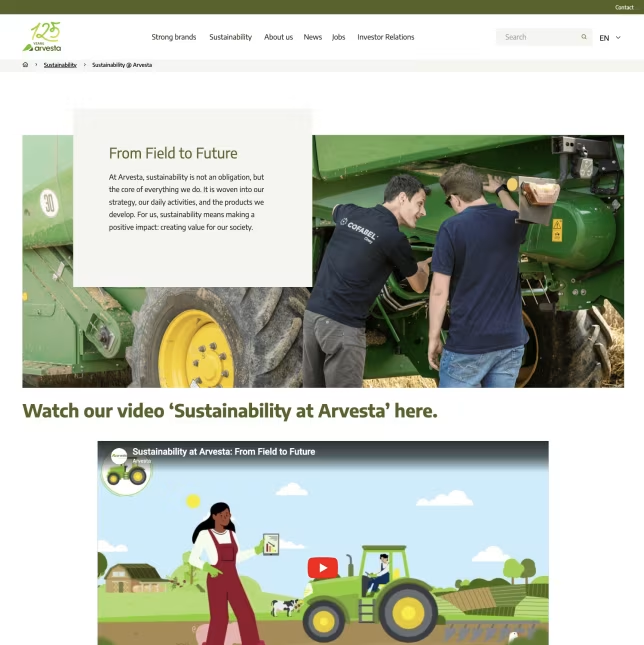
Contentful was implemented as a headless CMS with structured content models aligned to real corporate and campaign publishing needs. Editors could compose pages from approved components and fields rather than relying on ad-hoc formatting. This improved governance, reduced content-related regressions, and enabled scalable editorial operations.

Reusable Components & Variant Governance Across Repos

A shared UI library and clear variant rules were introduced to keep multiple codebases aligned. Components were designed to be configurable through content and design tokens, minimizing one-off implementations. This approach reduced rework during releases and ensured new features matched the established design system strategy.

Dynamic Search With ElasticSearch Cloud

ElasticSearch Cloud was integrated to provide fast search and filtering across content-heavy areas of the platform. Content was indexed in a way that supported relevant queries and responsive faceted navigation without overloading the front end. This improved content discovery for users and reduced friction when navigating large corporate and campaign libraries.

Augmented Front-End Engineering & Predictable Release Cadence

PathToProject acted as an additional front-end engineering team to accelerate delivery while keeping the in-house team focused on core priorities. Work was organized around shipping reusable components, page templates, and marketing updates in a consistent cadence. This reduced delivery bottlenecks and helped maintain quality as requirements changed quickly.

Core Features

Arvesta’s platform combines a Gatsby front end with Contentful to support high-frequency corporate and marketing publishing without sacrificing UI consistency. As a Contentful and Storybook component marketing platform, a Storybook-led workflow acts as the shared source of truth for patterns and variants across teams and repositories. Structured content models and editorial workflows enable scalable campaign delivery, while ElasticSearch Cloud provides fast discovery and filtering across content-heavy areas.

Implementation

Arvesta’s platform modernization was delivered as a Gatsby Contentful development project: a component-driven Gatsby front end backed by Contentful for structured content operations. Implementation focused on establishing a shared UI source of truth in Storybook, aligning content models to real editorial workflows, and delivering an ElasticSearch headless platform integration for fast discovery across content-heavy areas. PathToProject augmented the in-house team to ship reusable components and marketing updates without disrupting release cadence.

Architecture Setup: Gatsby + Contentful + Netlify

A modern front-end architecture was established with Gatsby consuming structured content from Contentful and deployed through Netlify. Build and deployment workflows were aligned to support frequent marketing releases while keeping the codebase maintainable across teams. This foundation ensured performance and predictable delivery for content-heavy corporate pages.

Storybook as the UI Source of Truth

A component library was implemented and documented in Storybook, covering key UI patterns and approved variants. Components were built to be reusable across multiple repositories while staying aligned with the existing design system rules. This reduced UI drift and made implementation decisions explicit for both designers and engineers.

Component Implementation & Governance Across Repos

Reusable components were delivered with clear APIs, variant handling, and consistent styling conventions to support parallel development. Review and alignment practices were introduced to keep implementations consistent when multiple teams contributed. This governance minimized rework and helped maintain a coherent UI across the platform.

Contentful Content Modeling & Editorial Workflows

Content models were refined to support structured marketing campaigns, corporate content, and repeatable page composition. Fields, references, and validation rules were shaped around real editorial tasks to reduce manual work and content inconsistencies. This made content operations scalable without requiring engineering involvement for routine updates.

ElasticSearch Cloud Search Integration

ElasticSearch Cloud was integrated to provide fast search, indexing, and filtering across corporate and campaign content. The implementation focused on reliable query behavior and predictable filtering so users could find relevant content quickly. This strengthened discovery for large content volumes and reduced friction in navigation-heavy areas.

Rapid Delivery Track for Marketing Updates

An execution track was run in parallel to ship ongoing marketing and feature changes while the platform foundations were being strengthened. Work was delivered in small, reviewable increments to keep releases predictable and reduce pressure on the in-house team. This approach ensured modernization did not block day-to-day marketing needs.

Business Outcomes

Arvesta’s corporate and marketing platform was modernized to increase delivery speed without sacrificing UI consistency across content-heavy pages. This corporate marketing headless case study pairs a Gatsby front end with Contentful and a Storybook-driven component workflow to improve cross-team alignment and reduce rework during releases. ElasticSearch Cloud strengthened content discovery, making large volumes of corporate and campaign content easier to find and manage. The result was a more predictable, scalable platform that supports ongoing marketing execution and future growth.

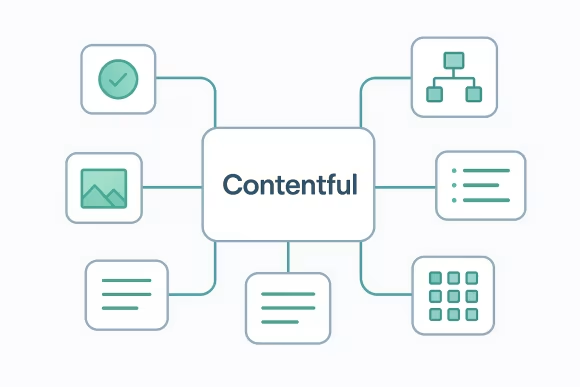
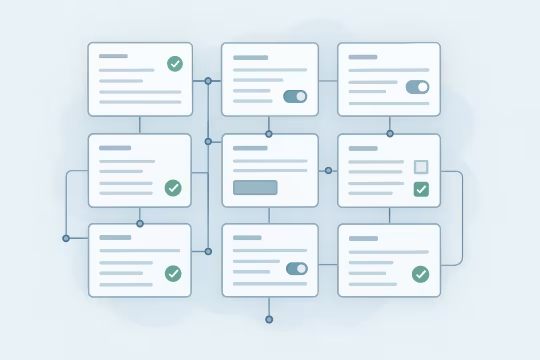
Outcome illustration for Faster Marketing & Corporate Releases[01]

Faster Marketing & Corporate Releases

Reusable components and documented UI variants enabled teams to ship new pages and campaign updates with less bespoke front-end work. PathToProject augmented the in-house team to accelerate implementation and keep delivery moving across competing priorities. This improved throughput while maintaining consistent patterns across the site.

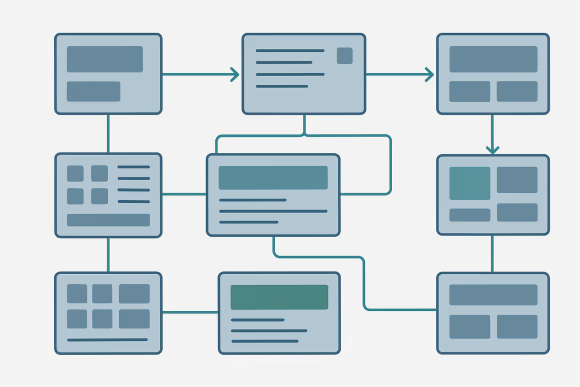
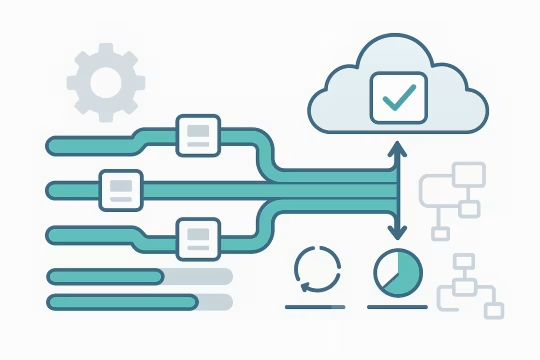
Outcome illustration for Consistent UI Across Content-Heavy Pages[02]

Consistent UI Across Content-Heavy Pages

Storybook served as the source of truth for components, states, and variants, reducing UI drift across repositories and teams. Shared patterns improved review quality and made it easier to validate changes before release. This lowered the risk of inconsistent user experiences as the platform evolved.

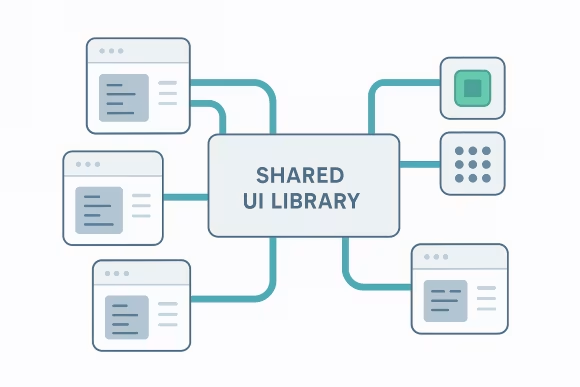
Outcome illustration for Reduced Engineering Bottlenecks[03]

Reduced Engineering Bottlenecks

Additional front-end capacity reduced delivery pressure on the internal team and helped maintain a predictable release cadence. Work was structured around reusable building blocks, which minimized repeated implementation effort. This allowed the team to focus more time on higher-value platform improvements and roadmap items.

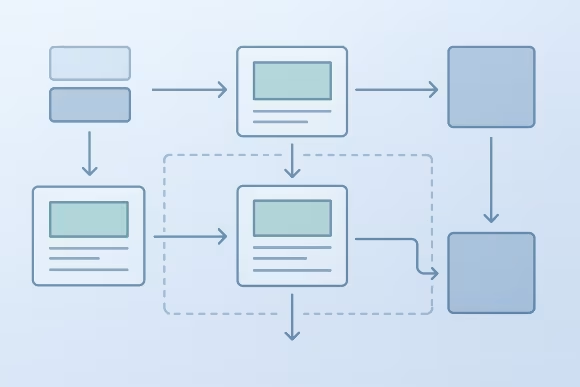
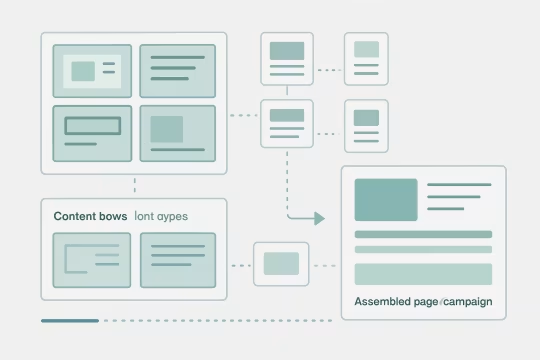
Outcome illustration for Scalable Editorial Operations in Contentful[04]

Scalable Editorial Operations in Contentful

Structured content modeling in Contentful supported repeatable page and campaign assembly without requiring constant developer involvement. Clear content types and governance-friendly structures improved reliability for ongoing publishing. This made editorial delivery more scalable as content volume and marketing needs increased.

Outcome illustration for Improved Content Discovery With ElasticSearch[05]

Improved Content Discovery With ElasticSearch

ElasticSearch Cloud integration enabled fast search and filtering across large corporate and campaign content areas. Better discovery reduced friction for users trying to find relevant information and improved navigation through dense content. It also provided a stronger foundation for future search-driven experiences.

Outcome illustration for Stronger Platform Foundation for Growth[06]

Stronger Platform Foundation for Growth

A modern Gatsby-based front-end and component-driven workflow improved maintainability and reduced long-term delivery risk. Standardized patterns and reusable components made future enhancements easier to implement and test. The platform is better positioned to support new sections, campaigns, and evolving requirements without major rework.

Used Services

The project leveraged a combination of design system and frontend engineering services to establish a consistent UI and accelerate delivery. Component Libraries and Storybook Development provided the foundation for reusable UI components and a source of truth for design variants, ensuring alignment across teams. Next. js Development supported the modern Gatsby-based frontend, enabling scalable, performance-optimized marketing updates. Additionally, Headless CMS Architecture and Content Platform Architecture facilitated structured content modeling and API-driven delivery with Contentful as the headless CMS. Search Platform Integration was critical for implementing dynamic ElasticSearch Cloud search, enhancing content discoverability and filtering capabilities. This curated mix of services ensured a scalable, maintainable platform that supports rapid marketing execution while maintaining strong UI consistency and operational predictability.

Headless Gatsby & Contentful Marketing Platforms

These case studies showcase scalable marketing and corporate delivery platforms built with Gatsby and Contentful, emphasizing component-driven workflows, rapid content updates, and integrated search capabilities. They reinforce themes of consistent UI governance, editorial scalability, and performance optimization within content-heavy digital experiences. Together, they highlight effective strategies for accelerating marketing execution while maintaining design and operational consistency.

Further reading on headless platform governance and component delivery

These articles expand on the same decisions behind this Gatsby and Contentful platform: governing shared frontend patterns across teams, keeping headless delivery reliable, and making structured content support search and editorial scale. Together they add useful context on component governance, headless operating risks, taxonomy discipline, and search architecture for content-heavy platforms.

Oleksiy (Oly) Kalinichenko

Oleksiy (Oly) Kalinichenko

CTO at PathToProject

Do you want to start a project?