Technologies

AWS Serverless Delivery
AWS CloudFront
Legacy SSI → Gulp Static Build
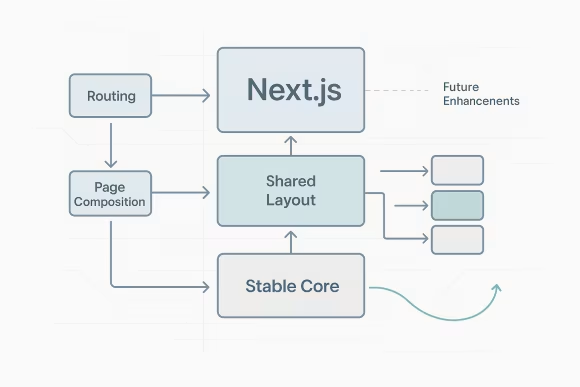
Gulp → Next.js Migration Strategy
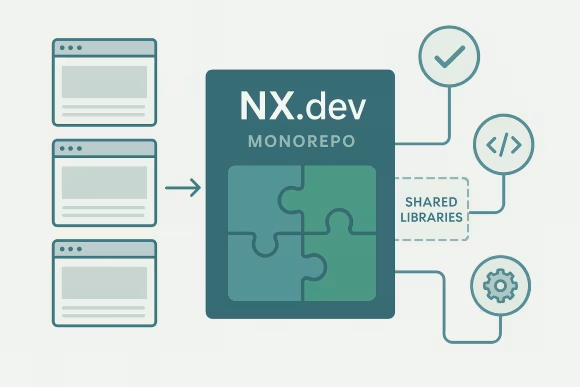
NX.dev Monorepo
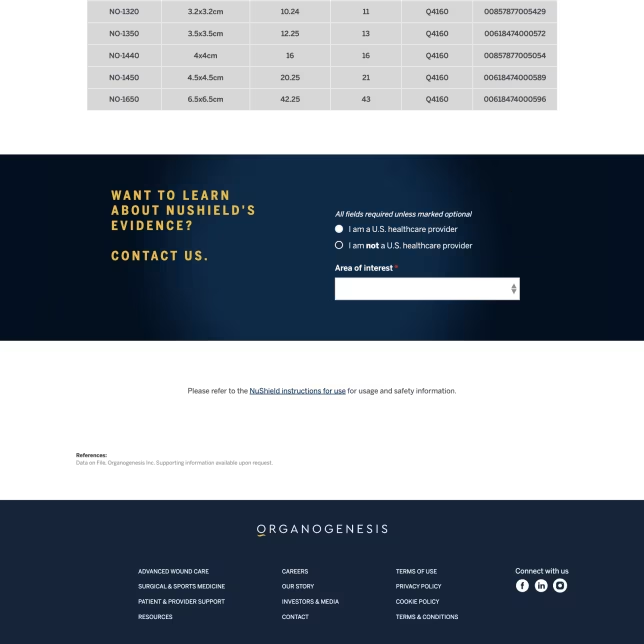
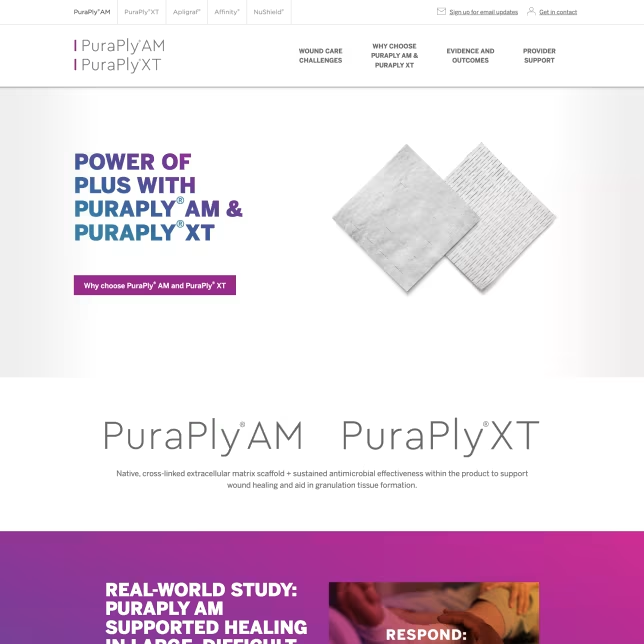
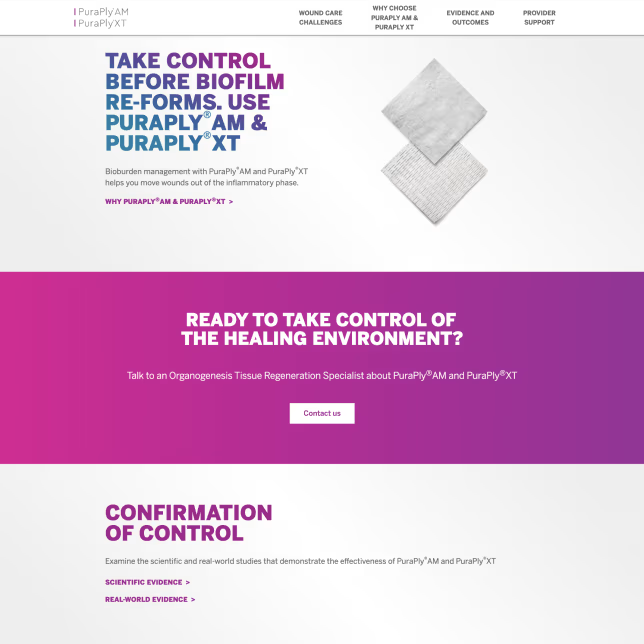
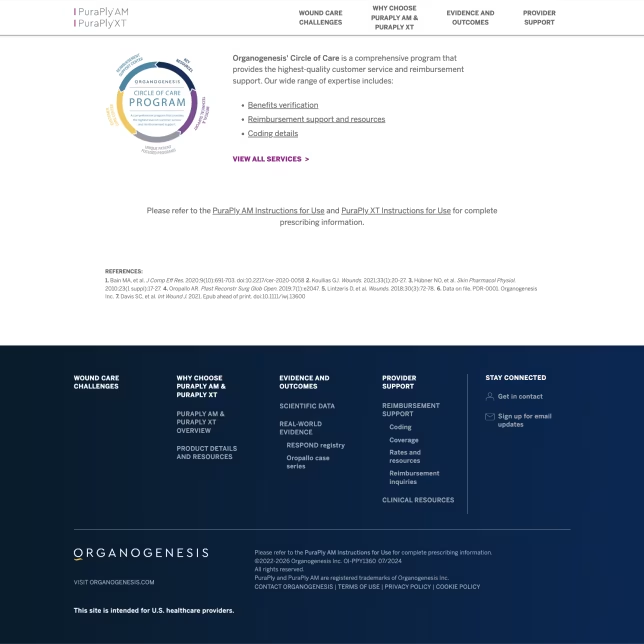
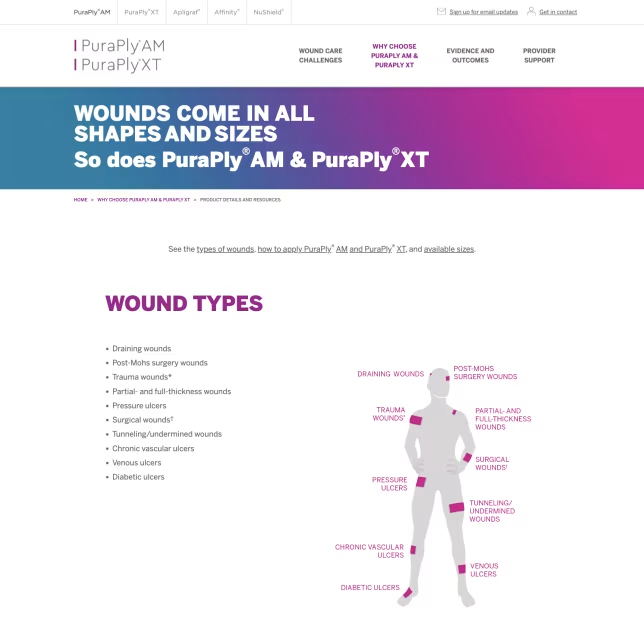
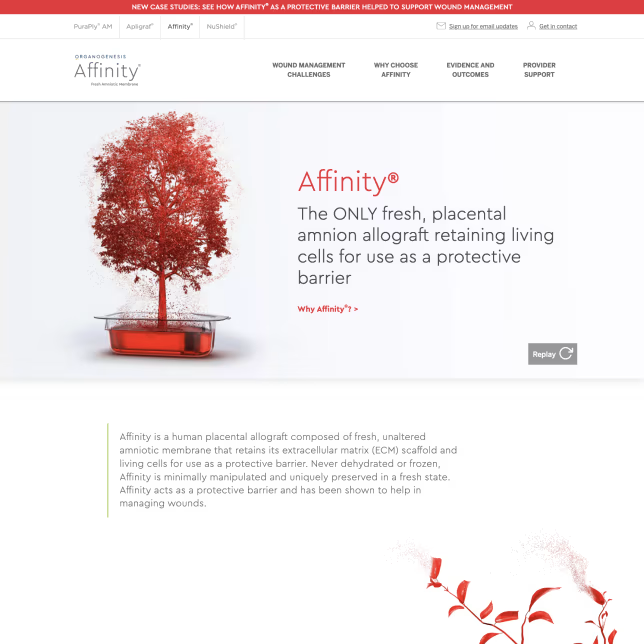
Next.js Marketing Platforms
Tailwind CSS
ShadCN UI
GA4 + GTM Tracking
Looker Studio Dashboards

Industry

Biotechnology / Healthcare / Multi-Brand Marketing

Project State

Modernization Strategy & Multi-Stage Platform Migration

Region

United States (Multi-Brand Digital Presence)

Teams Collaboration

  • Organogenesis Marketing & Content Teams
  • Internal Engineering Stakeholders
  • PathToProject Engineering & DevOps Team
  • Analytics / Tracking Stakeholders

[The Challenge]

Multiple marketing and brand sites were operating on a legacy SSI-based stack that had reached architectural and operational limits. The platform had become difficult to scale, risky to change, and expensive to maintain. Modern development practices could not be applied consistently, and delivery speed was constrained by outdated build and deployment workflows.

Because each site was maintained independently, duplicated code and unique styling approaches were accumulated over time. UI changes were required to be repeated across multiple repositories, increasing delivery cost and introducing inconsistencies between brands. Component reuse could not be implemented in a predictable way, and shared patterns were maintained through manual synchronization, which increased technical debt with every release.

Release governance and operational stability were also impacted. Changes were difficult to validate automatically, and safe delivery practices such as consistent CI/CD, controlled approvals, predictable builds, and fast rollbacks were not available across all sites. As a result, deployment risk was elevated, incident response time increased, and release confidence depended heavily on manual checks and tribal knowledge.

Platform risks were amplified by the legacy architecture. SSI-driven composition introduced long-term maintainability concerns and made modernization difficult without full refactoring. Security-related risk was increased as well, since legacy patterns often required special configuration exceptions and added complexity to hardening infrastructure policies and headers (including CSP rules).

Performance expectations were hard to meet consistently. Optimization was limited by legacy rendering patterns, fragmented asset pipelines, and the absence of standardized performance monitoring. Lighthouse scores were unstable and often remained in the 50–60+ range, while global delivery latency was affected by the non-unified static delivery approach and inefficient CDN integration.

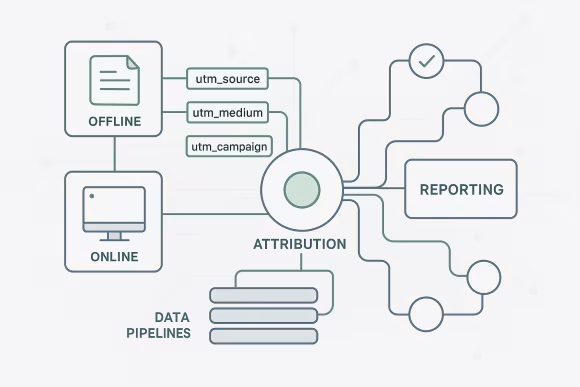
Customer data and analytics were fragmented across the platform. UTM attribution was not consistently captured across online and offline channels, video engagement was not measurable at the required level of detail, and webform conversions could not be analyzed per field or user journey step. Tracking logic differed from site to site, making unified reporting and reliable performance measurement difficult. Without centralized dashboards, product and marketing decisions were based on incomplete visibility.

A modernization strategy was required that could be executed quickly and safely without blocking business operations. The solution needed to fully remove SSI limitations, restore full AWS compatibility, consolidate development into a monorepo-based workflow, enforce consistent CI/CD governance, reduce release risk with automated validation and rollback-ready delivery, and establish a scalable foundation for performance and customer data tracking across all brands and sites.


[The Solution]

Legacy SSI Risk Fully Removed

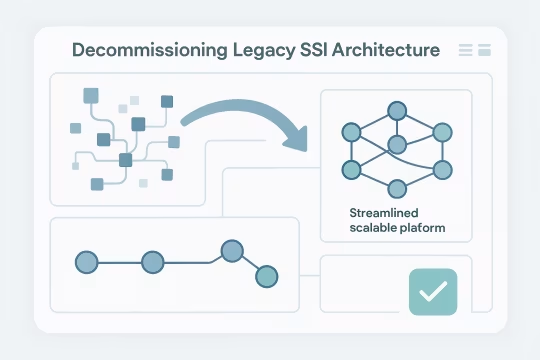
Legacy SSI implementation was fully removed, eliminating architectural risk and long-term maintenance limitations.

AWS Serverless Delivery With CloudFront

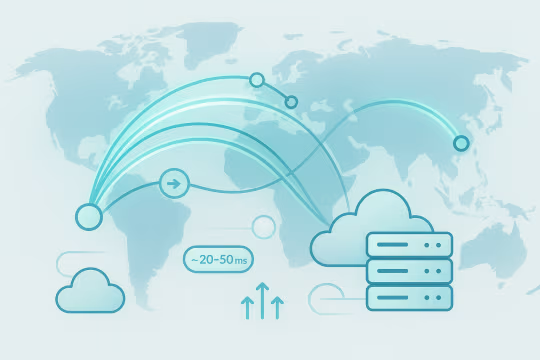
A serverless AWS delivery approach was implemented with CloudFront integration to achieve globally distributed low-latency delivery.

Quick Stabilization Through Gulp Static Migration

A fast migration was executed from legacy SSI to a Gulp-based static build system to restore maintainability and AWS compatibility.

NX.dev Monorepo For Multi-Site Delivery

A monorepo strategy was introduced to consolidate all marketing sites into a single workspace with shared libraries and unified delivery workflows.

Next.js Modernization Strategy

A second-stage strategy was executed to migrate Gulp-based sites to Next.js platforms for performance, SEO, and modern rendering capabilities.

CI/CD Modernization For Predictable Releases

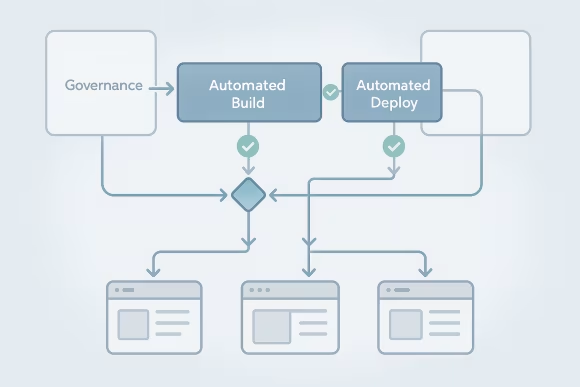
A full CI/CD modernization was implemented and aligned with NX.dev monorepo workflows to standardize builds, validations, and deployments.

CDP Layer Based On GA4 + GTM + Looker

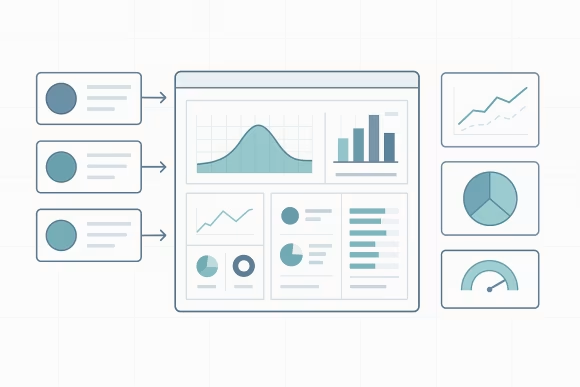
A unified customer data platform was introduced to consolidate tracking events across all sites into a global analytics dashboard.

Advanced Tracking Extensions

Tracking was extended to include UTM attribution, video activity, and detailed webform field-level analytics across key conversion points.

[Core Features]

[Implementation]

Stage 1: SSI To Gulp Migration

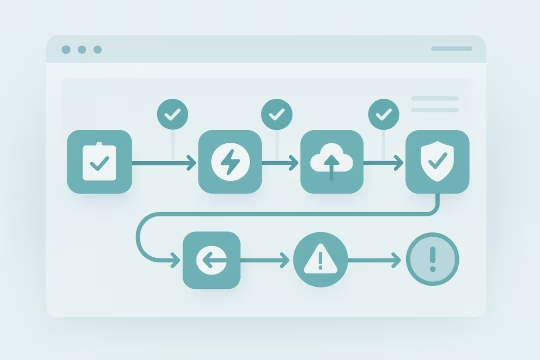
Legacy SSI sites were migrated into a Gulp static build system to quickly stabilize delivery and ensure AWS compatibility.

Stage 2: Consolidation Into NX.dev Monorepo

Sites were consolidated into a single NX.dev workspace to support shared components, common scripts, and standardized CI delivery.

Stage 3: Gulp To Next.js Platform Evolution

A modernization strategy was executed to migrate static builds into Next.js for modern rendering, performance, and SEO readiness.

CI/CD Modernization

CI/CD processes were modernized to unify builds, validations, and deployments using NX.dev monorepo standards.

Design System Adoption

Random unique styles were replaced with a Tailwind + ShadCN system to enable scalable UI delivery and consistent presentation.

CDP Tracking Layer Deployment

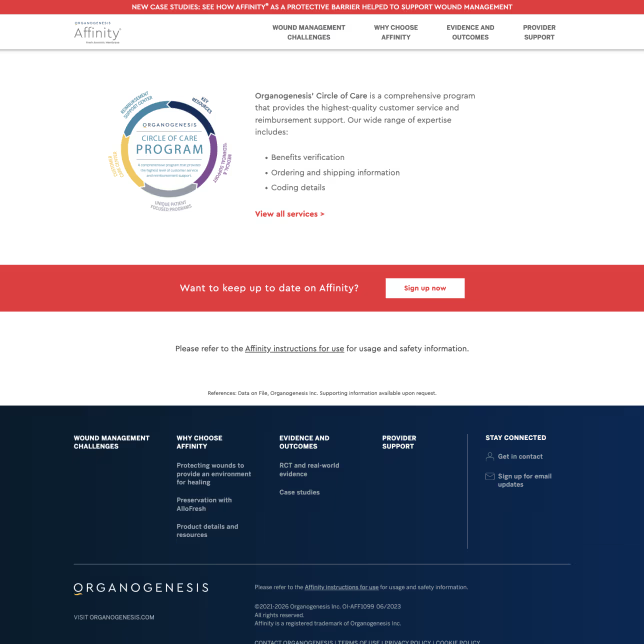
A unified tracking architecture was implemented using GA4, GTM, and Looker dashboards to systemize and centralize analytics.

[Business Outcomes]

Reduced Development Budget By ~30%

Monorepo consolidation and component reuse reduced engineering overhead and saved approximately 30% of the development budget versus separate repositories.

Time To Deliver Changes Reduced By 20–25%

Modern development workflows reduced the delivery time for marketing changes by approximately 20–25%.

Performance Modernization With Lighthouse ~90+

Lighthouse performance was improved from 50–60+ to ~90+ through modernization of rendering, delivery, and asset strategy.

Ultra-Fast Global Delivery With 20–50ms Loading

Serverless AWS delivery with CloudFront integration enabled ultra-fast page loading of approximately 20–50ms.

Legacy SSI Risks Removed

Legacy SSI risks were eliminated entirely, improving stability, maintainability, and long-term scalability.

Unified Analytics & CDP Visibility

GA4, GTM, and Looker dashboards provided a consolidated view of performance and user behavior across all marketing sites.

Enhanced Conversion Optimization Capabilities

Field-level webform tracking and video analytics enabled deeper funnel understanding and more actionable marketing insights.

[Next Projects]

Oly

Oleksiy (Oly) Kalinichenko

CTO at PathToProject

Do you want to start a project?