Integration Focus

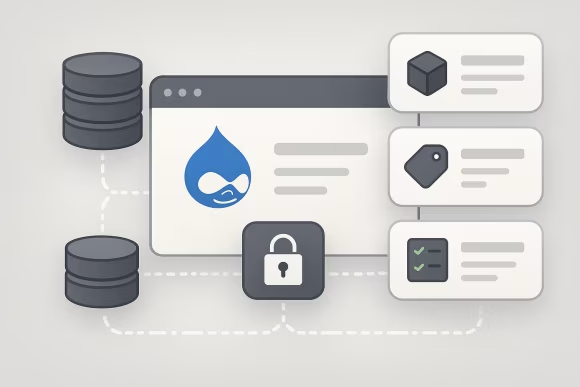
CRM & Sales platforms
Customer Data Platforms (CDP)
ERP & internal systems
Marketing automation
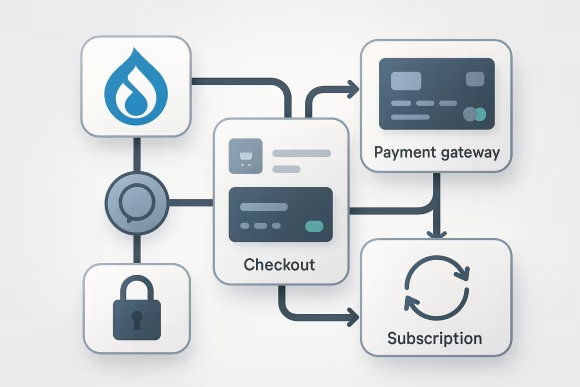
Payment gateways

Architecture Patterns

  • API-first design
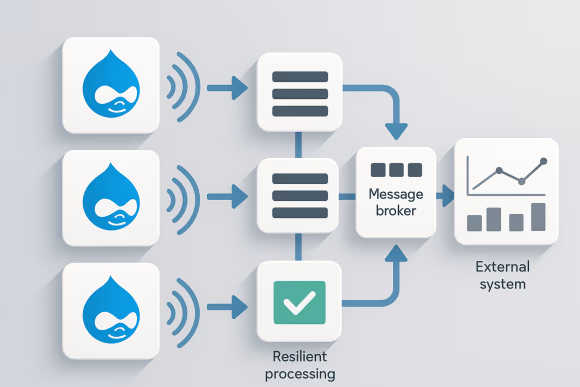
  • Event-driven integrations
  • Middleware & microservices
  • Queue-based processing

Security Standards

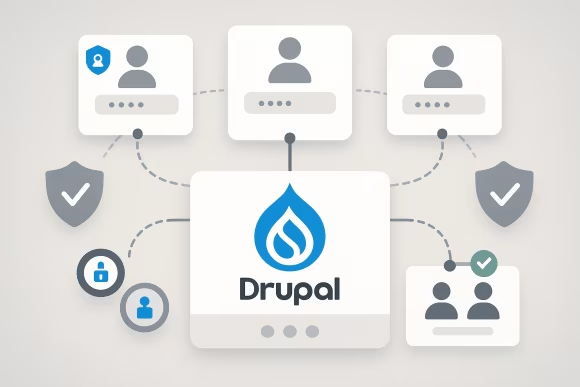
  • OAuth2 / SSO
  • Token-based authentication
  • Encrypted data transport (TLS)
  • Role-based access control

Delivery Models

  • Real-time synchronization
  • Scheduled data sync
  • Webhooks
  • Custom connectors

Disconnected Systems Slow Down Growth

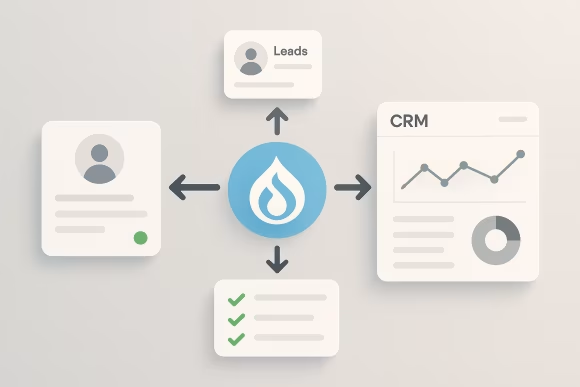
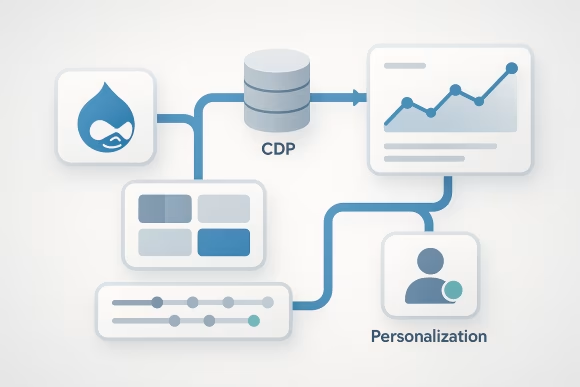
Many organizations struggle with fragmented digital ecosystems: marketing tools don’t sync with CRM, website data doesn’t flow into CDP, and internal systems operate in silos. This leads to manual work, inconsistent reporting, data duplication, and poor customer experience. Without a clear integration strategy, Drupal becomes just a content layer instead of a fully connected digital platform that drives automation and business value.

Our Drupal Integration Approach

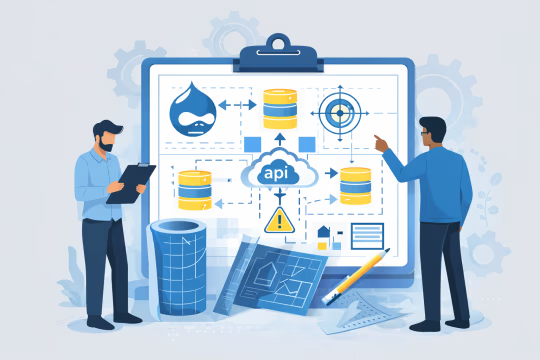
Integration Discovery & System Mapping

We begin by identifying all systems involved in the ecosystem, mapping data entities, ownership boundaries, and existing integration points. This structured discovery phase clarifies business objectives, technical constraints, security requirements, and performance expectations before implementation begins.

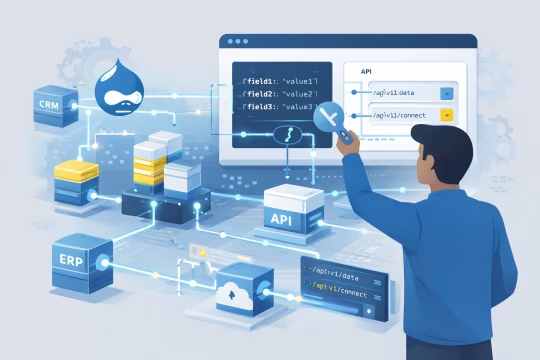
Data Modeling & Contract Definition

We define clear data contracts, payload structures, and synchronization rules between Drupal and external systems. API schemas, validation logic, and field mappings are documented to ensure predictable data exchange and long-term maintainability.

Architecture & Security Design

Integration architecture is designed with scalability, resilience, and governance in mind. We select appropriate patterns such as synchronous APIs, asynchronous queues, or middleware layers, while enforcing authentication, encryption, and access controls.

Implementation & Validation

Connectors, webhooks, and middleware components are implemented with structured logging and monitoring. Functional testing, edge-case validation, and performance verification ensure reliable behavior across real-world usage scenarios.

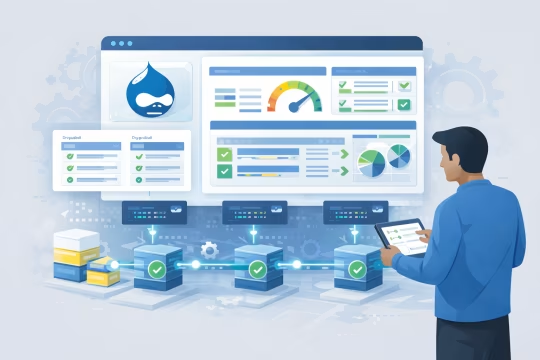
Monitoring & Observability

We establish monitoring dashboards, alerting rules, and health-check mechanisms to detect failures or data drift. Integration performance, latency, and error rates are tracked to maintain operational transparency and rapid incident response.

Governance & Continuous Optimization

Post-launch, we refine synchronization strategies, improve performance, and adapt integrations as business requirements evolve. Clear documentation and version-controlled integration contracts ensure long-term stability and controlled expansion.

Core Integration Capabilities

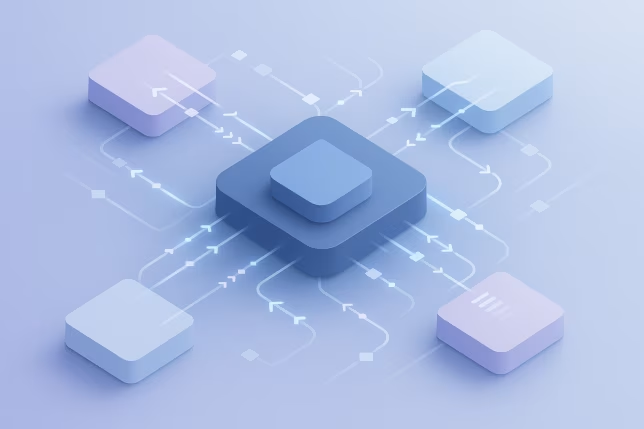
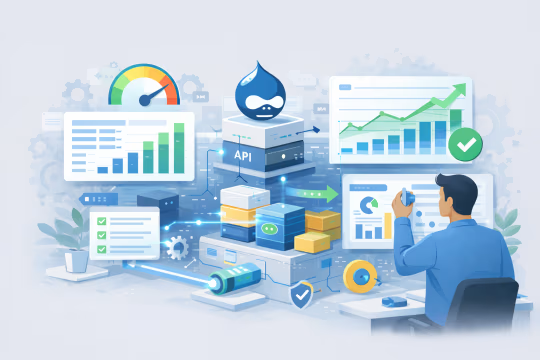
Drupal Integrations establishes a structured, API-driven foundation for connecting Drupal with enterprise systems across marketing, commerce, identity, and back-office operations. We design secure, bi-directional data flows that preserve integrity, enforce governance, and maintain performance under scale. Event-driven architectures and middleware layers decouple systems to reduce operational risk and improve resilience. Identity federation, payment processing, CRM synchronization, and analytics pipelines are implemented with strict access control and compliance awareness. The result is a connected digital ecosystem where Drupal operates as a reliable orchestration layer rather than an isolated CMS.

What We Deliver
  • Enterprise-grade API integrations
  • Middleware and microservices architecture
  • Secure authentication & authorization flows
  • Data transformation & validation logic
  • Logging, monitoring & alerting
  • Documentation & long-term maintainability
Who This Is For
  • Enterprises with multiple internal systems
  • Organizations implementing CRM/CDP strategies
  • E-commerce platforms requiring ERP sync
  • Marketing teams needing automation & data consistency
  • CTOs modernizing legacy integrations
Technology Ecosystem
  • Drupal 9/10/11/12
  • REST / JSON:API / GraphQL
  • Salesforce / HubSpot / Dynamics
  • Stripe / PayPal / Adyen
  • Azure AD / Okta / OAuth2
  • AWS / Docker / CI/CD pipelines

How We Deliver

Our integration delivery model combines structured architecture planning, disciplined implementation, and controlled deployment practices. We align business objectives with technical execution to ensure secure data exchange, operational reliability, and long-term scalability. Each phase is designed to minimize risk, accelerate time-to-value, and provide measurable integration stability.

Delivery card for Assessment & Architecture Blueprint[01]

Assessment & Architecture Blueprint

Comprehensive integration discovery including system analysis, data flow mapping, API capability review, and technical constraints evaluation. We produce a structured architecture blueprint with integration patterns, security considerations, and documentation that aligns business requirements with scalable technical design.

Delivery card for Custom Integration Development[02]

Custom Integration Development

Design and implementation of robust APIs, middleware connectors, and custom synchronization logic. We build secure, maintainable integrations using best practices for data transformation, authentication, and error handling to ensure reliable communication between Drupal and external systems.

Delivery card for Testing & Validation[03]

Testing & Validation

End-to-end validation of integration workflows through automated test pipelines and structured manual verification. We test data accuracy, edge cases, performance thresholds, and failure scenarios to guarantee stability, reliability, and predictable system behavior.

Delivery card for Deployment & CI/CD[04]

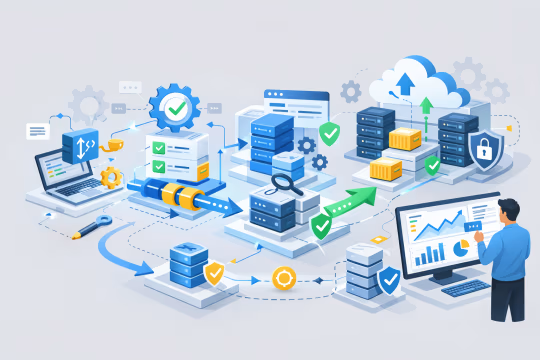
Deployment & CI/CD

Controlled production releases with environment isolation, CI/CD automation, and rollback safeguards. Our deployment process ensures secure configuration, version control traceability, and minimal downtime during integration rollout.

Delivery card for Monitoring & Logging Setup[05]

Monitoring & Logging Setup

Implementation of monitoring dashboards, structured logging, and proactive alert systems. We configure health checks, failure notifications, and operational metrics to provide real-time visibility into integration performance and system reliability.

Delivery card for Ongoing Optimization[06]

Ongoing Optimization

Continuous refinement of integration performance, scalability, and reliability. We analyze system metrics, optimize data pipelines, improve throughput, and adapt integrations to evolving business requirements and platform changes.

Business Impact

Well-architected integrations eliminate data silos and create a consistent, reliable flow of information across systems. Automated synchronization reduces manual effort, lowers error rates, and improves operational efficiency. Real-time data exchange enhances customer experience by ensuring accurate content, pricing, account information, and personalization signals. Executive teams gain clearer reporting and consolidated insights across CRM, ERP, CDP, and analytics platforms. The integration framework also supports scalable growth, enabling new tools and services to be added without destabilizing the core platform.

Unified Customer Data

Eliminate fragmented data silos and establish a consistent single source of truth across CRM, CDP, ERP, and Drupal.

Operational Efficiency

Automated synchronization reduces manual processes, minimizes human error, and accelerates internal workflows.

Improved Customer Experience

Real-time data exchange ensures accurate content, pricing, and personalization across digital touchpoints.

Scalable Architecture

Integration layers are designed to accommodate new systems, regions, and business models without reengineering the platform.

Better Reporting & Insights

Consolidated analytics pipelines enable executive-level reporting, attribution clarity, and performance visibility.

Reduced Integration Risk

Structured APIs, authentication controls, and monitoring mechanisms lower dependency failures and operational exposure.

Related Projects

What Clients Say

Ready to Connect Your Drupal Platform?

Let’s design a secure, scalable integration architecture that connects Drupal with your enterprise systems and unlocks real business value.

Oleksiy (Oly) Kalinichenko

Oleksiy (Oly) Kalinichenko

CTO at PathToProject

Do you want to start a project?