Technologies

Drupal Site Factory
Drupal 7 → 8
Drupal 8 → 10
Acquia Site Factory Hosting
Enterprise Integrations (40+)
Advanced Caching Strategy
Configuration Management Extensions

Industry

Environmental Services / Sustainability / Enterprise Operations

Project State

Modernization Strategy & Delivery With Continuous Platform Evolution

Region

Global (Multi-Region / Multi-Business Sites)

Teams Collaboration

  • Veolia In-House Engineering Team
  • Platform Governance & Operations Stakeholders
  • Regional Editorial Teams Across 200+ Sites
  • Integration Owners / External Vendors

The Challenge

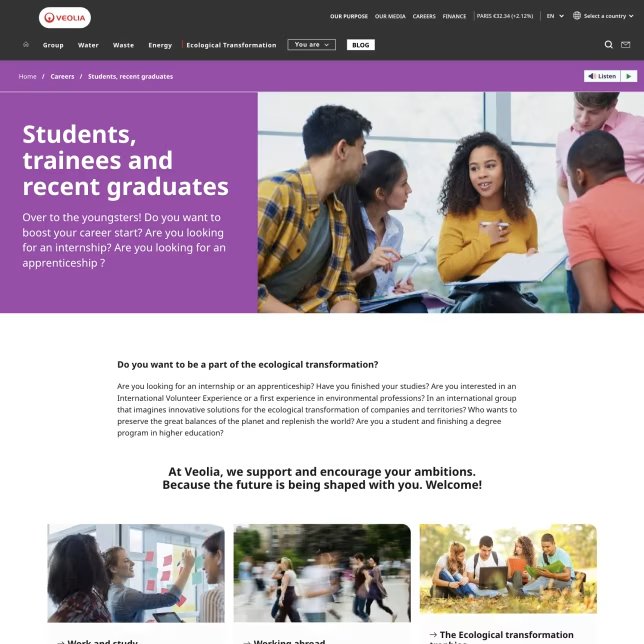
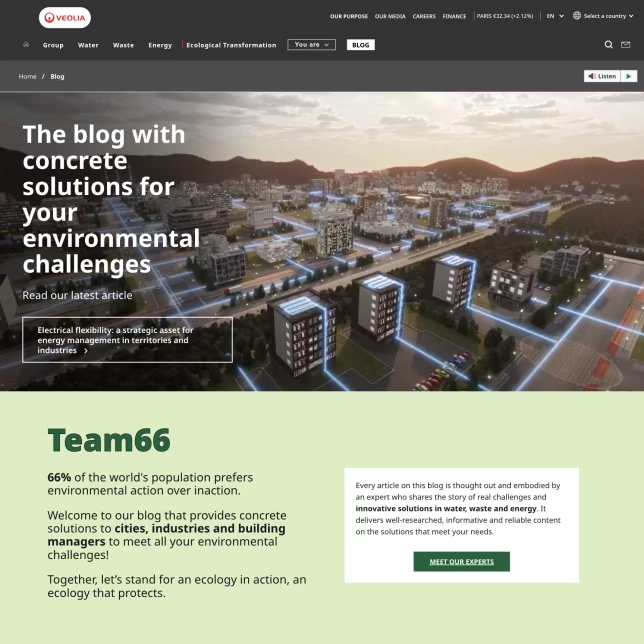
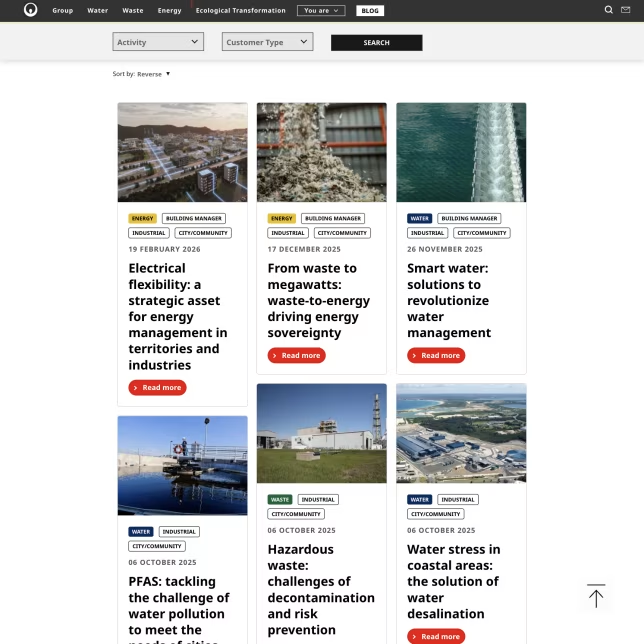
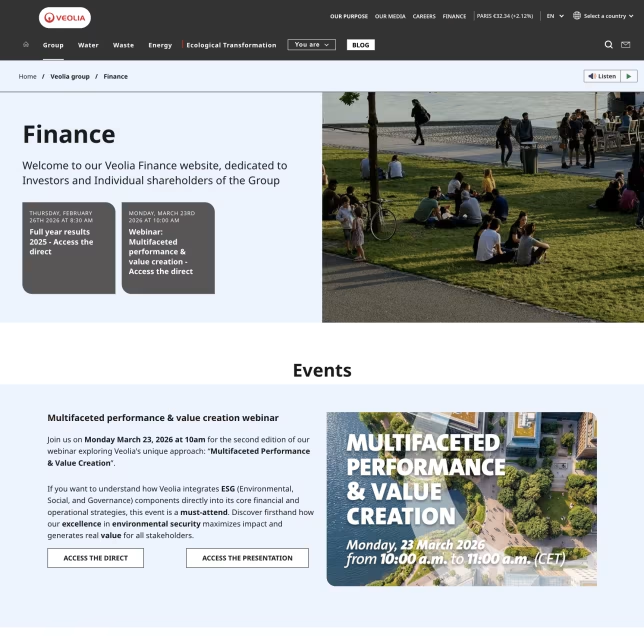
Drupal Site Factory was running a large multisite ecosystem with more than 200 sites, each with regional requirements and content workflows—an Acquia Site Factory 200+ site platform case study scenario with enterprise-scale dependencies. The platform was tightly connected to enterprise systems through 40+ integrations for job posts, operational feeds, business data synchronization, and regional services — creating strong dependencies across teams and systems.

Due to Drupal 7 end-of-life, modernization was required while preserving platform stability and the ability to deploy changes across hundreds of sites without disruption. Classic configuration deployment methods were risky at this scale, because full configuration overwrite would have caused regression risks and unwanted side effects on already released sites.

Performance challenges were also present due to expensive data fetching and integration-heavy pages. A new caching and delivery strategy was required to reduce loading times while keeping content accurate and keeping integrations stable.

The Solution

Site Factory Modernization Strategy

A governed modernization strategy was defined to migrate the full Drupal Site Factory estate from Drupal 7 to Drupal 8, with a clear evolution path toward Drupal 10. The approach prioritized compatibility with existing multisite patterns and enterprise dependencies to avoid breaking regional operations. Phasing and sequencing were built in from the start so upgrades could proceed predictably without forcing a “big bang” cutover.

Enterprise Multisite Governance & Rollouts

Delivery was structured to support 200+ regional and business-specific sites with consistent governance and repeatable release practices. Rollouts were sequenced to reduce regression risk, ensuring changes could be introduced incrementally and validated across representative sites before wider adoption. This kept the platform continuously releasable while protecting local variations and workflows.

Integration Stability Across 40+ Systems

The modernization program maintained and stabilized 40+ third-party integrations used for business workflows, data synchronization, and regional services. Integration touchpoints were assessed and adapted as the platform moved between major Drupal versions to preserve contracts, payloads, and operational expectations. This ensured business continuity while the underlying platform architecture evolved.

Performance Refactoring for Integration-Heavy Pages

Key pages impacted by expensive data fetching were refactored to reduce repeated calls and unnecessary processing. The work focused on the real bottlenecks created by integration-driven rendering and dynamic data assembly. This improved responsiveness without sacrificing correctness of time-sensitive or externally sourced content.

Custom Caching Strategy & Delivery Controls

Tailored caching strategies were introduced to balance speed with accuracy in a highly integrated environment. Cache behavior was designed around the platform’s data sources and page composition patterns, reducing load while avoiding stale or inconsistent outputs. This provided a controlled performance layer that could be tuned per use case as sites and integrations evolved.

Extended Configuration Governance for Multisite

Configuration management was redesigned to fit enterprise multisite realities where each site can have legitimate divergence. Governance rules and deployment practices were introduced to prevent unintended side effects when promoting configuration across many sites. This reduced operational risk and made configuration changes auditable and easier to reason about during releases.

Selective Configuration Merge Deployments

A granular deployment mechanism was implemented to merge targeted configuration fragments into existing site configurations rather than overwriting everything. This enabled safe updates to shared capabilities while preserving site-specific settings already in production. The result was more predictable releases and fewer regressions caused by classical full configuration imports at multisite scale.

Core Features

Veolia’s platform modernization focused on keeping a 200+ site Drupal Site Factory estate continuously releasable while upgrading from Drupal 7 to Drupal 8 and evolving toward Drupal 10—reflecting a Drupal 7 to Drupal 10 multisite migration project delivered through phased evolution. Core capabilities centered on enterprise Drupal multisite governance, safe configuration deployment, and stability across 40+ enterprise integrations. Performance improvements were delivered through targeted refactors and caching strategies designed for integration-heavy pages. The result was a more predictable operating model for regional teams without sacrificing enterprise controls.

Implementation

Modernization was delivered as a governed, low-risk upgrade program for an enterprise Drupal multisite estate on Site Factory spanning 200+ multisites and 40+ integrations. The approach combined phased platform upgrades (Drupal 7→8, then evolution toward Drupal 10) with tight collaboration alongside Veolia’s in-house engineers to keep decisions and delivery aligned. Performance and operational stability were treated as first-class deliverables, with targeted refactors and a safer configuration deployment model designed for multisite scale. Rollouts were sequenced to protect regional sites from regressions while keeping the platform continuously releasable.

Modernization Planning & Upgrade Path

A structured upgrade path was defined to move the full Site Factory ecosystem from Drupal 7 to Drupal 8, with a forward plan to evolve the platform further through Drupal 10. The work focused on identifying high-risk dependencies early—especially multisite behaviors and integration touchpoints—and designing an approach that minimized breaking changes. This planning phase mattered because it set predictable milestones and reduced disruption across hundreds of independently operated sites.

Multisite Architecture & Site Factory Governance

Implementation accounted for Site Factory constraints, shared code ownership, and the need to support many regional variants without fragmenting the platform. Governance patterns were applied to keep shared components consistent while allowing controlled local differences where required. This ensured the multisite estate could be upgraded and maintained as a single platform rather than 200+ separate projects.

Enterprise Delivery Collaboration Model

Delivery was executed in close partnership with Veolia’s internal development team, operating as an extension of engineering capacity rather than a separate vendor stream. Architectural decisions, implementation tasks, and release coordination were handled collaboratively to keep throughput high and reduce handoff friction. This approach mattered because it preserved institutional knowledge and enabled faster, safer decision-making in a high-dependency environment.

Integration Stability & Modernization Support

The platform’s 40+ third-party integrations were treated as critical-path dependencies during the upgrade, with careful attention to data synchronization and workflow continuity. Integration-heavy pages and services were reviewed to reduce coupling and to ensure behavior remained stable across Drupal version changes. This work mattered because integration regressions would have impacted business operations well beyond the CMS layer.

Performance Refactoring & Caching Strategy

Expensive data-fetching flows were refactored to reduce repeated computation and to better align with cacheable delivery patterns. Custom caching strategies were introduced to improve response times while maintaining correctness for integration-driven content. This mattered because performance issues were rooted in real runtime behavior, not just infrastructure, and required code-level changes to be sustainable.

Granular Configuration Management & Safe Rollouts

A new configuration governance approach was implemented to avoid full configuration overwrites across already released sites. Selective configuration merging enabled targeted updates, reducing the risk of unintended side effects in regional environments. This mattered because configuration drift is unavoidable at multisite scale, and safe, granular deployment is essential for predictable releases.

Testimonials

As Dev Team Lead on my project for 10 months, Oleksiy (PathToProject) demonstrated excellent technical skills and the ability to handle complex Drupal projects. His full-stack expertise is highly valuable.

Photo: Laurent Poinsignon

Laurent Poinsignon

Domain Delivery Manager Web at TotalEnergies

Business Outcomes

Veolia’s enterprise Drupal Site Factory ecosystem was modernized with a delivery approach designed for high scale, high integration density, and low tolerance for disruption—an enterprise Drupal multisite governance case study in practice across 200+ sites. The upgrade path from Drupal 7 to 8 and onward to Drupal 10 improved platform longevity while maintaining stability across 200+ regional sites. Performance and governance enhancements reduced operational risk in day-to-day releases, especially where configuration and third-party integrations could otherwise cause regressions. The result was a more predictable, maintainable multisite platform that could evolve without slowing regional teams or business workflows.

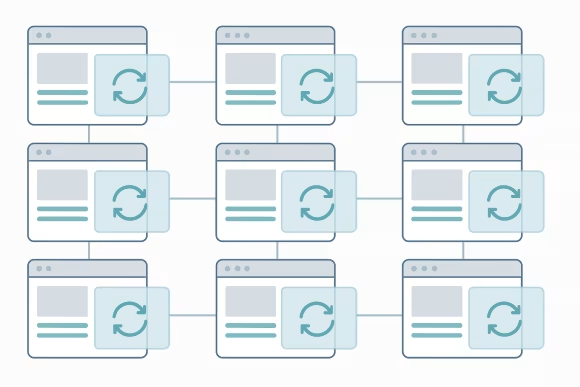
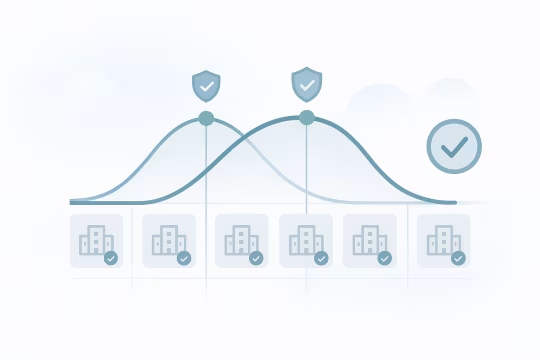
Outcome illustration for Modernization Delivered Across 200+ Multisites[01]

Modernization Delivered Across 200+ Multisites

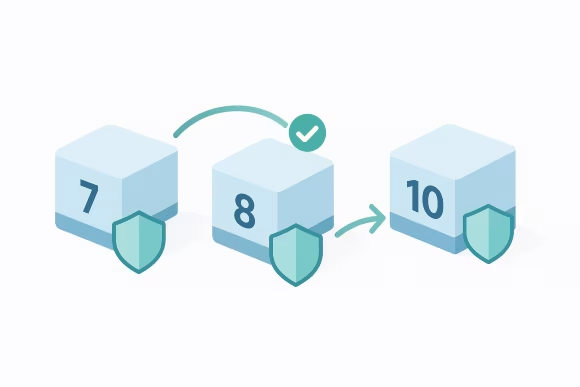
A structured upgrade strategy enabled the full Site Factory ecosystem to move off Drupal 7 end-of-life while preserving regional site autonomy. The approach supported consistent rollout planning across hundreds of sites, reducing disruption risk during platform-wide changes. This created a repeatable path for future upgrades and platform evolution.

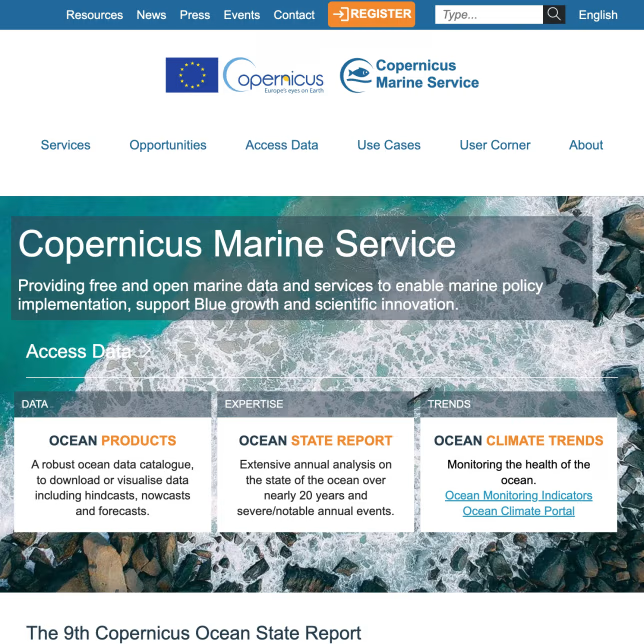
Outcome illustration for Future-Ready Foundation Through Drupal 10 Evolution[02]

Future-Ready Foundation Through Drupal 10 Evolution

The platform was not only upgraded but positioned for continued evolution through Drupal 10 with improved architecture and delivery practices. This reduced long-term technical debt and avoided repeated “big bang” migrations. Teams gained a clearer, safer path for adopting new Drupal capabilities over time.

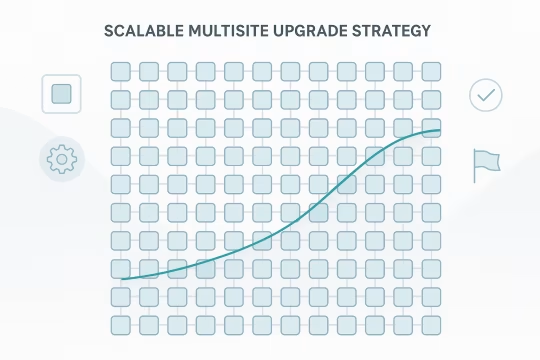
Outcome illustration for Performance Gains via Caching and Data-Fetch Refactoring[03]

Performance Gains via Caching and Data-Fetch Refactoring

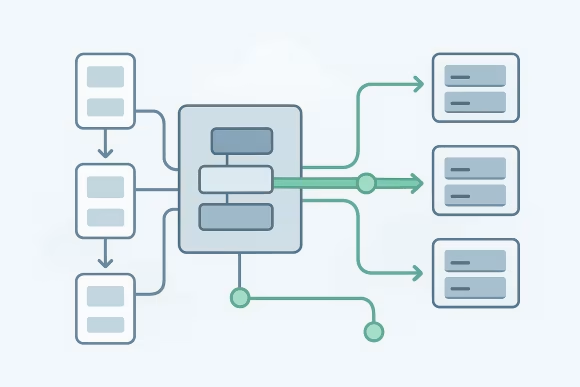
Custom caching strategies and refactoring of expensive data-fetching flows improved page delivery on integration-heavy pages. This reduced load pressure on backend systems and improved responsiveness for end users across the multisite estate. Performance work was implemented in a way that preserved data accuracy and integration stability.

Outcome illustration for Stable Operations With 40+ Enterprise Integrations[04]

Stable Operations With 40+ Enterprise Integrations

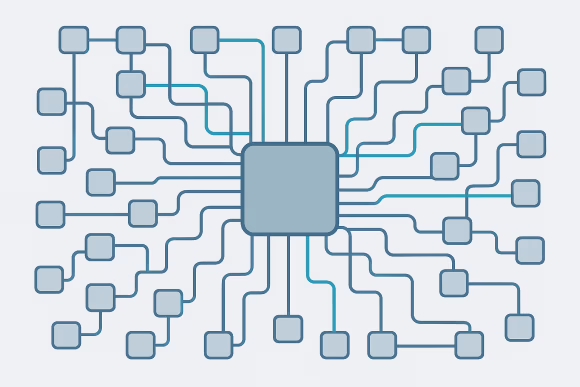
Modernization was executed while maintaining continuity for more than 40 third-party integrations supporting workflows, synchronization, and regional operations. Integration behavior was kept predictable during upgrades to avoid breaking dependent business processes. This protected operational reliability while the underlying platform changed.

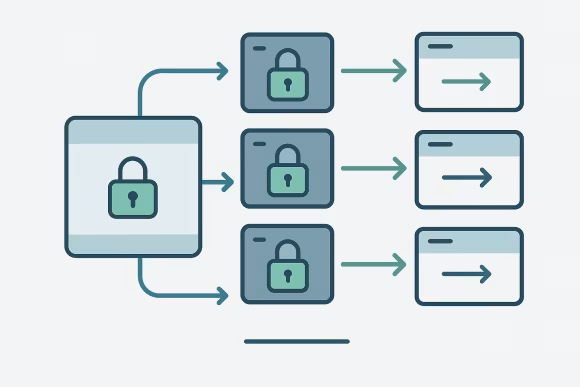
Outcome illustration for Safer Releases Through Granular Configuration Governance[05]

Safer Releases Through Granular Configuration Governance

A new configuration management approach enabled selective configuration merging instead of full overwrites. This reduced regression risk on already-released sites and allowed targeted updates without unintended side effects. Governance improvements made configuration changes more auditable and controllable at enterprise scale.

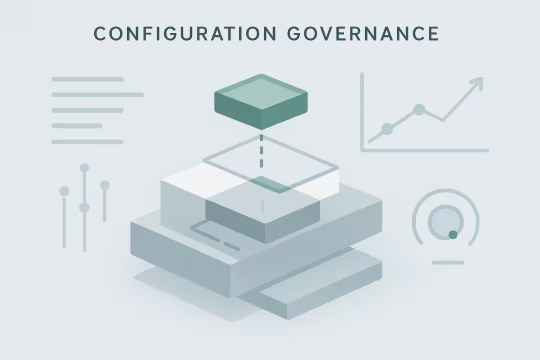
Outcome illustration for Lower Delivery Risk Through Predictable Rollout Practices[06]

Lower Delivery Risk Through Predictable Rollout Practices

The modernization program emphasized strict governance, stability, and controlled rollout strategies suited to a large multisite environment. This reduced the likelihood of platform-wide incidents caused by configuration drift or integration dependencies. Release planning became more reliable for both central and regional stakeholders.

Used Services

The project leveraged a comprehensive suite of Drupal-focused services to modernize and scale Veolia's extensive multisite platform. Key services included Drupal Platform Modernization for upgrading and stabilizing the Drupal Site Factory ecosystem, Drupal Multisite architecture to manage over 200 regional sites with centralized governance, and Drupal Performance Optimization to enhance system responsiveness through advanced caching strategies. Additionally, Drupal Development enabled custom module engineering and integration support, while Drupal Configuration Management extensions facilitated granular configuration updates, ensuring operational stability across the enterprise platform. These services collectively supported a high-risk modernization initiative with strict governance, integration stability, and scalable delivery.

Enterprise Drupal Multisite Modernization and Governance

These case studies highlight advanced Drupal platform modernization, multisite governance, and integration stability in enterprise and environmental contexts. They reinforce themes of scalable content operations, complex system integrations, and performance optimization relevant to large-scale Drupal ecosystems. Together, they provide insights into managing risk and delivering predictable rollouts in high-dependency environments.

Further reading on enterprise Drupal modernization

These articles expand on the migration planning, multisite governance, and release controls behind large Drupal platform programs. They are especially relevant if you want to understand how teams keep enterprise upgrades stable while managing configuration drift, local delivery needs, and cutover risk.

Oleksiy (Oly) Kalinichenko

Oleksiy (Oly) Kalinichenko

CTO at PathToProject

Do you want to start a project?