Support Model

Contractual SLA
Defined response times
Incident-driven support

Primary Focus

  • Availability
  • Stability
  • Risk mitigation

Coverage

  • Business hours or 24/7
  • Severity-based response
  • Escalation paths

Best Fit For

  • Enterprise Drupal platforms
  • Regulated environments
  • Platforms with uptime commitments

The Problem

Many organizations rely on informal or best-effort Drupal support models that lack guarantees around response times or accountability.

When incidents occur, this often results in delayed reactions, unclear responsibilities, and operational risk—especially for platforms supporting critical business functions.

SLA-based Drupal Support addresses this gap by formalizing expectations, defining responsibilities, and ensuring timely response when it matters most.

Our SLA-Driven Approach

Defined Service Levels

Clear response and resolution targets based on incident severity.

Severity-Based Prioritization

Incidents are classified to ensure critical issues receive immediate attention.

Escalation Paths

Predefined escalation ensures issues never stall.

Availability Commitments

Support coverage aligned with your operational needs.

Operational Transparency

Clear reporting against SLA metrics.

Shared Accountability

Responsibilities are clearly defined on both sides.

SLA Coverage Includes

SLA-based Drupal Support provides a structured, contractually defined framework for maintaining platform reliability under agreed response and resolution targets. The service combines continuous monitoring, prioritized incident management, senior-level escalation paths, and disciplined security handling within measurable governance standards. Root cause analysis and transparent SLA reporting ensure that every incident contributes to long-term system resilience rather than temporary stabilization. This approach establishes predictable operational control aligned with enterprise uptime, compliance, and accountability requirements.

Capabilities
  • Drupal incident management
  • Severity-based response handling
  • Enterprise Drupal platforms
  • Multisite & multilingual setups
  • Headless & hybrid Drupal
  • Security & compliance support
Who This Is For
  • Enterprises with uptime commitments
  • Organizations with procurement SLAs
  • Regulated industries
  • Platforms with high business impact
Technology Scope
  • Drupal 5–6 (Legacy systems)
  • Drupal 8–11+ (Modern systems)
  • PHP & Symfony
  • Multisite Drupal
  • Headless Drupal APIs
  • Cloud & on-prem infrastructure
  • CI/CD & monitoring tools

How SLA Support Works

Our SLA-based Drupal Support delivery model is designed for organizations that require predictable response times, structured escalation paths, and measurable operational accountability. Every incident follows a clearly defined lifecycle — from intake and severity classification to resolution, verification, and post-incident review. We align response times and coverage with your business criticality, ensuring that high-impact issues receive immediate attention from senior Drupal engineers. The process is transparent, documented, and performance-driven — providing both technical stability and executive-level confidence in your platform’s reliability.

Delivery card for SLA Definition[01]

SLA Definition

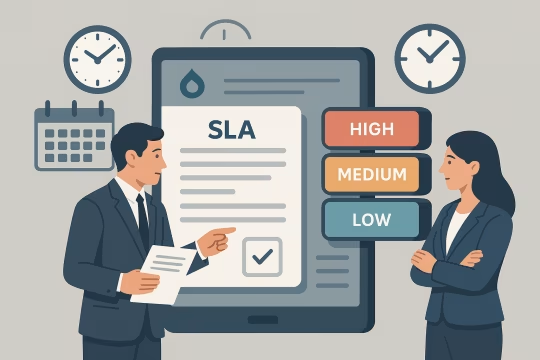
Response times, coverage windows, and service boundaries are clearly defined and contractually agreed. We align SLA tiers (P1–P4) with your business criticality, operational hours, and risk profile to ensure predictable and measurable support performance.

Delivery card for Incident Intake[02]

Incident Intake

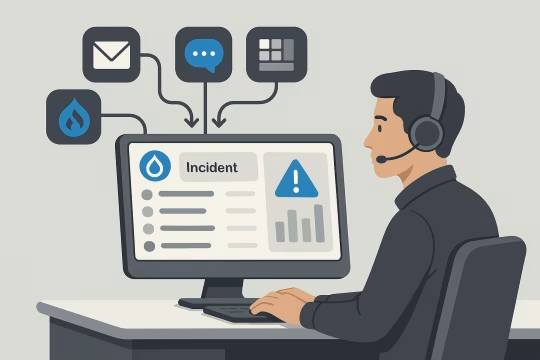
Clear and structured reporting channels are established, including dedicated email, ticketing system, or direct escalation paths. Every request is logged, timestamped, and acknowledged according to the defined SLA tier.

Delivery card for Severity Assessment[03]

Severity Assessment

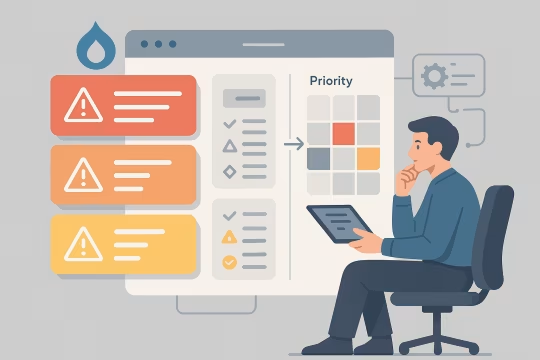
Incidents are immediately classified based on business impact, affected users, and technical severity. This structured triage ensures that critical outages receive immediate attention while lower-priority issues are handled systematically.

Delivery card for Engineer Assignment[04]

Engineer Assignment

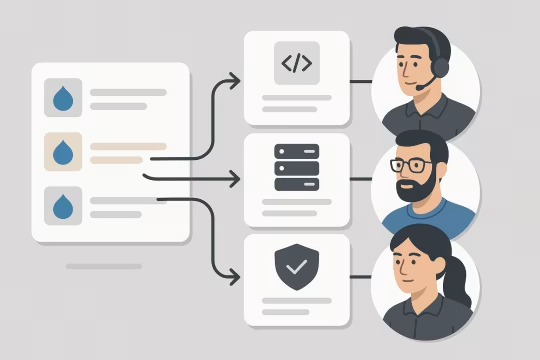
Issues are routed to the appropriate Drupal specialists based on expertise (backend, DevOps, security, or integrations). Senior engineers are involved in high-severity incidents to ensure fast and technically sound resolution.

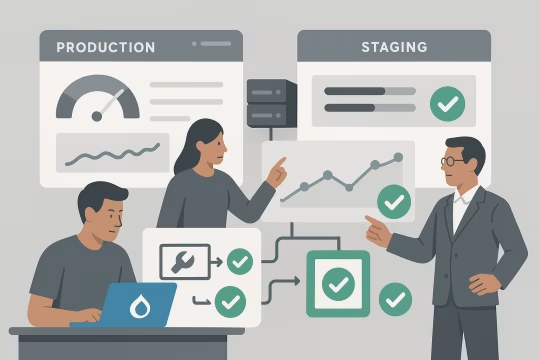
Delivery card for Resolution & Verification[05]

Resolution & Verification

Controlled remediation actions are implemented in production or staging environments. Fixes are tested, validated, and confirmed to ensure stability, security, and full restoration of service.

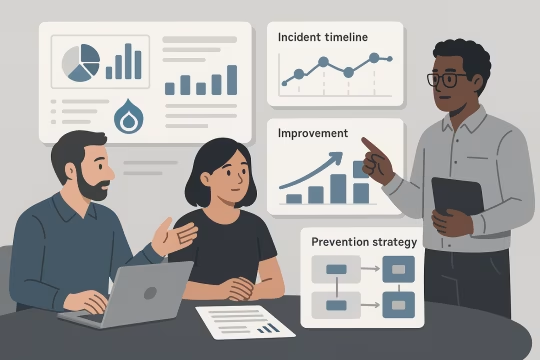
Delivery card for Post-Incident Review[06]

Post-Incident Review

After resolution, we provide structured reporting including root cause analysis, impact assessment, and preventive recommendations. This continuous improvement process reduces the likelihood of recurring incidents.

Business Impact

Defined service levels reduce operational uncertainty by guaranteeing response timelines aligned with business criticality. Continuous monitoring and structured escalation minimize downtime exposure and limit the financial and reputational impact of production incidents. Formal SLAs support audit readiness and governance reporting, providing leadership with measurable oversight of support performance. Clear accountability during high-pressure situations improves coordination between technical and executive stakeholders. Over time, this structured model strengthens platform reliability while protecting long-term digital investments.

Reduced Downtime Risk

Contractually defined response and resolution targets ensure that critical incidents are addressed within agreed timeframes, limiting revenue impact, customer disruption, and operational instability.

Operational Confidence

Continuous monitoring, structured escalation paths, and on-call coverage provide leadership and technical teams with assurance that incidents are handled predictably and professionally.

Compliance Alignment

Formal SLAs, documented workflows, and measurable KPIs support audit readiness, regulatory requirements, and internal governance standards across enterprise environments.

Clear Accountability

Defined ownership models and transparent reporting eliminate ambiguity during high-pressure incidents, ensuring responsible decision-making and coordinated stakeholder communication.

Improved Reliability

Structured root cause analysis and preventive recommendations reduce recurrence of incidents, strengthening long-term system stability and architectural resilience.

Predictable Service Performance

Measurable SLA metrics and regular performance reporting provide visibility into response trends, resolution efficiency, and overall platform health, enabling data-driven operational oversight.

Enterprise Drupal Experience

Trusted in Critical Situations

Need Guaranteed Drupal Support?

Let’s define SLA-based Drupal support that matches your risk profile and operational requirements.

Oleksiy (Oly) Kalinichenko

Oleksiy (Oly) Kalinichenko

CTO at PathToProject

Do you want to start a project?