LSHTM /
Enterprise Drupal Research Platform for a Leading Global Health Institution
Performance Optimization & Multi-Source Data Synchronization at Scale
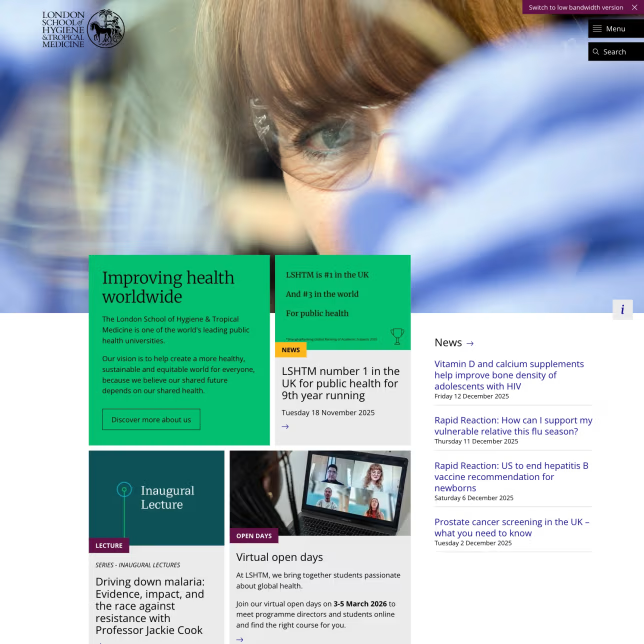
A complex Drupal-based research platform for LSHTM (London School of Hygiene & Tropical Medicine) was stabilized and optimized to support reliable data publishing, improved performance, and scalable integrations with external data providers.
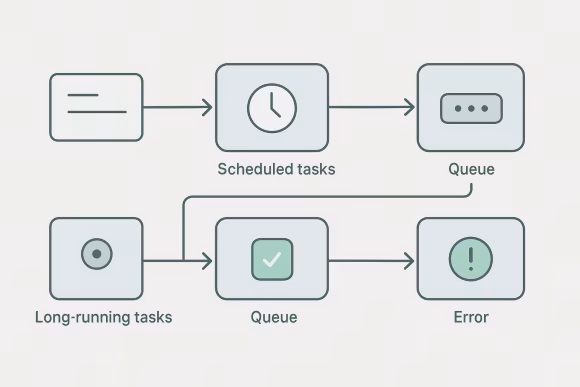
The work was focused on improving platform responsiveness and reducing operational risks caused by performance degradation and unreliable synchronization processes. Multiple data pipelines were stabilized, including scheduled exports/imports and distribution of research data to third-party systems and downstream consumers.
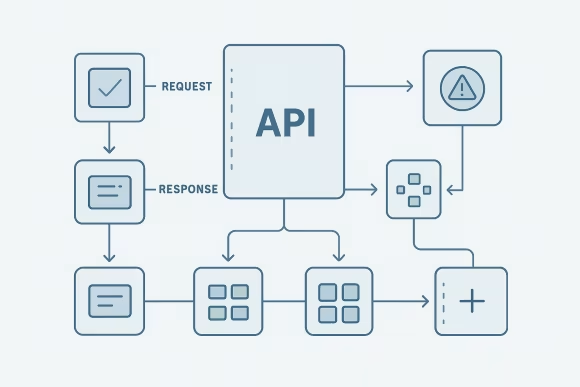
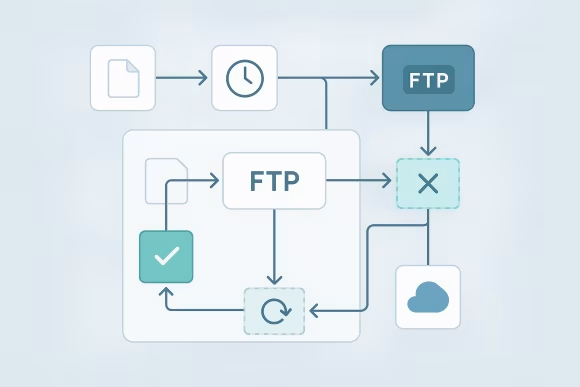
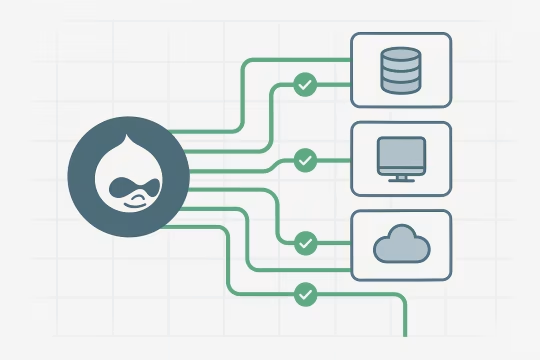
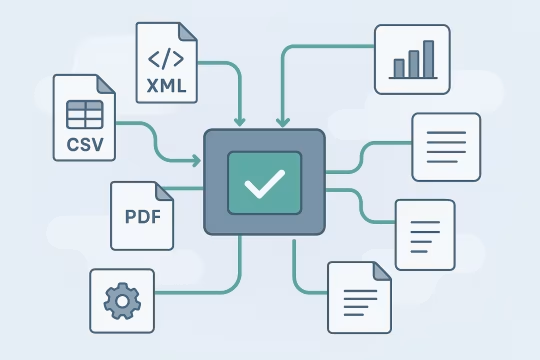
A robust integration layer was strengthened to support data exchange via APIs, FTP, Email delivery, and cloud storage providers (Google Drive and Microsoft cloud disks). The platform was enhanced to process and distribute structured and semi-structured content in XML, HTML, CSV, PDF, and Plain TXT formats while preserving data integrity, auditability, and performance.
Technologies
Drupal CMS
Custom Integrations
API Data Synchronization
FTP Automation
Email-Based Delivery
Google Drive Integration
Microsoft Cloud Disk Integration
CSV/XML/HTML/PDF Processing
Industry
Focus Area
Data Formats
- XML
- HTML
- CSV
- Plain TXT
Integration Channels
- API
- FTP
- Email Delivery
- Google Drive
- Microsoft Cloud Disk
[The Challenge]
The platform was operating with a high level of integration complexity and large volumes of research content and datasets. Over time, performance bottlenecks were accumulated, affecting both user experience and internal editorial operations. Slow page rendering and unstable background processing were observed, creating risk for a mission-critical research website.
Data synchronization was also impacted. Multiple pipelines were required to ingest, transform, and distribute data from and to external partners using different transport channels such as APIs, FTP, email delivery, and cloud drives. The overall process was difficult to troubleshoot and inconsistent in execution, which increased operational load and reduced trust in automation.
A stabilization strategy was required to address both the front-end performance layer and back-end processing reliability. The platform needed to be optimized while preserving existing content structures and workflows, without disrupting existing stakeholder processes.
[The Solution]
Performance Bottlenecks Eliminated
Critical rendering and backend processing hotspots were identified and optimized to improve site responsiveness and stability.
Reliable Data Synchronization Architecture
Data pipelines were stabilized to ensure consistent synchronization with third-party systems and internal publishing workflows.
Multi-Channel Integration Support
Integrations were improved to support API, FTP, Email, Google Drive, and Microsoft cloud disk delivery and retrieval.
Format-Agnostic Data Delivery
Distribution workflows were enhanced to reliably process XML, HTML, CSV, PDF, and Plain TXT formats.
Automated Validation & Monitoring Improvements
Health checks and validation mechanisms were introduced to reduce sync failures and improve troubleshooting.
Scalable Future-Proof Platform Enhancements
Improvements were applied in a way that preserved extendability and long-term maintainability of the Drupal platform.
[Core Features]
[Implementation]
Platform Performance Audit
Key performance bottlenecks were identified through profiling and real-world usage patterns.
Stabilization of Synchronization Pipelines
Data sync flows were refactored and hardened to reduce failure rates and improve repeatability.
Improved Automation for Imports/Exports
Import and export routines were streamlined, and validation steps were added to prevent data corruption.
Operational Resilience Improvements
Logging, monitoring, and failure recovery mechanisms were strengthened for long-term stability.
[Testimonials]
Oleksiy (PathToProject) has been a valuable developer resource over the past six months for us at LSHTM. This included coming on board to revive and complete a stalled Drupal upgrade project, as well as carrying out work to improve our site accessibility and functionality.
I have found Oleksiy to be very knowledgeable and skilful and would happily work with him again in the future.

Ali Kazemi
Web & Digital Manager at London School of Hygiene & Tropical Medicine
[Business Outcomes]
Improved Site Performance
Page load speed and backend processing were improved, providing a more responsive experience for users and editors.
Stable Data Synchronization
Data pipelines were stabilized, reducing delivery interruptions and improving consistency across integrations.
Reduced Operational Risks
Unpredictable sync failures and performance degradation were minimized through better validation and monitoring.
Faster Content Delivery
Publishing and data distribution workflows were accelerated, enabling faster turnaround for research updates.
Better Maintainability
Improvements were implemented in a structured way to preserve maintainability and support future enhancements.
Stronger Integration Layer
Multi-channel integration architecture was improved for long-term scalability and reliability.
[Next Projects]