Core Focus

Custom front-end implementation
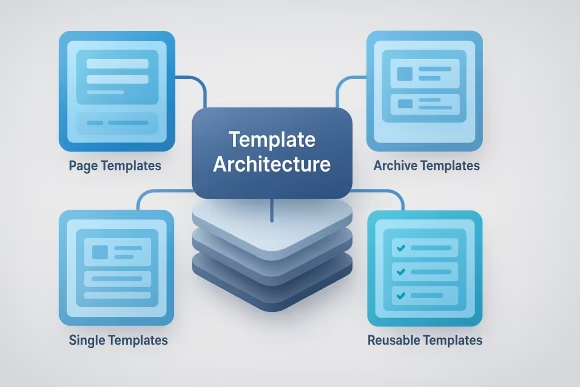
Reusable template systems
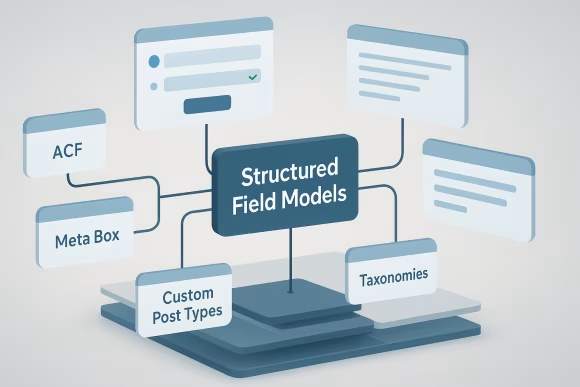
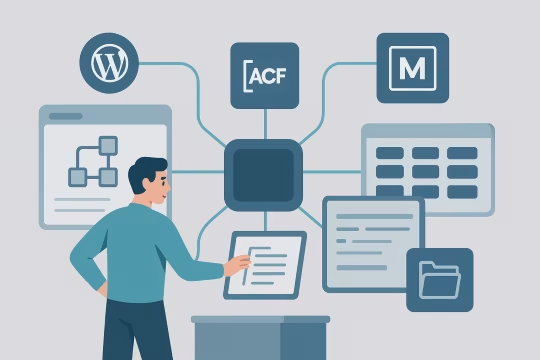
Structured content editing
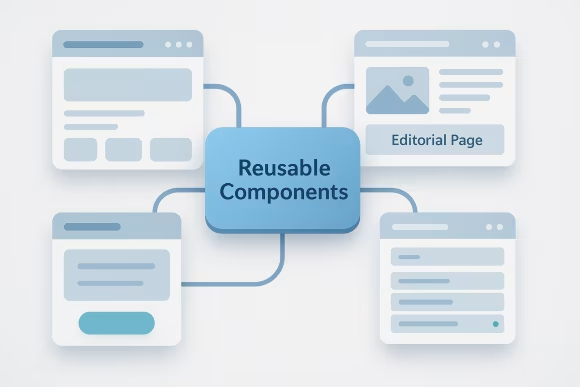
Component-based page layouts

Best Fit For

  • Enterprise marketing platforms
  • Multi-stakeholder content teams
  • Custom WordPress builds
  • Agency delivery partnerships

Key Outcomes

  • Lower layout inconsistency
  • Faster page assembly
  • Improved editor control
  • Reduced theme complexity

Technology Ecosystem

  • WordPress core
  • Oxygen Builder
  • ACF and Meta Box
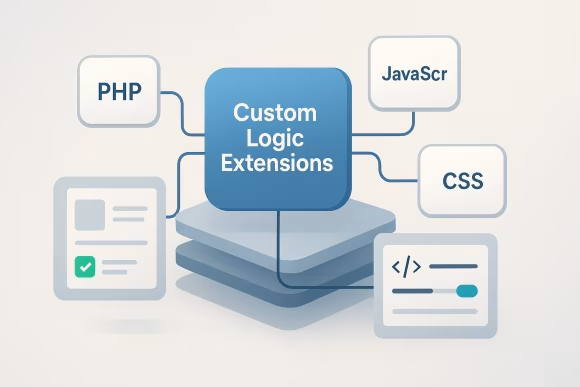
  • PHP JavaScript CSS

Delivery Scope

  • Template architecture
  • Component engineering
  • Field model integration
  • Editor workflow design

Unstructured Page Builder Setups Increase Frontend Complexity

As WordPress platforms grow, page-builder implementations often become difficult to manage because layout logic, content structure, and presentation rules are mixed together at page level. Teams start with a need for speed, but over time they accumulate one-off templates, duplicated sections, inconsistent spacing rules, and editor experiences that vary from one content type to another. What begins as a flexible publishing setup gradually becomes a fragmented front-end system.

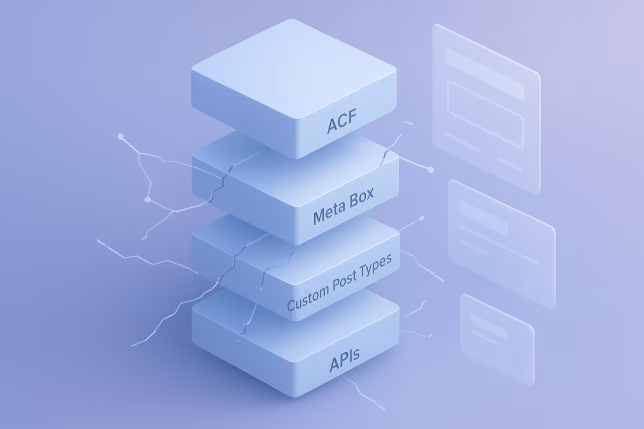
This creates architectural problems for engineering teams. Reusable patterns are hard to enforce, field models become inconsistent, and changes to shared UI elements require manual updates across many templates or pages. Integrations with ACF, Meta Box, custom post types, and API-driven content can also become brittle when the builder layer is not designed around a clear content model. As a result, the platform becomes harder to reason about, harder to test, and more expensive to evolve.

Operationally, these issues slow delivery and increase maintenance overhead. Content teams may have broad editing access but limited guardrails, which raises the risk of broken layouts and visual inconsistency. Developers spend more time correcting page-level issues, tracing template dependencies, and managing regressions introduced by small content changes. Over time, the platform carries more technical debt and less confidence in front-end changes.


Oxygen Builder Delivery Process

Platform Discovery

Review the current WordPress implementation, content model, editorial workflows, and existing builder usage. This stage identifies structural issues, reusable patterns, integration constraints, and the level of flexibility different teams actually need.

Template Planning

Define page types, content relationships, global regions, and reusable layout patterns. The goal is to separate content structure from presentation decisions so templates can scale without becoming page-specific exceptions.

Component Design

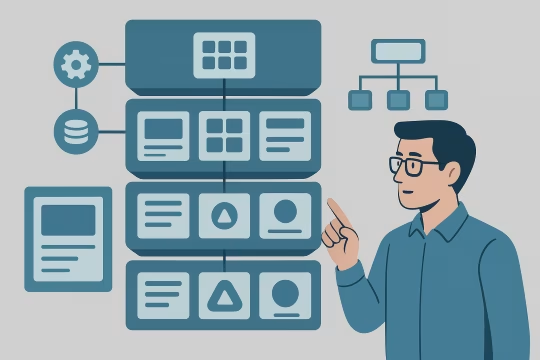
Translate design requirements into reusable Oxygen elements, sections, and utility patterns. Components are specified with clear responsibilities, configurable options, and constraints that support consistency across the platform.

Field Integration

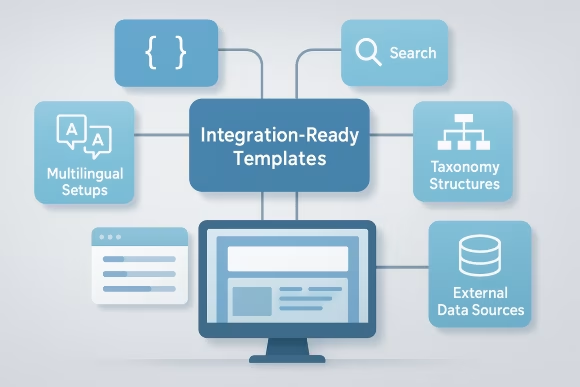
Connect templates to structured data using ACF, Meta Box, custom post types, and taxonomy models where needed. This ensures editors work with predictable inputs rather than manually assembling complex content structures.

Custom Implementation

Build the front end using Oxygen, PHP, JavaScript, and CSS with attention to code organization and extensibility. Custom logic is introduced where native builder capabilities are insufficient or too difficult to govern.

Quality Validation

Test templates, responsive behavior, editor workflows, and integration points across representative content scenarios. Validation focuses on rendering consistency, maintainability, and the risk of layout breakage during routine publishing.

Release Preparation

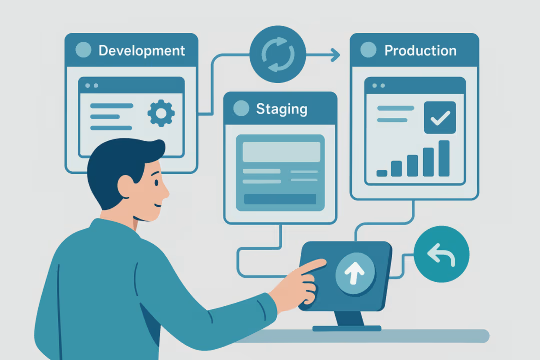
Prepare deployment steps, environment configuration, and rollback considerations for production release. This includes verifying dependencies, migration requirements, and any template or field changes that affect existing content.

Governance Handover

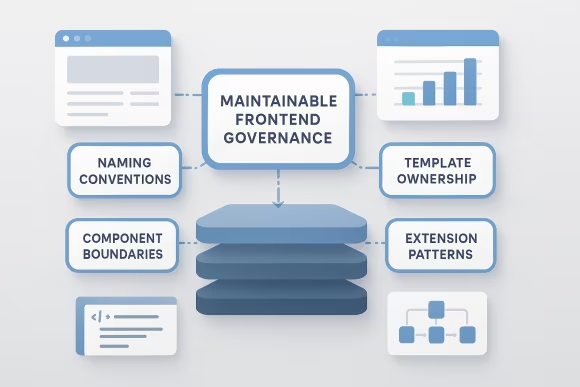
Document template rules, editing boundaries, component usage, and future extension patterns. Teams receive a maintainable operating model rather than an opaque builder setup that depends on undocumented decisions.

Core Oxygen Engineering Capabilities

This service focuses on building structured Oxygen Builder implementations that behave like maintainable front-end systems rather than ad hoc page compositions. The emphasis is on reusable templates, controlled editing models, and clean integration with WordPress data structures. Engineering decisions are made to support long-term platform evolution, reduce layout drift, and keep front-end behavior understandable across teams and environments.

Capabilities
  • Oxygen template architecture
  • Reusable component development
  • Custom WordPress front-end builds
  • ACF integration
  • Meta Box integration
  • Custom post type templating
  • Editor workflow configuration
  • Frontend refactoring and support
Who This Service Supports
  • CTOs
  • Technical Product Owners
  • Marketing Technology Teams
  • Agency Partners
  • Platform Architects
  • WordPress Engineering Teams
Technology Stack
  • WordPress
  • Oxygen Builder
  • PHP
  • JavaScript
  • CSS
  • ACF
  • Meta Box

Delivery Model

Delivery is structured around platform analysis, template architecture, implementation control, and long-term maintainability. The model supports both new builds and remediation of existing Oxygen Builder installations that have become difficult to govern or extend.

Delivery card for Discovery[01]

Discovery

Assess the existing WordPress platform, current builder usage, content structures, and stakeholder workflows. This establishes the technical baseline and identifies where template logic, editor behavior, or front-end implementation need to be redesigned.

Delivery card for Architecture[02]

Architecture

Define the template hierarchy, component model, field strategy, and editing boundaries. Architectural decisions are documented so the implementation supports reuse, governance, and future platform evolution.

Delivery card for Implementation[03]

Implementation

Build templates, components, and custom logic using Oxygen, PHP, JavaScript, and CSS. The implementation phase focuses on maintainable structure rather than rapid page-by-page assembly.

Delivery card for Integration[04]

Integration

Connect the front end to ACF, Meta Box, custom post types, taxonomies, and any required platform integrations. This ensures content relationships and rendering logic remain aligned across the system.

Delivery card for Testing[05]

Testing

Validate responsive behavior, template consistency, editor workflows, and regression risk across representative content scenarios. Testing covers both front-end output and the practical editing experience used by internal teams.

Delivery card for Deployment[06]

Deployment

Prepare release steps, environment updates, and migration considerations for production rollout. Deployment is handled with attention to existing content dependencies and rollback planning where required.

Delivery card for Documentation[07]

Documentation

Provide implementation notes, editing guidance, and technical documentation for templates and components. This reduces support dependency and helps internal teams manage the platform with confidence.

Delivery card for Continuous Improvement[08]

Continuous Improvement

Support iterative refinement as content needs, design patterns, and platform integrations evolve. Ongoing work typically includes template consolidation, component extension, and performance or maintainability improvements.

Business Impact

A well-structured Oxygen Builder implementation improves more than page editing. It reduces front-end inconsistency, lowers maintenance overhead, and creates a WordPress platform that can evolve without repeated rebuilds or uncontrolled template sprawl.

Faster Page Delivery

Reusable templates and components reduce the amount of custom work required for new pages and content types. Teams can launch new sections more quickly without rebuilding common layout patterns each time.

Lower Maintenance Overhead

A structured implementation reduces duplicated layouts, one-off fixes, and hidden dependencies between pages. Engineering teams spend less time correcting builder drift and more time on planned platform improvements.

Improved Platform Consistency

Shared template logic and controlled editing patterns create more consistent output across the site. This supports design coherence and reduces the operational cost of reviewing and correcting content presentation.

Reduced Technical Debt

Moving away from ad hoc page composition helps contain front-end complexity before it spreads across the platform. Clear component boundaries and field models make future changes safer and easier to scope.

Better Editorial Control

Editors gain a more predictable publishing environment with clearer boundaries and fewer opportunities to break layouts. This improves day-to-day content operations without removing necessary flexibility.

Stronger Scalability

As more teams, pages, and content models are added, the platform remains easier to extend because templates are organized around reusable architecture. Growth does not require the same level of manual restructuring later.

Improved Developer Productivity

Developers work with a clearer front-end system that separates content structure, presentation, and custom logic more effectively. This shortens debugging time and makes enhancements easier to implement with confidence.

Lower Delivery Risk

Governed templates and tested component patterns reduce the likelihood that routine content changes will introduce regressions. This creates a more stable release process for both engineering and content teams.

Frequently Asked Questions

Common questions about Oxygen Builder architecture, implementation, governance, integrations, operational support, and how enterprise teams typically structure engagement.

When is Oxygen Builder a suitable choice for an enterprise WordPress platform?

Oxygen Builder is suitable when an organization needs a custom WordPress front end with more control than a conventional theme workflow and more structure than a loosely governed page-builder setup. It works well when the platform requires reusable templates, custom post type rendering, structured field integration, and a controlled editor experience for multiple stakeholders. The key consideration is not whether a visual builder is available, but whether the implementation can be treated as a maintainable front-end architecture. In enterprise contexts, that means defining template ownership, reusable component patterns, content modeling rules, and boundaries around what editors can change safely. Oxygen can support this model when it is implemented with discipline and backed by custom engineering where needed. It is less suitable when teams expect unrestricted visual editing across every page without governance, or when the platform roadmap points toward a fully decoupled front end. In those cases, the architecture may need a different approach. The decision should be based on content operations, integration requirements, long-term maintainability, and the level of front-end control the organization wants to retain.

How should Oxygen Builder be structured to remain maintainable over time?

Maintainability depends on treating Oxygen as a templating and component layer rather than a page-by-page design tool. The implementation should start with a clear template hierarchy for key content types, archives, shared regions, and reusable sections. Layout patterns should be centralized, and structured fields should drive content output wherever possible. A maintainable setup also requires conventions for naming, component ownership, custom code placement, and editor permissions. If every page contains unique layout logic or if visual controls are used to solve structural problems, the platform becomes difficult to govern. Reuse should happen through templates and components, not through repeated manual composition. Custom PHP, JavaScript, and CSS should be introduced deliberately for dynamic behavior, integration logic, and front-end refinement that the builder alone cannot support cleanly. Documentation matters as well. Teams need to understand how templates are assembled, where field data enters the rendering layer, and how future changes should be implemented without creating drift. That operating model is what keeps the platform sustainable.

Can Oxygen Builder support ongoing content operations without creating layout instability?

Yes, but only when the editing model is intentionally designed. Layout instability usually appears when editors are given broad control over structural decisions that should have been encoded in templates or reusable components. A stable operating model limits freeform page construction and instead provides governed content inputs, approved sections, and predictable template behavior. For content teams, this often improves efficiency rather than reducing flexibility. Editors can focus on content, messaging, media, and approved variations without needing to manage spacing systems, responsive behavior, or component composition manually. That reduces the chance of broken layouts and inconsistent presentation across business units or campaigns. Operational stability also depends on release discipline. Changes to shared templates or components should be tested against representative content scenarios before deployment. If the platform includes multiple editors, agencies, or regional teams, documentation and permissions become especially important. Oxygen can support reliable content operations, but the implementation has to be designed around controlled publishing workflows rather than unrestricted visual editing.

What kind of support is typically needed after an Oxygen Builder implementation goes live?

Post-launch support usually focuses on template refinement, component extension, issue resolution, and governance as the platform evolves. Even a well-structured implementation will need updates as new content types are introduced, campaign requirements change, or editorial teams request additional flexibility within defined boundaries. Support often includes reviewing requests for new sections, consolidating duplicated patterns, improving performance, and adjusting field models to better match content operations. In some cases, teams also need help diagnosing front-end regressions, clarifying template dependencies, or cleaning up legacy builder usage that predates the current architecture. For enterprise teams, ongoing support is most effective when it follows a clear change model. Shared templates should be versioned and tested, custom code should be documented, and requests should be evaluated against the existing component system rather than implemented as isolated exceptions. This keeps the platform coherent over time and prevents the builder layer from gradually returning to an unstructured state.

How does Oxygen Builder work with ACF and Meta Box?

Oxygen Builder can work effectively with both ACF and Meta Box by using those tools to define structured content inputs while Oxygen handles template rendering. This separation is important because it keeps content modeling concerns distinct from presentation logic. Editors enter data through fields, repeaters, relationships, and taxonomies, while templates determine how that data is displayed. This approach is especially useful for custom post types, landing page modules, team directories, resource libraries, and other structured content scenarios. Instead of manually building layouts for each page, the platform can render consistent outputs based on field-driven templates. That improves reuse and makes content changes less risky. The integration needs to be planned carefully. Field groups should align with template responsibilities, and dynamic data bindings should be implemented in a way that remains understandable to future developers. If field structures are inconsistent or if too much logic is embedded directly in builder controls, the implementation becomes harder to maintain. Used properly, ACF and Meta Box strengthen Oxygen by providing a more disciplined content architecture.

Can Oxygen Builder be integrated with custom APIs and external systems?

Yes, Oxygen Builder can be part of a broader WordPress integration architecture, but the builder itself should not carry all integration complexity. External APIs, search services, CRM data, or other platform connections are usually handled through WordPress application logic, custom plugins, or middleware layers, with Oxygen responsible for rendering the resulting data in templates. This separation keeps the front-end implementation cleaner and reduces the risk of tightly coupling page templates to external service behavior. For example, API responses may be normalized in PHP, cached appropriately, and exposed to templates through structured variables or custom fields. Oxygen then renders the output within reusable components or page templates. The main architectural concern is reliability. External integrations introduce latency, failure modes, and data-shape variability that should be managed outside the visual builder layer. With the right design, Oxygen can present integrated data effectively while the underlying WordPress platform handles authentication, transformation, caching, and error management in a more maintainable way.

How do you govern template changes in an Oxygen Builder environment?

Template governance starts with identifying which templates are global, which are content-type specific, and which components are approved for reuse. Once those boundaries are defined, changes should be routed through a controlled process that considers downstream impact. A small update to a shared header, archive layout, or content component can affect large portions of the platform. In practice, governance often includes documented ownership, staging-based review, regression testing, and release notes for shared template changes. Teams should know where to implement a change, who approves it, and how it is validated before production deployment. This is particularly important when multiple internal teams or agency partners contribute to the same WordPress platform. Governance also applies to editor permissions and component proliferation. If anyone can create new patterns without review, duplication and inconsistency return quickly. A governed Oxygen environment balances flexibility with architectural control so the platform remains coherent as new requirements emerge.

How can organizations prevent builder sprawl and duplicated layouts?

Preventing builder sprawl requires a combination of technical structure and operating discipline. The technical side includes reusable templates, approved components, structured field models, and clear rules about when a new pattern is justified. The operating side includes review processes, documentation, and limiting unrestricted layout creation in production environments. A common failure mode is allowing urgent campaign work or one-off requests to bypass the component system. Over time, those exceptions accumulate into multiple versions of the same layout pattern, each with slightly different spacing, markup, or responsive behavior. That increases support overhead and makes future redesigns more expensive. The most effective prevention strategy is to make the governed path easier than the ad hoc path. If teams have access to well-designed reusable sections and templates that meet common needs, they are less likely to create isolated alternatives. Regular audits also help identify duplication early, before it becomes embedded across many pages and stakeholders.

What are the main risks of a poorly implemented Oxygen Builder setup?

The main risks are structural inconsistency, hidden dependencies, and long-term maintenance overhead. When templates are not planned properly, layout logic often ends up scattered across individual pages, reusable parts, and custom code fragments with unclear ownership. This makes the front end difficult to debug and increases the chance that a small change will affect unrelated areas. Another risk is editorial instability. If content teams are given broad visual control without guardrails, pages can drift away from approved patterns and become harder to maintain. This creates a cycle where developers repeatedly fix presentation issues that should have been prevented through better architecture and permissions. There is also platform risk when integrations, field models, and custom logic are embedded in ways that are difficult to test or document. Over time, the organization becomes dependent on a small number of people who understand the implementation history. The result is slower delivery, higher support cost, and less confidence in evolving the platform. Most of these risks come from implementation choices rather than the tool itself.

How do you reduce migration or refactoring risk in an existing Oxygen Builder site?

Risk reduction starts with a structured audit of templates, reusable parts, custom code, field dependencies, and editor workflows. Existing Oxygen sites often contain a mix of legacy decisions, duplicated sections, and undocumented relationships between content and layout. Before changing anything, it is important to understand what is shared, what is isolated, and what business-critical pages depend on each pattern. Refactoring should then be sequenced rather than attempted as a full rebuild in one step. High-value shared templates, unstable components, and problematic editor experiences are usually addressed first. Where possible, new governed patterns are introduced alongside existing ones and migrated incrementally. This reduces disruption and allows teams to validate improvements against real publishing scenarios. Testing is essential throughout the process. Responsive behavior, dynamic field rendering, archive outputs, and editorial tasks all need verification. Documentation should also be created as part of the refactor so the improved architecture remains understandable after the immediate project ends. The goal is not only cleaner implementation, but a safer operating model going forward.

What does a typical Oxygen Builder engagement include?

A typical engagement includes platform review, template architecture, component design, field integration, custom implementation, testing, and documentation. The exact scope depends on whether the work is a new build, a remediation project, or an extension of an existing WordPress platform. In some cases, the focus is on establishing a maintainable foundation. In others, it is on correcting an implementation that has become difficult to govern. The work usually covers more than visual page construction. It often includes defining how custom post types are rendered, how ACF or Meta Box fields map to templates, how shared components are managed, and where custom PHP or JavaScript should be introduced. Editorial workflows and permissions may also be reviewed to reduce layout instability. For enterprise teams, engagements are often phased. An initial assessment may be followed by architecture and implementation, with later support for optimization or platform evolution. This phased model helps align technical decisions with delivery priorities and avoids introducing unnecessary complexity before the platform structure is understood.

How do collaboration and delivery typically begin?

Collaboration usually begins with a technical discovery phase focused on the current WordPress platform, content operations, design requirements, and the role Oxygen Builder is expected to play. This is not only a requirements exercise. It is an architectural review of how templates, fields, reusable patterns, and editor workflows should be structured to support the platform over time. Early discussions typically cover the existing implementation state, known pain points, stakeholder roles, content model complexity, and any integration or performance constraints. If Oxygen is already in use, the first step often includes an audit of templates, reusable parts, custom code, and governance gaps. If the platform is new, the focus is on defining the template system and editing model before implementation begins. From there, the work is usually broken into clear phases such as assessment, architecture, implementation, validation, and handover. This gives technical and product stakeholders a shared view of scope, dependencies, and decision points. The goal at the outset is to establish a maintainable delivery path, not simply to start building pages immediately.

How should internal teams and agency partners share responsibility for an Oxygen Builder platform?

Shared responsibility works best when the platform has explicit ownership boundaries. Internal teams often retain responsibility for platform governance, security, release approval, and long-term architectural direction, while agency partners may contribute design implementation, campaign delivery, or specialized front-end work. Problems usually arise when those boundaries are informal and template changes happen without a common operating model. A practical model defines which templates are core platform assets, which components can be extended, how new patterns are proposed, and what review process applies before release. Agency teams should be able to work efficiently, but within documented conventions for naming, code placement, field usage, and component reuse. This prevents parallel implementations of the same pattern and reduces support overhead later. The most effective collaboration model combines technical documentation, staging workflows, and regular architecture review. That allows multiple contributors to move quickly while preserving consistency across the WordPress front end. In enterprise settings, governance is what makes distributed delivery sustainable.

How do you decide whether to optimize an existing Oxygen implementation or replace it?

That decision depends on the structural condition of the current implementation, not just its age or visual quality. If the site has a workable template hierarchy, reusable components, and manageable custom code, optimization is often the better path. In those cases, targeted refactoring can improve maintainability, editor experience, and performance without the cost and disruption of a full rebuild. Replacement becomes more likely when the implementation is dominated by page-level exceptions, duplicated layouts, undocumented dependencies, and inconsistent field usage. If shared patterns cannot be identified or if routine changes create unpredictable regressions, the effort required to stabilize the existing setup may approach the effort of rebuilding it properly. A structured audit is usually the right starting point. It helps quantify reuse, identify technical debt concentration, and determine whether the current Oxygen layer can support future platform goals. The objective is to choose the path that reduces long-term operational risk, not simply the path that appears fastest in the short term.

WordPress Builder Cleanup and Component Governance Case Studies

These case studies are most relevant because they show real delivery around replacing fragile builder-driven content with structured, reusable components and stronger editorial governance. They reinforce the same maintainability goals as Oxygen Builder development: controlled templates, cleaner front-end implementation, and scalable content operations. Together, the case studies provide concrete proof of how component-based rebuilds and governance-focused architecture reduce long-term overhead in complex CMS environments.

Further reading on WordPress architecture and content governance

These articles expand on the structural decisions that make Oxygen Builder implementations scalable beyond one-off page building. They cover WordPress governance, structured content modeling, and component alignment so teams can support reusable templates, controlled editor experiences, and long-term maintainability. Together, they provide useful context for evaluating how this service fits into a broader platform architecture and delivery model.

Evaluate your WordPress front-end architecture

Review your current Oxygen Builder implementation, identify structural risks, and define a maintainable template and component model for future delivery.

Oleksiy (Oly) Kalinichenko

Oleksiy (Oly) Kalinichenko

CTO at PathToProject

Do you want to start a project?