Architecture Scope

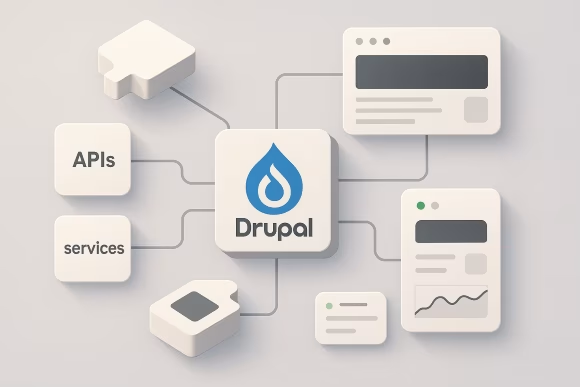
Multisite & multi-brand ecosystems
Global enterprise platforms
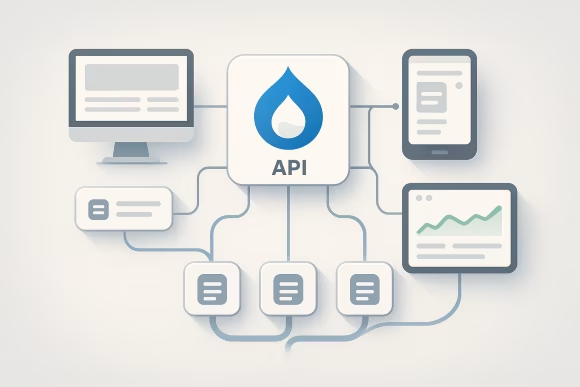
API-first & headless-ready systems

Infrastructure

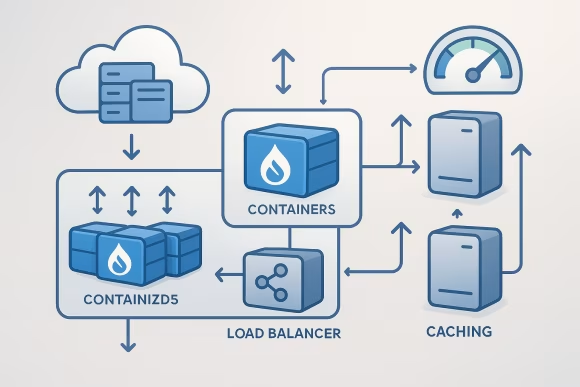
  • Acquia / AWS / Cloud-native
  • Containerized deployments
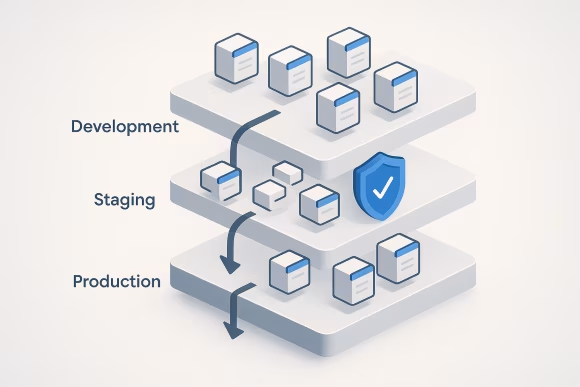
  • CI/CD automation pipelines

Integration Landscape

  • CRM / ERP / CDP
  • Search (Solr / Elastic)
  • SSO / Identity Providers

Governance

  • Editorial workflows
  • Role-based access control
  • Compliance-ready structures

When Drupal Architecture Becomes the Bottleneck

Many enterprise Drupal platforms suffer not from lack of features — but from weak architectural foundations.

Over-customized modules, unclear content models, unmanaged integrations, and missing governance structures create long-term technical debt.

As complexity grows, performance drops, deployments slow down, and scaling becomes risky.

Without proper architecture, every new feature increases instability.

Our Architecture Approach

Discovery & System Audit

We analyze current architecture, integrations, performance, and content structure.

Business-Aligned Platform Blueprint

Architecture decisions are aligned with business strategy, governance, and growth plans.

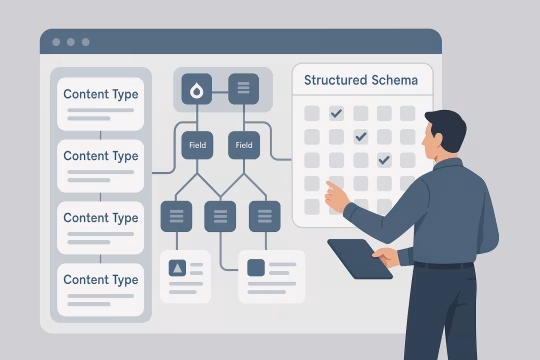
Structured Content Modeling

Future-proof content schemas designed for multi-channel delivery.

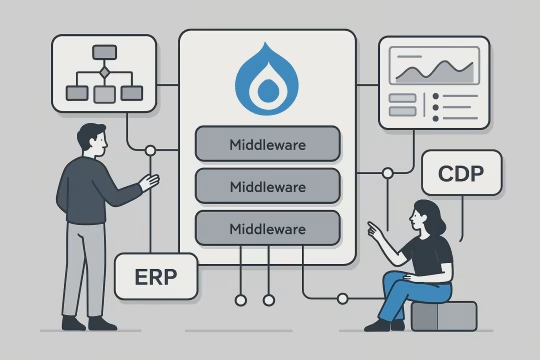
Integration Architecture Design

Clear API contracts and integration boundaries with CRM, CDP, ERP, and search systems.

Performance & Scalability Strategy

Caching layers, load balancing, and cloud infrastructure planning.

Deployment & CI/CD Framework

Automated deployment pipelines and configuration management best practices.

Architecture Capabilities

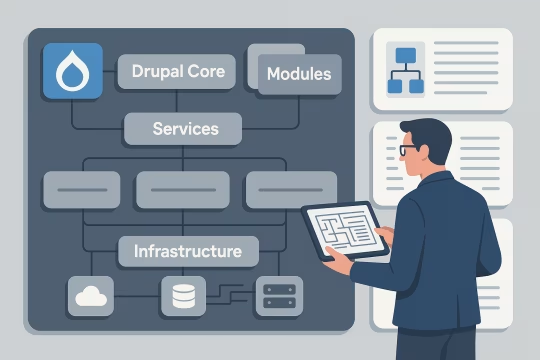
Enterprise Drupal Architecture establishes a structured foundation for large-scale, multi-brand digital ecosystems. The architecture combines multisite governance, composable design, API-first delivery, advanced configuration management, and cloud-native infrastructure principles into a cohesive system. It separates concerns between content, presentation, and integrations while maintaining centralized standards and controlled deployment workflows. Security, compliance, and scalability are embedded at the architectural level rather than added retroactively. The result is a maintainable, integration-ready platform capable of supporting global growth and long-term modernization.

What We Architect
  • Enterprise DXP platforms
  • Global multisite networks
  • Headless & hybrid ecosystems
  • Complex editorial workflows
  • Data-driven content platforms
  • Platform modernization roadmaps
Best Fit For
  • Large enterprises
  • Government institutions
  • Healthcare organizations
  • Global brands
  • High-traffic digital platforms
Technology Stack
  • Drupal 9 / 10 / 11 / 12
  • Solr / Elasticsearch
  • GraphQL / REST APIs
  • Acquia / AWS / Pantheon
  • CI/CD (Git-based pipelines)
  • Docker / Containerization

Architecture Deliverables

Our delivery approach focuses on building a durable architectural foundation that supports long-term scalability, security, and business evolution. We combine technical precision with strategic clarity — documenting decisions, mapping integrations, and designing infrastructure that aligns with your organizational goals. The result is not just a Drupal implementation, but a structured, future-proof platform blueprint that empowers teams to innovate with confidence and grow without architectural limitations.

Delivery card for Architecture Blueprint Document[01]

Architecture Blueprint Document

Comprehensive system architecture documentation including layered diagrams, module strategy, integration boundaries, and technical decision records. This blueprint serves as a long-term reference for development teams and stakeholders, ensuring clarity, scalability, and controlled platform evolution.

Delivery card for Content Model Specification[02]

Content Model Specification

Structured definition of entities, content types, taxonomies, field relationships, and governance rules. The specification ensures consistent editorial workflows, reusable components, multilingual readiness, and future-proof scalability across all digital properties.

Delivery card for Integration Map[03]

Integration Map

Detailed mapping of APIs, middleware layers, third-party systems, and data exchange flows. Clearly defined integration boundaries reduce risk, improve maintainability, and support composable, service-oriented architecture principles.

Delivery card for Infrastructure Design[04]

Infrastructure Design

Cloud-native infrastructure blueprint covering hosting topology, caching layers, load balancing, scaling strategy, CI/CD alignment, and failover mechanisms. Designed for performance, high availability, and predictable growth.

Delivery card for Security & Risk Assessment[05]

Security & Risk Assessment

Architecture-level security evaluation including access controls, data exposure analysis, compliance considerations, and vulnerability surface mapping. Provides prioritized recommendations to strengthen platform resilience and governance.

Delivery card for Migration Roadmap[06]

Migration Roadmap

Phased modernization strategy outlining upgrade paths, legacy system retirement, refactoring priorities, and risk mitigation steps. The roadmap aligns technical transformation with business timelines and resource planning.

Business Impact

A well-defined Drupal architecture reduces long-term maintenance complexity and prevents costly rework driven by fragmented technical decisions. Standardized foundations accelerate feature delivery while preserving governance and stability across teams and regions. Cloud-native scalability and structured configuration management lower operational risk during releases and expansions. Compliance-ready access controls and documented workflows support audit requirements and internal governance standards. For executive stakeholders, this translates into predictable scalability, improved development efficiency, and a digital platform aligned with long-term enterprise strategy.

Reduced Technical Debt

A clean, standardized architecture minimizes legacy patterns, fragmented integrations, and ad-hoc customizations—lowering long-term maintenance and modernization costs.

Faster Feature Delivery

Modular, composable foundations enable parallel development streams and reusable components, accelerating release cycles without compromising governance.

Enterprise Stability

Structured deployment workflows, configuration management, and cloud-native design ensure predictable scalability under growing traffic and organizational complexity.

Governance & Compliance

Role-based access control, documented processes, and secure architectural boundaries align editorial, operational, and regulatory requirements.

Operational Efficiency

Centralized multisite management and standardized infrastructure reduce duplication across brands and regions, lowering ongoing operational overhead.

Scalable Digital Expansion

API-first architecture and integration-ready design support expansion into new channels, markets, and enterprise systems without disruptive re-platforming.

Related Services

Enterprise Drupal architecture defines the structural foundation for scalable digital platforms. These related services extend that foundation by supporting platform implementation, operational reliability, and ecosystem connectivity. Together they help organizations translate architectural strategy into stable, secure, and maintainable Drupal platforms.

Frequently Asked Questions

Enterprise Drupal Architecture determines whether your platform scales sustainably or becomes a bottleneck under growth. This FAQ addresses strategic, technical, and operational questions that arise when designing large-scale Drupal ecosystems. The answers clarify architectural governance, multisite strategy, composable design, integration boundaries, and long-term maintainability — helping decision-makers approach Drupal system design with structural clarity and executive confidence.

What does Enterprise Drupal Architecture include?

Enterprise Drupal Architecture defines the structural blueprint of your platform — including multisite strategy, content modeling, integration boundaries, deployment workflows, and infrastructure topology.

It goes beyond selecting modules or themes. Architecture establishes governance models, API contracts, configuration management standards, and scalability patterns. A well-designed foundation ensures that new features, integrations, and regions can be added without destabilizing the system or increasing long-term technical debt.

When should an organization consider redesigning its Drupal architecture?

Architecture redesign is typically necessary when scaling becomes difficult, deployments are unstable, integrations are fragile, or technical debt slows feature delivery.

Warning signs include duplicated logic across multisite environments, unclear content ownership, inconsistent configuration management, and performance degradation under load. Addressing these structural weaknesses early prevents compounding complexity and reduces future modernization costs.

How does multisite Drupal architecture support global or multi-brand organizations?

Multisite architecture enables multiple brands, regions, or business units to operate on a shared Drupal foundation while maintaining controlled independence.

Shared modules, deployment workflows, and governance standards reduce duplication and operational overhead. At the same time, brand-specific themes, configurations, and content strategies remain isolated. This balance ensures centralized control without limiting localized flexibility.

Is headless or hybrid architecture necessary for enterprise Drupal platforms?

Headless or hybrid approaches are appropriate when multi-channel delivery, performance requirements, or frontend flexibility demand separation between content management and presentation layers.

However, decoupling should be driven by business needs rather than trend adoption. Architecture decisions must evaluate integration complexity, editorial workflows, long-term maintainability, and operational overhead before committing to fully decoupled models.

How are integration boundaries defined within Drupal architecture?

Integration architecture establishes clear API contracts between Drupal and external systems such as CRM, ERP, CDP, search engines, and identity providers.

Defining boundaries prevents tight coupling and reduces cross-system fragility. Each integration point is documented, versioned, and isolated to minimize cascading failures. This structured approach supports composable design while preserving maintainability and security.

How does architectural design impact Drupal performance and scalability?

Performance begins at the architectural level. Decisions around caching layers, load balancing, content modeling, and infrastructure topology directly influence response times and system stability.

A scalable architecture incorporates edge caching, environment-aware configuration management, and cloud-native deployment strategies. This ensures predictable performance under traffic spikes while maintaining governance and deployment control.

How is security integrated into Drupal architecture design?

Security is embedded through role-based access controls, least-privilege configuration, data separation strategies, and hardened deployment workflows.

Architecture-level security planning ensures compliance readiness and audit traceability. Rather than reacting to vulnerabilities after implementation, risk exposure is minimized proactively through structured system design and documented governance models.

How does structured architecture reduce long-term technical debt?

Technical debt accumulates when systems evolve without consistent standards. Architecture enforces modularity, configuration discipline, documented integration layers, and reusable component strategies.

By defining structural rules early, the platform avoids ad hoc customization and fragmented logic. This enables smoother upgrades, lower maintenance overhead, and improved development efficiency over time.

How long does a Drupal architecture engagement typically take?

Timelines depend on organizational complexity, number of integrations, and platform scale. A focused architecture audit may take several weeks, while enterprise blueprint development for global multisite ecosystems can extend longer.

The engagement is structured around discovery, system mapping, decision documentation, and blueprint delivery. The goal is to create a durable foundation rather than rush implementation decisions.

What is the first step in designing or modernizing Drupal architecture?

The process begins with a comprehensive system audit covering content models, integrations, infrastructure, governance workflows, and deployment pipelines.

Based on this analysis, a structured architecture blueprint is developed, outlining recommended patterns, scalability strategies, and modernization priorities. This blueprint provides clarity for stakeholders and ensures that future development aligns with long-term business objectives.

Related Projects

What Clients Say

Planning a Complex Drupal Platform?

Let’s design an architecture that supports your growth strategy, governance model, and technical vision.

Oleksiy (Oly) Kalinichenko

Oleksiy (Oly) Kalinichenko

CTO at PathToProject

Do you want to start a project?