



 [01]
[01]Discovery
We review the current WordPress platform, existing Brizy usage, page types, and team workflows. This identifies where speed requirements are creating inconsistency, support overhead, or frontend instability.
Brizy Builder support
Find layout drift, styling inconsistencies, and fragile builder setups before they slow delivery.
Built for WordPress teams managing Brizy templates, reusable sections, and governed editor workflows.
No login required. Takes 2–3 minutes.
Brizy Builder support covers the implementation, structuring, and ongoing maintenance of page builder capabilities within WordPress platforms. It is typically used where marketing and content teams need to publish campaign pages quickly, while engineering teams still need control over frontend quality, template consistency, performance, and integration behavior.
As WordPress estates grow, unmanaged page builder usage often creates fragmented layouts, duplicated content patterns, inconsistent styling, and difficult-to-maintain pages. A structured approach defines how Brizy is configured, how templates are composed, which components are reusable, and how content editors can work safely within platform constraints.
This capability supports scalable platform architecture by aligning editorial flexibility with engineering governance. It helps organizations standardize campaign page delivery, reduce avoidable frontend rework, and maintain a clearer boundary between content operations and platform engineering. The result is a WordPress implementation that remains usable for content teams without introducing unnecessary complexity into the broader platform.
Core Focus
Best Fit For
Key Outcomes
Technology Ecosystem
Delivery Scope
As WordPress platforms expand, page builders are often adopted to accelerate campaign delivery and reduce dependency on development teams for routine page creation. Over time, however, ad hoc usage tends to produce inconsistent layouts, duplicated sections, unmanaged styling variations, and content structures that differ from one team or campaign to another. What begins as a speed mechanism can gradually become a source of architectural inconsistency.
For engineering teams, this creates a difficult operating model. Frontend behavior becomes harder to predict, template logic is spread across builder configurations rather than structured implementation patterns, and integrations with analytics, forms, or personalization tools become more fragile. Editors may have broad publishing freedom but little guidance on which blocks, layouts, or content patterns are safe to use. This increases support overhead and makes quality assurance more reactive than systematic.
The operational consequences are usually visible in slower release cycles, more frequent visual regressions, performance degradation on high-traffic landing pages, and rising maintenance effort for what should be routine content changes. Without clear governance, reusable architecture, and support processes, page builder usage can introduce platform drift that affects delivery speed, consistency, and long-term maintainability across the wider WordPress estate.
Assess the existing WordPress implementation, current Brizy usage, content workflows, and campaign delivery requirements. This establishes where template sprawl, styling inconsistency, or operational friction is affecting the platform.
Define page types, reusable sections, content constraints, and editorial responsibilities. The goal is to create a template model that supports rapid page creation without allowing uncontrolled variation.
Configure Brizy within WordPress to align with the agreed content model, design rules, and publishing workflows. This includes setting up reusable blocks, layout patterns, and editor-safe structures.
Map builder output to the platform's CSS, JavaScript, and broader frontend conventions. This reduces styling conflicts, improves consistency, and keeps page-level implementation aligned with the wider site architecture.
Connect forms, analytics, tracking, CRM endpoints, and other campaign tooling used within landing pages. Integration behavior is validated so that builder-managed pages still operate reliably within the platform ecosystem.
Review responsive behavior, content editing scenarios, performance characteristics, and regression risks. Testing focuses on how pages behave under real editorial usage rather than only on static implementation checks.
Document template usage, governance rules, and support boundaries for content and platform teams. This helps editors work independently while keeping engineering intervention focused on higher-risk changes.
Refine templates, retire unstable patterns, and adapt the implementation as campaign requirements change. Continuous support keeps the builder useful without allowing the platform to become structurally inconsistent over time.
This service focuses on making Brizy Builder workable within a governed WordPress environment rather than treating it as an isolated editing tool. The emphasis is on reusable structures, controlled flexibility, frontend consistency, and maintainable integration patterns. Engineering work is directed toward reducing template drift, preserving platform standards, and enabling content teams to publish efficiently without weakening architectural discipline.
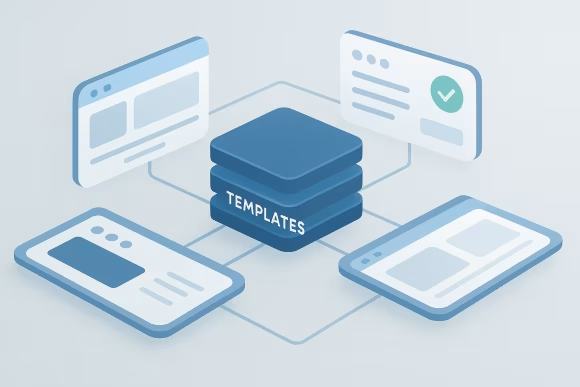
Page structures are defined around reusable templates, shared sections, and predictable content regions. This reduces one-off page construction and creates a more stable editing model for campaign delivery. A structured template layer also makes future updates easier to roll out across multiple pages without manual reconstruction.
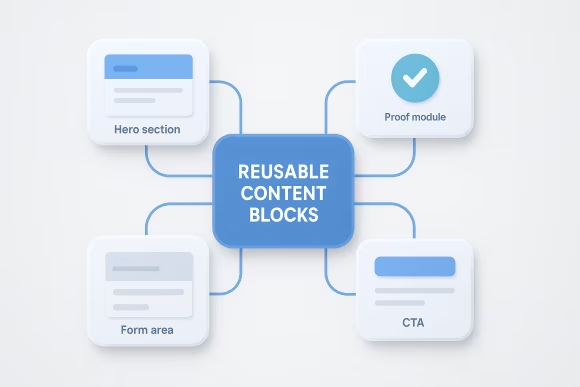
Common campaign elements such as hero sections, proof modules, CTAs, and form areas are implemented as repeatable building blocks. These blocks help teams assemble pages quickly while preserving layout consistency and reducing duplicated design logic. Reuse also improves editorial efficiency and lowers the chance of introducing visual or structural errors.

Builder output is aligned with the site's CSS conventions and visual system so that pages do not drift away from the broader platform. This includes managing spacing, typography, responsive behavior, and component-level styling patterns. The result is a more coherent frontend layer across builder-managed and custom-developed areas.
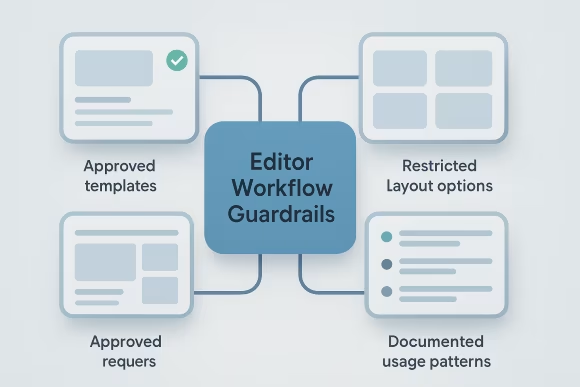
Editing capabilities are structured to give content teams practical flexibility within defined boundaries. Guardrails can include approved templates, restricted layout options, and documented usage patterns for common page types. This reduces accidental breakage and helps non-technical teams publish with greater confidence.
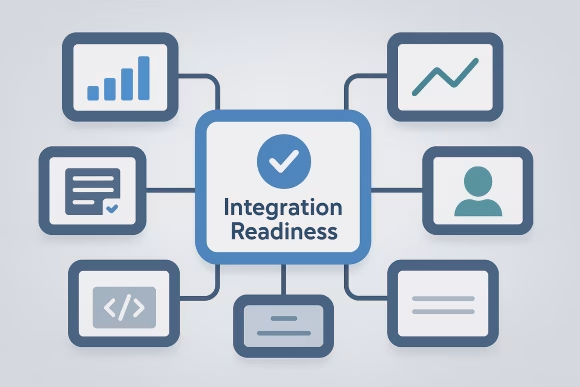
Campaign pages often depend on analytics, forms, CRM connections, consent tooling, and third-party scripts. The implementation accounts for these dependencies so that builder-created pages remain compatible with operational requirements. Integration points are reviewed to avoid fragile page-level customizations that are difficult to support later.

Page builder usage can introduce unnecessary markup, script weight, and inconsistent media handling if left unmanaged. Performance-aware implementation reviews how templates, assets, and content patterns affect page speed and rendering behavior. This helps keep campaign pages usable under real traffic conditions and device constraints.

Support is structured around documented templates, known extension points, and clear ownership between engineering and content teams. This makes troubleshooting more predictable and reduces the cost of routine updates. A maintainable support model also helps organizations evolve their page operations without repeatedly rebuilding the same patterns.
Review how Brizy is affecting template consistency, editor guardrails, integrations, and frontend stability.
Delivery is structured to balance editorial flexibility with platform control. Work typically combines architecture review, implementation, integration support, and ongoing operational refinement so that Brizy remains sustainable within the wider WordPress environment.
[01]We review the current WordPress platform, existing Brizy usage, page types, and team workflows. This identifies where speed requirements are creating inconsistency, support overhead, or frontend instability.
 [02]
[02]We define the template model, reusable content patterns, styling boundaries, and integration requirements. The architecture phase establishes how editors can work safely without weakening platform standards.
 [03]
[03]We configure Brizy, build reusable templates, and align page structures with the site's frontend conventions. Implementation focuses on maintainability, predictable editing behavior, and compatibility with the wider platform.
 [04]
[04]We validate responsive layouts, editor scenarios, integration behavior, and performance-sensitive page patterns. Testing covers both technical correctness and the practical realities of day-to-day content operations.
 [05]
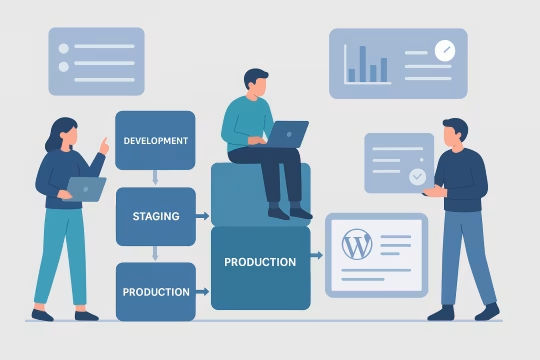
[05]Changes are introduced through controlled release processes that account for existing content and live campaign dependencies. Deployment planning reduces disruption to active publishing teams and business-critical pages.
 [06]
[06]We document template usage, editing rules, support boundaries, and known extension points. This gives content teams practical guidance while helping platform teams manage future changes more consistently.
 [07]
[07]We provide ongoing assistance for template updates, issue resolution, integration changes, and builder-related maintenance. Support is focused on keeping the implementation stable as campaign requirements evolve.
A structured Brizy implementation improves how marketing pages are produced and maintained within WordPress. The main value comes from reducing operational friction, preserving platform consistency, and making campaign delivery more predictable for both content and engineering teams.
Reusable templates and governed editing patterns reduce the time needed to assemble new landing pages. Teams can move from request to publication with less dependency on ad hoc frontend work.
When page structures are standardized, fewer issues are caused by inconsistent layouts or uncontrolled editor changes. Engineering teams spend less time correcting routine builder-related problems.
Shared patterns, styling controls, and template governance keep campaign pages aligned with the broader WordPress platform. This reduces visual drift and structural inconsistency across teams and business units.
Clear content models and reusable blocks prevent teams from rebuilding similar page sections repeatedly. This lowers duplication and makes updates easier to apply across multiple pages.
Pages that depend on forms, tracking, and campaign integrations behave more predictably when those dependencies are engineered into the template model. This reduces the risk of live-page failures during active campaigns.
Documented structures and known extension points make future changes easier to manage. The platform remains adaptable without accumulating the same level of builder-related technical debt.
Content teams can work within clear boundaries and approved patterns rather than improvising page structures. This improves publishing confidence while reducing the chance of accidental breakage.
WordPress page builder governance
Use the Health Check to surface template issues, content workflow gaps, and implementation risks across your WordPress platform.
No login required. Takes 2–3 minutes.
Common questions about architecture, operations, integrations, governance, risk, and engagement for Brizy Builder within WordPress platforms.
Brizy should be treated as one layer within the WordPress platform rather than as the platform itself. In practice, that means defining where builder-managed pages are appropriate, which page types should use reusable templates, and which parts of the site should remain custom-developed or theme-driven. A sound architecture separates content flexibility from core platform concerns such as navigation, global design rules, analytics instrumentation, and integration logic. The most maintainable model usually includes a limited set of approved templates, reusable content blocks, and clear boundaries for editor-controlled layout changes. Styling should align with a broader frontend system so that builder output does not diverge from the rest of the website. It is also important to define how forms, tracking scripts, consent tooling, and shared assets are handled, because these dependencies often become unstable when managed inconsistently at page level. Architecturally, the goal is not to maximize editing freedom. It is to create a controlled publishing environment that supports campaign speed while preserving consistency, performance, and maintainability across the wider WordPress estate.
Brizy is generally appropriate for campaign pages, landing pages, promotional microsurfaces, and content patterns that benefit from rapid iteration by non-developer teams. It works well when the organization needs repeatable page assembly, controlled layout flexibility, and shorter turnaround times for marketing-led publishing. In these cases, a builder can reduce routine development effort if it is implemented with clear governance. Custom WordPress development is usually more appropriate when the requirement involves complex application logic, highly specialized frontend behavior, bespoke data models, or tightly coupled integrations that demand precise control over markup and performance. It is also preferable for platform-critical templates where consistency, accessibility, and long-term maintainability outweigh the need for editor-driven layout variation. Many enterprise WordPress platforms use both approaches. Brizy supports a defined set of page types, while custom development handles core site architecture and more complex functional areas. The key decision is not whether one method is universally better, but whether each page type is being implemented with the right balance of flexibility, control, and operational cost.
Operational stability depends on giving content teams enough flexibility to publish efficiently while limiting the kinds of changes that introduce inconsistency or breakage. In practice, this means using approved templates, reusable sections, documented editing rules, and a clear distinction between safe content updates and changes that require engineering review. Teams work more effectively when they are not expected to invent page structures from scratch for every campaign. A good operating model also includes ownership boundaries. Content teams should know which blocks are reusable, which styles are inherited from the platform, how forms and tracking are configured, and when a request moves beyond standard page assembly into implementation work. Without those boundaries, support requests increase and troubleshooting becomes slower because no one can easily determine whether a problem is editorial, technical, or integration-related. Training and documentation matter, but they are not enough on their own. The builder configuration itself should reinforce the workflow by making approved patterns easy to use and unstable patterns harder to create. That combination of process and configuration is what keeps day-to-day operations manageable.
Ongoing support typically covers template maintenance, issue diagnosis, frontend adjustments, integration troubleshooting, and controlled updates to reusable page structures. It may also include reviewing newly requested campaign patterns, refining editor workflows, and retiring page configurations that are no longer stable or aligned with the platform. The exact model depends on how heavily the organization relies on builder-managed pages. In many cases, support is less about fixing isolated bugs and more about preserving a workable operating model over time. As content teams publish more pages, edge cases appear, integrations change, and design requirements evolve. Without regular oversight, those changes can gradually reintroduce inconsistency, duplicated patterns, and performance issues. A practical support model usually combines reactive maintenance with periodic architectural review. Reactive work addresses immediate publishing or rendering problems, while review work looks at whether the current template set, styling rules, and editor permissions still fit the platform's needs. This helps prevent the builder from becoming harder to manage as usage expands.
Brizy-managed pages often sit at the center of campaign activity, which means they depend heavily on analytics tags, form handling, CRM connections, consent tooling, and other marketing operations. If these integrations are added inconsistently at page level, the result can be unreliable tracking, duplicated scripts, broken submissions, or difficult-to-audit campaign behavior. The builder itself is not necessarily the problem; unmanaged implementation is. A stable integration approach defines where scripts are injected, how forms are configured, which events are tracked, and how reusable templates inherit those behaviors. This is especially important when multiple teams are publishing pages, because small differences in setup can create large reporting and operational gaps. Shared integration patterns reduce those inconsistencies. It is also important to test integrations under real editorial conditions. A page may look correct visually while still failing to pass campaign parameters, trigger analytics events, or submit data correctly to downstream systems. Support work should therefore include both frontend review and validation of the operational dependencies that make campaign pages useful.
In most cases, yes, but compatibility should be assessed rather than assumed. Existing WordPress platforms often include themes, custom plugins, analytics tooling, SEO plugins, consent management, caching layers, and form systems that all influence how builder-managed pages behave. Brizy can usually operate within that environment, but the implementation needs to account for styling conflicts, script loading order, shortcode behavior, and plugin-specific rendering patterns. The main risk is not simply whether Brizy can be installed. It is whether its output remains coherent within the broader platform architecture. For example, a page builder may technically function while still introducing inconsistent markup, duplicate assets, or editing patterns that conflict with established content workflows. Those issues become more visible over time as more teams use the builder. A proper integration review looks at page types, theme behavior, plugin dependencies, frontend conventions, and operational requirements before scaling usage. That review helps determine where Brizy fits cleanly, where constraints are needed, and where custom implementation remains the better option.
Governance usually starts with a defined template system and a limited set of approved reusable blocks. That gives teams a practical structure for building pages without introducing unnecessary variation. Governance also includes naming conventions, ownership rules, documentation, and review processes for new page patterns so that the builder does not gradually become a collection of one-off layouts. Editorial permissions are another important part of governance. Not every user needs the same level of control over layout, styling, or embedded scripts. Restricting high-risk changes helps preserve consistency and reduces the chance of accidental regressions. In enterprise environments, governance often extends to release management, especially when active campaigns depend on shared templates. The most effective governance models are operational rather than purely theoretical. They define how requests are handled, when engineering review is required, how reusable patterns are updated, and how outdated templates are retired. This keeps the builder aligned with platform standards even as campaign needs evolve and more teams contribute content.
Brizy should align with broader design and content standards through controlled template implementation rather than unrestricted visual editing. In practice, that means mapping builder elements to approved spacing, typography, color, and component patterns so that campaign pages remain visually coherent with the rest of the platform. The builder becomes a delivery mechanism for established standards, not an alternative design system. Content standards matter as much as visual ones. Reusable page sections should reflect consistent information hierarchy, CTA placement, form usage, and messaging structure where appropriate. This helps teams produce pages that are not only visually aligned but also operationally predictable for analytics, testing, and optimization. When design and content standards are not embedded into the builder setup, teams often compensate manually, which leads to drift over time. Alignment is strongest when templates, reusable blocks, and editorial guidance all reinforce the same rules. That reduces the need for constant review and makes scaling campaign production more realistic across multiple teams.
The main performance risks usually come from excessive markup, inconsistent media handling, duplicated scripts, and page-level customizations that accumulate over time. Campaign pages often include forms, tracking tags, embeds, and promotional assets, so even a visually simple page can become heavy if those elements are not managed carefully. A builder can amplify these issues when teams create pages without shared constraints. Performance risk is not just about page speed scores. It affects rendering consistency, mobile usability, conversion behavior, and the operational cost of troubleshooting under live campaign conditions. If templates are not structured well, each new page can introduce slightly different asset usage and frontend behavior, making optimization harder across the platform. Mitigation usually involves template discipline, asset review, image handling standards, and regular checks on how reusable sections are implemented. It is also useful to distinguish between acceptable flexibility and patterns that should be prohibited because they repeatedly create slow or unstable pages. Performance improves when the builder is governed as part of the platform, not treated as an isolated editor.
Long-term maintainability depends on limiting uncontrolled variation and documenting how the builder fits into the wider WordPress platform. Problems usually emerge when every campaign introduces new layouts, custom CSS fragments, or page-specific workarounds that are never consolidated into reusable patterns. Over time, those exceptions make updates slower and support more expensive. A maintainable model uses a curated template library, shared content blocks, clear ownership, and periodic review of what is actually being used. If a pattern appears repeatedly, it should be formalized into a reusable structure rather than copied manually from page to page. If a pattern is unstable or no longer needed, it should be retired rather than left in circulation indefinitely. Maintainability also improves when engineering teams define what belongs in the builder and what does not. Some requests are better solved through platform development than through increasingly complex page-level configuration. That boundary keeps the builder useful for the work it is suited to while preventing it from absorbing responsibilities that should remain in core platform architecture.
A typical engagement covers assessment of the current WordPress and Brizy setup, definition of reusable templates, alignment with frontend standards, integration review, and ongoing support for campaign page operations. Depending on the platform, it may also include editor workflow design, governance rules, performance review, and documentation for content teams. The scope is usually shaped by how much of the site relies on builder-managed pages. Some organizations need implementation support because Brizy is being introduced or restructured. Others need operational support because the builder is already in use but has become difficult to manage. In both cases, the work is usually a mix of architecture, practical implementation, and support process design rather than a single isolated task. The most effective engagements define clear outcomes early: which page types are in scope, which templates should be standardized, which integrations must be supported, and how responsibilities are split between content and engineering teams. That clarity helps avoid support models that are too reactive or too loosely defined to improve the platform meaningfully.
Collaboration usually begins with a review of the current WordPress platform, existing Brizy usage, and the operational pressures behind the request. That includes understanding which teams publish pages, what kinds of campaign or marketing pages are being created, where inconsistencies are appearing, and which technical dependencies such as forms, analytics, or CRM integrations are involved. The aim is to establish a realistic picture of both the editorial workflow and the platform constraints. From there, the initial phase often focuses on identifying a manageable scope. This may involve selecting a small set of representative page types, reviewing reusable sections, assessing styling and performance issues, and clarifying where governance is missing. Rather than trying to redesign every page immediately, the work usually starts by defining a stable template model and support priorities. Once that baseline is clear, implementation and support can proceed in a structured way. Teams know which patterns should be standardized, which issues require engineering attention first, and how Brizy should operate within the broader WordPress architecture going forward.
These case studies are relevant because they show how complex content editing environments were brought under stronger architectural control, with reusable components, safer editorial workflows, and cleaner long-term maintenance. They provide real delivery evidence for the same governance concerns behind Brizy Builder support: reducing fragmented page creation, standardizing content patterns, and improving implementation quality across marketing-driven publishing. They also demonstrate how builder-heavy or component-based content estates can be restructured to support faster publishing without losing frontend consistency or platform control.
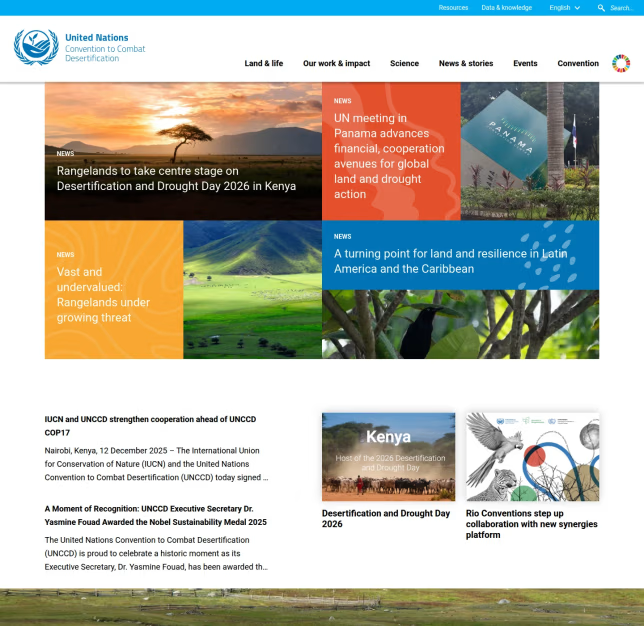
UNCCD operated four separate websites (two WordPress, two Drupal), leading to inconsistencies in design, content management, and user experience. A unified, scalable solution was needed to support a large-scale CMS migration project and improve efficiency and usability.
The modernization effort resulted in a cohesive, user-friendly, and scalable website, improving content management efficiency and long-term digital sustainability.
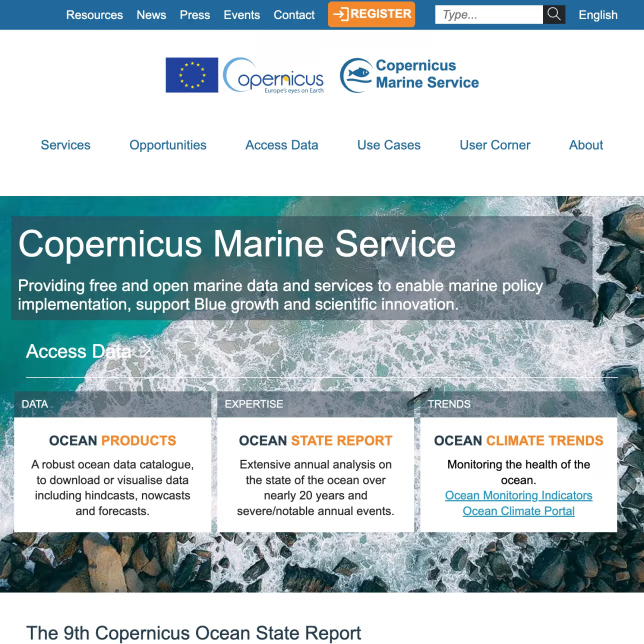
The existing marine data portal relied on three unaligned WordPress installations and embedded PHP code, creating inefficiencies and risks in content management and usability.
The new Drupal DXP streamlined content operations and improved accessibility, offering scientists and businesses a more efficient gateway to marine data services.
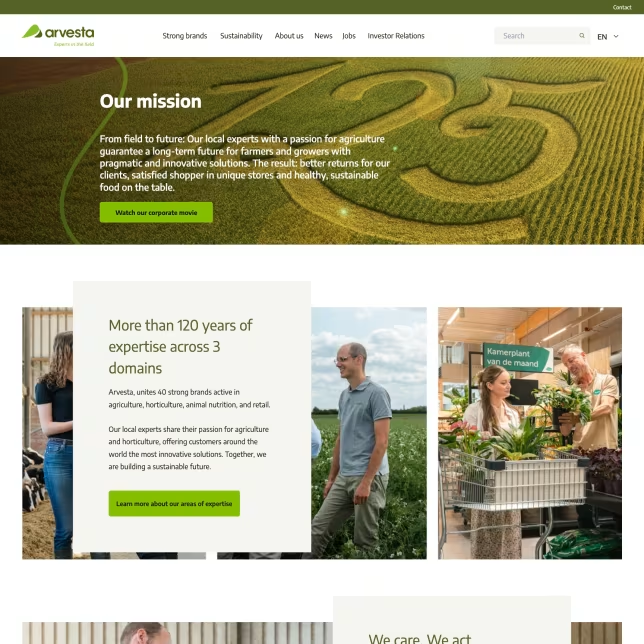
Arvesta required a modern, scalable headless CMS for enterprise corporate marketing—supporting rapid updates, structured content operations, and consistent UI delivery across multiple teams and repositories.
The platform enabled faster delivery of marketing updates, improved UI consistency across pages, and strengthened editorial operations through structured content models and reusable components.
These articles expand on the architecture and operational decisions that shape a maintainable WordPress page builder setup. They cover platform governance, integration boundaries, template consistency, and the support model needed to keep marketing pages flexible without losing control.
Let’s review how Brizy Builder fits into your WordPress platform and define a maintainable model for campaign page delivery, governance, and support.