Core Focus

Event taxonomy and naming
Tracking plan definition
Schema versioning strategy
Instrumentation patterns

Best Fit For

  • Multi-product analytics programs
  • CDP-driven activation teams
  • High-change product roadmaps
  • Cross-platform tracking alignment

Key Outcomes

  • Consistent event contracts
  • Reduced tracking regressions
  • Higher data quality signals
  • Faster analytics onboarding

Technology Ecosystem

  • Snowplow event schemas
  • Segment tracking plans
  • Warehouse-ready event design
  • Consent-aware context capture

Delivery Scope

  • Audit and gap analysis
  • Event model design
  • Validation and QA rules
  • Governance operating model

Inconsistent Events Break Analytics and Activation

As digital products scale, event tracking often evolves through incremental changes: new features ship with ad-hoc events, different teams use different naming conventions, and marketing tags introduce parallel definitions. Over time, the event stream becomes a mixture of overlapping concepts, missing context, and inconsistent identifiers across web, mobile, and backend sources.

This fragmentation creates architectural instability downstream. Data engineers spend cycles normalizing and backfilling, analysts lose trust in metrics due to silent schema changes, and CDP audiences or journeys behave unpredictably when key properties are absent or redefined. Without a clear event contract, instrumentation becomes tightly coupled to individual tools and implementations, making migrations or platform modernization risky.

Operationally, teams experience recurring delivery bottlenecks: every new dashboard requires bespoke mapping, QA becomes manual and incomplete, and releases introduce regressions that are detected only after business stakeholders notice metric shifts. The result is higher maintenance overhead, slower iteration, and increased risk in analytics-driven decision-making.

Event Tracking Architecture Methodology

Discovery and Audit

Review current event streams, tracking plans, schemas, and downstream dependencies. Identify duplication, gaps, and breaking-change patterns across products, channels, and tools, and map critical business metrics to their event sources.

Measurement Alignment

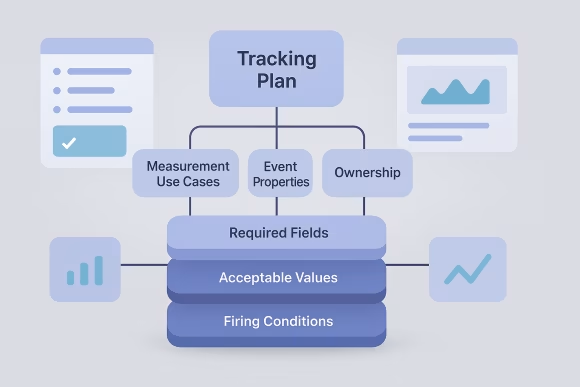
Translate priority use cases into measurable behaviors and required context. Define event coverage expectations, ownership boundaries, and how product analytics and marketing activation requirements coexist without creating parallel definitions.

Event Model Design

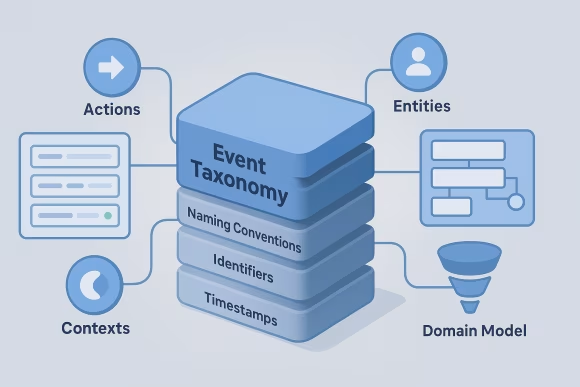
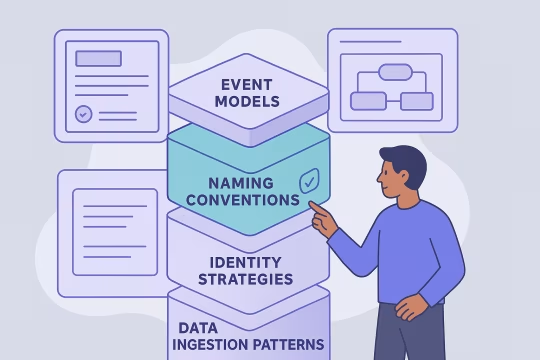
Design a normalized event taxonomy including naming conventions, entities, contexts, and property types. Establish rules for identifiers, timestamps, and attribution fields to support consistent joins and lifecycle analysis.

Schema and Versioning

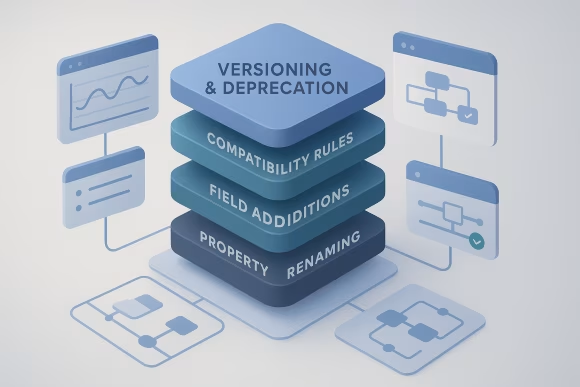
Define schema contracts, required vs optional fields, and compatibility rules. Introduce versioning and deprecation patterns so teams can evolve tracking without breaking downstream pipelines, dashboards, or CDP audiences.

Instrumentation Patterns

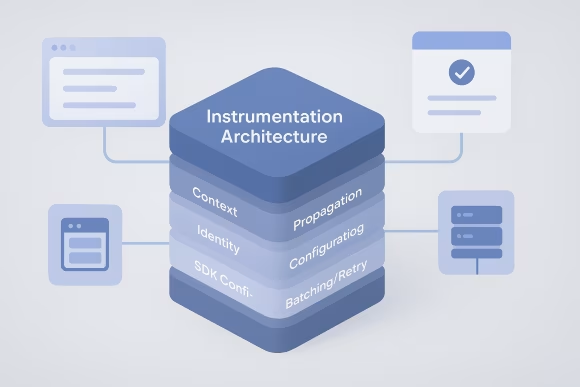
Specify implementation patterns for web, mobile, and server events, including context propagation and consent-aware collection. Provide guidance for SDK usage, event enrichment, and how to handle edge cases like retries and offline capture.

Validation and QA

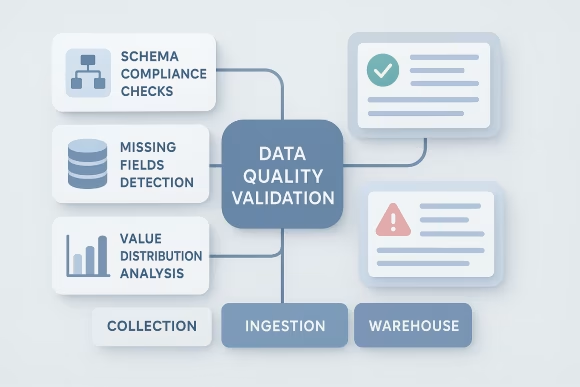
Implement automated validation rules for schema compliance, cardinality checks, and anomaly detection. Define test cases for critical flows and establish release gates to prevent regressions from reaching production datasets.

Operational Governance

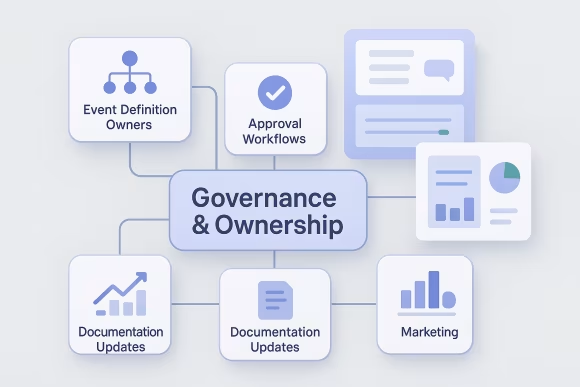
Set up an operating model for change requests, reviews, and documentation. Define ownership, approval workflows, and SLAs for event changes, including how updates are communicated to analytics and activation stakeholders.

Continuous Evolution

Establish routines for monitoring data quality, reviewing event usage, and retiring unused events. Iterate the model as products evolve, ensuring the architecture remains aligned to business questions and platform constraints.

Core Event Tracking Capabilities

This service establishes the technical contract for behavioral data across your CDP ecosystem. It focuses on durable event modeling, schema governance, and implementation patterns that reduce ambiguity and breakage as products evolve. The result is a tracking foundation that supports reliable analytics, consistent activation, and controlled change management across teams and channels.

Capabilities
  • Event taxonomy and naming conventions
  • Tracking plan and measurement mapping
  • Schema definition and validation rules
  • Versioning and deprecation strategy
  • Instrumentation guidance for web and mobile
  • Identity and context propagation patterns
  • Consent-aware tracking design
  • Documentation and governance workflows
Who This Is For
  • Product analytics teams
  • Data engineering teams
  • Marketing operations teams
  • Digital product engineering leads
  • Platform and data architects
  • Analytics engineering teams
Technology Stack
  • Event tracking
  • Snowplow
  • Segment
  • Event schemas and validation
  • Data warehouse integrations
  • Consent and privacy controls

Delivery Model

Engagements are structured to create a stable event contract first, then operationalize it through validation and governance. Delivery can be scoped to a single product or scaled across a portfolio, with clear handoffs to engineering and data teams for implementation and ongoing change management.

Delivery card for Platform Discovery[01]

Platform Discovery

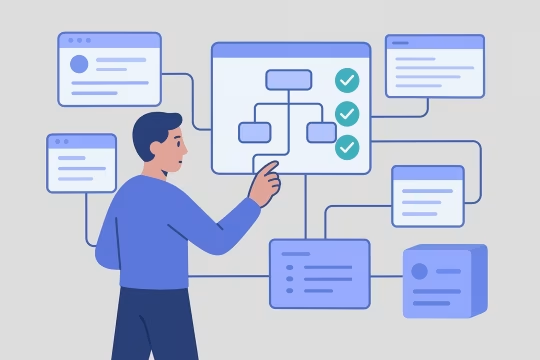
Run stakeholder and system discovery across product, analytics, and marketing operations. Inventory existing events, schemas, and downstream consumers, and identify critical metrics and high-risk areas where tracking changes cause breakage.

Delivery card for Architecture Definition[02]

Architecture Definition

Define the event model, naming conventions, and required contexts. Document identity strategy, consent boundaries, and how events map to CDP and warehouse ingestion patterns to ensure the architecture is implementable.

Delivery card for Tracking Plan Build[03]

Tracking Plan Build

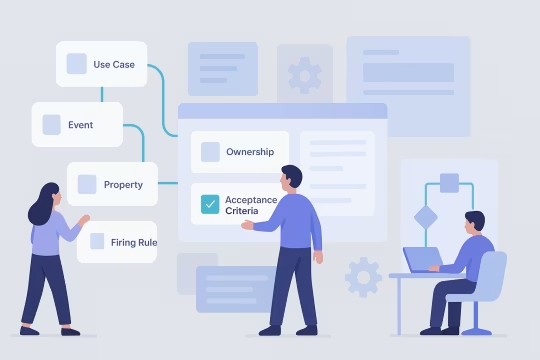
Produce a tracking plan that links use cases to events, properties, and firing rules. Establish ownership and acceptance criteria so engineering teams can implement consistently across platforms and releases.

Delivery card for Implementation Support[04]

Implementation Support

Provide reference implementations, instrumentation guidelines, and review of pull requests or tag configurations. Ensure event payloads match schema contracts and that identity/context fields are captured consistently.

Delivery card for Quality Assurance[05]

Quality Assurance

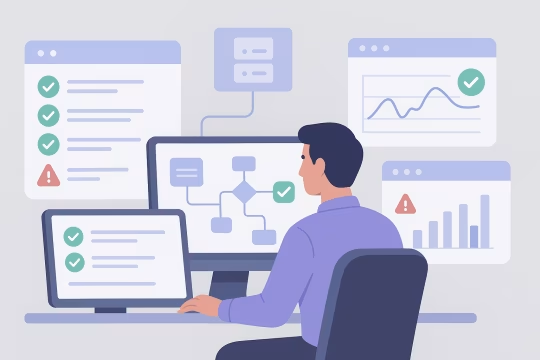
Introduce validation checks and test cases for critical journeys. Set up monitoring for missing fields, schema violations, and anomalies, and define release gates appropriate to your deployment workflow.

Delivery card for Release and Adoption[06]

Release and Adoption

Coordinate rollout sequencing, documentation publication, and communication to analytics and activation stakeholders. Support migration from legacy events, including mapping tables and deprecation timelines where needed.

Delivery card for Governance Operations[07]

Governance Operations

Establish a change request workflow, review cadence, and decision logs. Define how new events are proposed, approved, and documented, and how breaking changes are prevented or managed.

Delivery card for Continuous Improvement[08]

Continuous Improvement

Review event usage, data quality trends, and new measurement needs on a recurring cadence. Retire unused events, refine schemas, and evolve the model as products and CDP capabilities change.

Business Impact

A well-governed event architecture reduces ambiguity and rework across analytics, engineering, and marketing operations. It improves the reliability of metrics and activation logic while lowering the operational cost of maintaining tracking as products evolve.

More Reliable Metrics

Consistent event definitions reduce metric drift caused by silent schema changes. Analysts can trust trend movement because event semantics and required context are controlled and documented.

Lower Operational Risk

Versioning and validation reduce the chance that releases break dashboards, models, or CDP audiences. Teams gain predictable change management with clear deprecation windows and compatibility rules.

Faster Analytics Delivery

A shared tracking plan shortens the time from feature release to usable analysis. Standardized payloads reduce bespoke mapping and accelerate onboarding of new products and teams.

Reduced Data Engineering Rework

Cleaner event contracts reduce downstream normalization, backfills, and one-off fixes. Data engineers can focus on pipeline evolution rather than constant remediation of inconsistent inputs.

Improved Activation Consistency

Marketing operations can build audiences and journeys on stable properties and identifiers. Consistent context fields improve segmentation accuracy across channels and reduce unexpected audience behavior.

Better Cross-Product Comparability

A normalized taxonomy enables consistent reporting across a portfolio. Teams can compare funnels and engagement patterns without rebuilding definitions for each product surface.

Controlled Technical Debt

Governance and deprecation prevent indefinite accumulation of unused or overlapping events. The event layer remains maintainable as products and measurement needs change.

FAQ

Common architecture, operations, integration, governance, risk, and engagement questions for event tracking architecture in CDP ecosystems.

How do you design an event model that works across multiple products?

We start by separating the event model into stable primitives: actions (what happened), entities (what it happened to), and contexts (the surrounding state such as page, device, experiment, consent, and identity). For multi-product environments, we define a shared core taxonomy for cross-cutting behaviors (authentication, navigation, commerce, content engagement) and allow bounded extensions per product domain. The architecture includes naming conventions, identifier rules, and property type constraints so events can be joined and compared across platforms. We also define which contexts are mandatory everywhere (for example, user identifiers, session identifiers, and consent state) versus optional or domain-specific. A key design choice is to optimize for downstream consumption: warehouse-friendly schemas, consistent timestamps, and predictable cardinality. That reduces the need for per-product transformation logic and keeps analytics and CDP activation definitions portable as the portfolio evolves.

What does schema versioning look like for event tracking?

Schema versioning is the mechanism that allows event payloads to evolve without breaking downstream consumers. We define compatibility rules for changes such as adding optional fields (usually backward compatible), adding required fields (requires rollout coordination), renaming properties (typically treated as a deprecation plus introduction), and changing semantics (often requires a new event or version). In practice, versioning can be implemented via explicit schema versions (for example, versioned JSON schemas) and enforced through validation at collection or ingestion. We also define deprecation windows and communication patterns so analysts, data engineers, and marketing operations know when to migrate. The goal is to make change predictable: teams can ship product updates while maintaining stable dashboards, models, and CDP audiences. Versioning is paired with documentation and ownership so there is a clear decision trail for why changes were made and how they impact metrics.

How do you monitor event data quality in production?

We define data quality checks at the points where failures are most actionable: at collection (payload shape and required fields), at ingestion (schema compliance and enrichment success), and in the warehouse (distribution and anomaly checks). The checks typically cover missing required properties, invalid types, unexpected null rates, sudden cardinality spikes, and volume anomalies by platform or release. Monitoring is most effective when tied to ownership and release processes. We recommend alerting that routes to the team responsible for instrumentation, with runbooks that describe likely causes and how to validate fixes. For critical journeys, we also define synthetic or test-user flows that can be executed during QA or after deployment to confirm that key events fire with the expected contexts. This reduces the time between a regression and detection, and it prevents long periods of silent data corruption.

How should event tracking changes be handled in the release process?

Event tracking changes should be treated like API changes: reviewed, tested, and released with clear compatibility expectations. We define a lightweight change workflow where new events and property changes are proposed against the tracking plan, reviewed for downstream impact, and validated against schema rules. In the release pipeline, we recommend automated checks where possible (schema validation, required context presence) and targeted manual QA for critical flows. For changes that affect metrics or activation logic, we add release notes and a migration plan so analytics and marketing operations can update definitions on schedule. Where multiple teams ship independently, versioning and deprecation windows become essential. They allow old and new payloads to coexist temporarily, preventing dashboards and CDP audiences from breaking during staggered rollouts across web, mobile, and backend services.

How does this work with Snowplow event tracking?

With Snowplow, we typically implement the event model using self-describing events and contexts backed by versioned schemas. We define the schema registry structure, naming conventions, and compatibility rules so teams can publish new schemas safely. Contexts are used to standardize shared fields such as identity, consent, device, page, and experiment metadata. We also define enrichment expectations and how to handle failures (for example, what happens when an enrichment cannot be applied). Downstream, we align the schema design to the warehouse tables and modeling approach so analysts have stable, well-typed fields. The practical outcome is that instrumentation teams have clear contracts to implement against, and data engineering teams can rely on schema validation and versioning to reduce breakage. This is especially important when multiple products publish events into the same Snowplow pipeline.

How does this work with Segment tracking plans and destinations?

With Segment, we use the tracking plan as the primary contract: event names, required properties, and allowed values are defined centrally and aligned to measurement use cases. We then map that plan to destination requirements (CDP, warehouse, marketing tools) so the same event payload supports multiple consumers without per-destination divergence. We pay particular attention to identity and context propagation, because Segment implementations often span client and server sources. The architecture defines how user identifiers, anonymous identifiers, and consent state are captured and reconciled. Operationally, we recommend enforcing the tracking plan through validation where feasible and adding release discipline around changes. That prevents “destination-driven” event drift, where teams modify payloads to satisfy a single tool and inadvertently break analytics models or other destinations.

Who should own the event taxonomy and tracking plan?

Ownership is shared, but responsibilities must be explicit. Product analytics typically owns the measurement intent and definitions (what should be measured and why), engineering owns instrumentation correctness (when and how events fire), and data engineering owns downstream contracts and reliability (how events are validated, modeled, and consumed). We recommend a small governance group with clear decision rights for approving new events, changes to shared contexts, and any breaking changes. This group maintains the tracking plan, schema registry conventions, and documentation standards. The operating model should include a change request workflow, review SLAs, and a communication mechanism for releases. Without this, event definitions tend to fragment by team or tool, and the organization reverts to reactive fixes. Governance is most effective when it is lightweight, integrated into existing delivery processes, and backed by automated validation.

What documentation is required to keep tracking maintainable?

Maintainable tracking requires documentation that functions as a contract, not a narrative. At minimum, each event should have: a clear description of intent, firing rules, required and optional properties with types, example payloads, and ownership. Shared contexts (identity, consent, experiments, page/app metadata) should be documented once and referenced consistently. We also recommend documenting version history and deprecation status so consumers can understand what changed and when. For downstream users, include mappings to key metrics and models, and note any known limitations (for example, partial coverage on certain platforms). Documentation should be kept close to the implementation process: updated through the same workflow as code changes, reviewed during tracking plan updates, and validated against schemas where possible. This reduces the gap between “what we think we track” and what is actually emitted in production.

How do you reduce risk during tracking migrations or tool changes?

Tool changes are risky because tracking often becomes implicitly coupled to a vendor’s event format or destination behavior. We reduce risk by defining a tool-agnostic event contract first (taxonomy, schemas, required contexts, versioning rules) and then mapping implementations to the chosen collection and routing tools. During migration, we plan for parallel run periods where old and new pipelines coexist, with reconciliation checks on event counts, key properties, and metric outputs. We also define mapping layers where necessary so downstream models and dashboards can remain stable while instrumentation changes. A successful migration includes a deprecation plan: which events will be retired, how long they will be supported, and how consumers should update. Combined with automated validation and monitoring, this approach prevents long-lived inconsistencies and reduces the chance of breaking analytics or CDP activation during platform transitions.

What is the typical scope and timeline for an engagement?

Scope depends on the number of products, platforms, and existing tracking maturity. A common engagement starts with a focused audit and architecture definition for one or two critical journeys, then expands to a portfolio-wide taxonomy and governance model. The initial phase typically includes discovery, event model design, and a tracking plan for priority use cases. If instrumentation is included, we align with your release cadence and prioritize high-value events first. For organizations with active development, we often implement governance and validation early so new work does not add more inconsistency while the model is being rolled out. Timelines vary, but the work is usually staged: 2–4 weeks for audit and architecture definition, followed by iterative tracking plan expansion and implementation support over subsequent sprints. The goal is to deliver a usable contract quickly and then operationalize it through adoption and quality controls.

How do you collaborate with product, data, and marketing teams day to day?

We run collaboration as a cross-functional working cadence with clear artifacts and decision points. Product analytics and product teams provide measurement intent and prioritize use cases; engineering teams validate feasibility and implement instrumentation; data engineers align schemas to pipelines and warehouse models; marketing operations confirms activation requirements and destination constraints. Day to day, this typically includes short working sessions to refine event definitions, asynchronous reviews of tracking plan changes, and structured checkpoints for schema/versioning decisions. We also establish a single source of truth for documentation and change logs. To keep delivery efficient, we define acceptance criteria for events (required properties, example payloads, validation rules) and a review workflow that fits your sprint process. This reduces back-and-forth and ensures that tracking changes are treated as part of the platform contract, not an afterthought.

How do you prevent breaking changes from impacting dashboards and CDP audiences?

Prevention relies on three controls: contract clarity, validation, and change governance. First, we define explicit schemas with required fields and semantics so teams know what cannot change casually. Second, we implement validation and monitoring that detects schema violations and anomalies close to the point of collection or ingestion. Third, we establish a change workflow that requires impact assessment for changes to shared events or contexts. For unavoidable breaking changes, we use versioning and deprecation windows so old and new payloads can coexist while downstream consumers migrate. We also recommend identifying “critical events” that power key metrics or activation logic and applying stricter release gates to them. This combination reduces surprise breakage and makes changes predictable for analysts and marketing operations, even when multiple engineering teams ship independently.

How do you handle identity across web, mobile, and server events?

We define an identity strategy that separates anonymous identifiers, authenticated user identifiers, and device/app identifiers, and we specify when each should be present. The event model includes consistent fields for these identifiers and rules for how they are generated, persisted, and rotated. For cross-platform consistency, we define shared contexts that carry identity and session information, and we document how identity transitions are represented (for example, login, logout, account linking). Where server-side events are involved, we specify how correlation identifiers are propagated so client and server events can be joined reliably. We also account for consent and privacy constraints by defining which identifiers are allowed under which conditions. The outcome is a predictable identity contract that supports funnel analysis, attribution, and CDP profile stitching without relying on tool-specific behavior or undocumented assumptions.

How does collaboration typically begin?

Collaboration typically begins with a short discovery phase to align on goals, constraints, and current-state reality. We start by identifying the highest-value measurement and activation use cases, the products and channels in scope, and the systems that consume event data (CDP, warehouse, BI, marketing destinations). In parallel, we audit existing events, schemas, and tracking documentation to understand drift, duplication, and breakage patterns. From there, we agree on a first increment that is small enough to deliver quickly but meaningful enough to establish the contract: a core taxonomy, shared contexts (identity, consent, platform metadata), and a tracking plan for a prioritized set of journeys. We also define ownership and a change workflow so new work does not reintroduce inconsistency. The output of the kickoff phase is a clear plan: what will be defined, what will be implemented, how validation will work, and how teams will review and adopt changes during sprints. This creates a practical starting point that integrates with your delivery process.

Define a tracking contract your teams can sustain

Let’s review your current event streams, align on a shared event model, and establish governance and validation that keeps analytics and CDP activation reliable as your platform evolves.

Oleksiy (Oly) Kalinichenko

Oleksiy (Oly) Kalinichenko

CTO at PathToProject

Do you want to start a project?