


 [01]
[01]Discovery
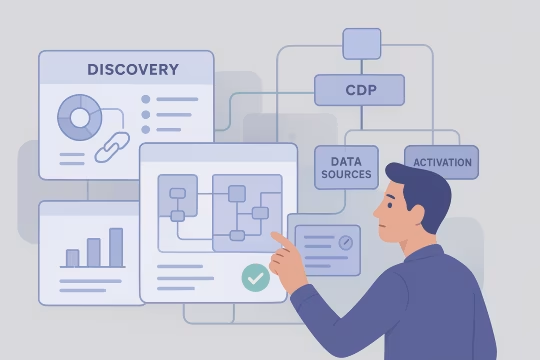
Review current CDP architecture, data sources, and activation destinations. Capture consent capture mechanisms, existing policies, and operational constraints, then produce a data-flow map highlighting enforcement gaps.
CDP consent architecture
Identify where consent, purpose, identity, and activation rules break across collection, pipelines, and downstream use before they create compliance risk.
Built to surface governance gaps, integration weaknesses, upgrade blockers, and enforcement inconsistencies.
No login required. Takes 2–3 minutes.
Privacy and consent architecture defines how consent signals, legal bases, and processing purposes are represented, enforced, and audited across a CDP ecosystem. It connects consent management platform inputs and privacy APIs integration to downstream identity resolution, profile unification, segmentation, and activation so that every data movement can be justified, constrained, and traced under GDPR compliance engineering expectations.
Organizations need this capability when data collection expands across web, mobile, server-side events, and partner feeds, and when multiple activation destinations (email, ads, personalization, analytics) introduce inconsistent enforcement. Without a consistent model, teams rely on ad hoc rules in tags, pipelines, and tools that are difficult to validate and maintain—and consent signal propagation for CDP platforms becomes unreliable.
A robust, CDP privacy-by-design architecture supports scalable platform operations by standardizing consent state, purpose taxonomy, retention policies, and enforcement points. It enables repeatable integrations, reduces rework during regulatory change, and provides evidence for audits through consistent logging and lineage across the CDP and connected systems.
Core Focus
Best Fit For
Key Outcomes
Technology Ecosystem
Delivery Scope
As CDP ecosystems mature, data collection and activation often expand faster than the organization’s ability to represent consent and privacy constraints consistently. Consent states may be captured in one system, transformed in another, and silently dropped before reaching downstream destinations. Purpose and legal basis are frequently implicit, embedded in tags, naming conventions, or tool-specific settings that do not translate across the platform.
This creates architectural fragmentation: identity resolution merges profiles without a reliable view of permitted processing, event pipelines route data without purpose-based filtering, and activation tools receive audiences that cannot be traced back to compliant collection. Engineering teams then compensate with one-off rules per channel, duplicated logic across ETL jobs, and manual checks during releases. Over time, the platform becomes difficult to reason about because enforcement is distributed and inconsistent.
Operationally, the result is slow change management and elevated risk. Regulatory updates or policy changes trigger broad refactoring across pipelines and integrations. Audit requests require manual evidence gathering across multiple tools, and incident response becomes reactive because monitoring and logging were not designed around consent and purpose constraints.
Inventory data sources, event schemas, identity flows, and activation destinations. Map current consent capture points and document where consent, purpose, and retention decisions are made or lost across the CDP ecosystem.
Translate legal and policy requirements into a technical model: consent states, legal bases, purposes, jurisdictions, and data categories. Define controlled vocabularies and versioning rules so changes can be introduced without breaking integrations.
Design where enforcement occurs across collection, ingestion, transformation, identity resolution, and activation. Specify decision points, default-deny behaviors, and how constraints propagate through batch and streaming pipelines.
Define interfaces for reading and writing consent and preference signals, including event-level and profile-level attributes. Integrate consent management platforms and privacy APIs with the CDP and downstream tools using consistent identifiers and error handling.
Implement consent propagation, purpose filters, and retention controls in pipelines and activation connectors. Add structured logging, lineage metadata, and monitoring signals to support audit evidence and operational troubleshooting.
Create test cases for consent transitions, jurisdiction rules, and purpose-based routing. Validate that audiences and exports respect constraints, and that denial or withdrawal scenarios correctly stop processing and trigger deletion workflows.
Establish ownership, review workflows, and documentation for consent taxonomy and enforcement rules. Define how new sources, destinations, and purposes are onboarded, and how policy changes are rolled out safely.
This service establishes the technical foundations required to represent consent and privacy constraints as first-class platform concerns within a CDP ecosystem. It supports GDPR compliance engineering by standardizing consent state, data processing purpose limitation design, and enforceable control points so consent signal propagation remains intact from collection through activation. The architecture emphasizes consent auditability and logging, predictable change management, and scalable onboarding of new channels without distributing compliance logic across tools.
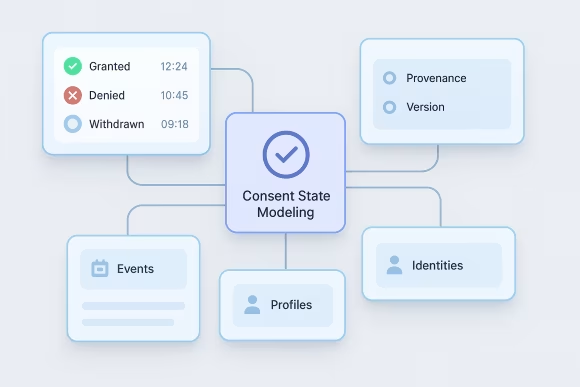
Define a normalized representation of consent, preferences, and lawful processing context that can be applied across events, profiles, and identities. The model supports explicit states (granted, denied, withdrawn), timestamps, provenance, and versioning so downstream systems can evaluate consent deterministically.
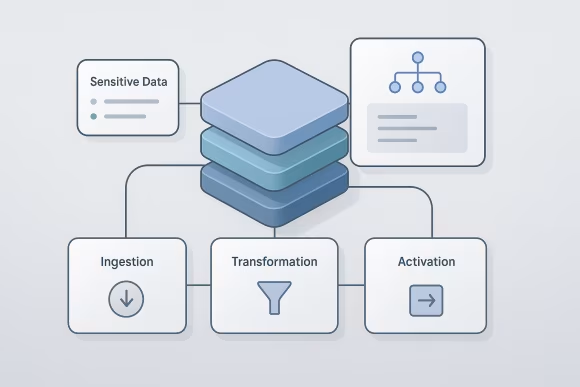
Create a purpose taxonomy and data classification scheme that maps policy language to enforceable technical attributes. This enables purpose limitation, category-based handling (e.g., sensitive data), and consistent interpretation across ingestion, transformation, and activation workflows.
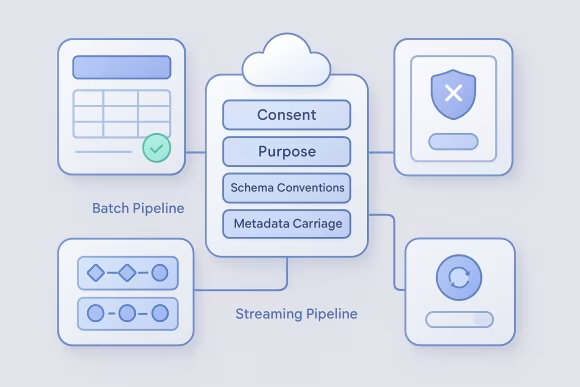
Design how consent and purpose signals travel through batch and streaming pipelines without being dropped or reinterpreted. This includes schema conventions, metadata carriage, transformation rules, and fallbacks when signals are missing, ensuring default-deny behavior where required.

Specify and implement where constraints are evaluated: collection gates, ingestion filters, identity resolution rules, audience build constraints, and export guards. Control points are designed to be observable and testable, reducing reliance on tool-specific settings and manual checks.
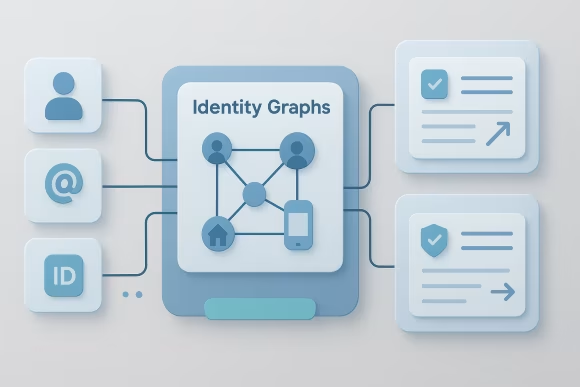
Define how consent applies across identifiers and merged profiles, including precedence rules, household or device relationships, and conflict handling. The architecture prevents unlawful propagation of consent across identities and supports jurisdiction-aware evaluation during unification.
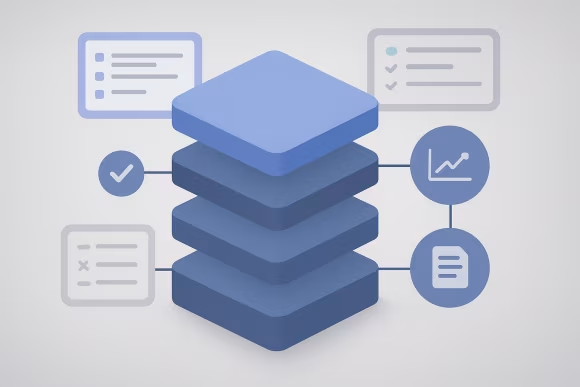
Design retention policies and deletion workflows aligned to purposes and legal requirements, including propagation to downstream systems. Implement mechanisms for erasure requests, suppression lists, and proof of execution through logs and lineage metadata.
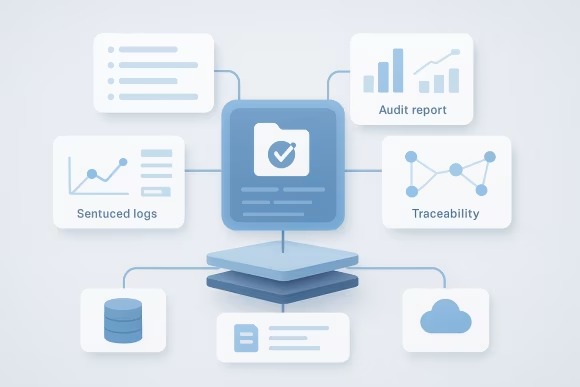
Implement structured logging and lineage metadata that ties activation outputs back to collection context, consent state, and purpose. This supports internal audits, regulatory inquiries, and incident response by making decisions explainable and reproducible.
Use the CDP health check to pinpoint where architecture, governance, and integration design fail to carry consent and purpose rules end to end.
Engagements follow a clear engineering sequence from discovery and data mapping through architecture definition, implementation, and validation. The delivery model aligns GDPR compliance engineering requirements with consent management platform integration, privacy API contracts, and observable control points so consent signal propagation and purpose limitation are enforced consistently across the CDP lifecycle.
[01]Review current CDP architecture, data sources, and activation destinations. Capture consent capture mechanisms, existing policies, and operational constraints, then produce a data-flow map highlighting enforcement gaps.
 [02]
[02]Define the target consent and purpose model, control points, and integration contracts. Document decision logic, default behaviors, and how the model applies across identities, jurisdictions, and data categories.
 [03]
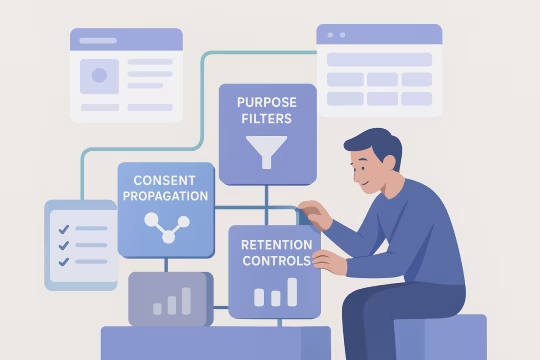
[03]Implement consent propagation, purpose filters, and retention controls in pipelines and connectors. Establish schema conventions and metadata handling so enforcement is consistent across tools and environments.
 [04]
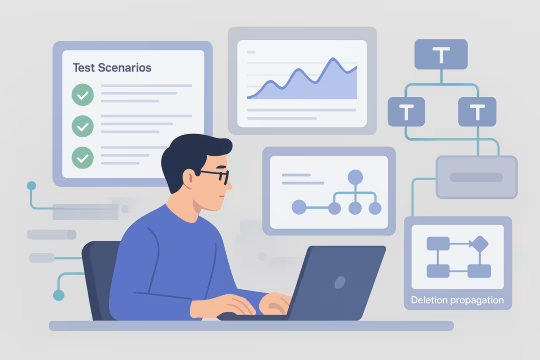
[04]Build test scenarios for consent transitions, withdrawals, and jurisdiction rules. Validate that audience builds and exports respect constraints and that deletion workflows propagate to downstream systems reliably.
 [05]
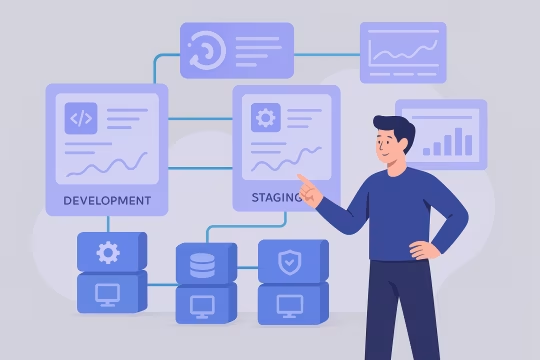
[05]Roll out changes with environment-specific configuration, monitoring, and rollback plans. Coordinate releases across CDP, CMP, and activation tools to avoid partial enforcement or inconsistent behavior.
 [06]
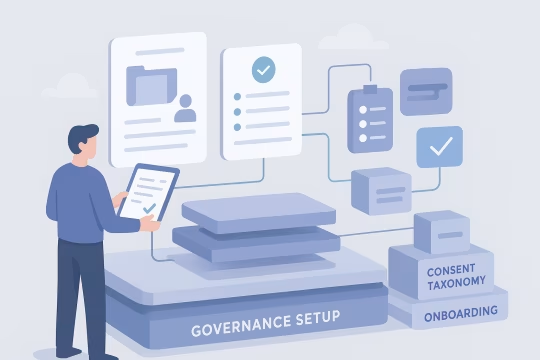
[06]Define ownership, change control, and documentation for consent taxonomy and enforcement rules. Establish onboarding checklists for new sources and destinations, including required evidence and test coverage.
 [07]
[07]Iterate as regulations, policies, and channels evolve. Use monitoring signals and audit findings to refine control points, improve observability, and reduce operational overhead over time.
A privacy and consent architecture reduces compliance risk by making constraints explicit, enforceable, and auditable across CDP data flows. By centralizing purpose limitation design and standardizing consent management platform integration and privacy APIs integration, teams can adopt policy changes faster, reduce rework across pipelines and destinations, and improve operational confidence in GDPR-aligned activation.
Purpose and consent constraints are enforced at defined control points rather than scattered across tools. This lowers the likelihood of exporting or activating data without valid consent or lawful basis.
When policies or regulations change, updates are applied to a shared model and enforcement layer. Teams avoid broad refactoring across tags, pipelines, and destination-specific configurations.
Structured logs and lineage metadata provide evidence of consent state, purpose, and processing decisions. Audit responses become repeatable and less dependent on manual data gathering across systems.
Audience builds and exports are constrained by purpose and jurisdiction rules. This reduces accidental activation of restricted segments and supports consistent suppression and withdrawal handling.
Standardized schemas and integration contracts reduce duplicated logic across ingestion, transformation, and activation. Engineering teams spend less time maintaining one-off compliance rules per channel.
Clear decision points and monitoring signals improve incident response and troubleshooting. Operational teams can detect consent signal loss, misconfiguration, or unexpected routing earlier in the delivery lifecycle.
New sources and destinations are onboarded through defined governance and technical patterns. This supports growth without expanding the compliance surface area in an uncontrolled way.
Before roadmap commitments
Review how well your CDP supports auditable consent propagation, purpose-based controls, deletion workflows, and integration governance before expanding activation.
Adjacent capabilities that extend CDP governance, architecture, and operational control across data collection, identity, and activation.
Enterprise CRM data synchronization and identity mapping
Event-driven journeys across channels and products
CDP audience activation with governed delivery to channels
Audience sync activation engineering for CDP activation
CDP real-time decisioning design for real-time experiences
Customer analytics platform implementation for governed metrics and behavioral analytics
Unified customer profile architecture and insight-ready datasets
Scalable enterprise audience segmentation models and cohort definition frameworks
Cross-channel identity stitching with governed matching rules
Common questions from legal, data, and marketing operations stakeholders evaluating consent-aware CDP architecture and delivery.
We treat consent, lawful basis, and purpose as explicit data attributes with a controlled vocabulary and clear semantics. Practically, this means defining a canonical consent state model (granted, denied, withdrawn), timestamps, provenance (where the signal came from), and scope (channel, brand, jurisdiction, or processing purpose). We then define a purpose taxonomy that maps policy language to technical identifiers used consistently across pipelines and tools. The model is designed to work at multiple levels: event-level (e.g., a pageview), profile-level (e.g., marketing preferences), and identity-level (e.g., device vs. account). We also define precedence and conflict rules so downstream systems can evaluate consent deterministically. Finally, we specify where the model is stored and accessed (CDP profile store, consent service, or privacy API), and how it is propagated through batch and streaming flows without being dropped or reinterpreted by individual tools.
Enforcement should happen at multiple control points, each with a clear responsibility, rather than relying on a single downstream gate. Typical control points include: collection (tagging/server-side collection rules), ingestion (routing and filtering), transformation (ETL/ELT rules), identity resolution (merge constraints and evaluation at unification time), audience building (purpose-based segmentation constraints), and activation/export (destination-specific guards). We design these control points so they are observable and testable. For example, ingestion filters should emit structured logs when events are dropped due to missing consent, and activation exports should record the consent and purpose context used to generate the audience. A key architectural principle is default-deny when consent context is missing or ambiguous, with explicit exceptions governed through change control. This reduces the risk of “silent permissive” behavior as integrations evolve.
Operationally, a consent-aware architecture reduces ad hoc decision-making during releases by making constraints explicit and centrally defined. Instead of each team configuring consent behavior independently in tags, pipelines, and destinations, you operate against a shared model and a set of enforcement points with documented behavior. In practice, releases become more predictable because changes are evaluated against a known set of rules: schema contracts for consent attributes, purpose taxonomy versions, and destination guardrails. We also introduce monitoring signals that operations teams can use to detect regressions, such as a sudden increase in events missing consent metadata or exports blocked due to purpose mismatches. There is some additional discipline required: onboarding a new source or destination includes validating consent signal propagation and adding test cases. The trade-off is fewer production incidents, clearer audit evidence, and less rework when policies change.
Audit readiness depends on being able to explain and reproduce processing decisions. We typically recommend three layers of evidence: (1) structured logs at enforcement points, (2) lineage metadata that ties outputs back to inputs and rules, and (3) configuration/version history for consent taxonomy and policy mappings. Structured logs should capture what was processed or blocked, why (missing consent, denied purpose, jurisdiction rule), and the context used for the decision (consent state version, purpose identifiers, timestamps). Lineage metadata should connect activation exports and derived audiences to the underlying events/profiles and the consent/purpose constraints applied. We also recommend dashboards and alerts for operational signals (consent signal loss, unusual export volumes, spikes in blocked events) and a repeatable “audit pack” process that can be generated on demand for a time window, destination, or purpose.
Integration starts by defining the contract between the CMP and the CDP: identifiers, consent categories, purpose mapping, and how updates are delivered (client-side, server-side, webhook, batch export, or privacy API). We then design how consent signals are persisted and referenced so downstream systems can evaluate them consistently. Key technical considerations include: identity linkage (device IDs, user IDs, hashed emails), handling partial identification (anonymous to known transitions), and ensuring consent updates propagate quickly enough for activation use cases. We also define how to handle consent withdrawal, including suppression and deletion workflows. Where possible, we prefer integration patterns that avoid duplicating consent logic in multiple places. For example, a privacy API can provide a single source of truth for consent evaluation, while the CDP stores the necessary attributes for segmentation and enforcement with clear versioning and provenance.
We design destination integrations so consent and purpose constraints are evaluated before data leaves the controlled environment, and so each destination receives only what it is permitted to process. This typically involves purpose-based audience constraints, export guards, and destination-specific field minimization. We also define a consistent mapping between internal purposes and destination use cases (e.g., email marketing vs. paid media). Where destinations have their own consent settings, we treat them as secondary controls and avoid relying on them as the primary enforcement mechanism. Operationally, we recommend maintaining a destination registry that documents: allowed purposes, required consent states, data categories permitted, retention expectations, and integration owners. This registry becomes part of governance and change control, so new destinations or changes to existing ones are reviewed against the same privacy architecture rules.
Ownership should be shared but explicit: legal/privacy typically owns the policy intent and definitions, while data/platform teams own the technical representation and enforcement implementation. We recommend establishing a small governance group that approves changes to the consent and purpose taxonomy, with clear decision rights and a documented change process. From an engineering perspective, governance includes versioning rules (how new purposes are introduced), backward compatibility expectations for schemas, and release procedures for updating enforcement logic across pipelines and destinations. We also define onboarding checklists for new data sources and activation endpoints, including required tests and evidence. The goal is to avoid “taxonomy drift,” where teams create new categories ad hoc. A controlled vocabulary, a registry of purposes and data categories, and a lightweight review workflow keep the platform consistent while still allowing iteration.
We design for change by separating policy intent from implementation details. The consent and purpose model is versioned, and enforcement points reference the model through configuration rather than hard-coded rules wherever feasible. This allows you to introduce new purposes, adjust retention, or change jurisdiction handling with controlled rollouts. A typical change workflow includes: updating the taxonomy and mappings, impact analysis across sources and destinations, implementing or adjusting enforcement logic, and validating with targeted test scenarios (including withdrawal and denial cases). We also recommend staged deployment with monitoring to detect unexpected blocking or leakage. For larger changes, we produce a migration plan that addresses historical data (e.g., reclassification, re-consent requirements) and downstream dependencies. The objective is to make policy change a repeatable operational process, not a platform-wide emergency refactor.
The primary risk is unlawful processing: data may be collected, merged, segmented, or activated without valid consent or outside the permitted purpose. In a CDP context, this risk is amplified because identity resolution and audience building can spread the impact across multiple destinations quickly. There are also engineering risks. If consent is inconsistently represented, teams implement compensating logic in multiple tools, which increases the chance of defects and makes behavior difficult to verify. Missing consent metadata can also lead to silent permissive defaults, where data flows continue because systems cannot evaluate constraints. We mitigate these risks by designing default-deny behavior when consent context is absent, adding validation at ingestion and export, and implementing monitoring that detects consent signal loss. We also ensure that evidence trails exist so decisions can be explained and corrected quickly when issues occur.
Identity resolution must be consent-aware. We define rules for when identifiers can be linked and how consent applies across merged identities. For example, consent granted on one identifier should not automatically extend to another identifier unless your policy and data collection context support that linkage. Technically, we implement precedence and conflict handling: if one identity has withdrawn consent for a purpose, the merged profile should respect the most restrictive applicable state for that purpose and jurisdiction. We also design how consent is evaluated during unification (at merge time) and during activation (at export time), because the correct decision can depend on the destination and purpose. We also recommend capturing provenance for identity links and consent signals, so you can explain why a profile was eligible for a given activation. This reduces risk and improves the ability to debug segmentation and export behavior.
Typical outputs include a consent and purpose data model, a mapped set of enforcement control points across the CDP flow, integration contracts for CMP/privacy APIs, and an implementation plan covering pipelines, identity resolution, activation, retention, and deletion. We also deliver a test strategy and an operational evidence plan (logging, lineage, monitoring) aligned to audit needs. To start effectively, we need access to current architecture documentation (or the ability to produce it via workshops), a list of data sources and destinations, existing consent categories and policy language, and an overview of identity resolution logic. We also need to understand operational constraints such as release cadence, tooling, and ownership boundaries. Engagements can be architecture-only, implementation-focused, or a phased approach. The scope is usually defined around the highest-risk flows first (collection to activation) and then expanded to cover additional channels and destinations.
Collaboration typically begins with a short discovery phase focused on data flows and decision points. We run structured workshops with legal/privacy, data/platform engineering, and marketing operations to align on policy intent, current consent capture, and the activation use cases that drive risk. Next, we produce a current-state map showing sources, transformations, identity resolution, and destinations, annotated with where consent and purpose are captured, transformed, enforced, or lost. This becomes the baseline for defining the target consent model and the enforcement architecture. From there, we agree on a phased plan: prioritize a small number of critical flows, implement the consent model and control points, and add monitoring and tests. We establish governance ownership early so taxonomy and rule changes have a clear review path as the platform evolves.
These case studies illustrate practical implementations of privacy, consent, and governance architectures within complex digital platforms. They highlight approaches to consent signal propagation, data governance, auditability, and integration with compliance-focused systems, reflecting key themes from the Privacy and Consent Architecture service. The selected work demonstrates measurable outcomes in managing consent states, enforcing purpose-based controls, and ensuring GDPR-aligned data flows across diverse ecosystems.
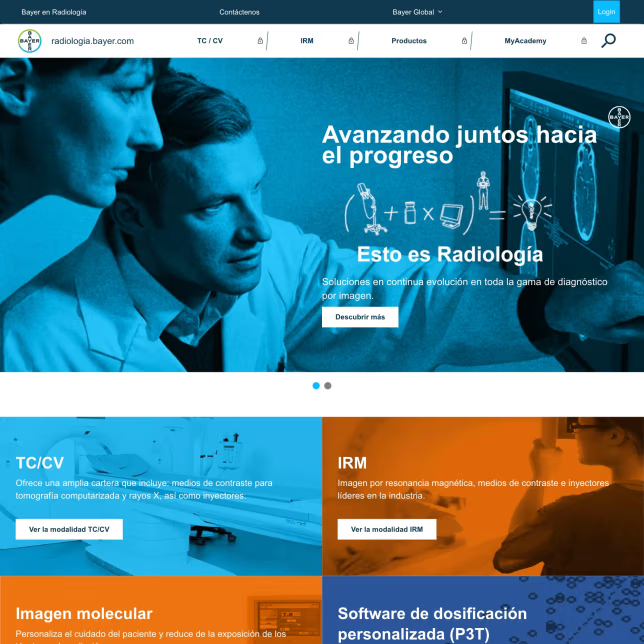
An advanced healthcare digital platform for LATAM was required to facilitate collaboration among radiology HCPs, distribute company knowledge, refine treatment methods, and streamline workflows. The solution needed secure medical website role-based access restrictions based on user role (HCP / non-HCP) and geographic region.
The platform enhanced collaboration, streamlined workflows, and empowered radiology professionals with advanced tools to gain insights and optimize patient care.
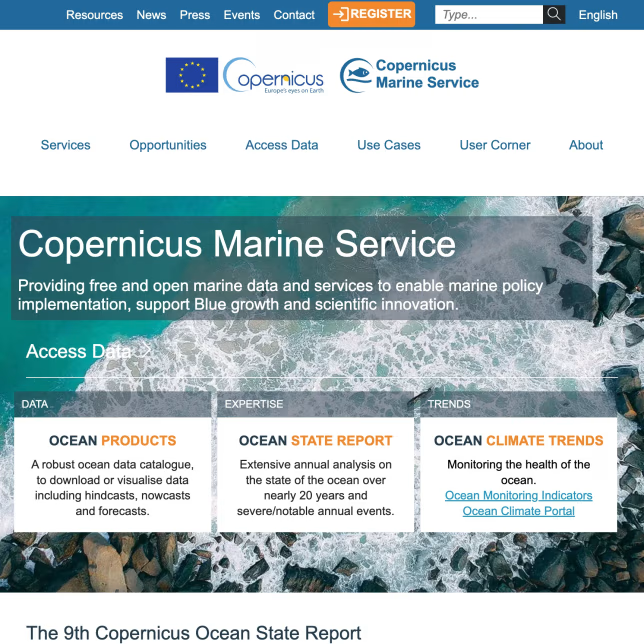
The existing marine data portal relied on three unaligned WordPress installations and embedded PHP code, creating inefficiencies and risks in content management and usability.
The new Drupal DXP streamlined content operations and improved accessibility, offering scientists and businesses a more efficient gateway to marine data services.
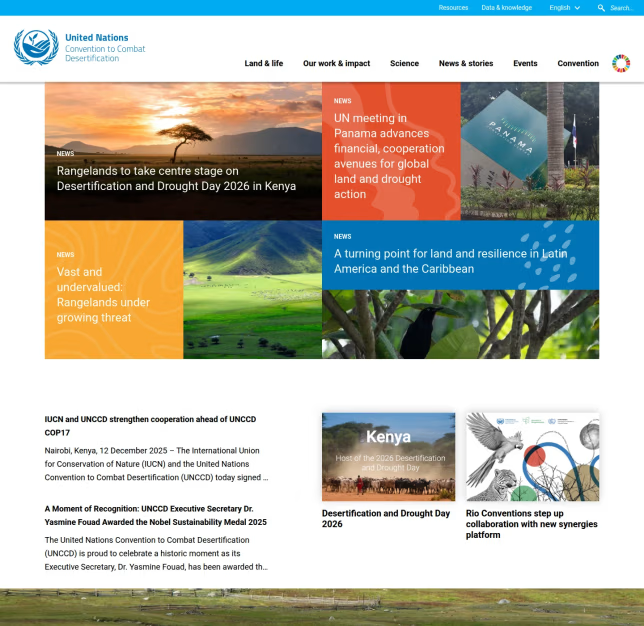
UNCCD operated four separate websites (two WordPress, two Drupal), leading to inconsistencies in design, content management, and user experience. A unified, scalable solution was needed to support a large-scale CMS migration project and improve efficiency and usability.
The modernization effort resulted in a cohesive, user-friendly, and scalable website, improving content management efficiency and long-term digital sustainability.
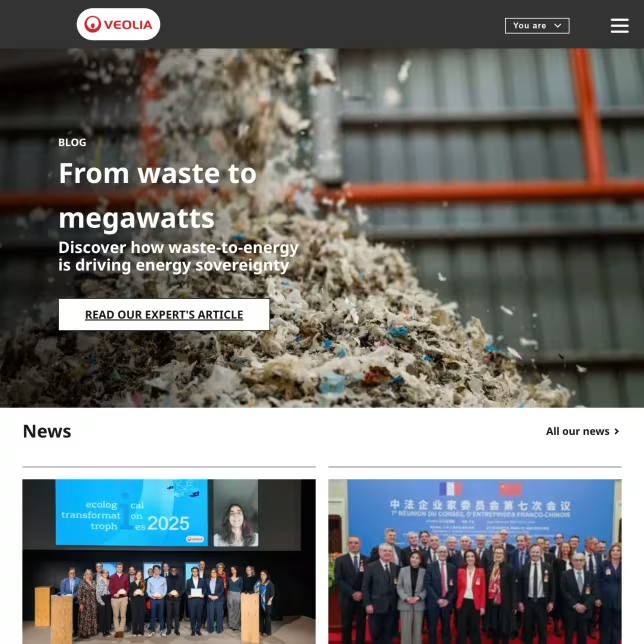
With Drupal 7 reaching end-of-life, Veolia needed a Drupal 7 to Drupal 10 enterprise migration for its Acquia Site Factory multisite platform—preserving region-specific content and multilingual capabilities across more than 200 sites.
The platform was modernized into a stable, scalable multisite foundation with improved performance, maintainability, and long-term upgrade readiness.
Oleksiy (PathToProject) worked with me on a specific project over a period of three months. He took full ownership of the project and successfully led it to completion with minimal initial information.
His technical skills are unquestionably top-tier, and working with him was a pleasure. I would gladly collaborate with Oleksiy again at any opportunity.

Nikolaj Stockholm Nielsen
Strategic Hands-On CTO | E-Commerce Growth
Oleksiy (PathToProject) is demanding and responsive. Comfortable with an Agile approach and strong technical skills, I appreciate the way he challenges stories and features to clarify specifications before and during sprints.

Olivier Ritlewski
Ingénieur Logiciel chez EPAM Systems
As Dev Team Lead on my project for 10 months, Oleksiy (PathToProject) demonstrated excellent technical skills and the ability to handle complex Drupal projects. His full-stack expertise is highly valuable.

Laurent Poinsignon
Domain Delivery Manager Web at TotalEnergies
These articles expand on the governance and implementation concerns behind privacy and consent architecture in CDP environments. They cover how consent can drift across pipelines, how event contracts and activation ownership affect enforcement, and how identity and replay controls shape compliant delivery.
Let’s map your current data flows, identify enforcement gaps, and design a consent and purpose model that scales across collection, identity resolution, and activation.