Discovery & Planning
Assess current UI components and define design system goals.
Storybook provides a structured environment for developing, testing, and documenting UI components independently from application logic. By organizing components into reusable building blocks, teams can build consistent user interfaces across large digital platforms while improving development efficiency.
We help organizations implement Storybook as the foundation for scalable design systems. Our approach connects component libraries with frontend frameworks, design tokens, and documentation workflows, enabling designers and developers to collaborate effectively while maintaining a reliable and well-governed UI architecture.
As digital platforms grow, frontend development often becomes fragmented. Components are duplicated across projects, documentation is outdated or missing, and design systems are difficult to maintain across teams.
Without a structured component library and documentation environment, developers spend time recreating UI elements instead of building new features. This slows delivery, introduces inconsistencies, and makes large frontend codebases harder to maintain.
Analyze existing UI components and identify reusable patterns across applications.
Design a scalable Storybook structure aligned with component libraries and design tokens.
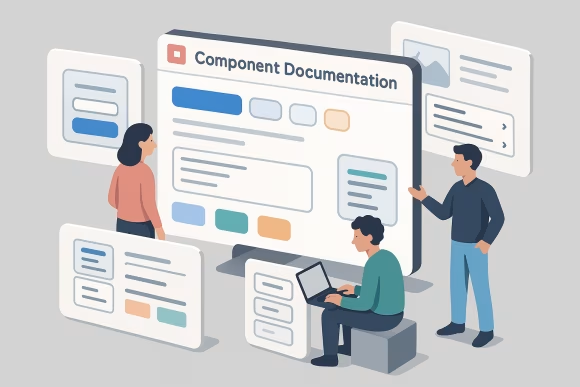
Document components with usage examples, configuration options, and development guidelines.
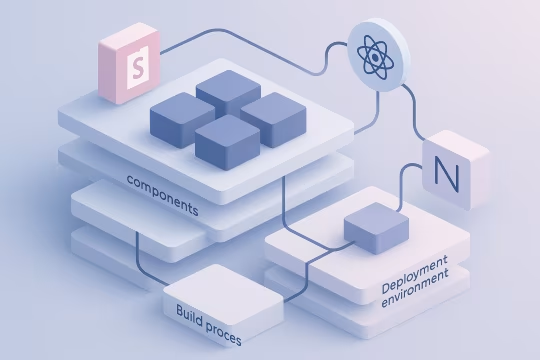
Connect Storybook with frameworks, build systems, and design system workflows.
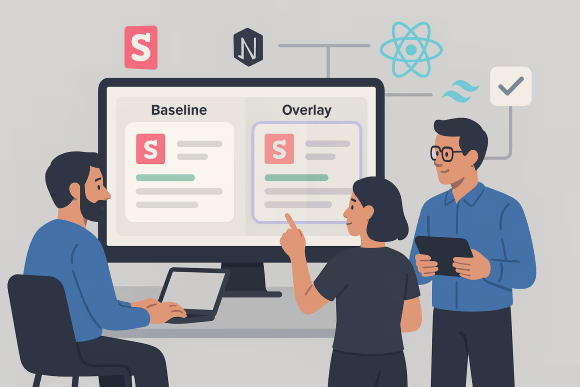
Integrate visual testing and component validation into the development pipeline.
Establish processes to evolve the design system and maintain component consistency over time.
Storybook provides a structured environment for building, documenting, and validating UI components independently from application logic. By organizing components into reusable modules with clear usage examples and configuration states, teams gain a transparent view of how interface elements behave across different scenarios. This approach improves developer productivity, strengthens collaboration between designers and engineers, and ensures that component systems remain scalable and maintainable as frontend platforms evolve.
Our Storybook implementation process focuses on establishing a scalable component documentation environment that integrates with the existing frontend architecture. We analyze current UI implementations, structure reusable component libraries, and integrate documentation, testing, and governance workflows. This structured delivery approach ensures that teams can consistently build, validate, and evolve UI components while maintaining alignment between design systems and production interfaces.
Assess current UI components and define design system goals.
Build reusable components and integrate them into Storybook.
Document component usage and establish design system rules.
Connect Storybook with development pipelines and testing tools.
Test components and ensure stability across environments.
Support long-term evolution of the design system.
Implementing Storybook as part of a frontend platform architecture improves development efficiency, interface consistency, and long-term maintainability of component systems. Teams gain a centralized environment for documenting and validating UI behavior, reducing duplicated development effort and minimizing interface regressions. This structured component workflow accelerates product delivery while enabling organizations to scale frontend engineering across multiple teams and applications.
Reusable components reduce development time.
Shared components ensure design consistency.
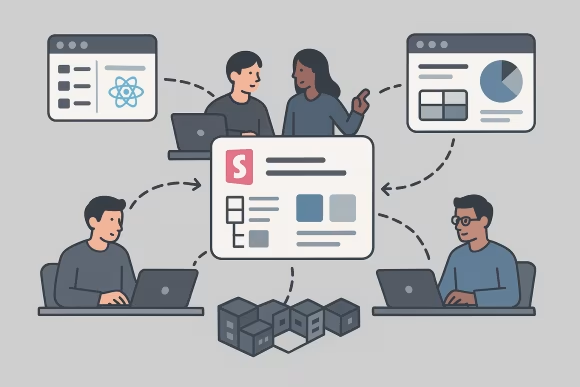
Designers and developers work from the same component system.
Structured component architecture simplifies maintenance.
Design systems support growth across multiple applications.
Testing and documentation reduce UI regressions.
Design systems and component libraries often connect with frontend architecture, headless platforms, and modern DevOps workflows. These related services help organizations build scalable digital platforms with consistent user interfaces.
Storybook is often introduced as a documentation tool, but in enterprise environments it becomes a central part of frontend architecture and design system governance. When implemented correctly, it supports reusable component development, structured collaboration between designers and engineers, and reliable UI testing workflows. These questions address common technical, operational, and strategic considerations that organizations evaluate when adopting Storybook as part of a scalable design system and frontend engineering platform.
Storybook provides a structured environment where UI components can be developed, documented, and validated independently from the application itself. Instead of embedding interface logic directly into page templates or product code, teams can isolate components and organize them into a reusable system.
This approach is essential for enterprise design systems. Each component becomes a documented building block with clear usage guidelines, variations, and states. Designers and engineers can collaborate around the same component definitions, ensuring consistency across applications and digital products.
Over time, Storybook becomes the operational center of the design system. It supports governance, improves discoverability of components, and reduces duplication across codebases. Organizations managing multiple applications, brands, or frontend teams benefit significantly from this centralized component architecture.
Yes. Storybook can be integrated into most existing frontend projects without requiring a complete architectural rewrite. In many cases, organizations introduce Storybook gradually while auditing their current component structure.
The process typically begins with identifying reusable UI components across the codebase. These components are then extracted and documented inside Storybook while maintaining compatibility with the application’s existing framework and build system.
Over time, teams can transition from ad-hoc UI development toward a structured component library. This incremental approach allows organizations to improve frontend architecture while continuing product development. It also helps reduce technical risk because the application itself does not need to be rebuilt during the transition.
One of the main challenges in frontend development is the disconnect between design documentation and implemented code. Designers often work in tools like Figma while developers work inside application repositories, which can lead to inconsistencies and interpretation gaps.
Storybook acts as a shared reference point. Each UI component is presented with interactive examples that show how it behaves across different states and configurations. Designers can review component behavior directly, while developers gain clear implementation guidelines.
This shared documentation layer significantly reduces ambiguity. Teams can discuss components using a common visual reference instead of screenshots or static design files. Over time, this improves design fidelity, accelerates UI reviews, and creates a more reliable collaboration process across product teams.
Yes. Storybook integrates well with visual testing tools that compare component rendering across builds. These tools capture visual snapshots of components and detect unintended changes during development.
This is particularly valuable in large frontend systems where small UI changes can affect multiple pages or applications. Automated visual testing ensures that design system components remain consistent even as the platform evolves.
By integrating visual regression testing into CI/CD pipelines, teams can identify issues early in the development process. This reduces the risk of UI regressions reaching production and improves overall frontend reliability. Many organizations treat Storybook as a foundation for UI testing workflows rather than only a documentation environment.
In modern frontend ecosystems, applications are often built from reusable components rather than large monolithic page templates. Storybook supports this architectural model by allowing teams to develop and validate components in isolation.
Instead of testing components only within the context of the application, developers can explore them independently in Storybook. This improves component reliability and reduces dependencies between UI elements.
Storybook also integrates well with modern frontend frameworks and build systems. It can operate alongside React, Next.js, and other frameworks commonly used in enterprise platforms. As a result, it becomes a core part of the frontend architecture, supporting documentation, development workflows, and design system governance.
Storybook works well in monorepo environments where multiple applications share a common component library. In these setups, components are typically maintained in shared packages while individual applications consume them as dependencies.
Storybook can serve as the documentation and testing environment for these shared components. Developers can explore the entire component library in one place, regardless of which application ultimately uses the components.
This approach is particularly effective for organizations managing multiple products or frontend teams. By combining monorepos with Storybook documentation, teams can maintain consistent UI patterns across projects while avoiding duplicated component implementations.
Governance is a critical aspect of maintaining a healthy design system. Storybook helps by providing a centralized location where all components are documented and reviewed.
However, governance also requires clear processes. Teams typically define component contribution guidelines, review workflows, and versioning strategies for shared UI libraries. Storybook becomes the reference point where these components are documented and validated.
Over time, organizations may establish a design system team responsible for approving new components and maintaining standards. This ensures the system evolves in a controlled way while still supporting innovation across product teams.
Yes. Storybook-based design systems are commonly used across multiple applications, websites, and digital platforms. Because components are documented independently from the application, they can be reused in different environments.
For example, a component library built in Storybook might be used across marketing websites, product dashboards, and mobile-friendly web applications. As long as these platforms share compatible frontend technologies, the components can remain consistent.
This multi-platform capability is one of the reasons design systems have become essential for large organizations. Instead of rebuilding UI patterns for every product, teams rely on a centralized component library that evolves alongside the platform ecosystem.
In most cases, yes. Storybook improves development speed by reducing duplication and providing a clear component reference library.
When developers can reuse documented components instead of recreating interface elements, new features can be delivered faster. Teams also spend less time debugging UI inconsistencies because components are tested independently before integration into applications.
Over time, the efficiency gains become more significant. As the component library grows, developers rely on existing patterns rather than building new ones. This allows organizations to maintain high UI quality while accelerating delivery across multiple products.
A Storybook implementation usually begins with a frontend architecture review. This includes analyzing existing UI components, identifying duplication across projects, and evaluating how components are currently documented.
Based on this analysis, teams define the structure of the component library and establish the initial Storybook environment. Core UI elements such as buttons, forms, navigation patterns, and layout components are often documented first.
Once the foundation is in place, the component library gradually expands as new features are developed. The goal is to ensure that future UI development relies on reusable building blocks instead of ad-hoc component implementations.
Engagements typically start with a discovery phase where the current frontend architecture and component landscape are evaluated. This assessment helps determine whether a design system already exists informally within the codebase.
Based on the findings, a structured implementation plan is created. This plan may include component extraction, design system architecture, Storybook setup, documentation standards, and integration with development pipelines.
Organizations may adopt Storybook as part of a focused design system initiative or integrate it gradually into ongoing frontend development. The engagement model is flexible and can support both short architecture sprints and long-term design system evolution.
Let’s design a reusable component library and Storybook documentation system tailored to your frontend architecture.