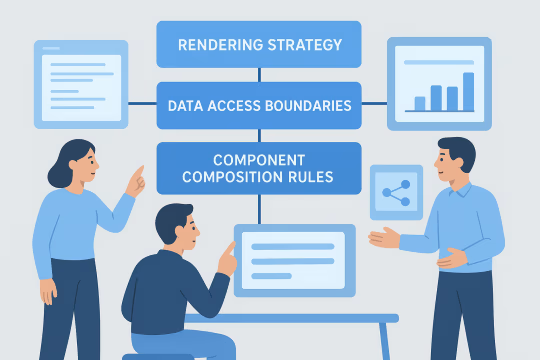
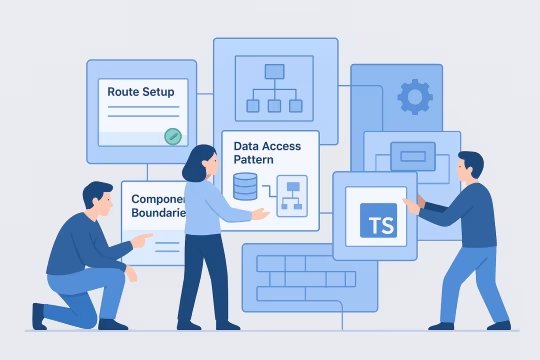
React frontend architecture defines the structural decisions that keep a headless frontend predictable as features, teams, and integrations expand. For enterprise programs, it clarifies Next.js application architecture choices—how the UI is composed, how data is fetched and cached, how routing and rendering are handled, and how cross-cutting concerns like security, frontend performance budgets, and observability are implemented.
Organizations need this capability when a headless program moves beyond a single product team. Without clear boundaries and conventions, React codebases tend to accumulate ad-hoc patterns for state, data access, and component reuse. That increases coupling to backend APIs, makes performance tuning reactive, and complicates upgrades across React, Next.js, and TypeScript.
A well-defined architecture supports scalable platform delivery by separating concerns (presentation, domain, data access), standardizing component composition and API-driven UI integration points, and establishing enterprise frontend governance that enables parallel development. It also aligns frontend decisions with platform constraints such as caching layers, CDN behavior, authentication flows, and content modeling, so the system can evolve without repeated rework.










 [01]
[01]