Discovery
We review existing interface implementations and identify duplicated UI patterns.
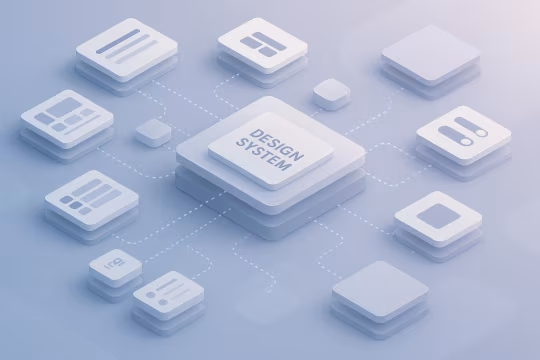
Design systems provide the structural foundation for consistent user interfaces across modern digital platforms. Instead of defining visual standards in isolation, organizations establish a governed system that connects design tokens, reusable components, documentation, and development workflows into a unified architecture.
Design system architecture ensures that this system remains scalable and maintainable as digital platforms grow. Teams can introduce new applications, features, and products while maintaining consistent interface patterns and design language. This approach significantly reduces duplication in frontend development and improves collaboration between designers and engineers.
We help organizations design and implement scalable design system architectures that integrate with modern frontend frameworks, component libraries, and documentation environments. The result is a structured interface ecosystem that supports long-term platform evolution while maintaining consistent user experience across applications.
As digital platforms grow, organizations often struggle to maintain consistent user interfaces across applications and teams. Interface patterns evolve independently across projects, leading to duplicated components, inconsistent design implementations, and fragmented frontend architecture.
Without a structured design system architecture, design decisions are often documented informally while engineers implement components independently. This disconnect creates inconsistencies between design specifications and production interfaces. Over time, maintaining alignment between products becomes increasingly difficult.
The lack of governance also increases operational risk. Updating design patterns requires modifying multiple codebases, which slows development and introduces regression risks. New teams entering the platform ecosystem face a steep learning curve due to fragmented documentation and unclear component ownership.
A well-structured design system architecture solves these challenges by defining clear component hierarchies, reusable patterns, and governance processes. It allows organizations to scale frontend development while maintaining consistent design standards across the entire platform.
We analyze existing applications to identify duplicated interface patterns and inconsistencies. This assessment reveals opportunities to standardize components and establish a reusable UI architecture.
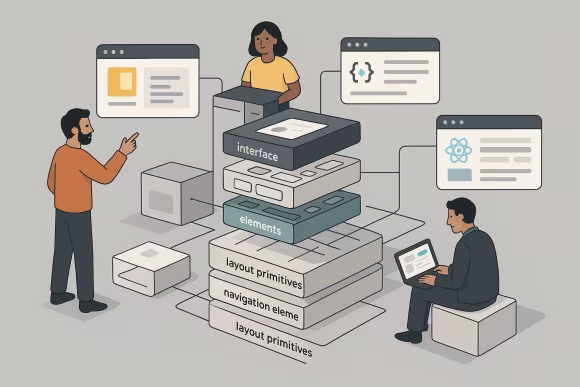
We design the structural foundation of the design system including component hierarchy, token structure, and documentation environment. The architecture supports long-term scalability across products.
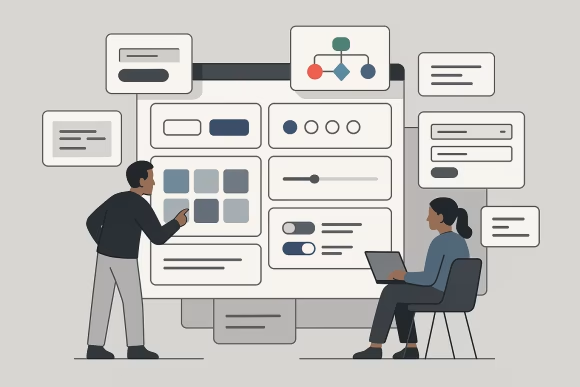
Reusable UI components are defined as modular building blocks aligned with design guidelines. This model ensures consistent behavior across applications.
Design tokens and interface patterns are connected directly with engineering implementations. This alignment ensures visual standards translate reliably into production code.
We implement a structured documentation environment for exploring and testing UI components. This improves collaboration across design and engineering teams.
We establish contribution workflows, ownership rules, and versioning processes. These governance structures allow the design system to evolve safely over time.
Design system architecture establishes the structural foundation for scalable interface development across digital platforms. By organizing design tokens, reusable components, and interface patterns into a coherent system, organizations create a shared language between design and engineering teams. This architecture ensures that visual standards, interaction patterns, and component behavior remain consistent across applications while enabling teams to evolve the interface ecosystem in a controlled and maintainable way.
Our design system architecture delivery process focuses on transforming fragmented interface implementations into a structured and governed system. We analyze existing applications, identify duplicated patterns, and define a scalable architecture for components, design tokens, and documentation environments. This structured approach connects design guidelines directly with engineering implementation and introduces governance workflows that allow teams to evolve the design system safely as the platform grows.
We review existing interface implementations and identify duplicated UI patterns.
We design the design system structure including tokens, components, and documentation environments.
Core UI components and token systems are implemented following scalable engineering patterns.
A documentation platform is established to explore and test components.
Visual testing and validation workflows ensure component stability.
Contribution workflows and versioning strategies are introduced for sustainable evolution.
A well-designed design system architecture improves consistency, scalability, and collaboration across digital product teams. Centralized interface standards reduce duplicated development effort and allow design updates to propagate reliably across applications. This structured approach accelerates product development, improves user experience consistency, and enables organizations to scale frontend engineering across multiple teams while maintaining long-term platform stability.
Design systems ensure that all applications follow the same interface patterns and design language. This improves usability and brand consistency across products.
Reusable UI patterns allow teams to implement new features faster. Developers focus on functionality rather than rebuilding interface components.
Centralized component systems reduce duplicated implementations across projects. Maintenance becomes simpler and more predictable.
Designers and engineers work from the same interface system. Shared documentation reduces communication gaps during development.
Design system architecture supports growth across multiple products and teams. New applications can adopt standardized UI components immediately.
Centralizing UI logic reduces the effort required to maintain multiple applications. Interface updates can be implemented once and propagated across products.
Design system architecture connects closely with component libraries, documentation platforms, and modern frontend development frameworks. These related services help organizations implement reusable UI systems and scalable frontend engineering practices across digital platforms.
Design system architecture raises important questions about scalability, governance, and long-term maintainability of interface systems across multiple applications. These frequently asked questions address architectural strategy, operational workflows, integration with frontend frameworks, and governance models required to evolve a design system sustainably. The answers focus on practical considerations for engineering organizations implementing reusable UI architecture across enterprise digital platforms.
Design system architecture defines the structural foundation that connects design standards with engineering implementation. It typically includes design tokens, reusable UI components, documentation environments, and governance processes that ensure consistent interface development across applications.
Instead of treating design guidelines as static documentation, a design system architecture translates those guidelines into reusable engineering assets. These assets include component libraries, token systems, versioning strategies, and testing frameworks that allow teams to reuse interface patterns across projects.
This architecture becomes a shared layer of the frontend platform. It ensures that visual design decisions, interaction patterns, and accessibility standards remain consistent while allowing teams to develop features independently. As organizations scale across multiple products or regions, this structured approach helps maintain interface consistency while supporting sustainable platform evolution.
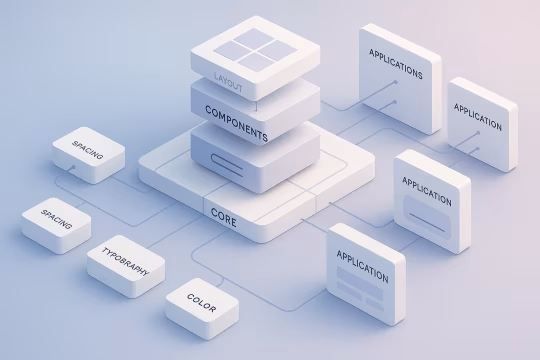
A well-designed system allows multiple product teams to reuse the same UI components, design tokens, and interaction patterns without duplicating implementation. This is achieved by structuring the design system as a shared platform layer that applications can consume.
Core components and tokens remain centralized while product-specific extensions are layered on top of the system. This allows each product team to maintain flexibility while still inheriting common design standards.
Governance and versioning play a key role in scaling the system. Teams can adopt new component versions incrementally while maintaining stability in production systems. Documentation environments also allow engineers and designers to explore available components independently. This structure enables organizations to scale interface development across multiple applications without losing consistency or increasing maintenance complexity.
Introducing a design system usually begins with a discovery phase that analyzes current UI implementations across applications. This assessment identifies duplicated interface patterns, inconsistencies in design implementation, and opportunities for reusable components.
Based on this analysis, teams define the architecture of the system, including token definitions, component hierarchies, and documentation tools. Initial components are often extracted from existing applications and standardized into reusable building blocks.
Implementation typically follows an incremental approach. Instead of replacing all UI code at once, teams gradually introduce shared components as new features are developed or existing interfaces are updated. This approach minimizes operational risk and allows the design system to mature organically while improving consistency across the platform over time.
Design systems establish a shared environment where designers and engineers work with the same interface definitions. Designers maintain visual standards and design tokens, while engineers implement reusable components that reflect those standards in production code.
Collaboration often occurs through documentation platforms such as Storybook or design system portals. These tools allow teams to explore components, review implementation examples, and validate interaction patterns before integrating them into applications.
Governance workflows also help coordinate collaboration. Design and engineering teams typically review proposed changes to ensure they align with established patterns. This structured collaboration model ensures that design decisions translate consistently into engineering implementation while enabling both teams to evolve the system together.
Design systems typically integrate directly with the frontend frameworks used within the platform ecosystem. For example, organizations building applications with React often implement their component libraries using React so that applications can import components directly.
Framework compatibility ensures that components work within the platform’s rendering model, including server-side rendering, static generation, or client-side interactions. This alignment allows teams to maintain consistent interface behavior while benefiting from framework performance features.
Integration is usually managed through package management systems or monorepos. Applications depend on the shared component library and update it through version upgrades. This approach allows the design system to evolve independently while maintaining compatibility with multiple applications across the platform.
Component libraries are the engineering implementation of a design system. While the design system defines visual standards, interaction guidelines, and design tokens, the component library provides the actual code that implements those rules.
In a structured architecture, each reusable UI element is implemented as a component with a defined API, behavior, and documentation. Applications import these components rather than recreating interface patterns independently.
This relationship ensures that the design system remains enforceable in production environments. Instead of relying on documentation alone, engineering teams interact directly with reusable components that follow the system’s standards. Over time, this approach helps maintain interface consistency across multiple applications while reducing duplication in frontend development.
Governance ensures that the design system evolves in a controlled and sustainable way. Most organizations establish a small design system or platform team responsible for reviewing component changes, defining standards, and maintaining documentation.
Contribution guidelines define how new components or updates are proposed and reviewed. This prevents fragmentation of interface patterns and ensures new additions align with the architectural principles of the system.
Versioning also supports governance. Updates to components are released through structured version management so applications can adopt changes gradually. Documentation and testing frameworks help teams understand how components behave and ensure stability across releases. Together, these practices ensure the design system remains reliable while adapting to evolving product needs.
Design systems are not static artifacts; they evolve alongside the digital platforms they support. As new interface patterns emerge or new products are introduced, the system expands with additional components and tokens.
Structured versioning allows teams to introduce improvements without disrupting existing applications. Older component versions remain available while teams gradually migrate to newer implementations.
Continuous documentation and testing also support system evolution. Visual regression testing, component documentation, and developer feedback loops help identify issues early and maintain quality across updates. This iterative model ensures the design system remains adaptable while maintaining stability across the interface ecosystem.
Without a structured design system architecture, frontend development often becomes fragmented across teams and projects. Developers implement similar interface patterns independently, which leads to duplicated components and inconsistent user experiences.
Over time this duplication increases maintenance complexity. Design updates must be implemented across multiple codebases, and inconsistent implementations can introduce usability issues or accessibility gaps.
Fragmentation also slows development velocity. Engineers spend time rebuilding UI elements rather than focusing on product functionality. New teams joining the platform ecosystem often struggle to understand interface standards due to incomplete documentation. Implementing a design system reduces these risks by centralizing UI patterns and establishing a reusable architectural foundation for interface development.
Yes. Design system architecture is particularly valuable in headless and multi-platform ecosystems where multiple applications consume shared content and APIs. In these environments, maintaining consistent interface patterns across web applications, portals, and other interfaces becomes essential.
The design system provides a reusable UI layer that sits above backend systems. Applications built on different frontend frameworks can still implement consistent design patterns by consuming shared components or token definitions.
This separation between backend architecture and interface architecture allows organizations to evolve platform infrastructure independently from the UI layer. The result is a flexible system where content platforms, APIs, and frontend applications can evolve without disrupting user experience consistency.
Design systems reduce platform risk by centralizing interface logic and establishing consistent engineering practices. Instead of managing many variations of similar UI components across codebases, organizations maintain a single shared implementation.
This centralization simplifies maintenance and improves reliability. When accessibility improvements, design updates, or bug fixes are required, they can be implemented once and adopted across applications through version updates.
Structured documentation and governance processes also reduce operational risk. Teams understand how components behave, how to integrate them correctly, and how to upgrade them safely. This predictable architecture allows organizations to evolve their digital platforms with greater confidence while maintaining stable and consistent user interfaces.
Design system initiatives usually begin with an architectural discovery phase that evaluates existing applications and UI implementations. This step identifies duplicated components, inconsistent design patterns, and areas where reusable interface structures can improve development workflows.
Based on this assessment, teams define the initial architecture of the design system. This includes defining design tokens, establishing component hierarchies, selecting documentation tools, and outlining governance processes.
Implementation typically begins with a small set of foundational components such as buttons, forms, layout primitives, and navigation patterns. These components are introduced into active applications gradually, allowing the system to grow organically. This incremental approach allows organizations to introduce a scalable design system without disrupting ongoing product development.
Let’s design a structured design system architecture that supports scalable frontend development and consistent user experiences across your digital platforms.