Core Focus

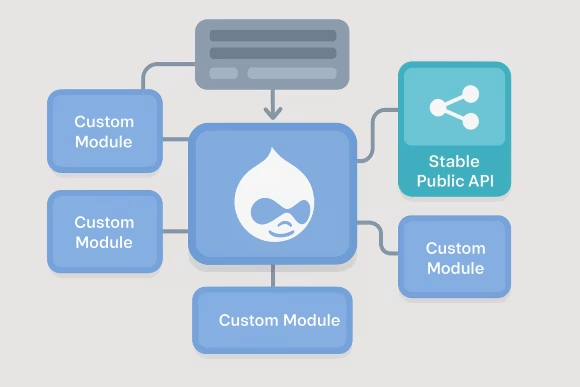
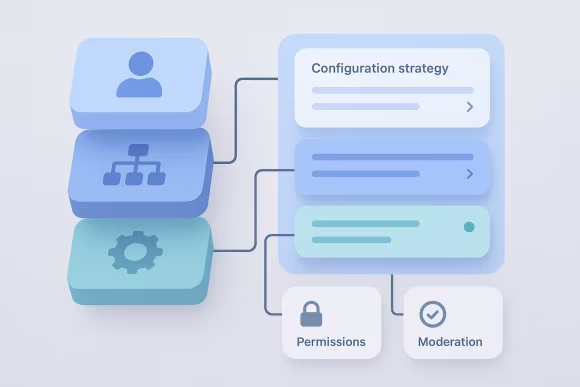
Custom module engineering
Platform extension patterns
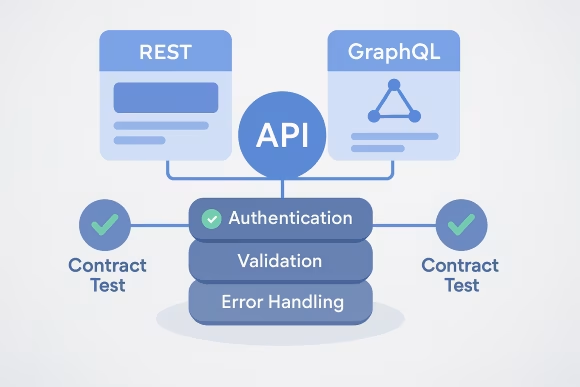
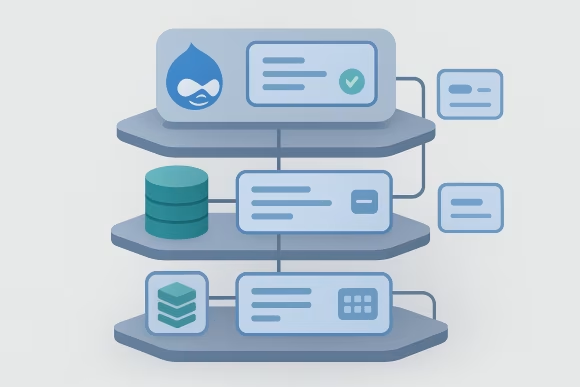
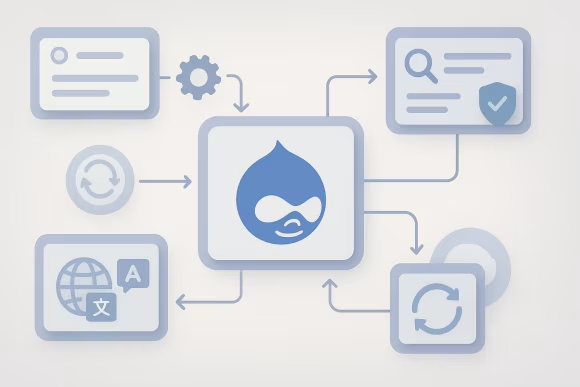
API integration layers
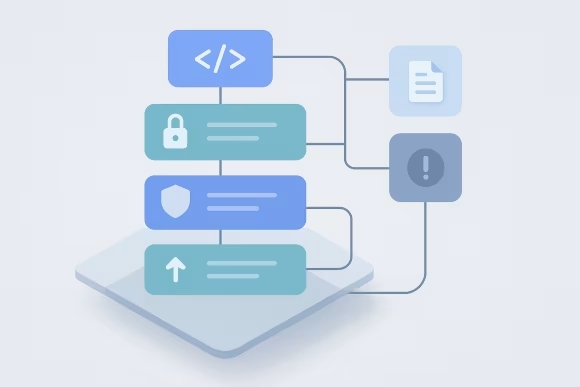
Upgrade-safe code design

Best Fit For

  • Multi-site Drupal ecosystems
  • Complex editorial workflows
  • High integration environments
  • Long-lived enterprise platforms

Key Outcomes

  • Faster feature iteration
  • Reduced upgrade friction
  • Lower regression risk
  • Consistent platform behavior

Technology Ecosystem

  • Drupal 10–12
  • PHP and Symfony
  • Composer and Drush
  • MySQL or PostgreSQL

Platform Integrations

  • REST and GraphQL APIs
  • Search with Solr
  • Caching with Redis
  • Headless frontends

Custom Code Drift Increases Upgrade and Delivery Risk

As Drupal platforms grow, feature delivery often becomes distributed across multiple teams, sites, and environments. Quick fixes and project-specific modules accumulate, while integration logic is implemented inconsistently across codebases. Over time, the platform develops multiple ways to solve the same problem—content modeling, access control, workflows, caching, and API exposure—making behavior harder to predict and harder to change.

This fragmentation affects architecture and engineering operations. Custom modules may rely on internal APIs, patch core or contributed modules, or bypass dependency management conventions, which increases coupling and reduces upgradeability. Integration points (REST, GraphQL, search, identity, analytics) can become brittle when contracts are undocumented or when error handling and retries are not standardized. Teams spend more time diagnosing regressions, reconciling environment differences, and coordinating releases than implementing new capabilities.

Operationally, the platform becomes harder to secure and maintain. Release cycles slow down due to manual testing and late-stage integration issues, while performance problems emerge from inconsistent caching strategies and unbounded queries. The result is higher delivery risk, increased maintenance overhead, and reduced confidence in platform changes—especially during Drupal core upgrades or infrastructure migrations.

Drupal Development Delivery Process

Platform Discovery

Review the current Drupal landscape: codebase structure, module inventory, content model, environments, and release process. Identify architectural constraints, integration dependencies, and upgrade targets. Establish a shared definition of done for features and platform changes.

Architecture Alignment

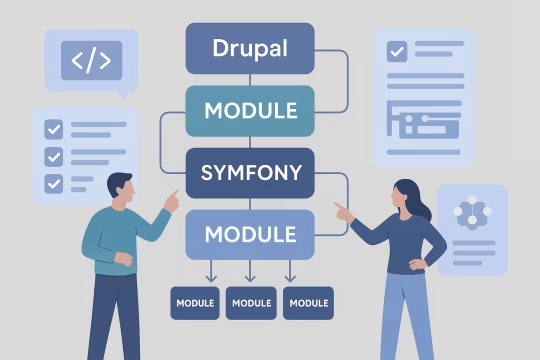
Define module boundaries, service contracts, and extension points aligned with Drupal and Symfony conventions. Establish dependency management rules (Composer), configuration strategy, and patterns for APIs, caching, and search. Document decisions that affect long-term upgradeability.

Backlog Decomposition

Break down requirements into implementable epics and technical tasks with clear acceptance criteria. Identify cross-cutting concerns such as permissions, editorial workflows, multilingual, and performance. Plan incremental delivery that avoids large, high-risk merges.

Module Engineering

Implement custom modules and platform extensions using stable APIs, services, and configuration management. Apply coding standards, static analysis where appropriate, and clear separation between site-specific and shared functionality. Ensure changes remain compatible with target Drupal versions.

Integration Implementation

Build and harden integrations using REST and/or GraphQL, including authentication, error handling, and contract validation. Integrate with search (Solr), caching (Redis), and external systems as required. Create integration tests or contract tests for critical interfaces.

Quality Engineering

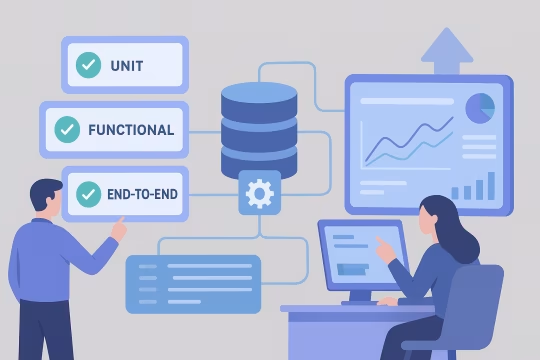
Add automated tests at the right level: unit tests for services, functional tests for key workflows, and end-to-end tests for critical user journeys. Validate configuration changes across environments. Include performance checks for high-traffic paths and expensive queries.

Release and Deployment

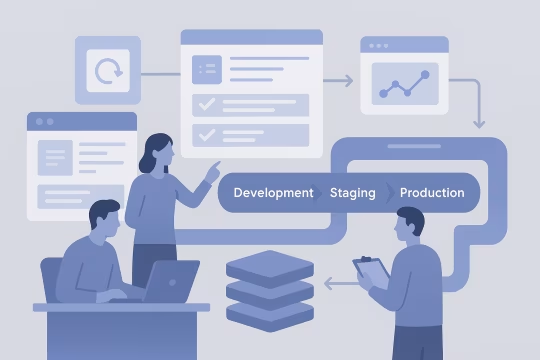
Package changes for predictable releases using environment parity and repeatable build steps. Support CI/CD pipelines, database update routines, and configuration imports. Provide rollback considerations and release notes for platform teams and stakeholders.

Governance and Evolution

Establish contribution guidelines, module ownership, and review practices to prevent code drift. Define upgrade cadence, dependency update routines, and deprecation handling. Maintain architectural documentation and a technical roadmap for platform evolution.

Core Drupal Development Capabilities

This service focuses on engineering Drupal capabilities that remain maintainable as the platform evolves. We emphasize clear module boundaries, Symfony-aligned patterns, and disciplined dependency management so custom code stays upgrade-safe. Integrations are implemented with explicit contracts and consistent error handling to reduce operational surprises. The result is a Drupal codebase that supports multi-team delivery, predictable releases, and incremental modernization toward headless or hybrid architectures when needed.

Capabilities
  • Custom Drupal module development
  • Platform extensions and reusable features
  • Drupal core and contrib upgrades
  • API integrations (REST/GraphQL)
  • Search integration and indexing
  • Performance profiling and caching
  • Configuration management workflows
  • Automated testing enablement
Who this is for
  • CTO
  • Head of Digital Platforms
  • Engineering leadership
  • Platform architecture teams
  • Drupal development teams
  • Product owners
  • Digital transformation leaders
  • Delivery and operations teams
Technology stack
  • Drupal 10, 11, 12
  • PHP, Symfony, Twig, Composer, Drush
  • MySQL, PostgreSQL, Redis, ACP
  • Solr, ElasticSearch, Algolia
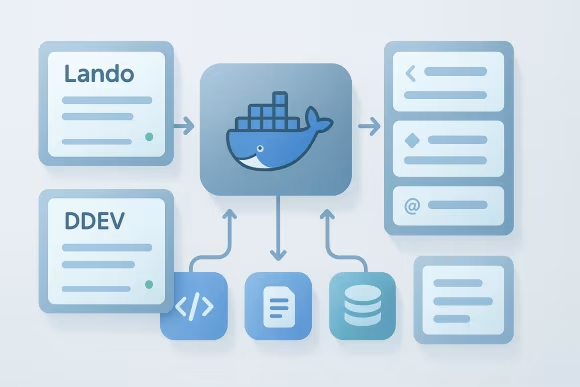
  • Docker, Lando, DDEV
  • GraphQL, REST API
  • Next.js, React, Storybook, Tailwind CSS
  • Bitbucket Pipelines, GitHub Actions
  • AWS, Pantheon, Acquia

Delivery model

Engagements are structured to reduce platform risk while enabling incremental feature delivery. We align architecture decisions with your release process, environments, and governance model, then implement changes in small, testable increments. The delivery model supports both product-led roadmaps and platform modernization programs.

Delivery card for Discovery and Audit[01]

Discovery and Audit

We review the existing Drupal codebase, module landscape, environments, and delivery workflow. We identify architectural constraints, integration dependencies, and upgrade blockers. Findings are translated into a prioritized technical plan.

Delivery card for Architecture and Standards[02]

Architecture and Standards

We define module boundaries, coding standards, dependency rules, and configuration strategy. We align patterns with Drupal and Symfony conventions to keep custom code upgrade-safe. Decisions are documented for long-term governance.

Delivery card for Incremental Implementation[03]

Incremental Implementation

We implement features and platform extensions in small, reviewable increments. Work is organized to minimize merge conflicts and reduce cross-team coordination overhead. Each increment includes validation against agreed acceptance criteria.

Delivery card for Integration Delivery[04]

Integration Delivery

We implement and harden integrations with external systems, including contract definition and error handling. We validate authentication, rate limits, retries, and observability requirements. Integration changes are tested against consumer expectations.

Delivery card for Testing and Verification[05]

Testing and Verification

We add automated tests appropriate to the change: unit, functional, and end-to-end for critical journeys. We validate configuration changes across environments and ensure database updates are repeatable. Performance checks are included for high-impact paths.

Delivery card for Release Enablement[06]

Release Enablement

We package changes for predictable releases, supporting CI/CD pipelines and environment promotion. We provide release notes, deployment steps, and rollback considerations. We coordinate cutovers when changes affect integrations or content workflows.

Delivery card for Governance and Handover[07]

Governance and Handover

We establish contribution guidelines, review practices, and module ownership to prevent code drift. We document architectural decisions and operational runbooks. Knowledge transfer is built into delivery, not left to the end.

Delivery card for Ongoing Evolution[08]

Ongoing Evolution

We support roadmap delivery, dependency updates, and Drupal core upgrades with a repeatable cadence. We monitor technical debt and deprecations and plan remediation before they become blockers. The platform evolves through controlled, testable change.

Business impact

Drupal development done with architectural discipline improves delivery predictability and reduces platform risk. By keeping custom code upgrade-safe and integrations contract-driven, teams can ship features without destabilizing core operations. The impact is measured in reduced rework, faster release cycles, and improved platform resilience under change.

Faster Feature Delivery

Clear module boundaries and reusable patterns reduce time spent re-implementing similar capabilities. Teams can deliver features with fewer cross-cutting surprises. Release planning becomes more predictable as changes are smaller and easier to validate.

Reduced Upgrade Risk

Composer-managed dependencies and deprecation-aware development lower the effort required for Drupal core and contrib updates. Upgrade work shifts from emergency remediation to planned iteration. This reduces downtime risk and avoids long-lived version lock-in.

Lower Regression Rate

Automated tests and consistent integration contracts catch breaking changes earlier. Configuration and database update routines become repeatable across environments. Teams spend less time on late-stage bug triage and hotfix cycles.

Improved Platform Consistency

Standardized patterns for content modeling, permissions, and workflows reduce behavioral differences between sites and products. Consistency improves onboarding and reduces operational support load. Platform teams can enforce governance without blocking delivery.

Better Integration Reliability

Explicit API contracts, error handling, and observability reduce brittle integrations. External system changes are easier to detect and manage. This improves stability for downstream consumers such as mobile apps, portals, and data pipelines.

Performance Predictability

Caching strategies and query optimization reduce latency variability under load. Performance work is integrated into engineering decisions rather than treated as reactive tuning. This supports growth in traffic, content volume, and editorial activity.

Reduced Technical Debt Growth

Governance practices and documented architecture decisions prevent uncontrolled code drift. Refactoring and dependency updates are planned as part of normal delivery. This keeps maintenance costs stable as the platform evolves.

Higher Developer Productivity

Consistent local environments and tooling reduce setup time and environment-specific defects. Clear contribution workflows improve code review throughput. Teams can focus on product work rather than debugging inconsistent builds and deployments.

Drupal Development FAQ

Common questions from enterprise platform teams evaluating custom Drupal development, integrations, governance, and long-term maintainability.

How do you structure custom modules to stay maintainable over time?

We start by defining module boundaries around stable business capabilities rather than project-specific pages or one-off features. Each module has a clear responsibility, explicit dependencies, and a minimal public surface area. We prefer Drupal services, plugins, and events over hard-coded procedural hooks when it improves testability and reduces coupling. We separate reusable platform modules from site-specific glue code. Reusable modules contain domain logic, integrations, and shared UI patterns, while site modules focus on configuration, theming, and composition. Dependency management is enforced through Composer constraints and consistent namespaces, and we avoid patching core or contributed modules unless there is a documented, time-bounded reason. Finally, we document extension points and deprecations as the platform evolves. This makes it possible for multiple teams to contribute without creating hidden coupling, and it reduces the cost of Drupal core upgrades because custom code aligns with upstream APIs and Symfony conventions.

When does a headless or hybrid Drupal architecture make sense?

Headless or hybrid approaches make sense when you need independent release cycles for the frontend, multiple consuming applications (web, mobile, kiosks), or a unified content API across products. Drupal remains valuable as a content platform and workflow engine, while the delivery layer can move to frameworks like Next.js when you need advanced rendering strategies, edge caching, or a component-driven UI architecture. We evaluate this decision based on content complexity, editorial workflow requirements, personalization needs, and the operational maturity of the teams running the platform. A hybrid approach is often a pragmatic step: keep Drupal-rendered pages where it is efficient, and expose structured content via REST or GraphQL for specific experiences. The key architectural requirement is a stable contract between Drupal and consumers. That includes versioned APIs, predictable caching and invalidation, and governance around schema changes. Without those, headless increases integration risk rather than reducing it.

How do you support predictable releases across multiple environments?

Predictable releases depend on repeatable builds, environment parity, and a disciplined approach to configuration and database changes. We standardize build steps with Composer, ensure configuration is managed through Drupal’s configuration management workflow, and define how database updates and content migrations are executed in each environment. We align the release process with your CI/CD tooling (for example GitHub Actions or Bitbucket Pipelines) and hosting constraints (AWS, Pantheon, Acquia). This includes artifact creation, automated checks, and promotion rules between environments. We also define rollback considerations, especially when releases include schema changes or integration updates. For multi-team platforms, we recommend small, frequent releases with clear ownership and a shared definition of done. This reduces the size of change sets, lowers regression risk, and makes it easier to coordinate with stakeholders who depend on editorial workflows and external integrations.

How do you approach performance work in Drupal development?

We treat performance as a combination of architecture, caching strategy, and query behavior rather than a single tuning exercise. We start by identifying critical user journeys and high-traffic paths, then profile server-side rendering, database queries, and cache effectiveness. We look for patterns such as unbounded entity queries, missing indexes, and cache contexts that prevent reuse. On the Drupal side, we align render caching, dynamic page cache, and external caching (for example Redis) with the site’s personalization and authentication model. We ensure cache tags and invalidation are correct so content updates remain accurate without forcing excessive cache misses. Where search is involved, we validate indexing frequency, query complexity, and relevance tuning. The outcome is a set of changes that improve latency predictability under load and reduce operational incidents caused by traffic spikes or content growth.

How do you design and implement Drupal API integrations safely?

We start by defining the integration contract: endpoints or schema, authentication method, payload structure, error semantics, and caching rules. For REST and GraphQL, we pay particular attention to versioning and backward compatibility because consumer applications often deploy on different schedules than Drupal. Implementation focuses on resilience. We standardize timeouts, retries where appropriate, idempotency for write operations, and structured logging so failures are diagnosable. We also consider rate limits and batching strategies to avoid load amplification when consumers scale. Testing is critical for safety. Depending on the integration, we add contract tests, mocked integration tests, or end-to-end tests in a staging environment. This reduces the risk of breaking downstream systems and helps platform teams manage changes as part of normal release cycles rather than emergency fixes.

How do you enforce coding standards and architectural consistency across teams?

We establish a contribution model that includes coding standards, module ownership, review requirements, and a clear definition of what belongs in shared modules versus site-specific code. Standards are reinforced through automation where possible: linting, static analysis, and CI checks that prevent non-compliant changes from merging. Architectural consistency is maintained through documented decisions and repeatable patterns. We create lightweight architecture notes that explain module boundaries, integration contracts, configuration strategy, and deprecation handling. This documentation is designed to be used during code review and onboarding, not stored as an unused artifact. For multi-team environments, we recommend a platform stewardship function—sometimes a small group of maintainers—who review cross-cutting changes and manage shared dependencies. This reduces drift without centralizing all delivery work into a bottleneck.

How do you manage Composer dependencies and contributed modules responsibly?

We manage dependencies with explicit Composer constraints, a documented update cadence, and a clear policy for contributed modules. We prefer well-maintained modules with stable release practices and avoid introducing dependencies that duplicate existing capabilities or create long-term upgrade friction. When patches are necessary, we treat them as temporary and track them with a plan to upstream or remove them. We also monitor security advisories and compatibility notes, especially when preparing for Drupal core upgrades. Dependency updates are tested in CI and validated in staging with automated checks and targeted regression testing. For enterprise platforms, we also consider operational constraints such as hosting compatibility and PHP version support. The goal is to keep the dependency graph understandable and upgradeable, reducing the risk of being blocked by abandoned modules or unmanaged transitive dependencies.

How do you reduce security risk in custom Drupal development?

Security risk is reduced through a combination of secure coding practices, dependency hygiene, and operational controls. On the code side, we follow Drupal security guidance for input validation, access checks, and safe rendering. We pay close attention to permission boundaries, especially for custom entities, administrative routes, and API endpoints. On the dependency side, we keep Drupal core and contributed modules within a managed update cadence and respond to security advisories with a defined process. We avoid ad-hoc patches and undocumented overrides that make future updates risky. Where appropriate, we add automated checks that flag known vulnerable versions. Operationally, we align with your environment and deployment controls: secrets management, least-privilege access, and auditability of changes. For integrations, we validate authentication flows and ensure sensitive data is handled consistently across logs, caches, and API responses.

How do you minimize risk during Drupal core upgrades while still delivering features?

We minimize upgrade risk by separating upgrade readiness work from feature delivery, while keeping both streams aligned through shared standards. First, we assess compatibility: custom modules, contributed modules, PHP version, and hosting constraints. We identify deprecations and refactor custom code toward supported APIs before attempting large version jumps. We then establish an upgrade branch strategy and a test plan that includes automated regression coverage for critical workflows. Features are delivered in a way that avoids introducing new upgrade blockers—for example, by enforcing dependency rules and avoiding deprecated APIs. Where possible, we implement feature work that is forward-compatible with the target Drupal version. Finally, we plan cutover steps and rollback considerations, especially when configuration changes and database updates are involved. This approach allows the platform to keep moving while upgrades become a controlled engineering activity rather than a disruptive event.

What engagement models work best for enterprise Drupal development?

The most effective model depends on whether you need capacity, specialist capability, or platform stewardship. For product teams delivering ongoing features, an embedded model works well: engineers collaborate in your sprint cadence, align with your definition of done, and contribute directly to your repositories and CI/CD workflows. For platform modernization or multi-site standardization, a delivery squad model is often better. A small cross-functional team (architecture, Drupal engineering, integration, QA) works against a defined roadmap with clear milestones, while coordinating with internal stakeholders and platform owners. In both cases, we recommend explicit governance: module ownership, review practices, and release coordination. We also define how decisions are made (architecture notes, ADRs) and how knowledge is transferred. This keeps delivery predictable and reduces dependency on individual contributors over time.

How does collaboration typically begin for a Drupal development engagement?

Collaboration typically begins with a short discovery phase focused on understanding your Drupal ecosystem and delivery constraints. We review the codebase structure, custom and contributed modules, environments, CI/CD setup, and key integrations. We also align on the product roadmap, platform goals, and any upcoming deadlines such as Drupal core upgrades or infrastructure changes. From that assessment, we propose a prioritized plan that includes a small set of initial work items designed to validate ways of working: one or two representative features, a targeted refactor, or an integration improvement. These early items establish coding standards, review workflow, and testing expectations while producing tangible progress. We then agree on operating rhythm: communication channels, sprint or release cadence, ownership boundaries, and governance for shared modules. The goal is to create a repeatable delivery process that fits your team structure and reduces risk as scope expands.

Assess your Drupal platform backlog and architecture

Let’s review your Drupal codebase, integrations, and upgrade path, then define a delivery plan for scalable feature development with controlled operational risk.

Oleksiy (Oly) Kalinichenko

Oleksiy (Oly) Kalinichenko

CTO at PathToProject

Do you want to start a project?