Search Quality Degrades as Drupal Platforms Scale
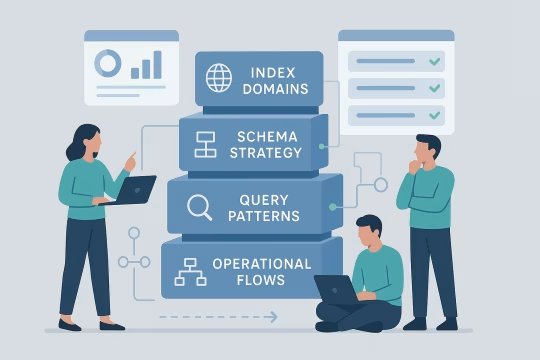
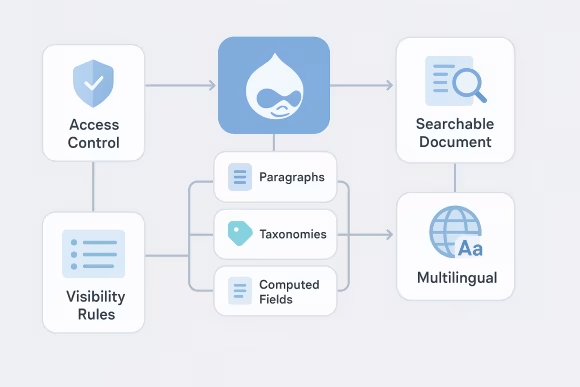
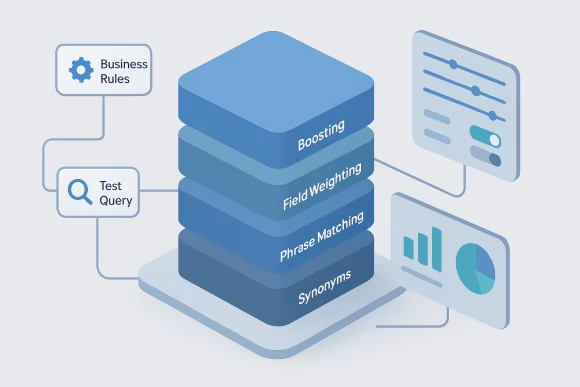
As Drupal content ecosystems grow, search often evolves through incremental configuration changes rather than an explicit architecture. New content types, languages, and sites introduce inconsistent field mapping, duplicated indexes, and ad-hoc query logic. Over time, relevance becomes difficult to explain, and teams lose confidence in whether search results reflect business rules, permissions, and content intent.
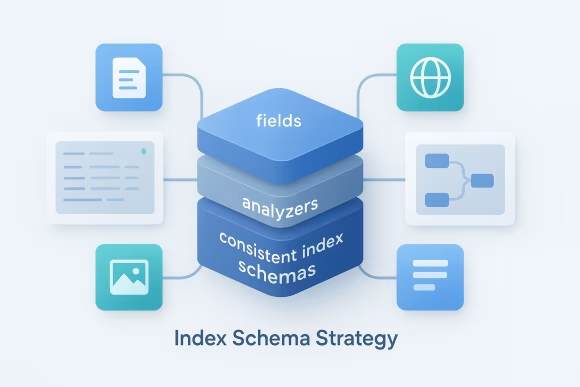
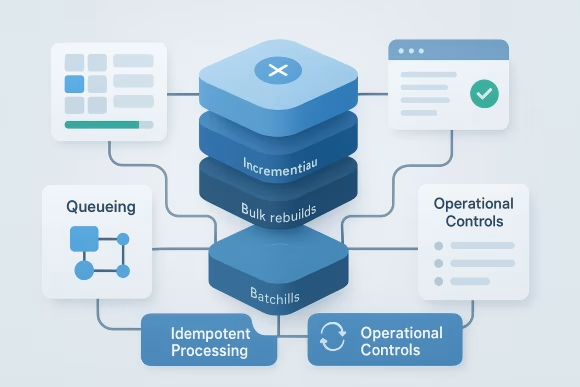
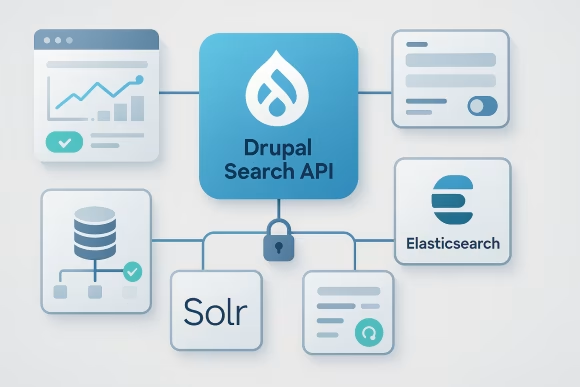
Engineering teams then face a compounding set of issues: indexing pipelines that are tightly coupled to content model changes, long-running reindex operations that disrupt releases, and unclear ownership between Drupal configuration and the search backend. Without a stable schema strategy, small changes to analyzers, tokenization, or field types can invalidate existing relevance assumptions and create regressions that are hard to detect.
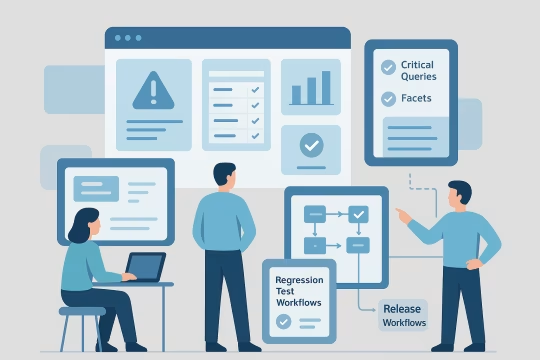
Operationally, these problems surface as slow queries, timeouts under load, inconsistent facets, and incidents during deployments or upgrades. Search becomes a delivery bottleneck because changes require risky reindexing, manual tuning, and reactive troubleshooting rather than controlled iteration with measurable outcomes.








 [01]
[01]