



 [01]
[01]Discovery and Audit
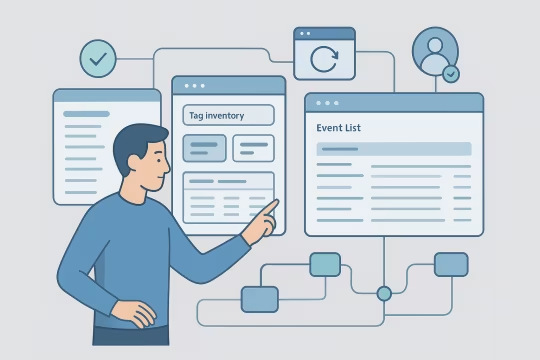
Inventory existing tags, events, and destinations, and review reporting dependencies. Identify gaps, duplication, and high-risk areas such as consent handling, cross-domain flows, and authenticated journeys.
Drupal analytics readiness
Use a Drupal health check to uncover event model gaps, data layer drift, consent issues, and integration risks across GA4 and downstream reporting.
Ideal before refactoring templates, expanding instrumentation, or committing to analytics remediation work.
No login required. Takes 2–3 minutes.
Drupal analytics integration services are the engineering work required to instrument a Drupal platform so user behavior, content performance, and conversion signals are captured consistently and can be trusted downstream. This includes Drupal GA4 event tracking, defining an event tracking taxonomy, implementing a data layer specification, integrating tag management and analytics SDKs, and validating that events are emitted correctly across templates, components, and custom modules.
Organizations need this capability when reporting is inconsistent across sites, when multiple teams ship features without shared measurement standards, or when analytics data must feed CDP and warehouse systems. Without a clear enterprise tracking architecture, teams accumulate ad-hoc tags, duplicate events, and ambiguous definitions that make analysis unreliable.
A structured integration approach makes measurement part of platform architecture: events are versioned, consent and privacy constraints are enforced, and data flows are observable from browser/server collection through to analytics tools and data platforms. Where appropriate, a server-side tagging strategy can reduce client-side fragility and improve control over data collection. This supports scalable delivery by reducing rework, enabling comparable reporting across properties, and keeping instrumentation maintainable as Drupal evolves.
Core Focus
Best Fit For
Key Outcomes
Technology Ecosystem
Platform Integrations
As Drupal platforms grow, analytics implementations often evolve through incremental changes: tags added per campaign, events introduced per feature, and tracking logic duplicated across themes, components, and custom modules. Over time, multiple “sources of truth” emerge (GA events, data layer fields, backend logs), and teams lose confidence in what is actually being measured.
This fragmentation impacts both engineering and data teams. Engineers inherit brittle tracking code that breaks during template refactors or component migrations, while analysts spend cycles reconciling inconsistent event names, missing parameters, and shifting definitions. When consent requirements, cross-domain journeys, or authenticated experiences are introduced, the measurement model becomes harder to reason about and harder to validate.
Operationally, unreliable tracking increases delivery risk: releases ship without measurement coverage, regressions go undetected, and dashboards drift from reality. Downstream integrations to CDP or warehouse systems amplify the problem because bad event semantics become persistent data quality issues, complicating attribution, experimentation, and long-term reporting.
Review current analytics setup, tag inventory, data destinations, and reporting requirements. Identify critical user journeys, conversion definitions, consent constraints, and gaps between business questions and available signals.
Define a governed event model with naming conventions, required parameters, and versioning rules. Map events to Drupal content types, components, and key interactions to ensure consistent semantics across teams and sites.
Design a Drupal-friendly data layer contract that standardizes page context, content metadata, user state, and interaction payloads. Document ownership, initialization timing, and how components contribute fields without collisions.
Implement tracking hooks in themes, modules, and component templates, using a maintainable abstraction layer. Configure analytics SDKs and tag management to consume the data layer and emit events consistently.
Connect event streams to platforms such as GA4 (Google Analytics), Drupal Segment integration paths, and warehouse ingestion. Ensure identity, campaign parameters, and cross-domain context are preserved according to privacy and consent rules.
Create a validation plan using test environments, debug tooling, and repeatable checks for event payloads and parameter completeness. Verify consent behavior, edge cases, and release-to-release stability of instrumentation.
Establish monitoring for event volume anomalies, schema drift, and destination delivery failures. Define alert thresholds and operational runbooks so data issues are detected early and triaged efficiently.
Set processes for requesting new events, reviewing changes, and deprecating legacy tracking. Maintain documentation and versioned schemas so measurement evolves alongside Drupal releases and product roadmaps.
This service establishes a durable measurement architecture for Drupal platforms, focusing on consistent event semantics, maintainable implementation patterns, and verifiable data quality. It supports enterprise analytics instrumentation for Drupal through data layer design, consent-aware analytics, and integrations to analytics and data platforms such as GA4 and Segment. Emphasis is placed on governance and change control so instrumentation remains stable through theme refactors, module updates, and multi-site expansion.
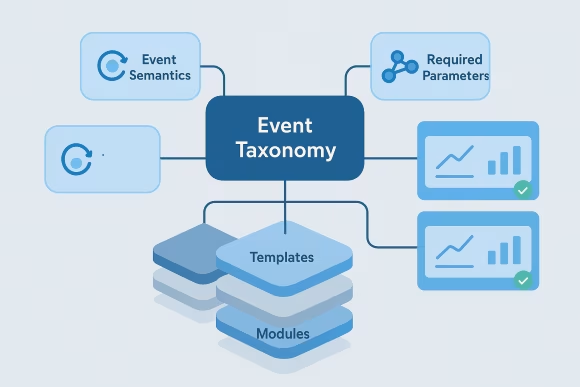
Define an event taxonomy with clear semantics, required parameters, and versioning. The model is designed to be implementable in Drupal templates and modules, and analyzable downstream without per-report interpretation. This reduces ambiguity across teams and enables consistent dashboards and experimentation metrics.
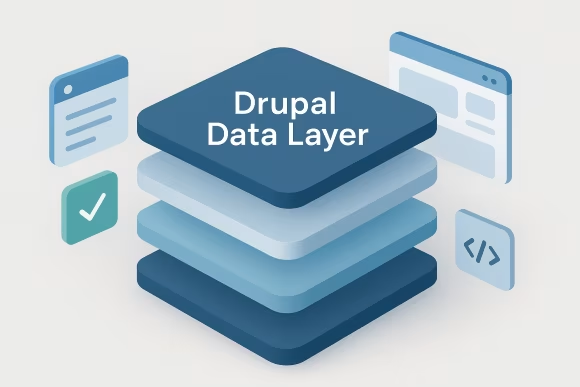
Implement a structured data layer that exposes page context, content metadata, and interaction payloads in a predictable contract. The approach supports component-based rendering and avoids duplicated logic by centralizing shared fields while allowing feature teams to extend safely.
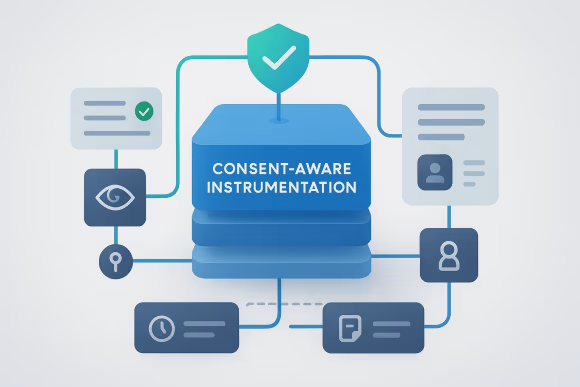
Integrate consent signals into the tracking lifecycle so collection, storage, and forwarding behaviors align with policy requirements. This includes conditional firing, parameter redaction where needed, and predictable behavior across anonymous and authenticated sessions.

Configure analytics libraries and tag management to consume the data layer and emit events consistently. Implementation focuses on deterministic triggers, parameter mapping, and minimizing custom tag logic that becomes difficult to maintain during platform changes.
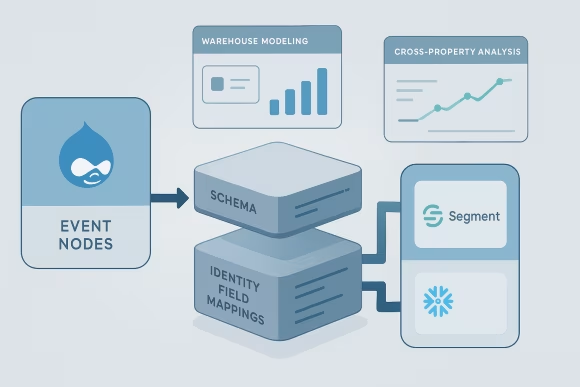
Design mappings from Drupal events to downstream destinations such as Segment and Snowflake, including schema compatibility and identity fields. Ensure event payloads are structured to support warehouse modeling, attribution, and cross-property analysis without extensive transformation.
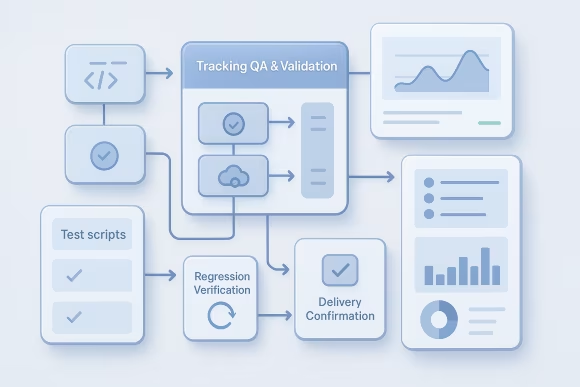
Establish repeatable validation of event payloads, parameter completeness, and destination delivery. This includes test scripts, environment-specific checks, and regression verification during releases so measurement changes do not silently degrade reporting.
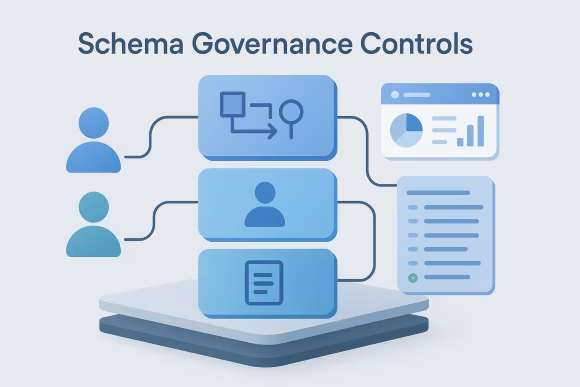
Introduce change control for event definitions and payload schemas, including review workflows and documentation standards. Governance reduces schema drift and supports long-term maintainability as multiple teams contribute instrumentation.
Review how Drupal events, data layers, consent logic, and integration mappings hold up under release pressure so teams can fix what matters first.
Delivery is structured as an engineering sequence that aligns measurement requirements with Drupal implementation constraints and downstream data consumers. Work is performed in small, verifiable increments so GA4/Segment event tracking changes can be validated before rollout, with governance to keep the tracking architecture stable as teams and sites scale.
[01]Inventory existing tags, events, and destinations, and review reporting dependencies. Identify gaps, duplication, and high-risk areas such as consent handling, cross-domain flows, and authenticated journeys.
 [02]
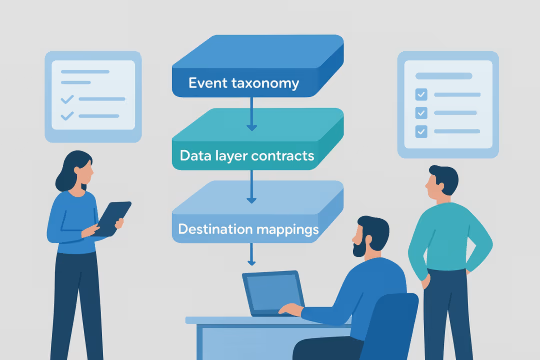
[02]Define the event taxonomy, data layer contract, and destination mappings. Produce implementation notes for Drupal themes/modules and a validation plan that can be executed during development and release cycles.
 [03]
[03]Implement tracking in prioritized user journeys and templates, using reusable abstractions. Configure analytics and routing tools to consume the data layer and standardize event emission.
 [04]
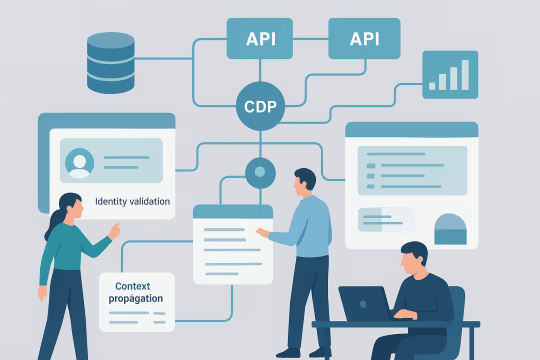
[04]Connect events to analytics, CDP, and warehouse paths with consistent schemas. Validate identity, campaign parameters, and context propagation so downstream datasets remain analyzable and stable.
 [05]
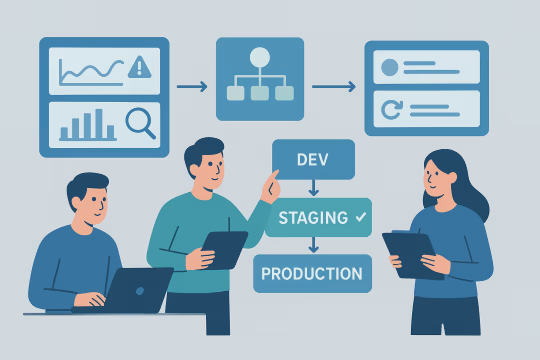
[05]Run payload validation, consent behavior checks, and regression testing across environments. Confirm that dashboards and key metrics reconcile with expected behavior and that edge cases are handled predictably.
 [06]
[06]Deploy changes with controlled rollout where appropriate, including monitoring for volume anomalies and schema drift. Provide runbooks for triage and define rollback strategies for high-impact tracking changes.
 [07]
[07]Deliver event catalogs, data layer documentation, and contribution guidelines. Enable teams to request and implement new events without breaking existing reporting or downstream pipelines.
 [08]
[08]Iterate on instrumentation as product features evolve, and periodically review data quality and governance adherence. Retire legacy tags and reduce complexity to keep the tracking architecture maintainable.
A governed analytics integration reduces measurement ambiguity and makes platform decisions more defensible. By treating tracking as architecture, teams improve data quality, reduce regressions during releases, and enable reliable downstream use in reporting, experimentation, and data platforms.
Consistent event definitions and validated payloads reduce conflicting dashboards and interpretation overhead. Analysts can focus on insights rather than reconciliation and manual data cleaning.
Tracking regressions are detected earlier through validation and monitoring. Engineering teams avoid shipping changes that silently break measurement for critical journeys and conversions.
A documented taxonomy and data layer contract reduces time to instrument new features. Teams can implement measurement with predictable patterns instead of ad-hoc tagging.
Multi-site and multi-team environments benefit from shared semantics and governance. Metrics become comparable across brands, regions, and properties without per-site customization.
Events structured for CDP and warehouse usage reduce transformation complexity and schema drift. Data engineers can model datasets with clearer contracts and fewer exceptions.
Centralized tracking abstractions and controlled change processes prevent uncontrolled tag sprawl. Over time, the platform carries less brittle instrumentation and fewer legacy dependencies.
Consent-aware collection and documented handling of sensitive parameters support policy requirements. Governance creates traceability for what is collected, why it is collected, and where it is sent.
Before roadmap commitments
Confirm whether your Drupal measurement model, governance controls, and integration setup are ready for upgrades, new features, and reliable downstream data use.
Adjacent capabilities that extend Drupal integration work into API design, platform operations, and data architecture.
Drupal event tracking architecture, identity, and audience sync engineering
Drupal API development services for secure integration layers
Drupal GraphQL schema design and schema-first integration
Secure endpoints and consistent resource modeling
Secure Drupal Salesforce and HubSpot connectivity with enterprise data sync
Drupal ecommerce API integration and data synchronization
Connect Drupal with Your Enterprise Ecosystem
Roadmaps, governance model design, and platform decision frameworks
Designing Scalable Digital Foundations
Common questions about analytics integration on Drupal platforms, including architecture, operations, integrations, governance, and engagement models.
We start from the decisions the organization needs to make (conversion performance, content effectiveness, journey drop-off, feature adoption) and translate those into a small set of event types with consistent naming and required parameters. The taxonomy is designed to be implementable in Drupal’s rendering model, so events map cleanly to content types, routes, components, and key interactions. A practical taxonomy includes: event names, parameter definitions and types, required vs optional fields, identity and session context rules, and versioning/deprecation guidance. We also define how page context is represented (content IDs, taxonomy terms, language, site/brand, authentication state) so downstream analysis does not depend on URL parsing. The output is a governed catalog that engineering can implement and analytics can query without reinterpreting each event. This reduces drift when multiple teams contribute tracking over time and makes it easier to validate payloads during QA and releases.
A Drupal data layer is a structured JavaScript object (or equivalent contract) that exposes page and interaction context in a predictable schema. In practice, we define a base layer that is always present (site, environment, page type, content metadata, user state) and an extension mechanism so components and features can add fields without collisions. Implementation typically combines server-rendered context (Twig templates, preprocess functions, or module hooks) with client-side updates for dynamic interactions. We pay attention to timing: when the data layer is initialized, when events are pushed, and how single-page behaviors or progressive enhancements affect payload completeness. The key architectural goal is separation of concerns: Drupal produces authoritative context; tagging/SDK configuration consumes that context to emit events. This reduces duplicated logic in tags and makes tracking resilient to theme refactors and component migrations.
We treat analytics as an operational system with observable signals. Monitoring typically includes event volume baselines (per event name and per property), schema validation checks (required parameters present, types correct), and destination delivery health (events reaching analytics/CDP/warehouse endpoints). Depending on the stack, monitoring can be implemented via destination-side checks (e.g., warehouse ingestion tables, Segment delivery metrics) and lightweight synthetic journeys that verify critical events. We also define alert thresholds for anomalies such as sudden drops in conversions, spikes in unknown event names, or increases in null parameters. Operationally, we provide runbooks: how to triage whether an issue is caused by a Drupal release, tag configuration, consent changes, or downstream pipeline failures. This reduces time-to-detection and prevents long periods of silently degraded reporting.
We reduce regressions by making tracking changes testable and by minimizing ad-hoc tag logic. First, we implement a stable data layer contract and reusable instrumentation patterns in Drupal so tracking is not scattered across templates. Then we add validation steps to the release process: payload inspection in staging, consent behavior checks, and verification of critical journeys. Where feasible, we introduce automated checks that compare expected event payloads against actual payloads for a defined set of pages and interactions. Even when full automation is not practical, a repeatable manual checklist with clear acceptance criteria catches most issues early. Finally, we recommend change control for the event catalog: new events and parameter changes are reviewed, documented, and versioned. This prevents “small” changes from breaking dashboards and downstream models unexpectedly.
Yes. The key is to define the event model independently of any single destination and then map it deterministically to Google Analytics. We implement a consistent set of event names and parameters in the Drupal data layer, then configure GA event mappings so the same semantics are preserved across properties and environments. We also address common GA integration pitfalls: duplicate firing due to multiple containers, inconsistent campaign parameter handling, cross-domain measurement gaps, and differences between anonymous and authenticated journeys. If consent requirements apply, we ensure that GA collection behavior aligns with consent state and that tags do not fire prematurely. The outcome is that GA reports reflect stable definitions over time. When the platform evolves, changes are made at the data layer and mapping level with validation, rather than through scattered tag edits that are hard to audit and reproduce.
We design event payloads so they are both analytics-friendly and warehouse-ready. For Segment, that means a clear track/page/identify strategy, consistent event names, and a stable set of properties with defined types. We also define identity rules (anonymous IDs, user IDs, and when they are linked) so downstream systems can model users and sessions correctly. For Snowflake, we focus on schema stability and downstream modeling: predictable columns, controlled cardinality fields, and explicit handling of nested properties. We also consider how events will be partitioned, deduplicated, and joined to reference data such as content metadata or campaign tables. The integration work includes validating delivery (events arriving as expected), documenting mappings, and establishing governance so new events do not introduce uncontrolled schema drift in the warehouse.
Ownership is typically shared, but responsibilities must be explicit. Platform engineering usually owns the data layer contract and the Drupal implementation patterns (where context is sourced, how components contribute fields, and how changes are released). Analytics or data teams typically own the event taxonomy semantics, reporting requirements, and downstream mappings to CDP/warehouse models. We recommend a lightweight governance model: a documented event catalog, a review process for new/changed events, and a clear definition of “done” for instrumentation (payload validated, consent behavior verified, destination mapping confirmed). This prevents teams from introducing one-off tags that create long-term maintenance overhead. In multi-site environments, governance should also define which fields are global vs site-specific and how brand/region differences are represented without fragmenting the core taxonomy.
We treat event schemas as versioned contracts. Changes are categorized (additive, breaking, deprecations) and reviewed before implementation. Additive changes (new optional parameters) are usually safe, while breaking changes (renaming events, changing parameter meaning or type) require a migration plan and coordination with reporting and downstream pipelines. Practically, we maintain an event catalog with definitions, examples, and ownership. We also recommend a deprecation window: keep old and new fields in parallel for a defined period, update dashboards/models, then remove legacy fields once consumers have migrated. For Drupal implementation, we encapsulate tracking logic so changes are made in one place rather than across many templates. Combined with validation and monitoring, this approach reduces schema drift and keeps analytics reliable as the platform evolves.
We start by identifying what data is collected, why it is collected, and where it is sent. Then we design the tracking architecture so consent state influences collection and forwarding behavior. This can include conditional firing of tags, suppression of certain event types, and redaction or omission of sensitive parameters. On Drupal, we ensure that the data layer does not inadvertently expose sensitive values (e.g., PII in URLs, form fields, or user attributes). We also define rules for authenticated experiences, where the risk of collecting identifiable data is higher. If identity is required for product analytics, we implement explicit, documented identity fields and ensure they are handled appropriately by destinations. Finally, we validate consent behavior in QA: what fires before consent, after consent, and when consent is withdrawn. This makes privacy behavior predictable and auditable rather than dependent on ad-hoc tag configuration.
Common risks include duplicate event firing (multiple containers or repeated bindings), missing context (events emitted before the data layer is populated), inconsistent parameter types (strings vs numbers), and semantic drift (same event name used for different behaviors across teams or sites). Another frequent issue is relying on URL parsing instead of explicit content identifiers, which breaks when routing changes. We mitigate these risks by defining a stable data layer contract, implementing deterministic triggers, and validating payloads against the event catalog. We also design for maintainability: centralized tracking utilities, clear component integration patterns, and minimal custom logic in tags. Downstream, we reduce risk by aligning schemas with warehouse/CDP needs and by monitoring for anomalies and schema drift. The goal is to detect issues early and prevent bad semantics from becoming persistent, hard-to-fix historical data problems.
A typical engagement includes an audit of current tracking, definition of the measurement model (event taxonomy and required parameters), a Drupal data layer specification, and implementation for prioritized journeys and templates. We also include destination mappings (e.g., Google Analytics and/or Segment) and a validation plan to confirm payload correctness. For enterprise platforms, we usually add governance artifacts: an event catalog, contribution guidelines, and a change control workflow so future tracking requests do not reintroduce fragmentation. If events must feed a warehouse such as Snowflake, we align payload structure and identity fields to support downstream modeling. The exact scope depends on platform complexity (multi-site, personalization, authenticated areas), consent requirements, and how many destinations must be supported. Work is commonly delivered in increments so value is realized early while the architecture remains coherent.
Collaboration usually begins with a short discovery phase to align on goals, constraints, and current-state reality. We request access to existing tag configurations, analytics properties, documentation (if any), and a representative set of Drupal pages and user journeys. In parallel, we identify key stakeholders across engineering, analytics, and data teams to clarify ownership and decision-making. We then run an audit workshop to review the current event landscape, consent behavior, and downstream consumers (dashboards, CDP, warehouse). From that, we propose a measurement architecture plan: a prioritized event backlog, a data layer contract, destination mappings, and a validation approach that fits your release process. Once the plan is agreed, implementation starts with a small set of high-value journeys to establish patterns and prove data quality. After that, we scale coverage and introduce governance so ongoing changes remain controlled and maintainable.
These case studies showcase advanced Drupal platform implementations with strong analytics instrumentation, governance controls, and data pipeline alignment. They highlight real-world delivery of consent-aware tracking, event taxonomy, and scalable integration with analytics tools such as GA4 and GTM. The selected work demonstrates measurable outcomes in maintaining consistent measurement, improving data reliability, and enabling enterprise-grade analytics architectures within Drupal ecosystems.
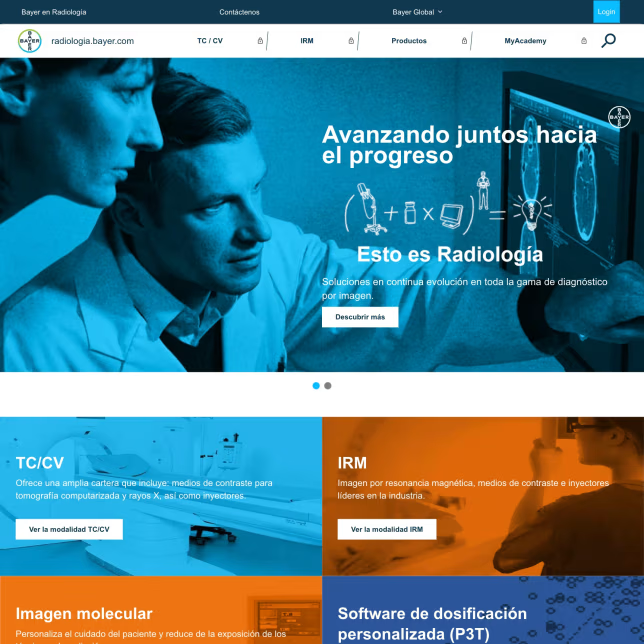
An advanced healthcare digital platform for LATAM was required to facilitate collaboration among radiology HCPs, distribute company knowledge, refine treatment methods, and streamline workflows. The solution needed secure medical website role-based access restrictions based on user role (HCP / non-HCP) and geographic region.
The platform enhanced collaboration, streamlined workflows, and empowered radiology professionals with advanced tools to gain insights and optimize patient care.
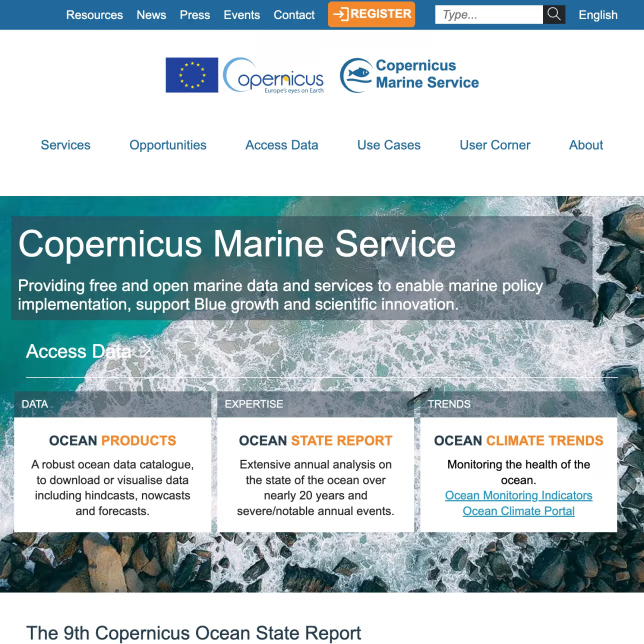
The existing marine data portal relied on three unaligned WordPress installations and embedded PHP code, creating inefficiencies and risks in content management and usability.
The new Drupal DXP streamlined content operations and improved accessibility, offering scientists and businesses a more efficient gateway to marine data services.
UNCCD operated four separate websites (two WordPress, two Drupal), leading to inconsistencies in design, content management, and user experience. A unified, scalable solution was needed to support a large-scale CMS migration project and improve efficiency and usability.
The modernization effort resulted in a cohesive, user-friendly, and scalable website, improving content management efficiency and long-term digital sustainability.
With Drupal 7 reaching end-of-life, Veolia needed a Drupal 7 to Drupal 10 enterprise migration for its Acquia Site Factory multisite platform—preserving region-specific content and multilingual capabilities across more than 200 sites.
The platform was modernized into a stable, scalable multisite foundation with improved performance, maintainability, and long-term upgrade readiness.
JYSK required a robust retail Digital Experience Platform (DXP) integrated with a Customer Data Platform (CDP) to enable data-driven design decisions, enhance user engagement, and streamline content updates across more than 25 local markets.
The modernized platform empowered JYSK’s marketing and content teams with real-time insights and modern workflows, leading to stronger engagement, higher conversions, and a scalable global platform.
It was my pleasure working with Oleksiy (PathToProject) on a new Drupal website. He is a true full-stack developer—the ideal mix of DevOps expertise, deep front-end knowledge, and the structured thinking of a senior back-end developer.
He is well-organized and never lets anything slip. Oleksiy understands what needs to be done before being asked and can manage a project independently with minimal involvement from clients, product managers, or business analysts.
One of the best consultants I’ve worked with so far.

Andrei Melis
Technical Lead at Eau de Web
Oleksiy (PathToProject) and I worked together on a Digital Transformation project for Bayer LATAM Radiología. Oly was the Drupal developer, and I was the business lead. His professionalism, technical expertise, and ability to deliver functional improvements were some of the key attributes he brought to the project.
I also want to highlight his collaboration and flexibility—throughout the entire journey, Oleksiy exceeded my expectations.
It’s great when you can partner with vendors you trust, and who go the extra mile.

Axel Gleizerman Copello
Building in the MedTech Space | Antler
Oleksiy (PathToProject) is demanding and responsive. Comfortable with an Agile approach and strong technical skills, I appreciate the way he challenges stories and features to clarify specifications before and during sprints.

Olivier Ritlewski
Ingénieur Logiciel chez EPAM Systems
These articles expand on the platform and governance decisions that shape reliable measurement in Drupal. They cover how downstream systems, shared schemas, and integration boundaries affect data quality, trust, and long-term maintainability.
Let’s review your current Drupal instrumentation, agree on an event model, and implement consent-aware analytics integrations that produce reliable data for reporting and downstream platforms.