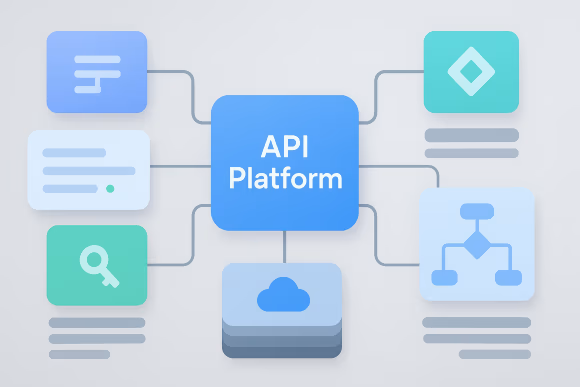
API platforms become critical infrastructure as headless ecosystems expand across channels, products, and teams. Our API platform architecture services help define how APIs are structured, exposed, secured, and operated so that backend services can evolve without breaking consumers and without creating bottlenecks in delivery.
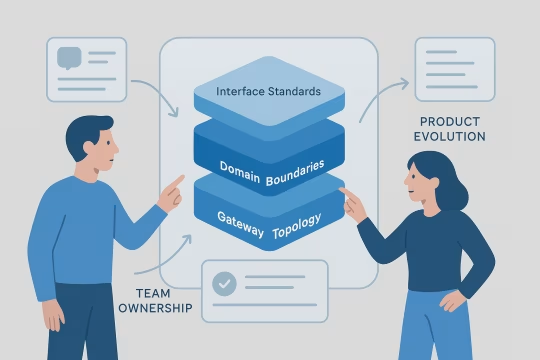
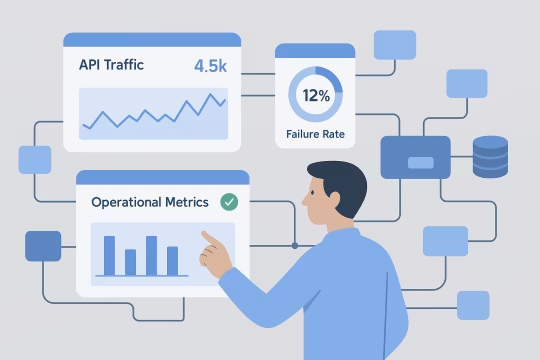
We focus on architecture decisions that determine long-term platform behavior: domain boundaries, enterprise API design standards, API styles (REST and GraphQL), API gateway architecture and routing patterns, contract and schema management, and cross-cutting concerns such as authentication, authorization, rate limiting, caching, and observability. The goal is to make API change predictable, integration safer, and platform operations measurable.
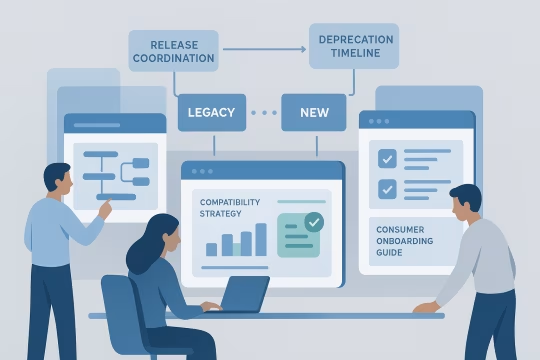
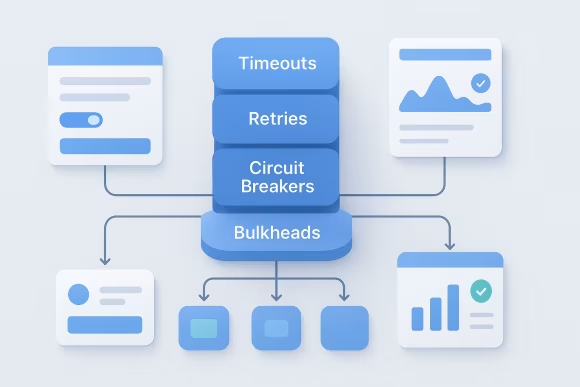
A well-architected API platform reduces coupling between teams, supports incremental modernization, and provides a stable interface layer for web, mobile, and partner integrations. It also establishes governance mechanisms so that API versioning and lifecycle management, backward compatibility, and operational reliability are treated as platform concerns rather than ad-hoc project tasks.









 [01]
[01]