Inconsistent Content Delivery APIs Create Multi-Channel Delivery Bottlenecks
As organizations expand to more channels and products, headless CMS implementations often grow organically: content types are added to satisfy immediate needs, API endpoints proliferate, and frontend teams introduce channel-specific transformations. Over time, the platform accumulates implicit rules that only a few people understand, and changes become risky because the impact surface is unclear.
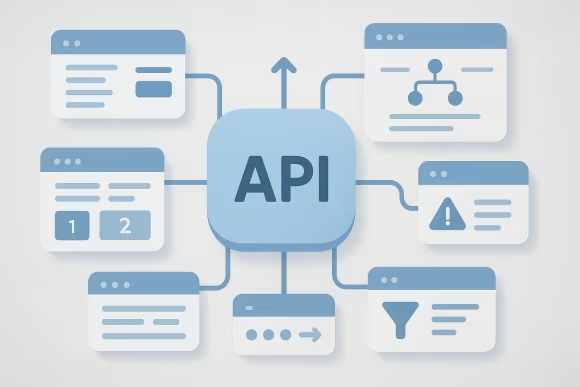
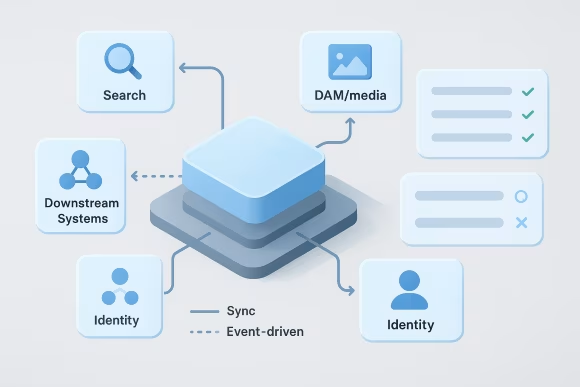
Architecturally, the most common failure mode is misalignment between content modeling and delivery requirements. Content schemas encode presentation concerns, API contracts vary by consumer, and integrations (search, DAM, identity, personalization) are implemented inconsistently across products. This leads to tight coupling between the CMS and downstream applications, making it difficult to evolve content structures without breaking clients or duplicating logic.
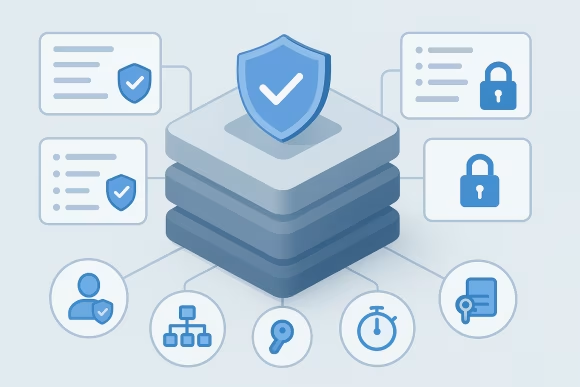
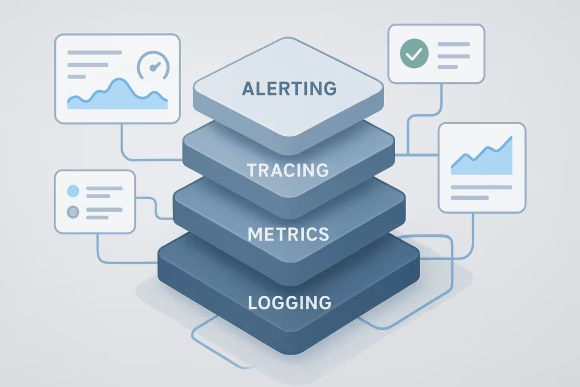
Operationally, these issues surface as slow delivery, frequent regressions, and governance gaps. Teams spend time debugging API behavior, reconciling inconsistent content semantics, and managing breaking changes across environments. Without clear ownership and lifecycle controls, the platform becomes harder to secure, observe, and scale reliably under real traffic and editorial load.


 [01]
[01]