


 [01]
[01]Discovery and Audit
Run a structured audit of content, configuration, custom code, and integrations. Identify migration complexity drivers such as multilingual content, media volume, legacy HTML patterns, and external system dependencies.
Drupal migration readiness
Run a Drupal health check to surface content mapping gaps, integration dependencies, upgrade blockers, and governance issues that can derail migration timelines.
Useful before committing roadmap, scope, or cutover dates.
No login required. Takes 2–3 minutes.
Drupal migrations are high-impact platform changes that combine application evolution with large-scale content and data transformation. For enterprise teams planning an Enterprise Drupal upgrade—such as Drupal 7 to 11 migration or Drupal 10 to Drupal 11 readiness—migration work needs to be treated as a controlled engineering program rather than a one-off content move. As Drupal versions and architectural patterns shift (Symfony foundations, configuration management, modern theming, and API-first integrations), the migration approach must keep data integrity and operational risk measurable.
Organizations typically need this capability when legacy Drupal estates accumulate custom modules, inconsistent content models, and tightly coupled integrations. Migration becomes a constraint on delivery: teams cannot modernize safely without a clear mapping of data, configuration, and runtime behavior, plus repeatable runs that expose edge cases early.
This service establishes a migration architecture that supports repeatable runs, measurable data integrity, and predictable cutover. It aligns content modeling, Drupal data mapping and transformation, and environment strategy so the target Drupal platform remains maintainable after go-live, with clear ownership and operational practices for ongoing evolution.
Core Focus
Best Fit For
Key Outcomes
Technology Ecosystem
Platform Integrations
As Drupal platforms grow over years, content models drift, custom modules accumulate, and integrations become tightly coupled to legacy assumptions. Editorial teams rely on established workflows and URL structures, while engineering teams inherit undocumented data relationships, inconsistent field usage, and multiple sources of truth across environments.
When a migration is approached as a simple upgrade, teams often discover late-stage issues: incomplete data mapping, missing edge cases in content relationships, unplanned redirects, and configuration differences that only appear under production-like traffic. Integrations (search, SSO, analytics, CRM, DAM) can fail subtly because payloads, identifiers, or caching behavior change between versions.
Operationally, these gaps create repeated rework cycles and unstable cutovers. Migration runs are not reproducible, validation is manual and partial, and stakeholders lose confidence in timelines. The result is prolonged parallel systems, increased defect rates after launch, and a target platform that carries forward legacy complexity instead of establishing a maintainable baseline for ongoing delivery.
Assess the current Drupal estate, including content types, fields, taxonomies, media, users, and custom modules. Inventory integrations, environments, and operational constraints such as editorial freeze windows, SEO requirements, and compliance needs.
Define the target Drupal version, hosting model, and environment strategy. Establish decisions for configuration management, caching, search, media handling, and integration boundaries so migration work aligns with the long-term operating model.
Normalize and refine the target content model based on business and editorial needs. Produce mapping specifications for entities, fields, references, translations, and URL patterns, including rules for deprecations and consolidations.
Implement migrations using the Content Migration API with deterministic transforms and idempotent runs. Build migration groups, dependencies, and rollback strategies, and automate execution via Drush to support repeatable test cycles.
Validate and adapt upstream and downstream integrations affected by identifiers, content structure, authentication, or caching. Introduce contract tests or fixtures where feasible to detect payload drift and reduce late-stage surprises.
Create validation checks for counts, referential integrity, media completeness, and URL parity. Run performance and regression testing in production-like environments, focusing on migration-specific risks such as cache warmup and search reindexing.
Plan and rehearse cutover steps including content freeze, final delta migration, DNS or routing changes, and rollback conditions. Coordinate operational runbooks across engineering, content, and infrastructure teams to minimize downtime and uncertainty.
Monitor platform behavior, logs, and content integrity after launch. Triage migration-related defects, complete deferred cleanups, and formalize governance for ongoing content model changes and future upgrades.
Drupal content migration engineering is treated as an enterprise-grade system: a defined target architecture, explicit data contracts, and repeatable pipelines that can be executed and validated multiple times. The focus is on deterministic transformations, measurable integrity checks, and controlled cutover mechanics. This supports Drupal platform modernization migration without carrying forward legacy inconsistencies into the new platform.
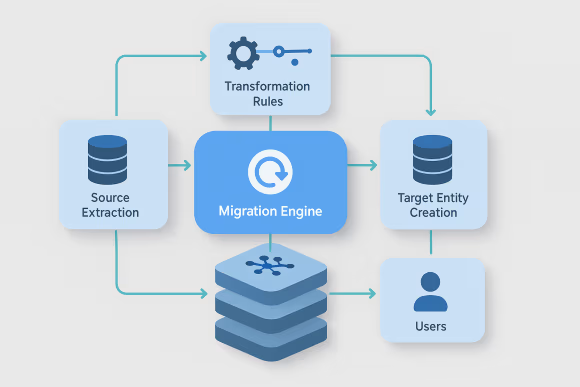
Design a migration structure that separates source extraction, transformation rules, and target entity creation. Establish dependency ordering for entities (nodes, media, taxonomy, users) and define rollback and re-run behavior so migration cycles remain predictable across environments.
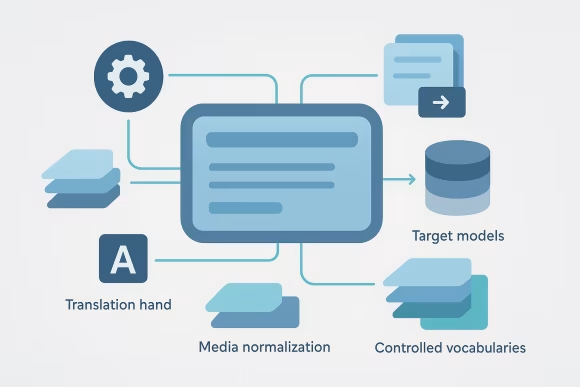
Produce explicit mappings from legacy content types and fields to the target model, including reference resolution, translation handling, and media normalization. Define transformation rules for deprecated fields, merged types, and controlled vocabularies to reduce long-term model drift.

Implement repeatable transforms for identifiers, dates, HTML cleanup, embedded media, and structured metadata. Ensure transformations are testable and consistent across runs, minimizing manual intervention and reducing the risk of subtle content corruption.
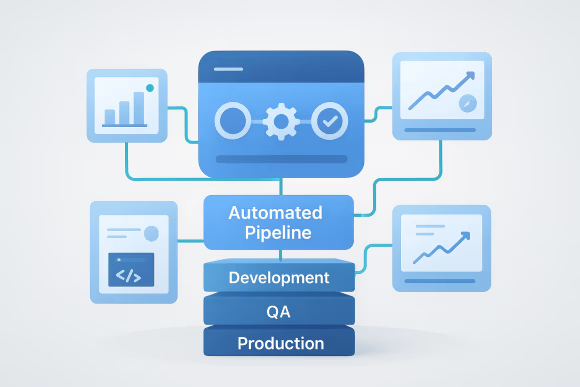
Automate migration execution using Drush and environment-specific configuration so teams can run migrations frequently during development and QA. Support full and incremental runs where appropriate, enabling rehearsal of cutover steps and faster feedback on mapping changes.
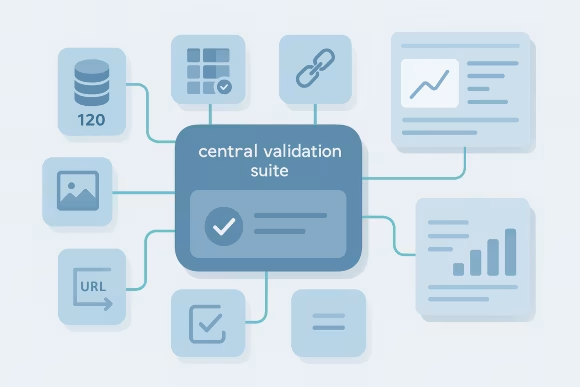
Create validation checks for entity counts, required fields, broken references, missing media, and translation completeness. Add URL and redirect verification where required, and produce auditable reports that allow stakeholders to review migration completeness objectively.
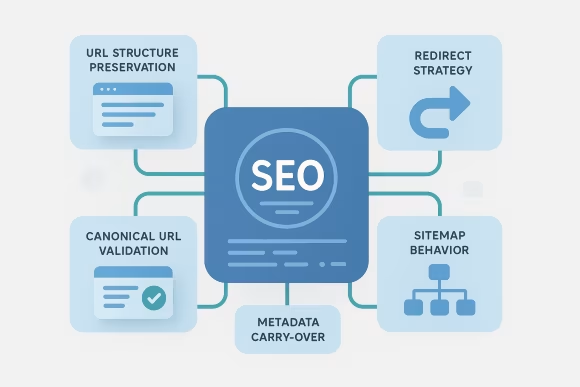
Preserve URL structures where feasible and define redirect strategies where changes are required. Validate canonical URLs, metadata carry-over, and sitemap behavior, and ensure migration decisions do not introduce duplicate content or unexpected indexation changes.
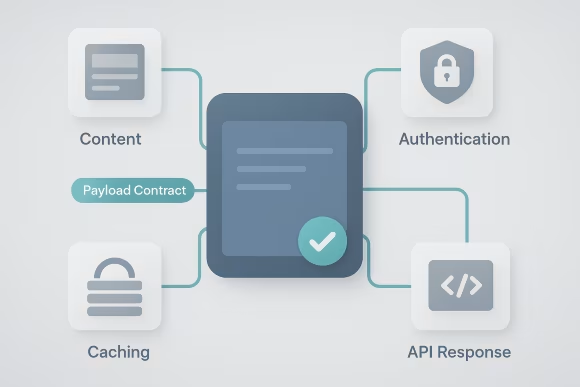
Identify integration touchpoints impacted by content structure, authentication, caching, or API responses. Align payload contracts and identifiers, and introduce lightweight contract checks to detect breaking changes early during migration iterations.
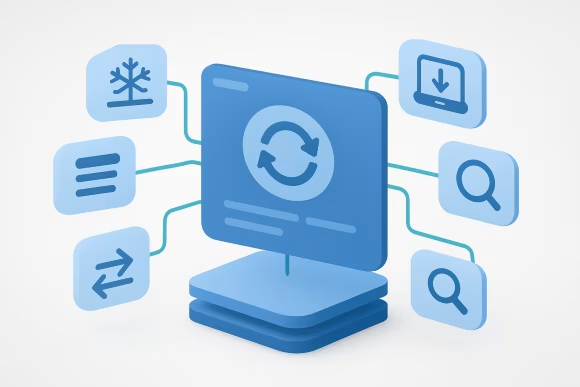
Engineer cutover mechanics including content freeze strategy, delta migration approach, cache warmup, and search reindex sequencing. Define rollback conditions and operational runbooks so production changes are controlled and reversible under time constraints.
Use the health check to identify where legacy architecture, weak governance, and integration assumptions will slow migration delivery and increase cutover risk.
Drupal migration services are delivered as an engineering sequence from discovery and target architecture decisions through content mapping, Content Migration API implementation, repeatable migration runs, and validation evidence. The delivery model emphasizes rehearsal, integration alignment, and operational readiness so cutover planning is based on measured runs and clear runbooks.
[01]Run a structured audit of content, configuration, custom code, and integrations. Identify migration complexity drivers such as multilingual content, media volume, legacy HTML patterns, and external system dependencies.
 [02]
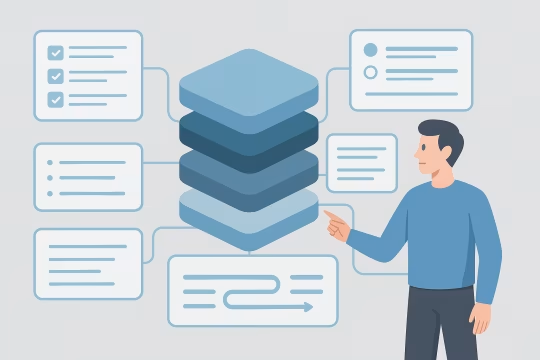
[02]Define scope boundaries, sequencing, and acceptance criteria for data integrity and URL continuity. Establish a migration run strategy (full vs incremental), environment needs, and a cutover approach aligned to business constraints.
 [03]
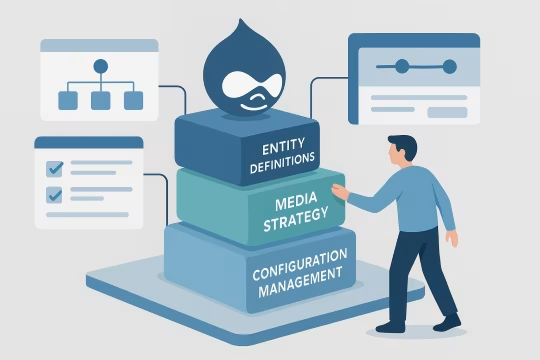
[03]Align the target Drupal build with migration needs, including entity definitions, media strategy, and configuration management. Ensure the target platform supports required workflows and integration points before large-scale data movement begins.
 [04]
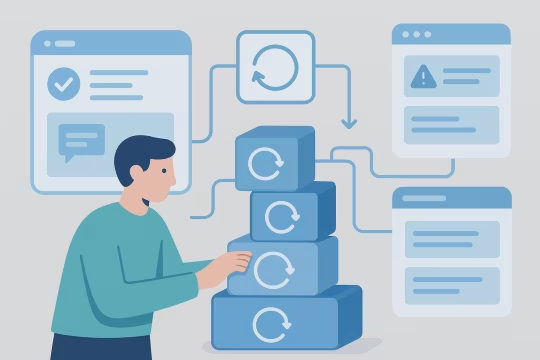
[04]Implement migrations and run them repeatedly to validate mapping assumptions. Iterate based on QA findings, editorial feedback, and integration constraints, keeping migration logic versioned and reproducible.
 [05]
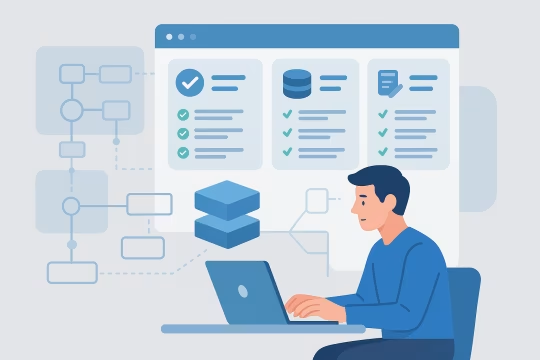
[05]Execute automated and manual validation for completeness, referential integrity, and editorial usability. Produce reports for stakeholders and address defects through controlled changes to mapping and transforms.
 [06]
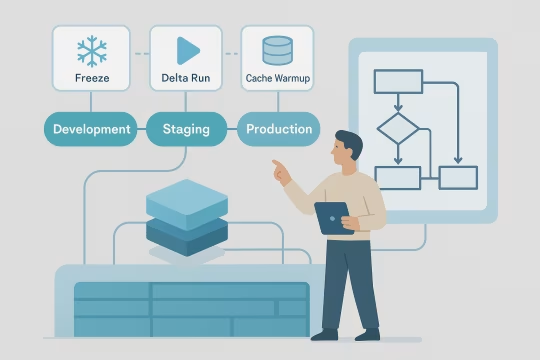
[06]Rehearse cutover steps end-to-end, including freeze, delta run, cache warmup, and search reindex. Confirm rollback conditions and operational responsibilities across teams.
 [07]
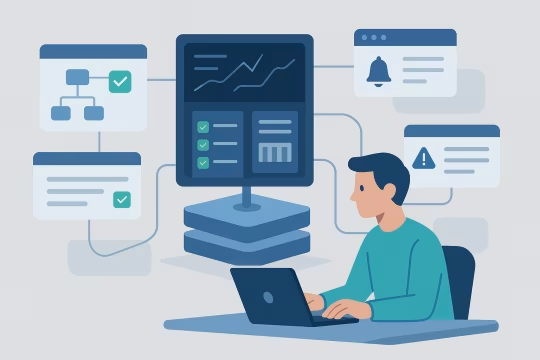
[07]Support production cutover with runbooks, monitoring, and rapid triage. Validate critical paths immediately after launch, including authentication, search, forms, and high-value content journeys.
 [08]
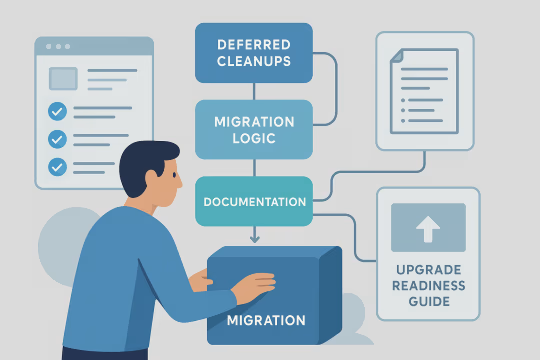
[08]Resolve migration-related defects, complete deferred cleanups, and document migration logic and operational practices. Hand over ownership with clear guidance for future content model changes and upgrade readiness.
A well-engineered Drupal migration reduces platform risk while enabling modernization. By making Drupal data mapping and transformation repeatable and measurable, teams can plan cutovers with confidence, reduce post-launch defects, and establish a maintainable baseline for future Enterprise Drupal upgrade cycles.
Rehearsed cutovers and deterministic migration runs reduce uncertainty during production changes. Clear rollback conditions and runbooks improve operational control under time constraints.
A normalized content model and modern Drupal baseline reduce friction for new features. Teams spend less time working around legacy constraints and more time delivering product changes.
Validation suites and integrity checks catch issues before go-live. This reduces post-launch incidents related to missing media, broken references, and unexpected URL behavior.
Migration decisions are documented as explicit mappings and transforms rather than ad-hoc scripts. This makes future upgrades, content model changes, and integration updates easier to reason about.
Repeatable pipelines and environment parity reduce last-minute surprises. Engineering and operations teams can estimate timelines based on measured run durations and known dependencies.
URL and redirect strategies protect existing search equity during platform change. Verification of canonical behavior and metadata reduces the risk of indexation regressions.
Early alignment of payload contracts and identifiers reduces downstream breakage. Integration checks help detect drift between legacy and target behavior before production cutover.
Defined ownership for content model changes and configuration practices reduces uncontrolled drift. This supports long-term platform evolution and reduces the likelihood of another high-risk migration cycle.
Before migration planning locks in
A Drupal health check helps teams validate architecture, governance, upgrade path, and integration readiness before major migration commitments are made.
These related Drupal services are common extensions to Drupal migration services—supporting target architecture decisions, content model design, multisite strategy, and broader Drupal platform modernization migration across the estate.
Designing Scalable Digital Foundations
Drupal content architecture design and editorial operating design
Entity modeling and durable data structures
Drupal editorial workflow engineering and permissions model design
Headless Drupal Development Services for API-First Front-Ends
One Platform. Multiple Brands. Infinite Scalability.
Enterprise Drupal Technical Assessment & Drupal Health Check
Enterprise Drupal upgrade strategy for upgradeable delivery
Drupal Major Version Upgrades: Drupal 8/9/10 to 11/12
Common questions from enterprise teams planning Drupal migrations, covering architecture, operations, integrations, governance, risk management, and engagement mechanics.
We start by separating three concerns: the target Drupal runtime architecture (hosting, caching, search, media), the content model (entities, fields, references, translations), and the integration boundaries (SSO, analytics, external content sources). The target architecture is defined early because migration logic depends on entity definitions, media strategy, and how configuration is managed and deployed. Practically, we run an audit of the existing estate and identify constraints such as multisite patterns, editorial workflows, URL requirements, and compliance needs. We then document architectural decisions: which Drupal version, how configuration will be promoted, how files/media will be stored and served, and how search indexing will be handled. This avoids building migrations against a moving target. The output is a concise architecture brief plus a migration-oriented backlog: what must exist in the target build before data movement (content types, vocabularies, media types, user roles), and what can be deferred. This sequencing reduces rework and keeps migration runs deterministic across environments.
Multisite and multi-language migrations add complexity in three areas: content ownership boundaries, shared versus site-specific configuration, and translation/reference integrity. For multisite, we first confirm whether the target remains multisite, moves to a single codebase with multiple sites, or consolidates into one site with domain access patterns. That decision affects how configuration is split and how content is partitioned. For multi-language, we validate how translations are represented in the source (entity translations, separate nodes, or custom patterns) and map them to Drupal’s translation model in the target. We pay particular attention to referenced entities (taxonomy, media, paragraphs) to ensure translations resolve correctly and do not create orphaned references. Operationally, we design migration runs to support partial execution per site or per language when needed, while still allowing full end-to-end rehearsals. Validation includes language completeness checks, URL parity per locale, and verification that editorial workflows and permissions behave consistently across sites.
We treat cutover as an operational procedure with rehearsals, not a single event. The plan starts with defining acceptable downtime and whether a content freeze is required. Many Drupal migrations use a freeze window to ensure the final delta migration is small and predictable, but the exact approach depends on content velocity and integration constraints. We design a cutover runbook that includes: pre-cutover checks, freeze steps (who triggers it and how), final migration execution, cache warmup, search reindex sequencing, and verification of critical journeys. We also define explicit rollback conditions (for example, failed authentication, missing critical content sets, or unacceptable error rates) and the steps to revert routing or DNS. Where feasible, we reduce downtime by rehearsing delta runs and measuring their duration, ensuring the migration pipeline is idempotent and can be re-run. The goal is a cutover window based on measured evidence rather than optimistic estimates.
At minimum, we recommend development, a production-like staging environment, and production. For migrations, staging must be able to run full migration cycles with representative data volumes and production-like infrastructure characteristics (database engine/version, PHP runtime, caching layers, file storage, and search). Without this, performance and edge-case behavior often only appear at cutover. We also define how data refresh works. Migration development typically needs repeatable source snapshots so that mapping changes can be tested consistently. If the source system is still changing, we agree on snapshot cadence and how to handle deltas. Finally, we align configuration management and deployment processes early. Migration code and configuration must be promoted the same way as application code, otherwise teams end up with environment drift that invalidates test results. The outcome is an environment strategy that supports repeatable runs, measurable validation, and realistic cutover rehearsal.
We start by inventorying integration touchpoints and classifying them by risk: authentication/SSO, search indexing, analytics/tagging, outbound webhooks, and inbound content feeds. For each integration, we identify what changes between source and target: identifiers, URL patterns, caching behavior, API responses, or event timing. During implementation, we align integration contracts with the target platform. That may include updating SSO configuration and role mapping, adjusting search indexing pipelines, and ensuring analytics events and page metadata remain consistent. Where possible, we introduce contract checks or fixtures so payload drift is detected during staging runs rather than after go-live. We also plan cutover sequencing. Some integrations must switch at the same time as routing changes (SSO callbacks, search index endpoints), while others can run in parallel. The goal is to avoid a “big bang” integration change by making dependencies explicit and testable throughout migration rehearsals.
Yes, but we treat it as a data integration and transformation problem rather than a simple import. The first step is to define the source-of-truth for each content domain and the extraction method (database access, APIs, exports). We then map source fields to the target Drupal content model, including normalization rules, taxonomy alignment, and media handling. Implementation typically uses Drupal’s migration framework with custom source plugins or intermediate staging tables where needed. For API-based sources, we pay attention to rate limits, pagination, and idempotency so repeated runs are reliable. For file-based sources, we define validation rules and checksums to detect missing or corrupted assets. The key risk is hidden semantics in the source system (implicit relationships, inconsistent formats). We mitigate this by running early profiling, creating transformation tests, and producing validation reports that confirm completeness and referential integrity before cutover.
Content model drift is usually a governance and tooling issue: changes are made ad-hoc to meet short-term needs, and over time the model becomes inconsistent. During migration, we establish a baseline content model with explicit definitions (entity types, fields, vocabularies, allowed values) and document the rationale for key decisions. We then align governance with delivery workflows. That includes defining who can propose and approve model changes, how changes are reviewed (impact on templates, APIs, search, and analytics), and how configuration is promoted across environments. In Drupal, configuration management is central: model changes should be versioned, reviewed, and deployed like code. Where appropriate, we add automated checks in CI to detect unexpected configuration changes or schema drift. The goal is not to block evolution, but to ensure changes are intentional, reviewed, and compatible with integrations and long-term maintainability.
Redirect and SEO ownership should be shared, with clear decision rights. Engineering typically owns implementation and verification (redirect rules, canonical behavior, sitemap generation, performance impact), while product/content stakeholders own prioritization and acceptance criteria (which URLs must be preserved, what can change, and how content is consolidated). We recommend establishing a redirect strategy early: preserve where feasible, redirect where necessary, and avoid creating chains. We also define how redirects are sourced (existing redirect modules, spreadsheets, analytics-driven top URLs) and how they are tested. Validation includes sampling and automated checks for critical URL sets, plus verification of canonical tags and metadata behavior. During cutover, redirects are part of the operational runbook. Post-launch, we monitor 404s and search console signals to identify gaps. This governance model keeps SEO continuity measurable and prevents last-minute changes that introduce risk.
We define integrity as a set of measurable checks rather than a subjective review. Typical checks include entity counts by type, required field completeness, media file presence, translation completeness, and referential integrity for entity references. We also validate URL parity or redirect coverage for agreed URL sets. The approach combines automated validation (scripts and Drupal queries) with targeted manual sampling for high-value content. For complex relationships (nested components, paragraphs, embedded media), we add specific checks that confirm referenced entities exist and render correctly. Where content is transformed (HTML cleanup, taxonomy normalization), we validate transformation rules against representative samples and edge cases. The output is a validation report per run, allowing teams to compare results across iterations and identify regressions when mappings change. This evidence-based approach supports go/no-go decisions and reduces reliance on late-stage manual spot checks.
Custom modules create risk when they encode business logic that is not visible in content structure alone. Common issues include: custom entity types, bespoke field storage patterns, hard-coded assumptions about node IDs or paths, and integrations implemented directly in module code without clear contracts. We mitigate this by auditing custom modules early and classifying them: retire, replace with contrib/core, refactor, or rebuild. For modules that must remain, we identify what data they depend on and ensure migration mappings provide the required entities and configuration. We also check for behavioral changes between Drupal versions (event subscribers, services, caching, routing) that can alter runtime behavior. Finally, we plan testing around custom logic. Migration validation must include functional checks for features implemented in custom modules, not just content completeness. This reduces the risk of launching a platform where content exists but critical workflows fail.
Timeline depends on content volume, model complexity, custom code, and integration surface area. A useful way to estimate is by phases: discovery/audit, target model alignment, migration implementation, iterative validation cycles, and cutover rehearsal. The number of iterations is often the dominant factor, because mapping changes and edge cases emerge as teams test with real data. For complex platforms, we typically plan for multiple migration runs in staging with measurable acceptance criteria. Each run produces validation evidence and a defect backlog, which is then addressed before the next run. This iterative approach is what makes cutover predictable. We provide an initial estimate after discovery, including critical path items (custom module refactors, integration changes, media handling). We also identify opportunities to reduce scope or sequence work, such as migrating core content first and deferring low-value legacy content, as long as governance and SEO requirements are respected.
Successful migrations require both engineering and content participation. From your side, we typically need: a technical owner (platform architect or lead engineer) to make architecture decisions and coordinate environments; a content owner to validate content model decisions and editorial workflows; and stakeholders for SEO and integrations (analytics, SSO, search) to confirm acceptance criteria. Engineering participation is important for access, security approvals, and integration knowledge. Content participation is important for validating that the target model supports real editorial use and that transformed content remains accurate. SEO and analytics stakeholders help define URL continuity requirements and measurement expectations. We keep collaboration structured through mapping workshops, validation review sessions, and cutover rehearsals. Clear decision rights and availability during key checkpoints reduce rework and prevent late-stage scope changes that increase risk.
We treat Drupal 10 as the immediate target and Drupal 11 as a compatibility constraint. During discovery and target design, we review contributed modules, custom code, and theming approaches for forward compatibility. This includes checking deprecations, Symfony/PHP version alignment, and whether key dependencies have a clear Drupal 11 roadmap. In implementation, we avoid patterns that create upgrade friction: tightly coupled custom patches, unversioned configuration changes, and undocumented overrides. We also keep migration logic and configuration in version control with repeatable pipelines, so future upgrades can be tested in parallel environments. The goal is not to over-engineer for an unknown future, but to make deliberate choices that reduce the cost of the next upgrade cycle. A migration that lands on Drupal 10 with clean dependencies, clear governance, and automated checks is typically much easier to move to Drupal 11 when the time comes.
Performance risk often comes from two sources: content structures that create expensive render paths (deeply nested components, heavy entity reference graphs) and media handling that increases storage and delivery overhead. During modeling and mapping, we review how content will be rendered and cached, and we identify patterns that can cause N+1 entity loads or excessive cache invalidations. We also plan for operational performance events during cutover: cache cold starts, search reindexing, and media synchronization. Cutover runbooks include cache warmup steps and sequencing for indexing so the platform stabilizes quickly after routing changes. Validation includes performance testing in a production-like staging environment using representative content volumes. We focus on key templates, high-traffic routes, and editorial operations that can trigger expensive rebuilds. Where issues are found, we adjust caching strategy, rendering patterns, or content model constraints to keep performance predictable.
For Drupal migrations, we generally prefer the Drupal migration framework because it makes transformations explicit, supports dependency ordering, and enables repeatable runs with validation. Direct database moves can appear faster initially, but they often carry forward legacy schema assumptions and make it harder to normalize the target content model. That said, we may use database-level approaches for specific cases: moving large file metadata tables, staging source snapshots, or extracting data from legacy systems where the Drupal migration framework needs a stable intermediate representation. The key is to keep the transformation logic deterministic and testable. We decide based on requirements: how much the content model changes, how many transformations are needed, and how important repeatability and rollback are. For enterprise platforms with complex content and integrations, the migration framework typically provides better control and auditability.
Maintainability is addressed through architecture decisions, governance, and operational practices established during the migration. We align the target platform with configuration management, environment parity, and a clear deployment process so changes are traceable and reproducible. We also document content model decisions and integration contracts so future teams can evolve the platform without rediscovering assumptions. We recommend a post-go-live stabilization period where migration-related defects are resolved and deferred cleanups are completed. This is also when ownership is formalized: who manages content model changes, how redirects are maintained, and how integrations are monitored. Finally, we aim to leave behind a platform that is upgrade-ready: dependencies are known, custom code is rationalized, and operational runbooks exist for common tasks. This reduces the likelihood that the next upgrade becomes another high-risk migration program.
Collaboration typically begins with a short discovery phase focused on evidence gathering and decision-making. We start with access and context: a walkthrough of the current Drupal estate, an inventory of environments, and a review of key integrations and operational constraints. We also identify stakeholders for content, SEO, and platform operations. Next, we run an audit of content structures and custom code to determine complexity drivers and migration risk areas. In parallel, we clarify the target: Drupal version, hosting assumptions, configuration management approach, and any non-negotiables such as URL continuity or compliance requirements. The discovery phase produces concrete outputs: a migration plan with scope boundaries, a target architecture brief, a draft content model mapping approach, and an initial cutover strategy. From there, we agree on delivery cadence (iterations and validation checkpoints), define roles and responsibilities, and begin implementing migrations in a way that supports repeatable runs and measurable integrity checks.
These case studies showcase comprehensive Drupal platform migrations, consolidations, and modernizations that align closely with enterprise Drupal upgrade and content migration engineering. They highlight practical implementations of migration architecture, content modeling, automated pipelines, and governance controls, demonstrating measurable improvements in platform stability, scalability, and editorial workflows.
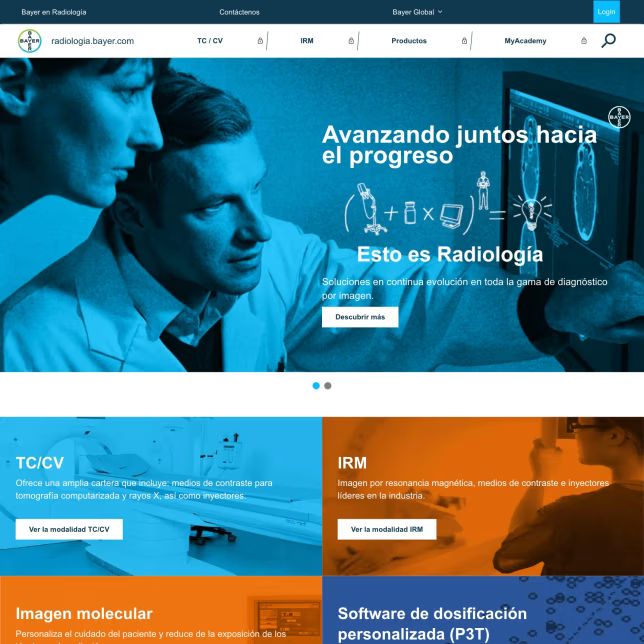
An advanced healthcare digital platform for LATAM was required to facilitate collaboration among radiology HCPs, distribute company knowledge, refine treatment methods, and streamline workflows. The solution needed secure medical website role-based access restrictions based on user role (HCP / non-HCP) and geographic region.
The platform enhanced collaboration, streamlined workflows, and empowered radiology professionals with advanced tools to gain insights and optimize patient care.
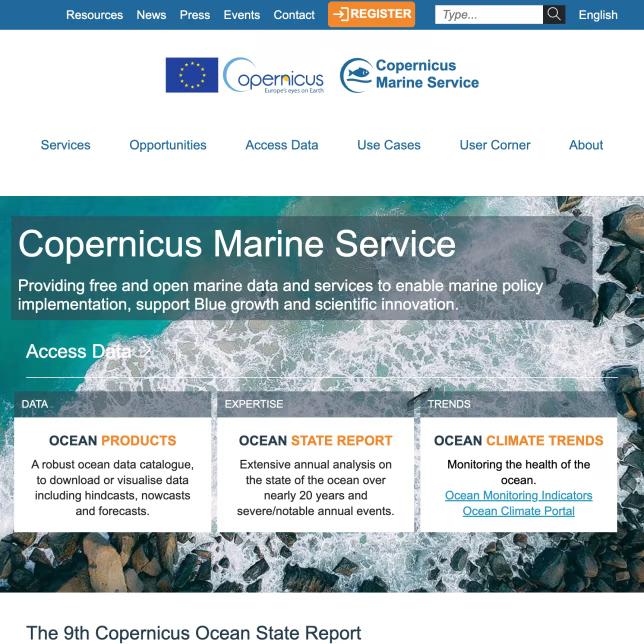
The existing marine data portal relied on three unaligned WordPress installations and embedded PHP code, creating inefficiencies and risks in content management and usability.
The new Drupal DXP streamlined content operations and improved accessibility, offering scientists and businesses a more efficient gateway to marine data services.
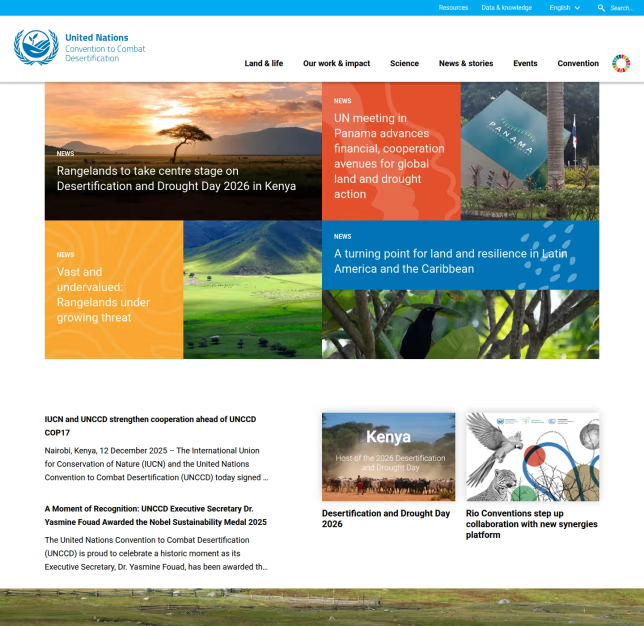
UNCCD operated four separate websites (two WordPress, two Drupal), leading to inconsistencies in design, content management, and user experience. A unified, scalable solution was needed to support a large-scale CMS migration project and improve efficiency and usability.
The modernization effort resulted in a cohesive, user-friendly, and scalable website, improving content management efficiency and long-term digital sustainability.
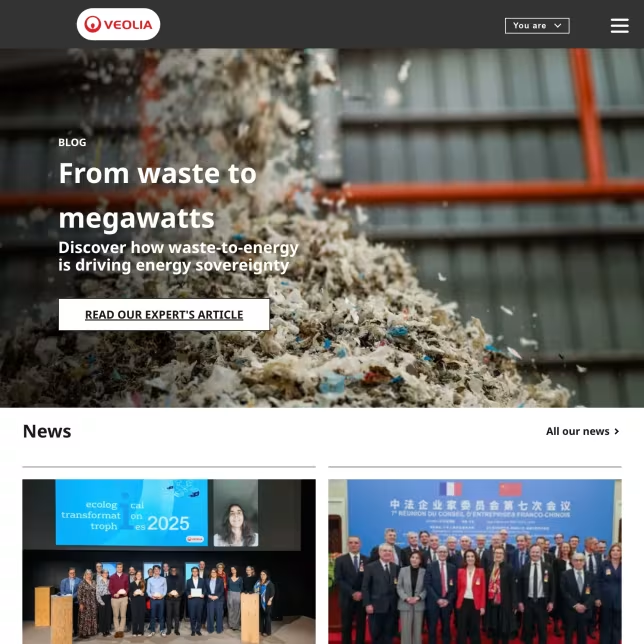
With Drupal 7 reaching end-of-life, Veolia needed a Drupal 7 to Drupal 10 enterprise migration for its Acquia Site Factory multisite platform—preserving region-specific content and multilingual capabilities across more than 200 sites.
The platform was modernized into a stable, scalable multisite foundation with improved performance, maintainability, and long-term upgrade readiness.
It was my pleasure working with Oleksiy (PathToProject) on a new Drupal website. He is a true full-stack developer—the ideal mix of DevOps expertise, deep front-end knowledge, and the structured thinking of a senior back-end developer.
He is well-organized and never lets anything slip. Oleksiy understands what needs to be done before being asked and can manage a project independently with minimal involvement from clients, product managers, or business analysts.
One of the best consultants I’ve worked with so far.

Andrei Melis
Technical Lead at Eau de Web
Oleksiy (PathToProject) and I worked together on a Digital Transformation project for Bayer LATAM Radiología. Oly was the Drupal developer, and I was the business lead. His professionalism, technical expertise, and ability to deliver functional improvements were some of the key attributes he brought to the project.
I also want to highlight his collaboration and flexibility—throughout the entire journey, Oleksiy exceeded my expectations.
It’s great when you can partner with vendors you trust, and who go the extra mile.

Axel Gleizerman Copello
Building in the MedTech Space | Antler
Oleksiy (PathToProject) is demanding and responsive. Comfortable with an Agile approach and strong technical skills, I appreciate the way he challenges stories and features to clarify specifications before and during sprints.

Olivier Ritlewski
Ingénieur Logiciel chez EPAM Systems
These articles expand on the planning, governance, and validation work that makes a Drupal migration predictable. They cover content integrity, cutover control, and post-migration verification so you can evaluate the service with a fuller implementation view.
Share your current Drupal estate, constraints, and target timeline. We will propose a migration architecture, validation approach, and cutover plan that supports repeatable runs and long-term maintainability.