


 [01]
[01]Discovery Workshop
Facilitate sessions with content, product, and engineering stakeholders to define domains, channels, and constraints. Capture current pain points and identify where structure and governance are required.
WordPress content architecture
Run a WordPress Health Check to uncover overlapping post types, weak taxonomy design, and field schemas that create template coupling.
Built for teams managing custom post types, ACF, Gutenberg, and API-driven content.
No login required. Takes 2–3 minutes.
WordPress content architecture design defines how content is modeled, structured, and governed across a platform: content types, taxonomies, fields, relationships, and the rules that keep them consistent. In enterprise environments, content is rarely “just pages”; it is a set of reusable domain objects that must support multiple templates, channels, and teams without becoming brittle.
Organizations need this capability when editorial requirements outgrow ad-hoc page building and when integrations depend on predictable content structures. Without explicit models, teams often encode business meaning into templates, shortcodes, and one-off fields, which makes change expensive and increases the risk of inconsistent data.
A well-defined content architecture improves maintainability by separating content intent from presentation, enabling stable APIs, and supporting Enterprise WordPress governance for long-term evolution. It also creates a shared contract between product, content, and engineering teams, which reduces rework and makes platform changes safer to implement.
Core Focus
Best Fit For
Key Outcomes
Technology Ecosystem
Platform Integrations
As WordPress platforms grow, content structure often evolves through incremental decisions: a new custom post type for a campaign, a few ACF fields added for a single template, and Gutenberg blocks introduced without a shared model. Over time, the platform accumulates overlapping content types, inconsistent taxonomies, and fields whose meaning is implied by templates rather than defined by a schema.
This drift creates architectural friction. Engineering teams must implement conditional logic to handle edge cases, integrations become fragile because API payloads vary by page or template, and migrations require manual cleanup because content is not normalized. Editorial teams experience inconsistent authoring experiences, unclear validation rules, and difficulty reusing content across pages, sites, or channels—especially when teams attempt Enterprise WordPress editorial workflow design without a stable underlying model.
Operationally, the platform becomes harder to change safely. Small content updates can trigger template regressions, new features require duplicating structures instead of extending a model, and governance gaps lead to uncontrolled growth in content variants. The result is slower delivery, higher maintenance overhead, and increased risk when modernizing themes, introducing headless delivery, or consolidating multiple sites.
Map business domains, content consumers, and editorial workflows. Identify canonical content objects, reuse opportunities, and constraints from existing themes, plugins, and integrations.
Audit existing post types, custom post types and taxonomies, fields, and Gutenberg usage. Classify duplication, inconsistencies, and legacy structures that affect migrations, search, and API stability.
Define content types, field schemas, relationships, and taxonomy strategies. Specify required vs optional fields, validation rules, and how content supports multiple presentations and channels.
Design Gutenberg block patterns, ACF field group layouts, and editorial guardrails. Align the UI with the content model so authors create consistent data without relying on template knowledge.
Align the model with REST endpoints, serialization needs, and downstream consumers. Define stable identifiers, relationship representations, and versioning considerations for long-lived integrations.
Implement WordPress custom post types taxonomy structures and field groups with clear naming and ownership. Refactor templates and queries to consume the model consistently and reduce hidden coupling.
Establish Enterprise WordPress governance for schema evolution, ownership, and review practices. Produce model documentation, field definitions, and conventions to keep future changes consistent.
Create a roadmap for incremental adoption, migrations, and deprecation of legacy structures. Define monitoring signals and periodic reviews to prevent model drift over time.
This service establishes explicit content contracts in WordPress so content remains consistent as teams, sites, and channels expand. We focus on durable modeling decisions across WordPress custom post types taxonomy strategy, ACF field architecture, and Gutenberg block content strategy. The result is a Headless WordPress content model that templates and integrations can consume reliably, with Enterprise WordPress governance that keeps the schema evolvable without uncontrolled growth.
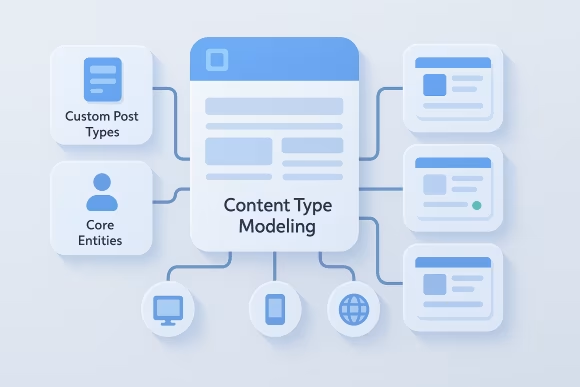
Define custom post types and core entity usage based on domain boundaries rather than templates. Establish canonical objects, required fields, and lifecycle states so content can be reused across pages, sites, and channels without duplicating structures.

Design taxonomies that support navigation, filtering, personalization, and reporting without creating overlapping classification systems. Define controlled vocabularies, hierarchy rules, and ownership so taxonomy growth remains intentional and query performance stays predictable.
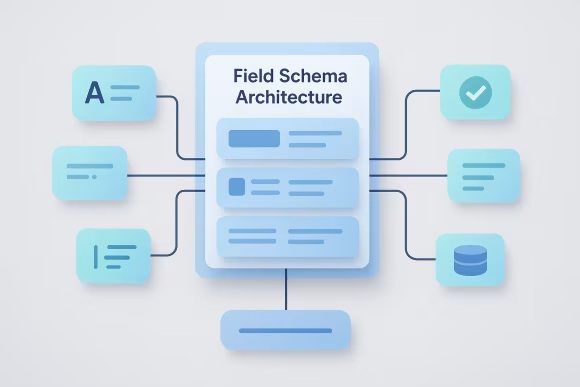
Structure ACF field groups and meta fields with consistent naming, data types, and validation rules. Reduce ambiguous “free-form” fields by encoding intent into the schema, improving data quality and simplifying downstream consumption.
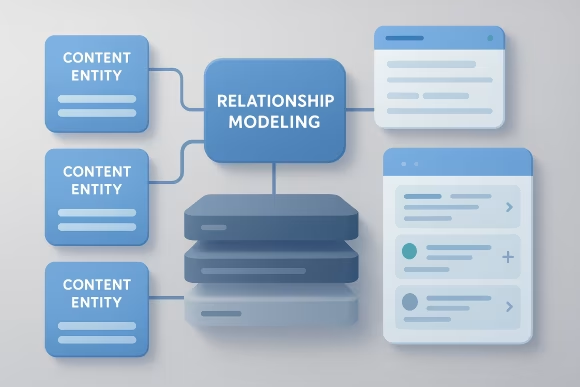
Model relationships between content entities using explicit references and predictable patterns. Define how related content is stored, queried, and exposed via APIs to avoid brittle template logic and reduce migration complexity.

Define block patterns, reusable layouts, and guardrails that align with the content model. Ensure blocks capture structured data where needed, avoid content-in-markup anti-patterns, and support consistent rendering across themes and channels.
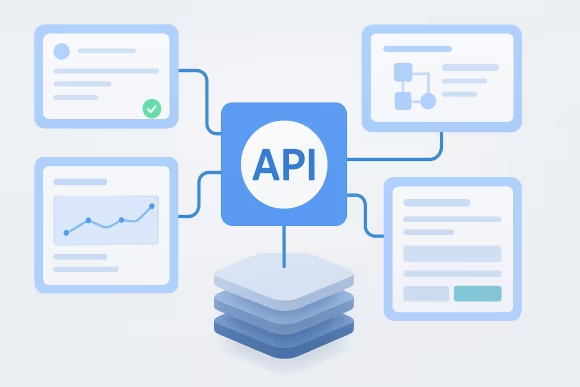
Align content structures with REST API payload expectations, including stable identifiers, relationship representations, and serialization rules. This enables reliable integrations, reduces ad-hoc transformations, and supports future headless or hybrid delivery models.
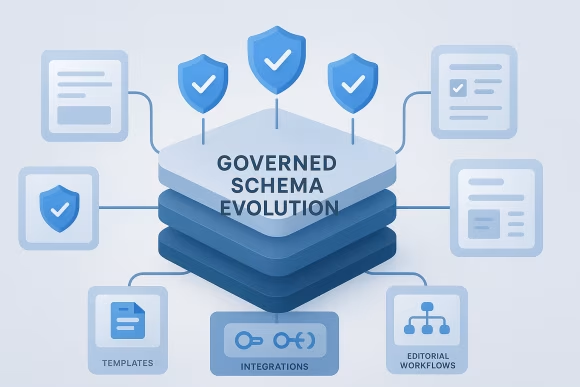
Introduce conventions and change control for adding or modifying content structures. Define documentation, review steps, and deprecation paths so the model can evolve without breaking templates, integrations, or editorial workflows.
Use the Health Check to spot schema gaps, inconsistent authoring patterns, and content relationships that make change risky.
Engagements follow a clear engineering sequence from discovery and current-state audit through WordPress content architecture design, implementation, and long-term governance. We work iteratively to align stakeholders on content contracts, implement changes safely (including custom post types, taxonomy, and ACF field architecture), and reduce migration and integration risk as the model evolves.
[01]Facilitate sessions with content, product, and engineering stakeholders to define domains, channels, and constraints. Capture current pain points and identify where structure and governance are required.
 [02]
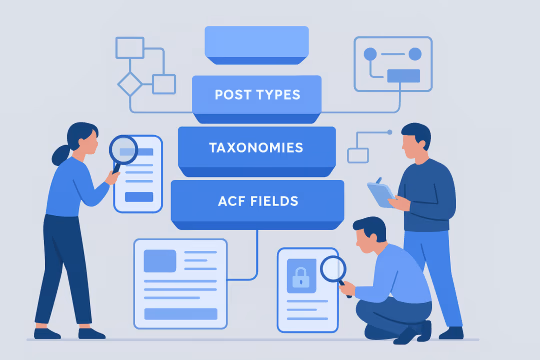
[02]Review existing post types, taxonomies, ACF fields, Gutenberg usage, and template dependencies. Document inconsistencies and areas where data meaning is encoded in presentation.
 [03]
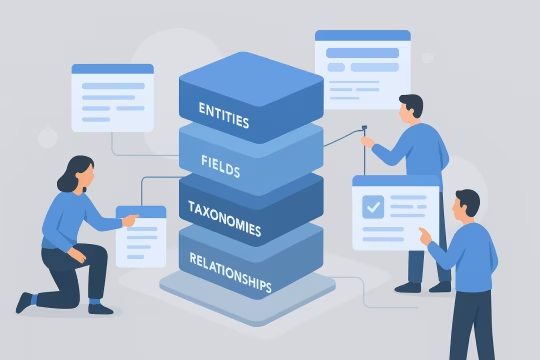
[03]Produce a target content model including entities, fields, taxonomies, relationships, and validation rules. Define naming conventions and ownership to support consistent implementation.
 [04]
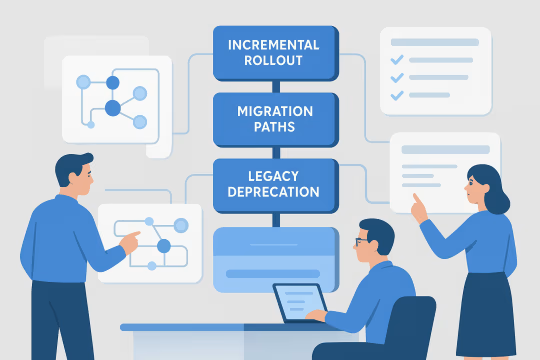
[04]Plan incremental rollout, migration steps, and deprecation of legacy structures. Identify integration touchpoints, testing needs, and release sequencing to minimize operational disruption.
 [05]
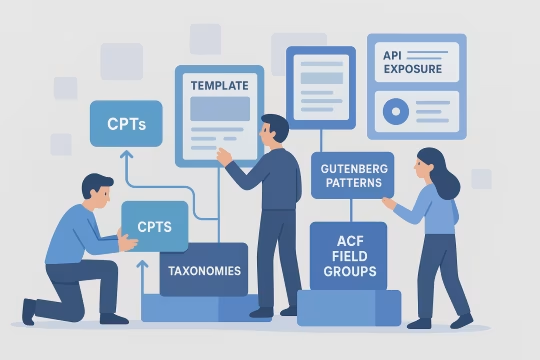
[05]Implement CPTs, taxonomies, ACF field groups, and Gutenberg patterns aligned to the model. Update templates, queries, and API exposure to consume the new structures consistently.
 [06]
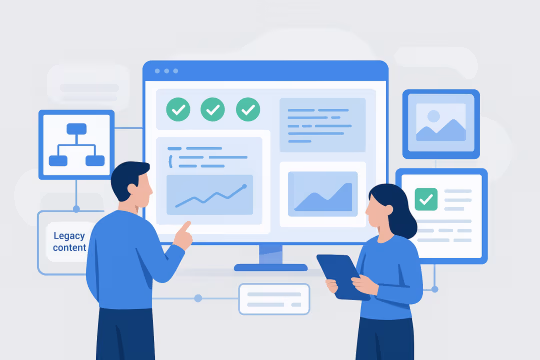
[06]Validate authoring flows, data integrity, and rendering across key templates and devices. Verify API payload consistency and ensure legacy content paths are handled during transition.
 [07]
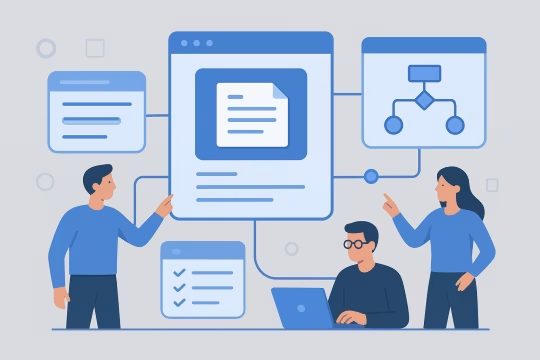
[07]Deliver documentation and lightweight processes for schema changes, reviews, and deprecations. Establish a repeatable approach for adding new content requirements without reintroducing drift.
 [08]
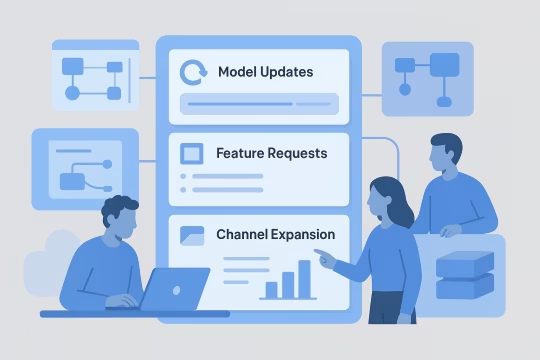
[08]Provide periodic model reviews and support for new features, migrations, or channel expansion. Maintain alignment between content contracts, integrations, and editorial workflows as the platform changes.
Structured content architecture reduces delivery friction by making content predictable and reusable across templates, APIs, and channels. It lowers operational risk during platform changes, improves integration stability, and supports Enterprise WordPress governance and editorial workflow design as teams scale. The impact is most visible in faster iteration, fewer regressions, and reduced long-term maintenance cost—especially when preparing a headless-ready WordPress content model.
Teams spend less time reverse-engineering content intent from templates and one-off fields. New features can extend an existing model instead of introducing parallel structures, reducing rework across themes and integrations.
Explicit schemas and governed evolution reduce the likelihood that content changes break rendering or APIs. Releases become more predictable because dependencies are documented and validated against a stable model.
Canonical content objects and relationships enable reuse across pages, sites, and channels. This reduces duplication and makes it easier to support campaigns, localization, and multi-site rollouts without creating new variants.
Stable API payloads and consistent taxonomy/field semantics improve downstream consumption. Analytics, search, and external systems can rely on predictable structures, reducing custom transformations and integration defects.
Fewer overlapping post types, taxonomies, and fields means less conditional logic in templates and fewer edge cases to support. The platform becomes easier to refactor during theme changes or modernization initiatives.
A consistent authoring experience with clear validation and patterns reduces training burden and content errors. Editorial teams can work faster with fewer exceptions and less reliance on engineering for routine changes.
Defined conventions and change control create accountability for schema decisions. This prevents uncontrolled growth in content structures and supports long-term maintainability as teams and vendors change.
Reduce schema drift
Start with a WordPress Health Check, then review your content architecture to improve reuse, authoring consistency, and API reliability.
No login required. Takes 2–3 minutes.
Adjacent capabilities that extend WordPress platform architecture, API and integration patterns, and long-term operability—often building on the same content model, governance, and headless-ready delivery considerations.
Upgrade-ready architecture, WordPress CI/CD and DevOps, and operational hardening
WordPress REST API engineering and GraphQL API design
GA4 event tracking WordPress with governed measurement
WordPress lead contact sync with secure lead capture
WordPress integration services for secure API connections
Custom WordPress REST endpoints, schemas, and authentication patterns
Enterprise WordPress extensibility with controlled dependencies
Enterprise WordPress network design for multi-site ecosystems
Enterprise WordPress Platform Engineering
Common questions about WordPress content architecture design—including custom post types and taxonomy strategy, ACF field architecture, Gutenberg block content strategy, API alignment, governance, and how to evolve a headless-ready WordPress content model over time.
We start by identifying the domain objects the platform needs to represent (for example: locations, products, people, publications) and how those objects are reused across templates and channels. If an object has its own lifecycle, needs relationships, or is queried independently, it usually belongs in a custom post type rather than being embedded in page content. Pages are appropriate for primarily navigational content with limited reuse and simple hierarchy. Custom post types are appropriate when you need structured fields, repeatable instances, editorial workflows, and predictable API exposure. Custom tables are considered when WordPress post/meta storage becomes a constraint: high write volume, large datasets, complex querying, or performance requirements that cannot be met with indexed meta queries. The decision is also influenced by operational factors: who will author the content, how it will be validated, how it will be migrated, and how it will be exposed via REST. We document the rationale so future teams understand why the model is structured the way it is and when exceptions are acceptable.
We typically produce a content model specification that is usable by both engineering and content teams. At minimum, it includes entity definitions (post types), field schemas (data types, required/optional, validation rules), taxonomy definitions (purpose, hierarchy, ownership), and relationship patterns (one-to-many, many-to-many, reference storage). For engineering, we add implementation-facing details such as naming conventions, meta keys, ACF field group structure, REST exposure rules, and any constraints related to MySQL indexing or query patterns. For content operations, we include authoring guidance: what each field means, examples, and how content should be reused. Where integrations exist, we also document API contracts: expected payload shapes, identifiers, and versioning/deprecation expectations. The goal is to make the model an explicit contract so changes can be reviewed, tested, and rolled out without relying on tribal knowledge or template behavior.
We focus on aligning the authoring experience to the content model using native capabilities and minimal, well-justified extensions. That usually means: clear separation of entities (so authors don’t build data structures inside page bodies), consistent field layouts in ACF, and Gutenberg patterns that guide layout while keeping structured data in fields where it belongs. We also define validation and guardrails: required fields, constrained vocabularies, and predictable relationships. This reduces the need for manual checks and prevents content from drifting into inconsistent formats. When workflow requirements go beyond basic publishing, we evaluate lightweight workflow patterns (roles, review steps, content states) before introducing heavy workflow tooling. Operationally, we aim to reduce exceptions. If authors need “special cases” frequently, it’s usually a signal the model is missing an entity or relationship. We iterate on the model so the workflow becomes simpler over time, rather than accumulating one-off editorial instructions.
A structured model can improve performance when it reduces template conditionals and normalizes how content is queried, but it can also introduce risk if implemented with unbounded meta queries or poorly designed taxonomies. We address performance explicitly during modeling by choosing query-friendly patterns and limiting high-cardinality meta filtering. For example, we prefer taxonomies for many filtering use cases because they are indexed and queryable efficiently compared to arbitrary meta fields. For relationships, we choose storage patterns that match expected access paths (for example, storing references in a predictable direction to avoid expensive cross-queries). We also review MySQL indexing constraints and the impact of plugins that add additional joins. When requirements exceed what post/meta storage can support reliably, we consider alternatives such as custom tables or precomputed indexes. The key is to design the model with query patterns in mind, not just editorial convenience.
We treat API payloads as a contract that should remain stable even as templates change. During modeling, we define which entities are first-class API resources, how relationships are represented (IDs, embedded objects, links), and which fields are exposed. We also define consistent identifiers and slugs so downstream systems can reference content reliably. If ACF is used, we decide whether to expose ACF fields via REST (and how) and ensure field naming and data types are consistent. For Gutenberg content, we clarify what is delivered as structured fields versus rendered HTML, depending on consumer needs. This prevents downstream systems from scraping markup to infer meaning. We also consider versioning and deprecation. If integrations depend on specific fields, we plan how changes are introduced (additive first, then migration, then deprecation) and how consumers are notified. This reduces integration breakage and supports long-lived enterprise integrations.
Search and analytics depend on consistent semantics. A well-modeled taxonomy strategy improves filtering and faceting, while structured fields enable more accurate indexing than free-form page content. We design content structures with indexing in mind: which fields should be searchable, which should be facetable, and which should be treated as metadata for ranking or boosting. For personalization, explicit relationships and classifications make it easier to select relevant content without brittle rules. For example, consistent categories, topics, and audience tags allow downstream systems to assemble experiences predictably. For analytics, structured models reduce ambiguity in event tagging and reporting. When content types and taxonomies are stable, reporting can be segmented reliably (by content type, topic, campaign, region) without manual mapping. We coordinate with analytics implementation so identifiers and classification fields are available and consistent across templates and channels.
Model drift happens when teams add fields, taxonomies, or new post types to solve immediate needs without considering the broader contract. Governance does not need to be heavy, but it must be explicit. We typically recommend: clear ownership for the model (often a platform team with content architecture input), documented conventions, and a lightweight review process for schema changes. Practically, this includes a change request workflow: what problem is being solved, which existing entities are impacted, how the change affects APIs/templates, and whether it introduces duplication. We also define naming rules, deprecation practices, and a cadence for periodic audits. Where multiple teams contribute, we recommend treating the content model like an API: additive changes first, migrations planned, and breaking changes avoided or versioned. This keeps WordPress flexible while maintaining the discipline required for enterprise-scale platforms.
Consistency in multi-site environments requires both technical packaging and process. Technically, we recommend centralizing schema definitions where possible: shared plugins for custom post types/taxonomies, versioned ACF JSON, and controlled Gutenberg patterns. This reduces site-by-site divergence and makes upgrades predictable. Process-wise, we define what is global versus site-specific. Some taxonomies should be shared across sites to enable cross-site search and reporting, while others may be local. We document these decisions and define who can introduce site-specific extensions. We also plan rollout and migration carefully. Multi-site changes can have wide impact, so we use staged deployment, regression checks on representative sites, and clear deprecation paths. The goal is to allow local autonomy where needed while preserving a coherent platform-level content contract.
The primary risks are data loss, broken rendering, and integration regressions. Data loss can occur when fields are renamed or retyped without migration, or when legacy content is not mapped to the new structure. Rendering issues happen when templates assume old structures or when Gutenberg content contains embedded assumptions that no longer hold. Integration regressions occur when REST payloads change unexpectedly or when identifiers/taxonomies used by downstream systems are modified. There is also operational risk: editorial teams may face confusion if the authoring UI changes without clear guidance and training. We mitigate these risks by planning changes as a sequence: introduce new structures additively, migrate content with repeatable scripts where possible, maintain compatibility during transition, and only then deprecate legacy fields. We also define verification steps: sample-based content QA, API contract checks, and rollback considerations. This approach reduces disruption while still allowing meaningful modernization.
We treat plugins as part of the platform’s dependency graph and design the content model to be resilient to change. With ACF, that means: keeping field definitions versioned (for example via ACF JSON), using stable field keys and naming conventions, and avoiding patterns that make content unreadable without the plugin. We also separate concerns: the canonical content meaning should be understandable from the data model, not only from UI configuration. Where possible, we ensure that content can be migrated or exposed via APIs without relying on plugin-specific rendering. Operationally, we define upgrade practices: test environments, regression checks for field rendering and REST exposure, and a clear process for updating ACF configurations across environments. If long-term strategy requires reducing plugin coupling, we can plan a phased approach to move critical structures into code (CPT/taxonomies) while keeping ACF as an authoring layer rather than a source of architectural truth.
Scope depends on platform size and existing complexity, but most engagements include discovery, an audit of current structures, a target model, and an implementation plan. For smaller platforms, this can be completed in a few weeks with a focused set of entities and templates. For enterprise platforms with multiple sites, integrations, and legacy content, work is often phased. A common approach is to start with one domain area (for example, a key content type and its taxonomy/relationships), implement it end-to-end, and then expand. This reduces risk and provides a concrete reference model for future work. We define deliverables early: model documentation, conventions, and a prioritized backlog of changes. If implementation is included, we also define migration strategy, testing expectations, and release sequencing. The goal is to produce an actionable architecture that can be adopted incrementally without requiring a “big bang” rebuild.
We run modeling as a joint exercise because content architecture is both a domain and an engineering concern. Content teams provide intent, lifecycle needs, and authoring constraints. Engineering teams provide platform constraints, integration requirements, and maintainability considerations. We facilitate structured workshops to converge on shared definitions and to surface conflicts early. We use concrete examples: representative content items, key templates, and API consumers. This helps avoid abstract debates and ensures the model supports real workflows. We also document decisions and trade-offs so stakeholders understand why certain patterns were chosen. During implementation, we keep feedback loops short. Editorial users validate the authoring experience, while engineering validates query patterns, API payloads, and template consumption. This reduces the risk of producing a model that looks correct on paper but fails in day-to-day operations.
Collaboration typically begins with a short discovery phase to establish context and constraints. We start by confirming the platform goals (channels, sites, integrations), identifying the primary content domains, and reviewing the current WordPress setup: themes, key plugins, existing post types/taxonomies, and how Gutenberg and ACF are used. Next, we run a focused workshop with content and engineering stakeholders to align on the most critical problems to solve first. We agree on success criteria such as: reducing duplication, stabilizing API payloads, improving authoring consistency, or preparing for a modernization initiative. From there, we propose a scoped plan for an audit and target model definition, including the artifacts to be produced (model documentation, conventions, backlog) and the implementation path (incremental rollout vs migration). We also define working practices: stakeholder touchpoints, review checkpoints, and how decisions will be captured so the model remains governable after the initial engagement.
These case studies showcase real-world implementations of content architecture, taxonomy strategy, and governance in enterprise WordPress and Drupal environments. They highlight structured content modeling, editorial workflow scalability, and API-ready content contracts that align closely with WordPress content architecture design principles. The selected work demonstrates maintainable content models and governance enabling long-term platform evolution and consistent delivery.
UNCCD operated four separate websites (two WordPress, two Drupal), leading to inconsistencies in design, content management, and user experience. A unified, scalable solution was needed to support a large-scale CMS migration project and improve efficiency and usability.
The modernization effort resulted in a cohesive, user-friendly, and scalable website, improving content management efficiency and long-term digital sustainability.
It was my pleasure working with Oleksiy (PathToProject) on a new Drupal website. He is a true full-stack developer—the ideal mix of DevOps expertise, deep front-end knowledge, and the structured thinking of a senior back-end developer.
He is well-organized and never lets anything slip. Oleksiy understands what needs to be done before being asked and can manage a project independently with minimal involvement from clients, product managers, or business analysts.
One of the best consultants I’ve worked with so far.

Andrei Melis
Technical Lead at Eau de Web
Oleksiy (PathToProject) is demanding and responsive. Comfortable with an Agile approach and strong technical skills, I appreciate the way he challenges stories and features to clarify specifications before and during sprints.

Olivier Ritlewski
Ingénieur Logiciel chez EPAM Systems
Oleksiy (PathToProject) was the Lead Developer on a number of client projects which I managed. He is highly skilled and incredibly hardworking. When assigning work to him, I could always rely on it being completed to a high quality and on time.
His technical expertise was valued across the team and he was often our 'go to' for technical challenges, which he loved to get stuck into. Oleksiy is proactive and engaged in a professional manner with our clients.
I have no hesitation in recommending him.

Daniela Graf
Senior Project Manager | Change Mgmt Practitioner | Process Improvement Geek
These articles expand on the architecture and governance choices that shape scalable WordPress content models. They cover information architecture, structured content governance, block strategy, and migration concerns that often surface when defining content types, taxonomies, and API-ready schemas.
Let’s review your current WordPress content structures, identify drift and integration risks, and define a governed content model that supports scalable delivery across teams and channels.