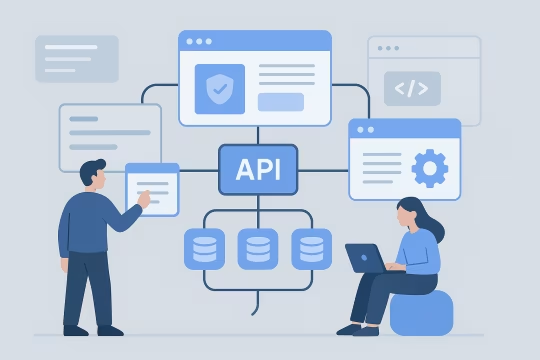
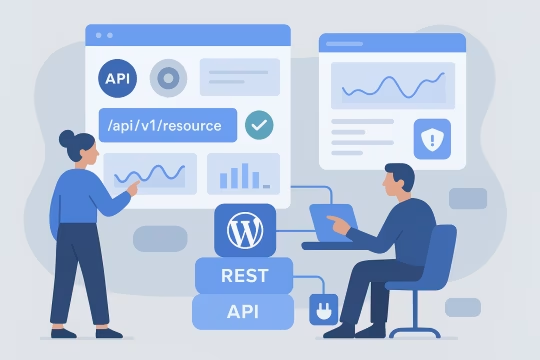
WordPress REST API development focuses on turning WordPress into a reliable integration surface: well-defined endpoints, stable JSON schemas, consistent WordPress API authentication and authorization design, and predictable performance characteristics. For enterprise platforms, the API is often the primary interface for headless frontends, mobile apps, search services, and downstream systems that depend on content and metadata.
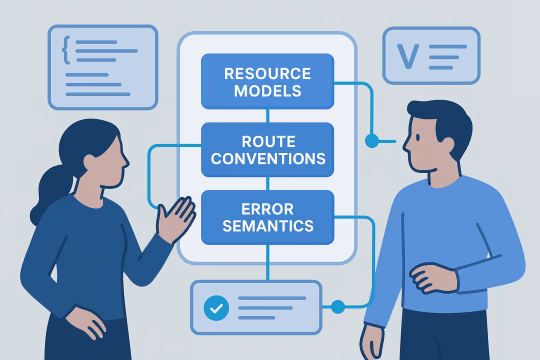
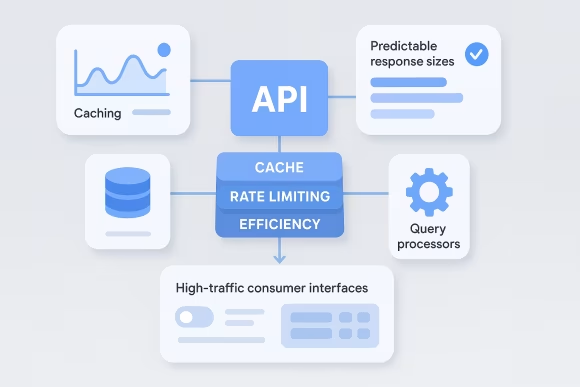
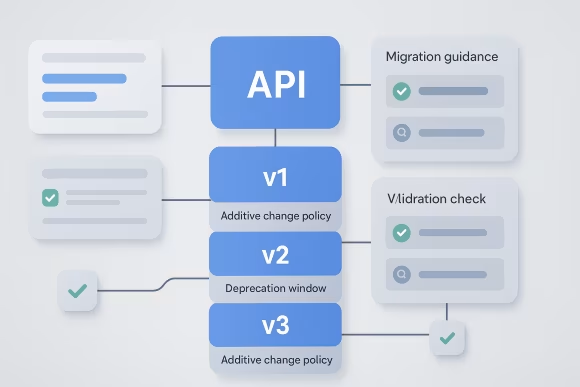
As platforms scale, ad-hoc endpoints and inconsistent payloads create coupling between teams and increase the cost of change. A structured API layer establishes clear contracts, WordPress REST API versioning rules, and error semantics so consumers can evolve independently. It also introduces operational controls such as caching strategy, WordPress API rate limiting and security, and observability to keep API behavior measurable and supportable.
This capability supports scalable platform architecture by aligning WordPress data models with integration patterns (BFF, aggregation, event-driven extensions where appropriate) and by implementing governance that keeps API changes safe across releases, plugins, and multi-environment deployments.










 [01]
[01]