
 [01]
[01]Discovery and Technical Audit
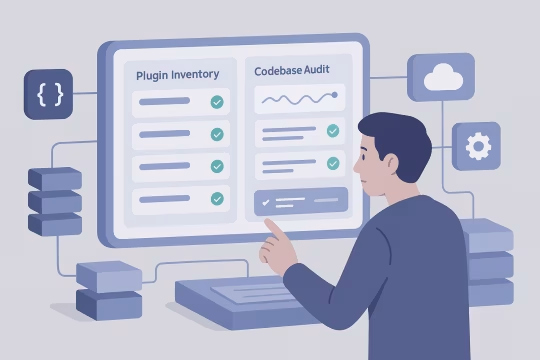
Review the current codebase, plugin inventory, environments, deployment mechanics, and support pain points. Produce an evidence-based modernization backlog and risk register.
WordPress platform modernization
Assess architecture, dependencies, release workflows, and performance bottlenecks across your WordPress estate.
Built for teams modernizing custom code, plugins, environments, and CI/CD without disrupting delivery.
No login required. Takes 2–3 minutes.
WordPress platform modernization services are the structured engineering work required to move a legacy WordPress implementation toward an upgradeable, observable, and operationally predictable platform. This typically includes WordPress legacy refactoring, dependency and plugin strategy, theme and build refactoring, environment standardization, and improvements to performance, security posture, and release workflows (including WordPress CI/CD and DevOps practices).
Organizations need modernization when upgrades become risky, delivery slows due to fragile themes or unmanaged plugins, or operational issues recur because environments and deployments are inconsistent. As the platform grows, integrations (identity, search, analytics, CDP, headless frontends) increase coupling and make changes harder to validate—especially during enterprise WordPress upgrades.
Modernization creates a platform architecture that supports incremental change: clear boundaries between custom code and vendor dependencies, automated validation in CI, repeatable deployments, and plugin and theme governance for WordPress modernization. The result is a WordPress ecosystem that can evolve through regular upgrades and controlled refactoring rather than periodic rebuilds.
Core Focus
Best Fit For
Key Outcomes
Technology Ecosystem
Platform Integrations
WordPress platforms often accumulate risk gradually rather than through a single major failure. Themes become tightly coupled to legacy page templates, plugin usage expands without ownership boundaries, and release practices evolve differently across environments. Over time, even routine upgrades begin to feel risky because teams cannot predict how core, plugin, theme, and integration changes will interact.
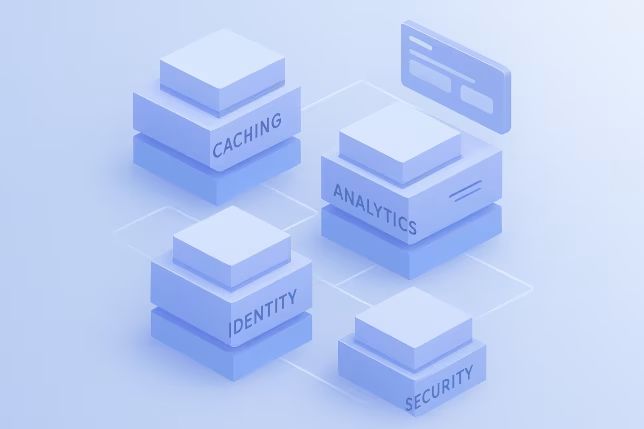
The architectural cost shows up in fragmented dependency management, inconsistent build processes, and fragile integration points with search, analytics, CRM, identity, and caching layers. Teams end up compensating with manual workarounds, prolonged freeze windows, and emergency fixes after deployment. Instead of supporting continuous improvement, the platform becomes something teams are afraid to change.
Operationally, modernization is needed when patching, performance tuning, and platform evolution compete with each other. Without repeatable release controls, environment parity, and governance for custom code and plugins, organizations face higher maintenance overhead, slower feature delivery, and more production risk. WordPress platform modernization addresses those issues by turning the estate into an upgrade-ready engineering platform rather than a collection of historical decisions.
Assess WordPress core version, plugin and theme inventory, hosting model, environments, and deployment workflows. Document architectural constraints, technical debt hotspots, and operational risks so modernization priorities are based on measured platform realities.
Define how the platform should be owned and evolved after modernization, including plugin governance, release cadence, environment strategy, and responsibility boundaries across product, engineering, and operations teams.
Establish a controlled dependency model for core, plugins, themes, and custom code. Introduce rules for approved extensions, versioning, Composer-managed assets where appropriate, and a deprecation path for unsupported components.
Refactor brittle theme logic, duplicated templates, and tightly coupled customizations into maintainable structures. Clarify where presentation logic, reusable blocks, and platform capabilities belong so future changes are easier to review and test.
Align local, CI, staging, and production environments to reduce drift and release surprises. Introduce containerized development or equivalent parity controls, configuration management conventions, and reproducible build expectations.
Design WordPress CI/CD and DevOps workflows with automated checks for coding standards, regression risk, dependency changes, and deploy readiness. Add rollback expectations and release gates so upgrades and refactors can ship with lower operational risk.
Modernize caching, performance baselines, access controls, and patching workflows so the platform is safer to operate. Validate runtime assumptions against real traffic patterns, admin workflows, and compliance constraints.
Complete modernization with runbooks, ownership rules, documentation, and improvement backlog recommendations. The goal is to leave the organization with a platform that can keep evolving safely rather than needing another large reset.
This service focuses on the engineering capabilities required to turn a legacy WordPress implementation into an upgrade-safe, maintainable platform. It combines WordPress legacy refactoring, dependency governance, WordPress CI/CD and DevOps automation, and WordPress security hardening modernization so platform evolution becomes repeatable instead of disruptive. The result is a WordPress estate that supports safer upgrades, clearer ownership, and faster iteration across content, integrations, and frontend delivery.
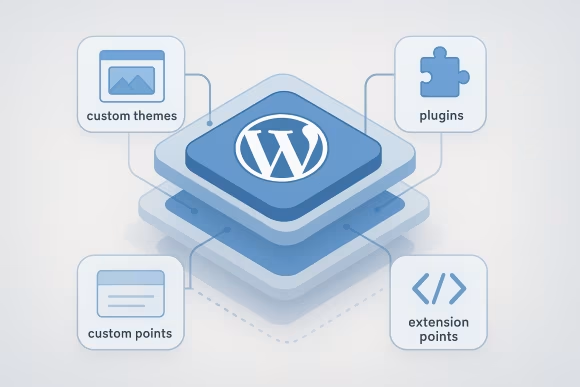
Restructure custom themes, plugins, and extension points so WordPress core and plugin upgrades can be introduced without destabilizing the platform. Clarify boundaries between vendor code, shared platform capabilities, and project-specific customizations.
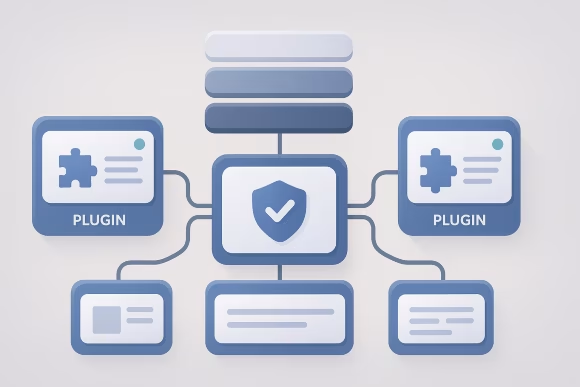
Introduce a governed strategy for plugin and library selection, versioning, and lifecycle management. This reduces extension sprawl and makes it easier to evaluate security, maintenance, and compatibility impacts before releases.
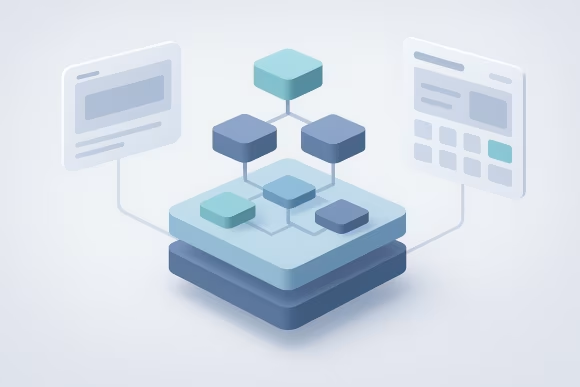
Refactor legacy template structures into more maintainable component and block patterns. This improves reuse, reduces duplication, and gives teams a clearer path for evolving presentation logic without rewriting large areas of the site.
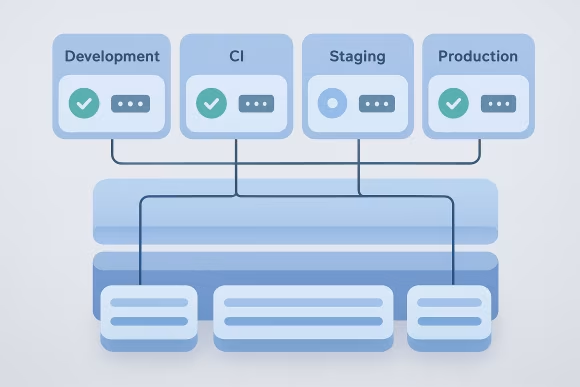
Standardize development, CI, staging, and production assumptions so behavior is more predictable across environments. This reduces drift, improves debugging, and makes release validation more trustworthy.
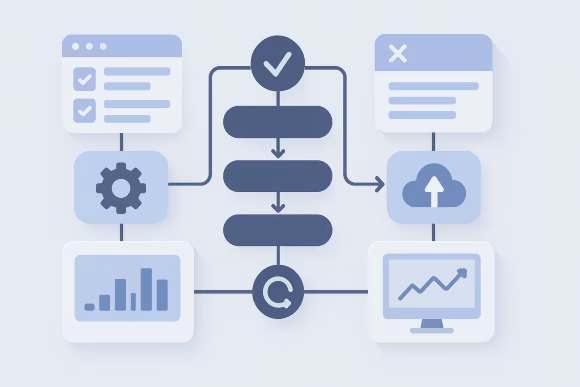
Build CI/CD workflows with testing gates, dependency awareness, and rollback expectations. Automation reduces manual release effort and lowers the chance that upgrades or refactors introduce avoidable regressions.
Define performance expectations across rendering, caching, media handling, and administrative workflows. Modernization aligns code and infrastructure decisions with measurable runtime targets instead of reactive tuning after incidents.

Strengthen patching workflows, admin boundaries, authentication patterns, and plugin review controls. This helps the platform stay compliant and reduces operational exposure as the WordPress estate grows.
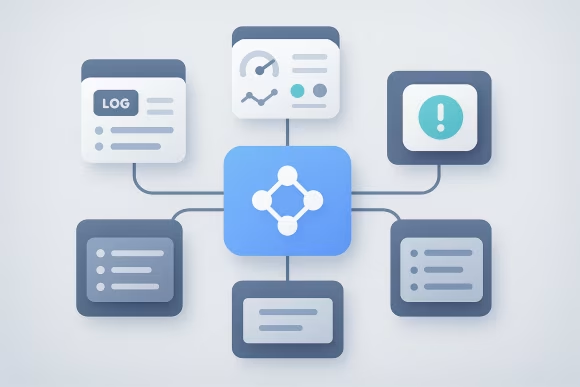
Add logging, monitoring, and operational runbooks so teams can understand platform health and diagnose issues quickly. Modernization is not complete until the platform can be supported predictably by engineering and operations teams.
Use the Health Check to surface technical debt, release friction, and performance constraints that make WordPress changes harder to ship.
Delivery is structured to modernize the platform incrementally while keeping release risk controlled. Each phase produces measurable outcomes: audit findings, target architecture decisions, refactoring work, release controls, and operational enablement. This model works particularly well for enterprise WordPress estates that need to keep delivering while modernization is underway.
[01]Review the current codebase, plugin inventory, environments, deployment mechanics, and support pain points. Produce an evidence-based modernization backlog and risk register.
 [02]
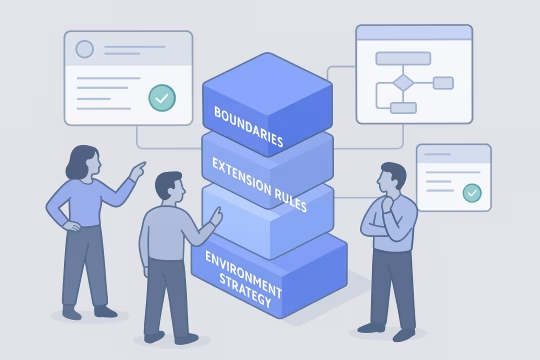
[02]Define target architecture boundaries, extension rules, dependency ownership, and environment strategy. Align the future-state platform with release management and operational expectations.
 [03]
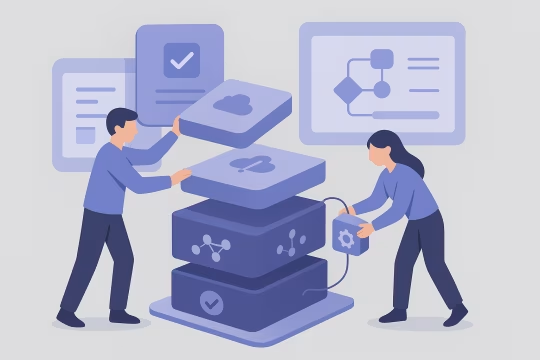
[03]Introduce dependency controls, build discipline, and environment parity improvements. Standardize how platform changes are packaged, tested, and promoted across environments.
 [04]
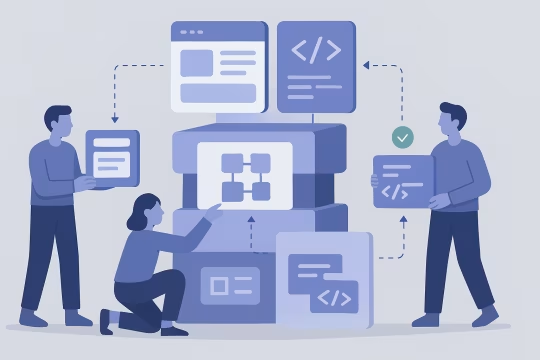
[04]Refactor fragile theme logic, duplicated template patterns, and tightly coupled custom code into maintainable structures that are safer to upgrade and easier to extend.
 [05]
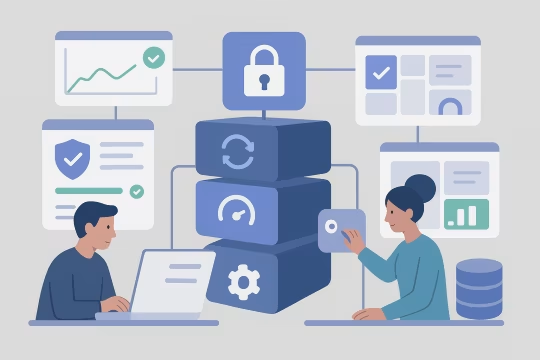
[05]Improve access controls, patching workflows, caching behavior, and runtime performance baselines. Validate assumptions against real operational and compliance requirements.
 [06]
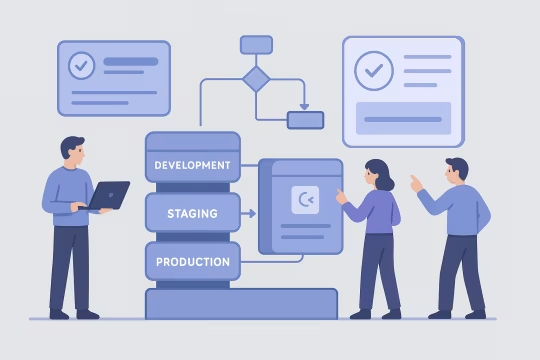
[06]Add CI/CD checks, rollback procedures, and production-readiness gates so upgrades and improvements can ship with lower risk and better visibility.
 [07]
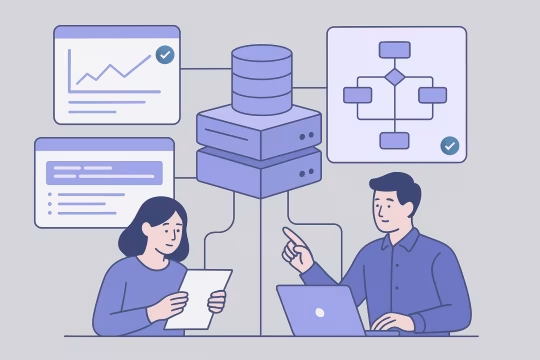
[07]Instrument the platform with monitoring, logs, and runbooks that support ongoing ownership. This reduces dependency on tribal knowledge and improves incident response quality.
 [08]
[08]Finish with a prioritized roadmap for remaining improvements, governance practices, and ownership handover. The platform is positioned for iterative modernization instead of future emergency rebuilds.
Platform modernization reduces the friction and uncertainty that make WordPress costly to evolve over time. By improving architecture clarity, release predictability, and operational controls, organizations gain a platform that is easier to maintain and safer to change. The business impact is visible in upgrade confidence, lower support overhead, and faster delivery of platform improvements.
Core and plugin updates become more predictable because architecture boundaries, dependency ownership, and release checks are explicit.
Refactoring and governance reduce recurring cleanup work, emergency fixes, and the effort required to support historical customizations.
Teams spend less time working around fragile releases and more time shipping planned improvements through repeatable workflows.
Monitoring, runbooks, and standardized environments improve incident response and reduce environment-specific surprises.
Governed dependencies, patching discipline, and access hardening make WordPress safer to operate in enterprise contexts.
The platform becomes easier for engineering, product, and operations teams to understand, govern, and evolve over time.
Modernize with confidence
Identify the highest-risk dependencies, weak release controls, and operational gaps before the next upgrade cycle.
These related services extend WordPress platform modernization into adjacent work such as Headless WordPress migration, multisite architecture, plugin architecture, and integration patterns (analytics, CRM, APIs). They are common next steps once upgradeability, governance, and delivery workflows are stabilized.
WordPress REST API engineering and GraphQL API design
GA4 event tracking WordPress with governed measurement
WordPress lead contact sync with secure lead capture
WordPress integration services for secure API connections
Custom WordPress REST endpoints, schemas, and authentication patterns
Schema-first APIs for headless content delivery
Enterprise WordPress extensibility with controlled dependencies
Enterprise WordPress network design for multi-site ecosystems
WordPress platform strategy consulting: architecture principles, governance, and roadmap definition
Common questions from teams modernizing legacy WordPress estates, including upgrade safety, dependency governance, release pipelines, and operational readiness.
Upgrade risk usually comes from accumulated coupling rather than WordPress core itself. Legacy themes, unmanaged plugins, undocumented customizations, and inconsistent environments create uncertainty about what will break when versions change. Teams often avoid upgrades not because each one is inherently large, but because the platform no longer has clear boundaries or predictable validation. Modernization reduces that risk by clarifying ownership, dependency rules, and release checks. Instead of treating upgrades as isolated technical events, it makes them part of a controlled operating model.
Modernization has to include both. Refactoring code without changing how dependencies are selected, versioned, tested, and deployed usually preserves the same long-term risk. A sustainable modernization program addresses architecture, plugin governance, environment parity, and CI/CD mechanics together. That combination is what makes future upgrades and improvements safer. Otherwise, technical debt reappears quickly even after a significant refactor.
The delivery model is incremental. We typically start with audit and governance work, then improve the most critical dependencies, release controls, and environment issues before tackling deeper refactors. That allows product and content teams to keep shipping while modernization reduces the platform’s long-term risk. Where needed, we also sequence changes so high-risk upgrades, performance fixes, or security controls are addressed first, with lower-priority cleanup folded into a longer improvement roadmap.
These case studies showcase real-world examples of platform modernization, governance, and upgrade-safe architecture in complex content management environments. They highlight approaches to dependency management, environment standardization, CI/CD pipeline enablement, and performance optimization relevant to WordPress platform modernization. The selected work demonstrates practical delivery of scalable, maintainable, and secure CMS ecosystems with controlled plugin and theme governance.
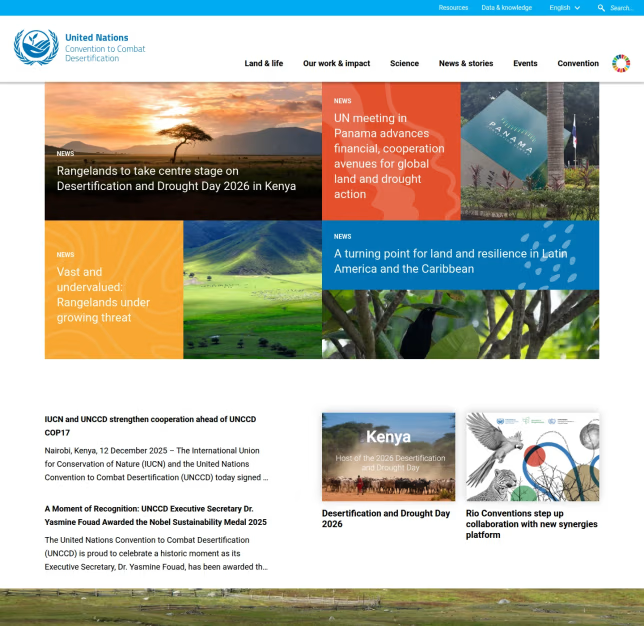
UNCCD operated four separate websites (two WordPress, two Drupal), leading to inconsistencies in design, content management, and user experience. A unified, scalable solution was needed to support a large-scale CMS migration project and improve efficiency and usability.
The modernization effort resulted in a cohesive, user-friendly, and scalable website, improving content management efficiency and long-term digital sustainability.
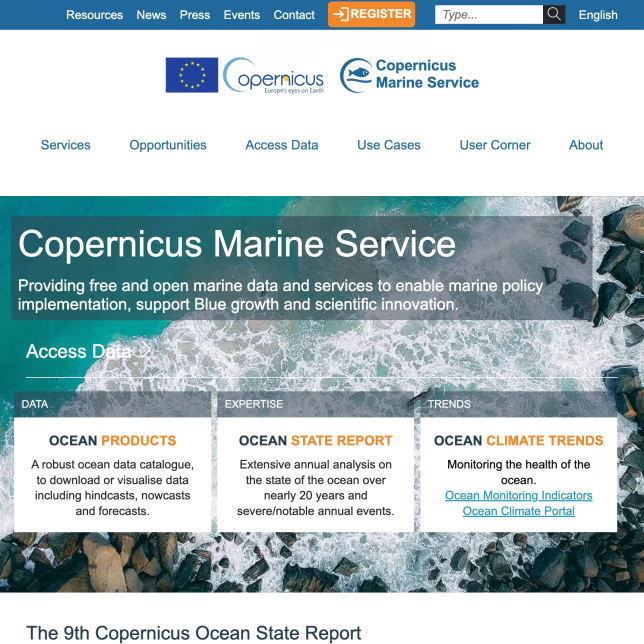
The existing marine data portal relied on three unaligned WordPress installations and embedded PHP code, creating inefficiencies and risks in content management and usability.
The new Drupal DXP streamlined content operations and improved accessibility, offering scientists and businesses a more efficient gateway to marine data services.
It was my pleasure working with Oleksiy (PathToProject) on a new Drupal website. He is a true full-stack developer—the ideal mix of DevOps expertise, deep front-end knowledge, and the structured thinking of a senior back-end developer.
He is well-organized and never lets anything slip. Oleksiy understands what needs to be done before being asked and can manage a project independently with minimal involvement from clients, product managers, or business analysts.
One of the best consultants I’ve worked with so far.

Andrei Melis
Technical Lead at Eau de Web
Oleksiy (PathToProject) is demanding and responsive. Comfortable with an Agile approach and strong technical skills, I appreciate the way he challenges stories and features to clarify specifications before and during sprints.

Olivier Ritlewski
Ingénieur Logiciel chez EPAM Systems
Oleksiy (PathToProject) was the Lead Developer on a number of client projects which I managed. He is highly skilled and incredibly hardworking. When assigning work to him, I could always rely on it being completed to a high quality and on time.
His technical expertise was valued across the team and he was often our 'go to' for technical challenges, which he loved to get stuck into. Oleksiy is proactive and engaged in a professional manner with our clients.
I have no hesitation in recommending him.

Daniela Graf
Senior Project Manager | Change Mgmt Practitioner | Process Improvement Geek
These articles expand on the architecture, governance, and operational patterns that make WordPress modernization safer and more repeatable. They cover plugin and theme control, reference architecture, observability, and the migration and integration decisions that often shape enterprise upgrade work.
If your WordPress estate has become difficult to upgrade, govern, or operate, modernization can make it maintainable again through architecture, release discipline, and operational hardening.