Inconsistent Tracking Undermines Reporting Confidence
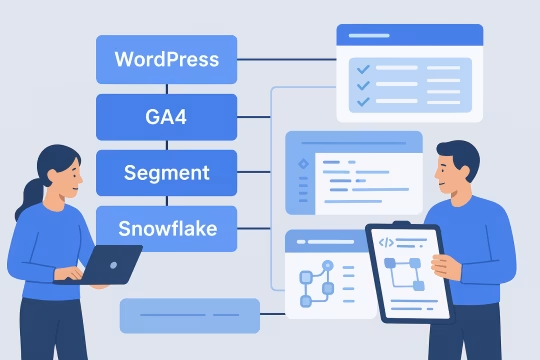
As WordPress platforms grow, analytics implementations often accumulate through incremental changes: tag manager updates, plugin-based tracking, theme refactors, and campaign-specific scripts. Events are added without a stable taxonomy, identifiers vary between tools, and critical context (content metadata, user state, consent) is inconsistently attached. Over time, teams rely on dashboards that appear stable while the underlying data contracts quietly drift.
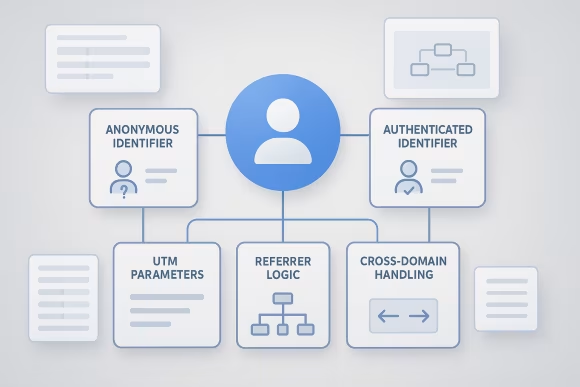
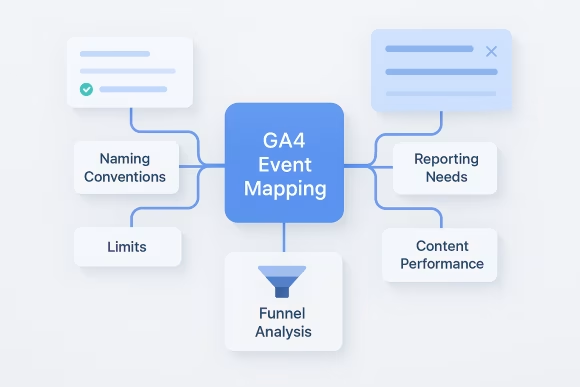
These issues create architectural friction. Engineering teams struggle to reason about what is being tracked and where transformations occur (browser, tag manager, CDP, warehouse). Marketing and product analysts spend time reconciling metrics across GA4, CDP views, and warehouse tables, often discovering that the same “conversion” is defined differently by channel or site. When multiple WordPress instances exist, cross-site journeys and shared identities become difficult to model, and changes in one site can break shared reporting.
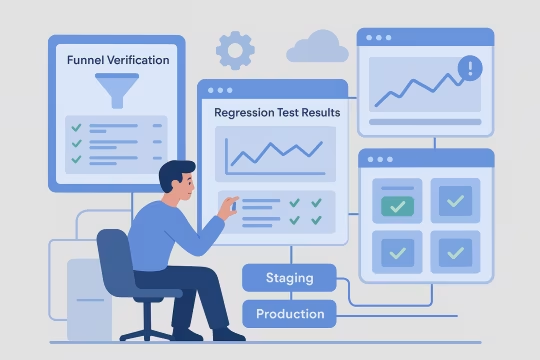
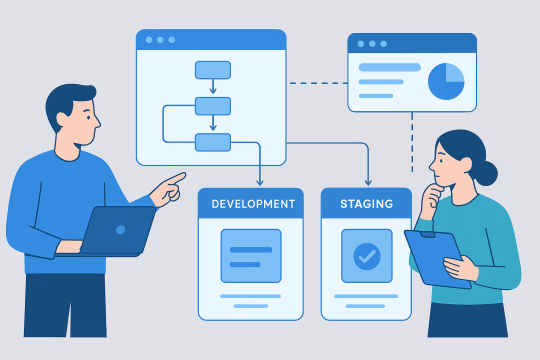
Operationally, measurement becomes risky to change. Releases introduce tracking regressions that are detected late, attribution becomes unreliable during high-traffic campaigns, and privacy requirements are handled inconsistently. The result is slower decision cycles, higher maintenance overhead, and reduced trust in analytics as a platform capability.








 [01]
[01]