
 [01]
[01]Discovery and Audit
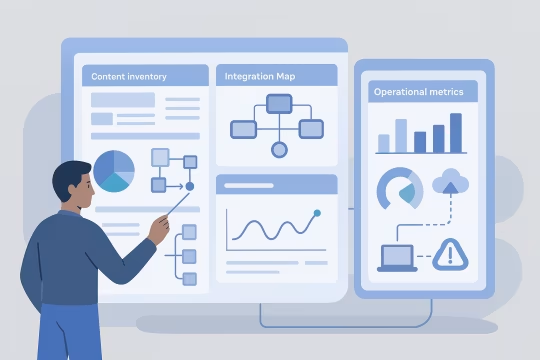
Run a platform audit covering content inventory, integrations, hosting constraints, and operational maturity. Produce a dependency map and migration risk register to guide sequencing and resourcing decisions.
WordPress replatforming
Run a WordPress Health Check to surface architecture, content model, integration, and environment risks that can slow migration.
Useful for legacy CMS estates, multi-site platforms, and complex integration footprints.
No login required. Takes 2–3 minutes.
WordPress replatforming services provide a controlled replacement of an existing enterprise web platform with WordPress while preserving critical content, integrations, and operational requirements. For many organizations, this is an enterprise WordPress platform migration program that includes rethinking information architecture, WordPress content model redesign, editorial workflows, and the runtime architecture needed to meet performance, security, and compliance expectations.
Organizations typically pursue CMS replatforming to WordPress when legacy CMS implementations constrain delivery speed, increase operational risk, or make integration change expensive. Common triggers include multi-site growth, fragmented publishing workflows, inconsistent templates, and integrations that were built without clear contracts or lifecycle management.
A well-executed replatforming establishes a maintainable WordPress architecture with clear boundaries between content, presentation, and integrations. It creates repeatable deployment and environment practices, improves observability and reliability, and provides a foundation for ongoing platform evolution without recurring “big rewrite” cycles.
Core Focus
Best Fit For
Key Outcomes
Technology Ecosystem
Delivery Scope
As enterprise platforms grow, legacy CMS implementations often accumulate tightly coupled templates, inconsistent content structures, and undocumented integration behaviors. Publishing teams adapt with workarounds, while engineering teams inherit brittle deployment processes and environment drift. Over time, the platform becomes difficult to change without unintended regressions in content rendering, search visibility, or downstream systems.
These constraints show up as architectural friction: content models that cannot represent new product structures, integrations that rely on ad-hoc transformations, and frontend patterns that are duplicated across sites. Teams spend more time coordinating releases and debugging edge cases than delivering new capabilities. The lack of clear contracts between CMS, identity, search, analytics, and downstream APIs increases the cost of every change.
Operationally, the platform becomes harder to secure and scale. Patch cycles are risky, performance tuning is reactive, and incident response lacks the telemetry needed to isolate issues quickly. The result is slower delivery, higher maintenance overhead, and a growing gap between platform expectations and what the current system can reliably support.
Assess the current CMS, content inventory, integrations, hosting constraints, and non-functional requirements. Establish migration scope, success criteria, and a dependency map across teams and systems to reduce surprises during cutover.
Define the WordPress runtime and application architecture, including environment strategy, plugin and theme approach, and integration boundaries. Specify data contracts, security controls, and scalability assumptions aligned to enterprise operating models.
Redesign content types, taxonomies, reusable blocks, and editorial workflows to support future change. Map legacy structures to the new model, including governance rules for ownership, validation, and lifecycle management.
Build repeatable migration pipelines for content, media, users, and metadata with deterministic transformations. Implement reconciliation reports, idempotent runs, and rollback strategies to support iterative testing and staged migrations.
Rebuild integrations using explicit API contracts and error handling, including identity, search, analytics, and downstream services. Introduce queues or caching where needed to isolate failures and control latency across dependencies.
Validate rendering, redirects, SEO parity, accessibility, and functional workflows across representative content sets. Add automated checks for migration completeness, broken links, and integration responses to reduce manual verification effort.
Plan a cutover strategy with freeze windows, delta migrations, and rollback procedures. Execute production readiness checks, monitor key metrics, and stabilize operational runbooks for support teams post-launch.
Establish standards for plugins, code review, release cadence, and security patching. Define ownership for content models and integrations, and implement a backlog process for ongoing platform improvements.
This service focuses on the engineering capabilities required for CMS replatforming to WordPress without losing operational control. It emphasizes explicit architecture decisions, repeatable migration mechanics, and integration contracts that can evolve safely. The result is an enterprise WordPress platform that supports multi-site growth, predictable releases, and maintainable content structures. Technical controls for WordPress performance and security replatforming, including observability, are treated as first-class platform concerns.
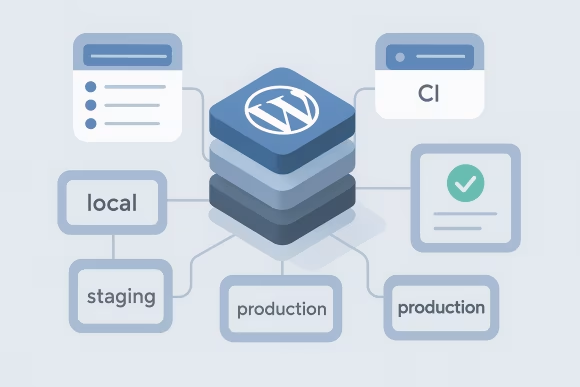
Define a WordPress architecture that separates concerns across theme/block layers, plugin strategy, and integration boundaries. Establish environment parity across local, CI, staging, and production. Document non-functional requirements and design decisions so future changes can be evaluated against clear constraints and trade-offs.
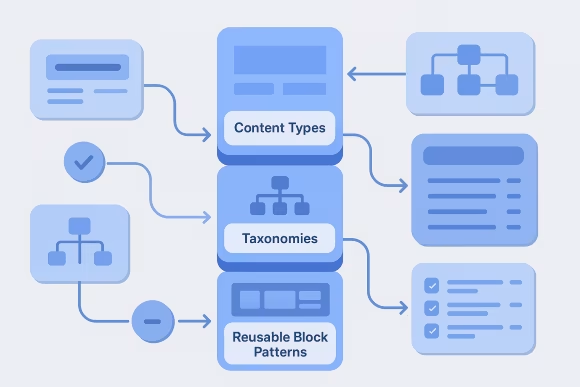
Design content types, taxonomies, and reusable block patterns that scale across teams and sites. Implement validation rules and editorial workflows aligned to governance needs. Provide mapping specifications from legacy structures to ensure migration transformations remain consistent and testable.

Implement scripted, repeatable migrations for content, media, and metadata with deterministic transformations. Support incremental runs, delta updates, and reconciliation reporting to prove completeness. Build tooling to detect duplicates, broken references, and encoding or formatting issues before production cutover.
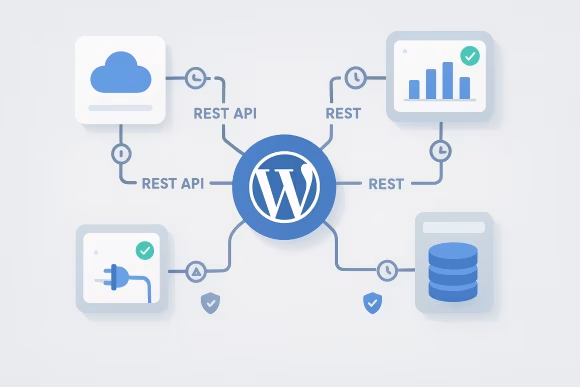
Replatform integrations using explicit REST API contracts, versioning expectations, and error-handling patterns. Introduce resilience controls such as retries, timeouts, and circuit-breaker-like behaviors where appropriate. Ensure integrations can be tested independently of the CMS UI to reduce coupling and regression risk.
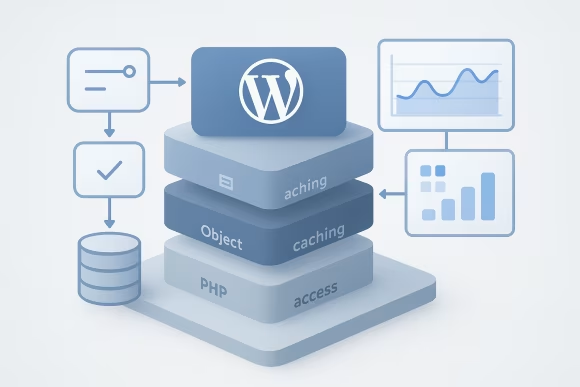
Engineer performance controls across PHP execution, database access patterns, object caching, and edge caching assumptions. Define cache invalidation rules that respect editorial workflows and personalization constraints. Establish load and performance test criteria tied to real traffic patterns and content complexity.

Harden authentication, authorization, and administrative boundaries, including role design and least-privilege access. Establish patching and vulnerability response procedures for core and plugins. Implement audit logging and secure configuration baselines to reduce operational exposure.
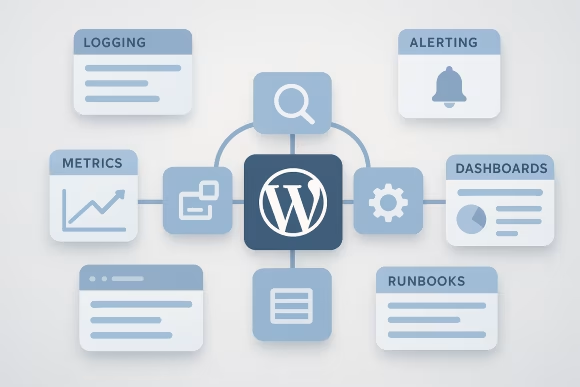
Define logging, metrics, and alerting requirements that support incident triage and capacity planning. Instrument key workflows such as publishing, search indexing, and integration calls. Provide runbooks and dashboards so platform teams can operate the system with predictable response patterns.
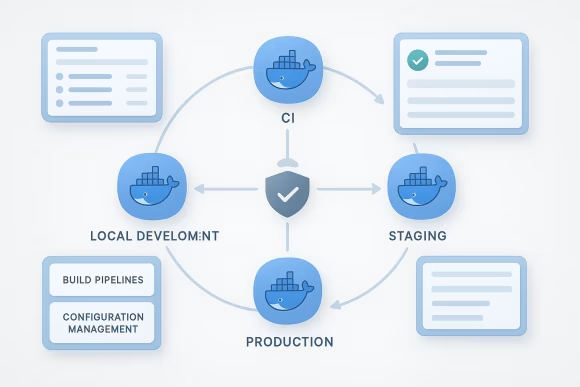
Standardize builds, configuration management, and deployment workflows to reduce environment drift. Use Docker-based parity for local development and CI to improve reproducibility. Establish rollback procedures and release gates that align with enterprise change management and audit needs.
Use the Health Check to identify brittle templates, content structure gaps, deployment issues, and integration dependencies before cutover planning starts.
Delivery is structured to reduce risk in enterprise CMS replatforming to WordPress while enabling parallel work across content, engineering, and integrations. Each phase produces testable artifacts and decision records so stakeholders can validate scope, readiness, and cutover criteria. The model supports staged launches for multi-site or high-volume platforms and includes practical planning for MySQL scalability for WordPress replatforming where database growth is a constraint.
[01]Run a platform audit covering content inventory, integrations, hosting constraints, and operational maturity. Produce a dependency map and migration risk register to guide sequencing and resourcing decisions.
 [02]
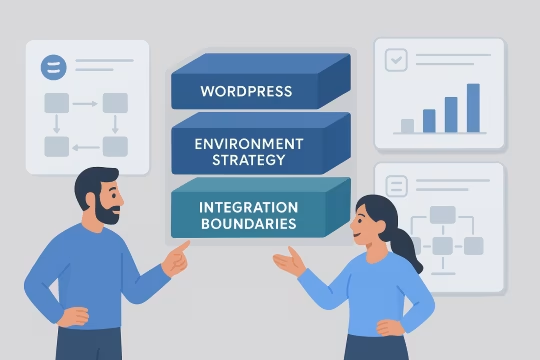
[02]Define the target WordPress architecture, environment strategy, and integration boundaries. Create a delivery plan with cutover approach, testing strategy, and acceptance criteria tied to measurable requirements.
 [03]
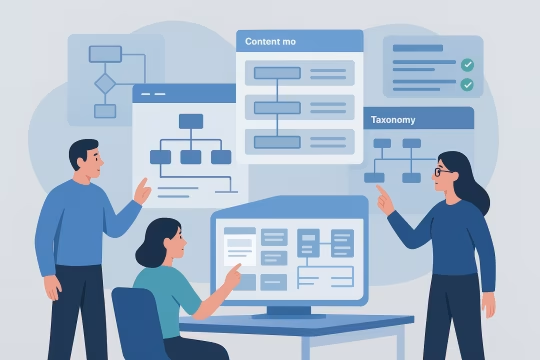
[03]Design content models, taxonomies, and block patterns that support editorial workflows and reuse. Establish governance rules for content ownership, validation, and lifecycle to prevent model drift post-launch.
 [04]
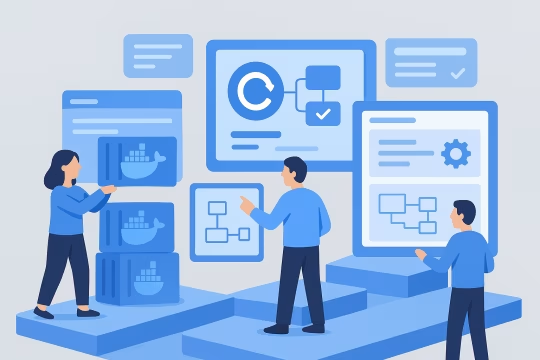
[04]Implement the WordPress codebase, plugin strategy, and configuration baselines across environments. Set up Docker-based local development and CI workflows to ensure reproducible builds and consistent runtime behavior.
 [05]
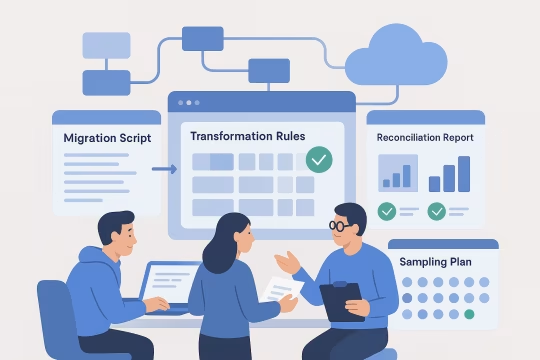
[05]Build migration scripts and transformation rules, then run iterative migrations into non-production environments. Validate completeness with reconciliation reports and sampling plans, and refine mappings based on editorial feedback.
 [06]
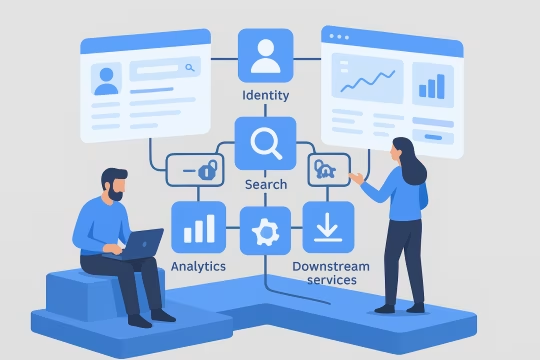
[06]Implement and test integrations with identity, search, analytics, and downstream services using explicit contracts. Add resilience controls and monitoring so failures are visible and do not cascade across the platform.
 [07]
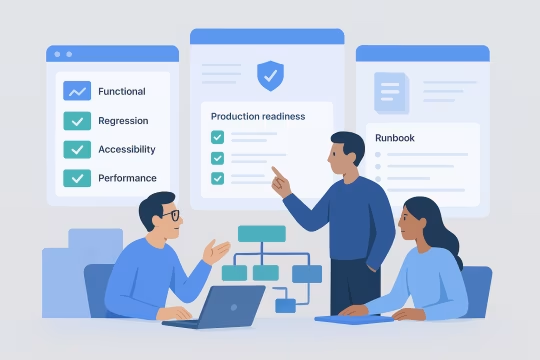
[07]Execute functional, regression, accessibility, performance, and security testing aligned to enterprise requirements. Complete production readiness checks, runbooks, and operational handover materials before cutover.
 [08]
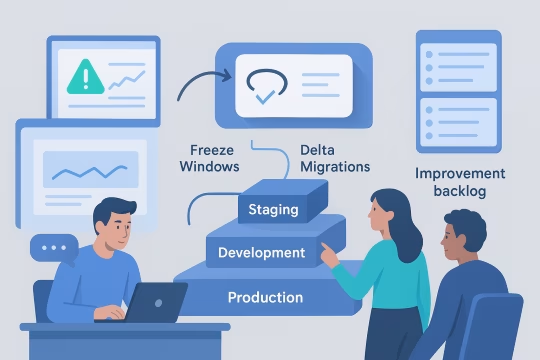
[08]Perform cutover with freeze windows, delta migrations, and rollback procedures. Stabilize with focused monitoring and incident response, then transition into an improvement backlog for ongoing platform evolution.
Replatforming improves the platform’s ability to change safely while reducing operational overhead created by legacy constraints. The impact is realized through clearer architecture boundaries, repeatable delivery mechanics, and improved reliability controls across WordPress performance and security replatforming workstreams. Outcomes depend on scope, but are typically visible in release predictability, incident reduction, faster iteration on content and product structures, and fewer regressions during ongoing platform modernization.
A clearer content model and reusable block patterns reduce the effort to introduce new page types and campaigns. Standardized environments and release gates shorten the path from development to production with fewer coordination cycles.
Repeatable deployments, rollback procedures, and observability reduce the blast radius of changes. Security baselines and patching processes make updates routine rather than high-risk events.
Performance and caching strategies are designed against real traffic and content complexity. Database and runtime tuning reduce bottlenecks and support predictable scaling as sites and content volume grow.
Replacing ad-hoc integrations and duplicated templates with explicit contracts and shared patterns reduces long-term maintenance load. Decision records and governance prevent architecture drift after launch.
Integration refactoring introduces consistent error handling, timeouts, and monitoring. Downstream systems receive cleaner, versionable payloads, reducing breakage when either side evolves.
Workflow design and content model clarity reduce manual workarounds and rework. Publishing teams gain predictable preview, validation, and approval paths aligned to governance requirements.
Least-privilege roles, hardened admin boundaries, and audit-friendly controls reduce exposure. Vulnerability response becomes measurable and repeatable across core, plugins, and infrastructure.
A defined operating model supports ongoing improvements without recurring replatforming cycles. Backlog governance and release cadence enable incremental modernization aligned to business priorities.
Before you migrate
Start with a WordPress Health Check, then review the findings to align architecture, migration scope, and stabilization priorities.
These related services are common extensions of WordPress replatforming services—supporting deeper platform modernization, migration execution, REST API integration work, multi-site architecture, and the operational practices needed after an enterprise WordPress platform migration.
Upgrade-ready architecture, WordPress CI/CD and DevOps, and operational hardening
Enterprise WordPress migration and replatforming services
WordPress REST API engineering and GraphQL API design
GA4 event tracking WordPress with governed measurement
WordPress lead contact sync with secure lead capture
WordPress integration services for secure API connections
Custom WordPress REST endpoints, schemas, and authentication patterns
Enterprise WordPress extensibility with controlled dependencies
Enterprise WordPress network design for multi-site ecosystems
Common questions from enterprise teams planning a WordPress replatforming program, including architecture, operations, integrations, governance, risk management, and engagement setup.
Enterprise WordPress replatforming usually starts by making the runtime and extension model explicit. That includes a clear theme and block strategy (what lives in the theme vs. custom blocks vs. plugins), a controlled plugin policy (approved, owned, and deprecated plugins), and defined integration boundaries for identity, search, analytics, and downstream APIs. On the infrastructure side, teams typically standardize environment parity (local, CI, staging, production) and configuration management so the platform behaves consistently across stages. Caching is treated as an architectural concern, not an afterthought: page/edge caching assumptions, object caching, and cache invalidation rules are defined alongside editorial workflows. For multi-site or multi-brand setups, the architecture should clarify shared vs. site-specific components, shared content patterns, and how releases are coordinated. The goal is not a single “perfect” reference architecture, but a documented set of constraints and decisions that make future changes predictable and reviewable.
We treat the content model as a product interface: it needs stability, versioning discipline, and governance. The process typically begins with an inventory of existing content types, fields, taxonomies, and page templates, then identifies where the current model is overfitted to legacy templates or under-specified for new use cases. In WordPress, reusable blocks and patterns are designed to express layout and presentation without embedding business logic in content. We define which blocks are “primitive” (typography, media, layout) versus “domain” blocks (product teaser, event listing, CTA module), and we document field semantics and validation rules. This reduces the risk of content becoming inconsistent across teams. We also plan for evolution: deprecating fields, introducing new block versions, and migrating content forward without breaking rendering. That includes migration scripts for model changes and automated checks that detect invalid or incomplete content before publishing.
A replatforming is successful only if the operating model changes with it. Operationally, teams need a defined patching cadence for WordPress core and plugins, clear ownership for plugin approvals and updates, and a release process that includes testing gates and rollback procedures. Environment management is another common shift. Enterprises benefit from reproducible builds and consistent configuration across environments, often using containerized local development and CI to reduce “works on my machine” drift. Logging, metrics, and alerting should be aligned to the platform’s critical workflows such as publishing, cache invalidation, search indexing, and integration calls. Finally, support and incident response need runbooks that reflect the new architecture: where to look when publishing fails, how to identify integration timeouts, how to validate cache behavior, and how to perform safe emergency changes. These practices reduce operational risk and make the platform easier to run over time.
Performance work starts with defining traffic and content complexity assumptions: peak requests, cache hit targets, authenticated vs. anonymous traffic, and editorial publishing patterns. From there, we design a caching strategy that matches the architecture, including edge/page caching where appropriate, object caching for repeated queries, and clear cache invalidation rules tied to content updates. Database performance is addressed through query profiling, indexing where applicable, and reducing expensive patterns introduced by plugins or custom code. We also review media handling, image optimization, and background processing for tasks like imports, indexing, or webhook delivery. Scalability is not only about infrastructure size; it is about predictable behavior under load. We define load test scenarios that reflect real user journeys, validate response times and error rates, and ensure observability is in place so bottlenecks can be identified quickly in production. The result is a platform that scales through design, not emergency tuning.
Integrations are often where legacy platforms accumulate the most hidden coupling. During replatforming, we start by cataloging integrations (identity, CRM, search, analytics, marketing automation, product APIs) and documenting current payloads, triggers, and failure modes. We then define explicit contracts: endpoints, authentication, expected response times, error handling, and versioning expectations. In WordPress, integrations may be implemented via REST API consumers, webhooks, scheduled jobs, or middleware depending on reliability requirements. We pay particular attention to isolating failures so an outage in a downstream system does not break publishing or page rendering. That can involve timeouts, retries with backoff, queueing patterns, and graceful degradation. We also define how integrations are tested. Contract tests and integration tests in non-production environments reduce the risk of late surprises. The aim is to make integrations evolvable: changes can be introduced with clear impact analysis and controlled rollout.
Yes, but it should be a deliberate architectural choice. WordPress can act as a content hub while one or more frontends consume content via REST APIs. In that model, the replatforming scope expands to include API design decisions, content preview strategies, authentication for editorial preview, and caching behavior across the frontend and CMS. A common approach is to start with a traditional WordPress-rendered experience for core pages while introducing API-driven surfaces for specific applications or channels. This reduces risk and allows teams to validate content modeling and governance before increasing architectural complexity. If headless is a requirement, we define the API contracts, content serialization rules, and versioning strategy early. We also plan for operational concerns such as rate limiting, monitoring API latency, and ensuring that editorial workflows (preview, scheduling, approvals) remain usable when the frontend is decoupled.
Plugin governance is essential because plugins are effectively third-party dependencies with security and maintenance implications. We typically establish a plugin policy that defines approval criteria (security posture, maintenance activity, licensing, compatibility), ownership (who updates and tests), and deprecation rules (how plugins are removed or replaced). For custom code, we recommend treating WordPress as an application with standard engineering controls: code review, automated testing where feasible, dependency scanning, and release tagging. Custom functionality should be organized so responsibilities are clear (e.g., domain plugins vs. theme concerns) and so upgrades do not require risky, unplanned refactors. Governance also includes documentation and decision records: why a plugin was chosen, what alternatives were rejected, and what constraints apply. This reduces institutional knowledge risk and supports auditability, especially in regulated environments.
Content governance prevents the platform from drifting into inconsistent structures that are expensive to maintain. We define ownership for content types and taxonomies, rules for introducing new fields or blocks, and validation requirements that protect downstream consumers such as search, analytics, and APIs. Editorial workflow governance typically includes role design, approval paths, and publishing controls aligned to organizational risk. For example, regulated content may require multi-step approvals, while marketing content may prioritize speed with lighter controls. We also define how reusable blocks and patterns are managed so teams do not create near-duplicates that fragment the UI and content semantics. Over time, governance should support evolution: deprecating fields, migrating content forward, and measuring content quality. Lightweight review processes and clear standards are usually more effective than heavy committees, as long as enforcement is supported by tooling and automated checks where possible.
The most common risks are incomplete content migration, SEO regression, integration failures, and operational readiness gaps. Mitigation starts with an explicit content inventory and mapping specification, followed by repeatable migration runs with reconciliation reporting. This provides evidence of completeness rather than relying on manual spot checks alone. SEO risk is mitigated through redirect planning, URL parity analysis, metadata mapping, and validation of canonical tags, structured data, and sitemap behavior. We also test rendering and performance characteristics that affect search, such as Core Web Vitals and caching behavior. Integration risk is reduced by defining contracts, implementing resilience controls, and testing failure modes. Operational risk is addressed through production readiness checks, runbooks, monitoring, and a cutover plan with rollback. The goal is to make risk visible and measurable throughout delivery, not discovered during launch week.
SEO continuity is treated as a migration workstream with its own acceptance criteria. We start by analyzing current URL structures, indexation patterns, top landing pages, and critical templates. Redirect rules are designed from this analysis, not generated blindly, and are validated in staging with automated checks for redirect chains, loops, and 404s. Metadata and on-page semantics are mapped explicitly: titles, descriptions, headings, canonical URLs, hreflang (if applicable), structured data, and internal linking patterns. We also validate sitemap generation and robots directives to ensure search engines can crawl the new platform correctly. During cutover, we monitor key indicators such as crawl errors, index coverage, response codes, and performance metrics. A rollback plan is defined in advance. The objective is not to guarantee zero fluctuation—some change is normal—but to prevent avoidable regressions and to detect issues quickly when they occur.
A successful replatforming requires shared ownership across technology and content. On the client side, we typically need a product or platform owner to make scope and priority decisions, a technical lead or architect to align enterprise constraints, and representatives for content operations to validate models and workflows. Integration owners are important: teams responsible for identity, search, analytics, and downstream APIs need to participate in contract definition and testing. If the organization has security, privacy, or compliance requirements, those stakeholders should be involved early to avoid late-stage rework. We also recommend identifying operational owners for post-launch support. Even if day-to-day operations are handled by a platform team or managed service, the client should have clear escalation paths and decision authority for changes that affect risk, cost, or user experience.
Scope and timeline are driven by content volume and complexity, the number and criticality of integrations, and the degree of redesign required for content models and templates. We typically begin with a discovery phase that produces a content inventory, integration catalog, and a target architecture outline. From that, we define work packages that can be estimated and sequenced. We avoid single-number estimates early. Instead, we provide ranges with explicit assumptions and identify the main drivers that could expand scope, such as undocumented legacy behaviors, complex redirects, or data quality issues in the source platform. For multi-site programs, we often recommend a phased approach: migrate a representative site first to validate patterns, then scale to additional sites using shared components and repeatable migration tooling. This reduces risk and improves predictability as the program progresses.
Collaboration typically begins with a short discovery and alignment phase designed to make scope, risks, and architectural decisions explicit. We start with stakeholder interviews across platform, content, and integration owners, then perform a lightweight audit of the current CMS, hosting model, deployment workflow, and key integrations. Next, we run a structured content inventory and mapping workshop to identify content types, templates, media patterns, and known data quality issues. In parallel, we define the target-state architecture at a level sufficient to make delivery decisions: theme/block strategy, plugin policy, environment approach, integration boundaries, and non-functional requirements. The output is a practical plan: a prioritized backlog, a migration and cutover strategy, acceptance criteria (including SEO and operational readiness), and a delivery sequence that supports iterative validation. This phase also establishes working agreements for communication, decision-making, and how engineering and content teams will collaborate during implementation.
These case studies highlight real-world examples of platform migration, content model redesign, and integration refactoring similar to WordPress replatforming. They showcase scalable architecture redesign, migration pipelines, and performance and security hardening that align with enterprise CMS transformation goals. Reviewing these examples provides insight into practical delivery approaches and measurable outcomes for complex content platform modernization.
UNCCD operated four separate websites (two WordPress, two Drupal), leading to inconsistencies in design, content management, and user experience. A unified, scalable solution was needed to support a large-scale CMS migration project and improve efficiency and usability.
The modernization effort resulted in a cohesive, user-friendly, and scalable website, improving content management efficiency and long-term digital sustainability.
It was my pleasure working with Oleksiy (PathToProject) on a new Drupal website. He is a true full-stack developer—the ideal mix of DevOps expertise, deep front-end knowledge, and the structured thinking of a senior back-end developer.
He is well-organized and never lets anything slip. Oleksiy understands what needs to be done before being asked and can manage a project independently with minimal involvement from clients, product managers, or business analysts.
One of the best consultants I’ve worked with so far.

Andrei Melis
Technical Lead at Eau de Web
Oleksiy (PathToProject) is demanding and responsive. Comfortable with an Agile approach and strong technical skills, I appreciate the way he challenges stories and features to clarify specifications before and during sprints.

Olivier Ritlewski
Ingénieur Logiciel chez EPAM Systems
Oleksiy (PathToProject) was the Lead Developer on a number of client projects which I managed. He is highly skilled and incredibly hardworking. When assigning work to him, I could always rely on it being completed to a high quality and on time.
His technical expertise was valued across the team and he was often our 'go to' for technical challenges, which he loved to get stuck into. Oleksiy is proactive and engaged in a professional manner with our clients.
I have no hesitation in recommending him.

Daniela Graf
Senior Project Manager | Change Mgmt Practitioner | Process Improvement Geek
These articles expand on the architecture, governance, and delivery decisions that shape a successful WordPress migration. They cover content modeling, integration boundaries, page-builder exit paths, and the operational risks that often surface during replatforming programs.
Let’s assess your current platform, map migration and integration risks, and define a target WordPress architecture that supports scalable delivery and long-term operations.