Performance Focus

Core Web Vitals optimization (LCP, CLS, INP)
Backend & database performance tuning
Frontend asset optimization
High-traffic scalability

Technical Scope

  • Cache strategy (Drupal cache, Redis, Varnish)
  • Database query optimization
  • Twig & render pipeline improvements
  • Queue & cron performance tuning
  • Lazy loading & image optimization

Infrastructure Layer

  • Cloud hosting optimization (AWS / DO / Acquia)
  • PHP-FPM & OPcache tuning
  • CDN & edge caching configuration
  • Horizontal scaling strategies

Slow Drupal Sites Hurt Growth, SEO, and Conversions

Many Drupal platforms suffer from slow page loads, heavy frontend bundles, inefficient database queries, and under-optimized caching layers. These issues directly impact Core Web Vitals, SEO rankings, conversion rates, and infrastructure costs.

Performance bottlenecks often hide across multiple layers — application code, database, caching strategy, CDN configuration, and frontend rendering — requiring a systematic optimization approach.

Our Performance Optimization Approach

Audit & Bottleneck Identification

We conduct a deep technical audit across frontend, backend, infrastructure, and database layers to identify performance bottlenecks and measurable improvement areas.

Optimization Strategy & Roadmap

We prioritize fixes based on impact and business value — balancing technical improvements with measurable SEO and UX gains.

Implementation & Validation

We implement improvements across caching, rendering, database queries, assets, and infrastructure — followed by performance benchmarking.

Continuous Monitoring

We help you maintain performance with monitoring, alerting, and ongoing optimization cycles.

Core Performance Optimization Areas

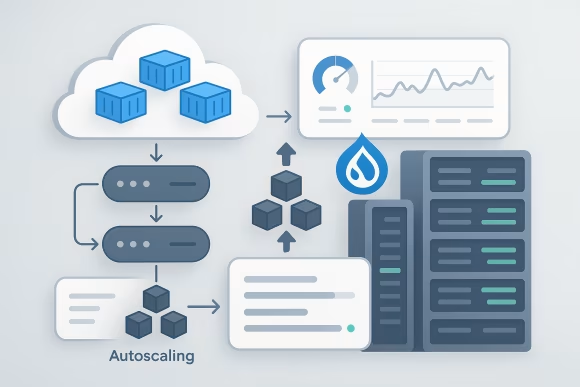
Drupal Performance Optimization focuses on improving platform responsiveness across application, infrastructure, and delivery layers. The service combines Core Web Vitals refinement, advanced multi-layer caching strategies, database and query optimization, and frontend asset tuning within a structured performance engineering framework. Infrastructure-level improvements such as PHP-FPM tuning, autoscaling, and load balancing are aligned with traffic patterns and growth projections. High-traffic readiness testing ensures predictable behavior during campaigns and peak demand periods. This approach strengthens reliability and scalability without compromising governance or architectural integrity.

What We Optimize
  • Drupal 8 / 9 / 10 / 11 / 12 platforms
  • Drupal 7 (Legacy) platforms
  • Multisite architectures
  • Headless Drupal setups
  • API-heavy Drupal applications
  • Enterprise content platforms
  • Commerce-driven Drupal websites
Who This Is For
  • Enterprises with SEO growth targets
  • Marketing teams struggling with slow landing pages
  • Organizations preparing for high-traffic campaigns
  • Teams migrating to modern Drupal versions
  • Companies optimizing infrastructure costs
Technologies & Tools
  • Drupal Cache API
  • Redis
  • Varnish
  • Cloudflare / CDN
  • AWS / DigitalOcean / Acquia
  • New Relic / Blackfire
  • Lighthouse & PageSpeed Insights
  • OPcache & PHP-FPM tuning

How We Deliver

Our performance optimization delivery model is structured, measurable, and results-driven. We begin with a comprehensive technical audit to identify performance bottlenecks across infrastructure, application logic, database queries, caching layers, and front-end delivery. Each optimization phase is executed in controlled sprints with clear benchmarks and before/after metrics to demonstrate impact. From load validation and scalability testing to continuous monitoring and refinement, we ensure your Drupal platform remains fast, stable, and future-ready. The result is not just improved page speed, but measurable gains in user experience, conversion rates, operational efficiency, and infrastructure cost optimization.

Delivery card for Performance Audit Report[01]

Performance Audit Report

A comprehensive technical assessment identifying bottlenecks across infrastructure, caching layers, database queries, front-end rendering, and third-party integrations. The report includes prioritized recommendations, performance scoring benchmarks, and clear impact projections to guide decision-making.

Delivery card for Implementation Sprint[02]

Implementation Sprint

Dedicated optimization cycles focused on high-impact improvements such as caching strategy refinement, query optimization, asset compression, and architectural tuning. Each sprint includes measurable before/after benchmarks to demonstrate tangible performance gains.

Delivery card for Load Testing & Validation[03]

Load Testing & Validation

Structured load and stress testing to simulate peak traffic scenarios and validate platform resilience. Includes real-time monitoring, bottleneck identification, and stability verification to ensure the system performs reliably under high demand.

Delivery card for Ongoing Optimization Retainer[04]

Ongoing Optimization Retainer

Continuous performance monitoring with proactive tuning and incremental improvements. Includes regular audits, metric tracking, and refinement of caching, infrastructure, and code efficiency to maintain long-term speed and scalability.

Business Impact

Improved performance directly influences search visibility, user engagement, and conversion outcomes. Faster load times reduce bounce rates and improve Core Web Vitals, supporting stronger SEO positioning and digital acquisition efficiency. Optimized caching and infrastructure tuning lower unnecessary server load, reducing operational costs over time. Structured load testing and scaling strategies minimize the risk of outages during high-traffic events. For executive stakeholders, this translates into measurable improvements in digital performance while maintaining cost control and operational stability.

Improved SEO Rankings

Optimized Core Web Vitals and faster page delivery enhance search engine visibility, increasing qualified organic traffic and long-term digital discoverability.

Higher Conversion Rates

Reduced latency and smoother user journeys decrease bounce rates and friction, supporting stronger engagement and improved conversion performance.

Lower Infrastructure Costs

Efficient caching layers and optimized queries reduce server utilization, enabling cost-effective scaling and better resource allocation.

Stable High-Traffic Performance

Load-tested architectures and scaling strategies ensure reliable performance during campaigns, product launches, and seasonal traffic spikes.

Operational Predictability

Structured performance monitoring and proactive optimization reduce emergency interventions and support predictable platform behavior under growth conditions.

Improved User Experience

Faster rendering, optimized assets, and responsive interfaces enhance overall usability, reinforcing brand credibility and customer satisfaction.

Related Services

Headless Drupal architectures rely on strong platform foundations, reliable APIs, and scalable operational infrastructure. These related services support the broader ecosystem by strengthening integration layers, deployment workflows, and architectural governance. Together they enable organizations to operate flexible, API-driven digital platforms while maintaining long-term stability and scalability.

Frequently Asked Questions

Drupal performance optimization requires coordinated improvements across caching layers, database architecture, frontend delivery, and infrastructure configuration. This FAQ addresses common technical, operational, and strategic questions raised by CTOs, Product Owners, and digital leaders seeking measurable speed, scalability, and Core Web Vitals improvements. The focus is on structured performance engineering — not isolated tweaks — ensuring that optimization efforts strengthen long-term reliability, SEO impact, and infrastructure efficiency.

What typically causes performance degradation in enterprise Drupal platforms?

Performance issues rarely originate from a single bottleneck. In most enterprise Drupal environments, degradation occurs gradually due to inefficient database queries, misconfigured caching layers, excessive render complexity, growing content structures, and integration overhead. Over time, technical debt accumulates across multiple layers — application logic, Twig templates, third-party modules, infrastructure configuration, and CDN settings. Without structured monitoring, these inefficiencies compound and become visible only under peak traffic conditions. A systematic performance audit is required to identify root causes rather than treating symptoms.

How do you improve Core Web Vitals in a Drupal environment?

Improving Core Web Vitals requires coordinated frontend and backend adjustments. Largest Contentful Paint is addressed through optimized asset delivery, critical CSS strategies, and efficient caching. Cumulative Layout Shift is reduced by stabilizing layout rendering and reserving media dimensions. Interaction latency improvements focus on JavaScript execution control and render pipeline refinement. Beyond frontend adjustments, backend response times must be optimized through caching strategies, query tuning, and infrastructure alignment. Sustainable improvements depend on measurable benchmarks and controlled implementation cycles.

Is implementing Redis or Varnish enough to fix a slow Drupal site?

Advanced caching tools such as Redis or Varnish significantly improve performance, but they are not standalone solutions. If underlying database queries, render complexity, or inefficient custom modules remain unresolved, caching may only mask deeper inefficiencies. Effective Drupal speed optimization requires layered caching design combined with query optimization, entity loading refinement, asset restructuring, and infrastructure tuning. Caching must be implemented as part of a broader performance architecture rather than as a reactive fix.

How is Drupal database performance optimized?

Database optimization begins with analyzing slow query logs and execution plans. Indexing strategies are refined, inefficient joins are corrected, and unnecessary entity loading is eliminated. Custom code and contrib modules are reviewed to prevent redundant database calls. In high-traffic environments, read/write separation, replication strategies, and query caching may be introduced. Database performance improvements must align with content growth projections and traffic patterns to ensure scalability rather than short-term relief.

Will performance optimization disrupt existing functionality?

Structured optimization is executed through controlled implementation phases, typically in staging environments before production deployment. Each improvement is validated through regression testing and performance benchmarking to prevent functional side effects. The objective is to improve responsiveness and stability without altering business logic. In cases where legacy customizations introduce performance risks, architectural adjustments may be recommended — always documented and reviewed before implementation.

How do you prepare a Drupal platform for high-traffic campaigns or seasonal peaks?

High-traffic readiness involves load testing, stress simulations, and infrastructure validation. Caching layers are refined, autoscaling thresholds are adjusted, and bottlenecks are identified under simulated peak conditions. Campaign-specific traffic patterns are analyzed to ensure predictable performance during launches or promotional periods. Infrastructure elasticity, CDN configuration, and backend resource allocation must be validated in advance to prevent outages and degradation during critical business moments.

How long does a Drupal performance optimization project typically take?

The duration depends on platform complexity, content scale, integration landscape, and infrastructure maturity. A comprehensive audit may take several weeks, while implementation cycles are usually delivered in structured sprints. Enterprise platforms often require phased optimization to balance risk and measurable gains. Short-term improvements can be delivered quickly, but sustainable scalability requires disciplined execution and validation across application and infrastructure layers.

Can performance optimization reduce infrastructure or hosting costs?

Yes. Efficient caching, optimized queries, and tuned infrastructure reduce server load and resource consumption. This often leads to lower compute requirements, improved autoscaling efficiency, and better cost predictability. Rather than simply increasing hosting capacity to compensate for inefficiencies, optimization ensures that existing resources are used effectively. Over time, this reduces emergency scaling events and supports more controlled infrastructure investment.

Is Drupal performance optimization a one-time activity?

Performance engineering is an ongoing discipline. As content grows, integrations expand, and traffic patterns evolve, new bottlenecks emerge. Without continuous monitoring, gains may gradually erode. A structured monitoring and optimization cycle ensures that Core Web Vitals, response times, and infrastructure stability remain aligned with business growth. Ongoing performance governance prevents regression and protects long-term scalability.

What is the first step in initiating a Drupal performance optimization initiative?

The process begins with a structured performance audit covering frontend rendering, backend execution, database efficiency, caching architecture, and infrastructure configuration. Baseline metrics are established using real-world monitoring data. Based on findings, a prioritized roadmap is created to address high-impact improvements first. This ensures that optimization efforts are aligned with measurable business outcomes such as improved SEO visibility, higher conversion rates, and predictable scalability.

Is Your Drupal Site Performing at Its Best?

Let’s audit your platform and identify clear, measurable performance improvements that impact SEO, conversions, and infrastructure efficiency.

Oleksiy (Oly) Kalinichenko

Oleksiy (Oly) Kalinichenko

CTO at PathToProject

Do you want to start a project?