Discovery and Baseline
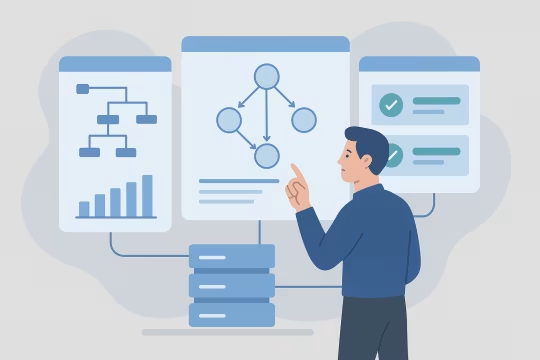
Review codebase structure, dependency graph, environments, and operational history. Identify upgrade blockers, fragile integrations, and sources of environment drift, then define a shared technical baseline and constraints.
Drupal platforms often accumulate architectural drift across versions, modules, build pipelines, and hosting environments. Modernization is the structured engineering work that brings an existing Drupal estate to a maintainable baseline: predictable dependency management, consistent environments, and a codebase that can be upgraded and operated with lower risk.
Organizations typically need this when upgrades become difficult, deployments are fragile, or teams rely on undocumented workarounds. Modernization focuses on reducing hidden coupling (custom code, contrib modules, and infrastructure), aligning the platform with current Drupal patterns, and making operational behaviors observable and testable.
The result is a Drupal platform that supports iterative evolution: upgrades can be planned and executed with clearer scope, delivery pipelines become repeatable, and platform teams can enforce conventions that keep the system stable as features, integrations, and traffic grow.
As Drupal platforms evolve over multiple years, they often accumulate inconsistent patterns: mixed dependency management, divergent environment configurations, and custom modules that embed assumptions about infrastructure or content models. Teams may keep the platform running through incremental fixes, but the underlying architecture becomes harder to reason about as versions, contrib modules, and hosting constraints change.
These conditions create compounding engineering friction. Upgrades become large, uncertain projects because the codebase cannot be assessed or built reliably across environments. Integration points (SSO, search, APIs) may be tightly coupled to legacy implementations, making refactoring risky. Without consistent build and deployment mechanics, teams spend time diagnosing environment-specific failures rather than improving platform capabilities.
Operationally, the platform becomes more expensive to change. Release cycles slow down due to manual steps and fragile deployments. Security patching becomes harder because dependency updates trigger unexpected regressions. Over time, technical debt shifts from being a backlog item to a systemic constraint on delivery, reliability, and governance.
Assess the current Drupal estate: versions, custom modules, contrib usage, build and deployment flow, hosting constraints, and integration touchpoints. Capture architectural risks, upgrade blockers, and operational failure modes with evidence from code, pipelines, and runtime behavior.
Define a sequenced plan that separates urgent stabilization from longer refactoring. Establish target Drupal version alignment, dependency strategy, and acceptance criteria for build reproducibility, deployment safety, and upgrade readiness.
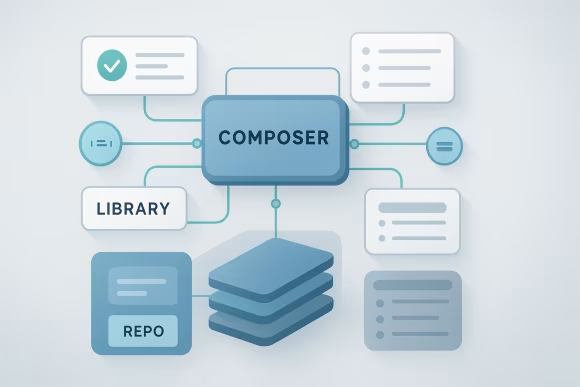
Normalize Composer usage, repository structure, and build artifacts so the platform can be built deterministically. Align local and CI builds, define environment variables and secrets handling, and remove ad-hoc steps that cause drift between environments.
Refactor custom code and platform structure to reduce coupling and remove legacy patterns. Replace deprecated APIs, isolate integration layers, and improve module boundaries so future upgrades and feature work have clearer blast radius.
Review and stabilize external integrations such as SSO, search, and upstream APIs. Introduce clear contracts, error handling, and configuration management to reduce runtime surprises and simplify environment promotion.
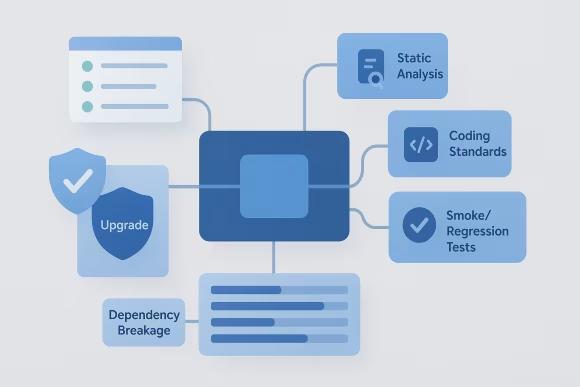
Introduce or strengthen automated checks around coding standards, dependency updates, and critical user journeys. Add smoke tests and upgrade-focused regression coverage to detect breakage early during modernization and future patching.
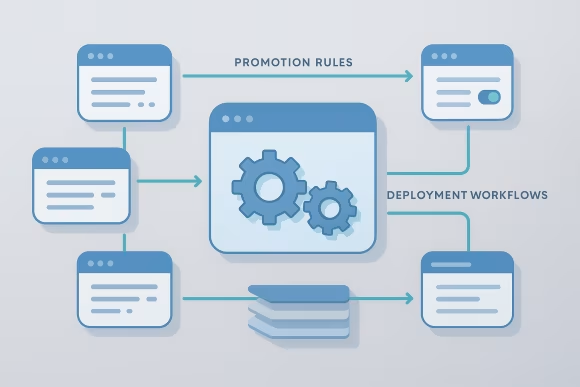
Align deployment steps with repeatable automation, including database update procedures, configuration import discipline, and rollback considerations. Ensure environments behave consistently and releases are traceable through logs and artifacts.
Document platform conventions, upgrade playbooks, and ownership boundaries. Establish lightweight governance for dependency updates, module intake, and architectural decisions so modernization gains persist after delivery.
Drupal platform modernization strengthens the technical foundation required for safe upgrades and predictable operations. The focus is on making builds deterministic, reducing architectural coupling, and aligning the codebase with current Drupal patterns and supported APIs. This work improves the platform’s ability to absorb change: security patches, dependency updates, integration evolution, and new feature delivery. The outcome is a platform that is easier to operate, test, and extend across teams and environments.
Delivery is structured to reduce risk while creating measurable platform improvements early. Work is typically organized into a baseline assessment, a sequenced modernization roadmap, and implementation increments that stabilize builds and refactor high-risk areas first. Each increment includes validation in representative environments and produces operational documentation for ongoing platform evolution.
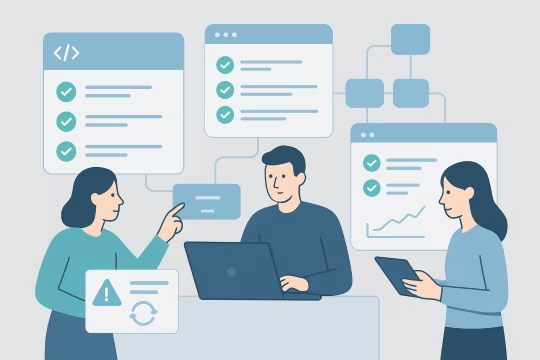
Review codebase structure, dependency graph, environments, and operational history. Identify upgrade blockers, fragile integrations, and sources of environment drift, then define a shared technical baseline and constraints.
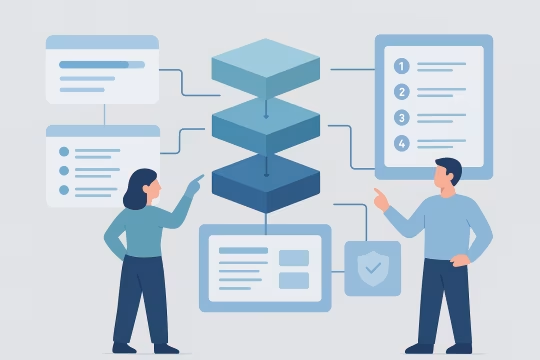
Define the target state for versions, build mechanics, configuration workflows, and integration boundaries. Produce a roadmap with sequencing, acceptance criteria, and risk controls aligned to release windows and operational constraints.
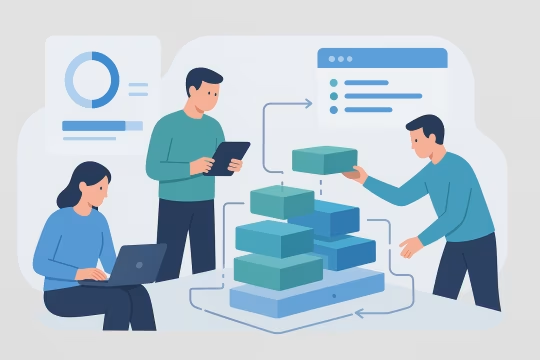
Implement modernization in small, reviewable increments: dependency cleanup, refactoring, and platform structure changes. Prioritize work that improves build determinism and reduces coupling before deeper functional changes.
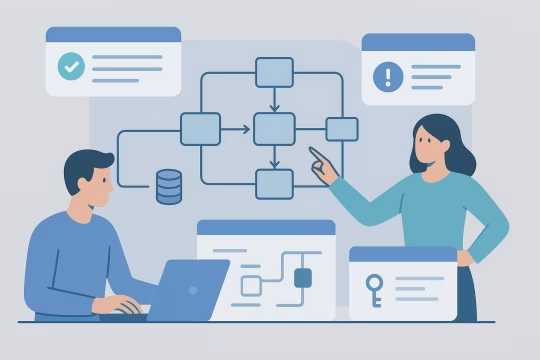
Validate key integrations and data flows in lower environments using representative datasets and credentials handling. Confirm error handling, timeouts, and configuration patterns behave consistently across environments.
Add or strengthen automated checks for coding standards, dependency updates, and critical flows. Establish a minimal regression suite that protects upgradeability and reduces the cost of future patching.
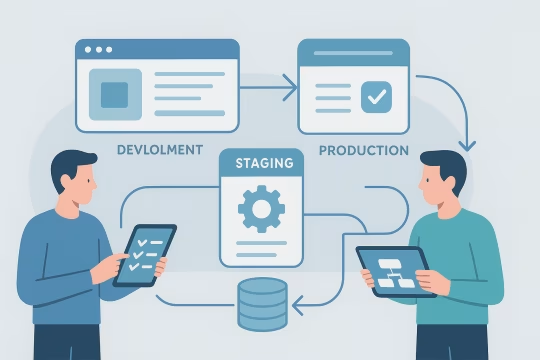
Align deployment steps with automation and clear runbooks, including database updates and configuration imports. Ensure releases are traceable, repeatable, and compatible with rollback or mitigation procedures.
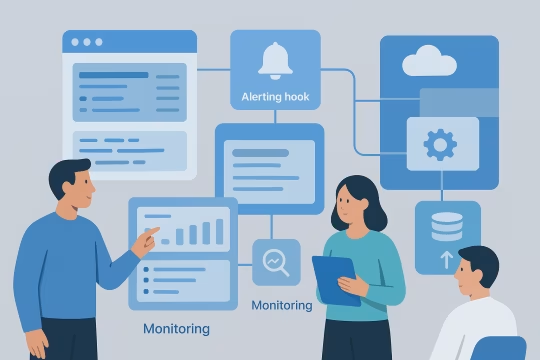
Introduce practical observability and operational conventions: logging, alerting hooks, and environment documentation. Ensure the platform can be supported by internal teams with clear ownership and escalation paths.
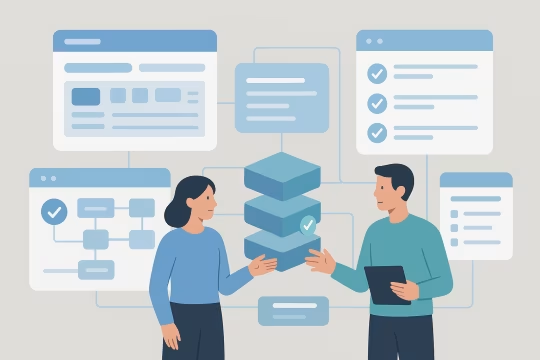
Define lightweight governance for dependencies, module intake, and architectural decisions. Provide upgrade playbooks and maintenance routines so modernization remains effective as the platform continues to evolve.
Modernization reduces the operational cost of change by making the Drupal platform easier to build, upgrade, and operate. It improves delivery predictability by removing environment drift and fragile deployment steps, and it lowers platform risk by clarifying dependencies and integration boundaries. The impact is most visible in upgrade planning, security patching, and the ability to deliver features without destabilizing the estate.
Upgrades become smaller and more predictable because deprecated patterns and hidden coupling are removed. Teams can plan version alignment with clearer scope and fewer unknowns, reducing long upgrade freezes.
Deterministic builds and standardized deployment steps reduce environment-specific failures. Releases become repeatable and traceable, which improves confidence during high-change periods and reduces rollback frequency.
Refactoring and dependency cleanup reduce the time spent diagnosing legacy behaviors. Engineering effort shifts from workaround maintenance to planned improvements and controlled platform evolution.
Cleaner dependency management and upgrade readiness make it easier to apply security patches quickly. This reduces exposure windows and supports compliance requirements that depend on timely updates.
Clear module boundaries, configuration discipline, and documented conventions make the platform easier to understand. New engineers can onboard faster and changes have a more predictable blast radius.
When environments behave consistently and integrations are hardened, delivery planning improves. Teams spend less time on late-cycle stabilization and more time on validated feature work.
Improved logging and release traceability shorten incident diagnosis and reduce mean time to recovery. Operational teams gain clearer signals about what changed and where to look when issues occur.
Lightweight governance around dependencies and architecture reduces regression risk over time. The platform remains upgradeable as teams and vendors contribute changes across multiple workstreams.
Adjacent services that extend Drupal platform evolution, upgrades, and operational stability.
Comprehensive Technical Assessment for Enterprise Drupal Platforms
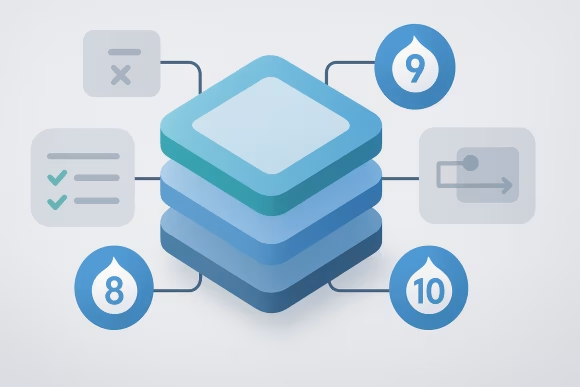
Upgrade from Drupal 8/9/10 to 11/12 with Confidence
Major upgrades with dependency and code remediation
Content, data, and platform migration engineering
Custom modules, extensions, and feature engineering
Phased modernization of legacy CMS estates
Common questions from engineering leaders planning Drupal platform modernization, including architecture, operations, integrations, governance, risk, and engagement.
Target architecture is defined by aligning three layers: application structure (custom modules, configuration, content model), build and dependency mechanics (Composer, artifact strategy), and runtime operations (environments, deployment workflow, observability). We start by documenting the current state and identifying constraints such as hosting limitations, release windows, and integration dependencies. From there we define a target Drupal version baseline (often Drupal 10), supported PHP/runtime requirements, and a reference repository structure. We also define conventions for configuration management (including environment-specific overrides), integration boundaries (adapters/services), and how custom code should interact with Drupal APIs. The output is a practical target state that can be implemented incrementally: a roadmap with acceptance criteria such as deterministic builds, repeatable deployments, and reduced deprecated API usage. The goal is not a theoretical blueprint; it is an implementable architecture that makes future upgrades and maintenance predictable.
Common anti-patterns include custom modules that mix business logic with infrastructure concerns, direct calls to external systems scattered across the codebase, and configuration practices that rely on manual environment edits. Another frequent issue is inconsistent dependency management, where parts of the platform are managed outside Composer or rely on undocumented patches. We also see legacy patterns from older Drupal versions: deprecated APIs, procedural code paths that are difficult to test, and tight coupling between content model assumptions and presentation logic. In multi-site estates, duplication of modules and configuration across sites often creates divergent behavior and upgrade complexity. Modernization addresses these by improving module boundaries, introducing explicit integration adapters, standardizing configuration promotion rules, and removing deprecated usage. The intent is to reduce coupling and make the platform’s behavior predictable across environments and releases.
Modernization improves reliability by making builds deterministic and environments comparable. Standardizing Composer usage ensures the same dependency graph is produced in CI and across environments. Aligning local development and CI with Docker reduces drift in PHP extensions, service versions, and configuration defaults that commonly cause “only fails in staging” issues. On the deployment side, we focus on repeatable steps: database update procedures, configuration import discipline, cache rebuild behavior, and clear separation of build-time versus run-time configuration. We also introduce traceability (release identifiers, artifact versions) so operational teams can correlate incidents with specific changes. The result is fewer manual steps, fewer environment-specific fixes, and clearer rollback/mitigation options. This is especially important for enterprises with multiple teams contributing changes and strict change management requirements.
After modernization, teams should have a defined maintenance routine: scheduled dependency updates, security patch cadence, and a repeatable release process with documented runbooks. Configuration management should be treated as code, with clear rules for what is promoted between environments and what remains environment-specific. Operational visibility should include structured logging, error reporting that preserves context, and basic health indicators aligned to Drupal runtime behavior. For multi-environment estates, teams benefit from a clear environment contract: how secrets are managed, how services (cache, search, queues) are provisioned, and how configuration overrides are applied. Finally, governance matters: define ownership for custom modules, criteria for adding contrib modules, and an architectural decision process for changes that affect upgradeability. These practices keep the platform stable and reduce the likelihood of reintroducing drift.
We treat integrations as high-risk surfaces and modernize them with explicit boundaries and staged validation. First we inventory integration points, authentication flows, error handling, and configuration sources. Then we introduce adapter layers or services that centralize external calls, making behavior consistent and testable. To avoid production disruption, changes are implemented behind configuration toggles or deployed in increments that preserve existing contracts. We validate in lower environments using representative credentials and datasets, and we add targeted smoke tests for critical flows such as login, indexing, and key API transactions. We also focus on operational characteristics: timeouts, retries where appropriate, and meaningful logging for integration failures. The aim is to make integrations resilient and observable, while keeping rollout controlled and reversible.
Yes, but it requires explicit sequencing and coordination. We typically separate modernization work into streams: foundational changes (Composer/build standardization, environment parity), refactoring of high-risk custom code, and integration hardening. Foundational work is planned to minimize conflicts, for example by stabilizing build mechanics early so feature branches inherit the improved workflow. We define compatibility rules for in-flight feature work: coding standards, module boundaries, and how configuration changes are managed. Where modernization introduces breaking changes, we plan migration steps and coordinate release windows. In practice, parallel delivery works best when there is a shared roadmap, a clear definition of “done” for modernization increments, and a release process that can handle frequent merges. This reduces the risk of modernization becoming a long-running branch that is hard to reintegrate.
Upgradeability depends on controlling drift. Governance should define how dependencies are updated (cadence, review requirements, patch management), how contrib modules are evaluated (maintenance status, security posture, compatibility), and how architectural changes are recorded (lightweight ADRs or equivalent). For custom code, governance includes ownership and boundaries: which modules are shared platform components, which are product-specific, and what patterns are allowed for integrations and configuration overrides. Teams should also agree on coding standards and automated checks that run in CI. The goal is not heavy process; it is a small set of enforceable rules that prevent reintroducing deprecated patterns and ad-hoc environment behavior. With this in place, future Drupal core upgrades and dependency updates remain routine rather than disruptive projects.
Handover focuses on operationally useful documentation rather than exhaustive narrative. We document the build and release workflow (how artifacts are produced, promoted, and deployed), configuration management rules (what is committed, what is environment-specific), and integration contracts (endpoints, auth mechanisms, failure modes). We also provide upgrade and maintenance playbooks: how to apply security updates, how to assess dependency changes, and how to run regression checks. For refactored areas, we document module boundaries and key architectural decisions so future changes follow the same structure. Where possible, documentation is paired with automation: CI checks, scripts, and reproducible environments reduce reliance on tribal knowledge. We typically run a walkthrough session with platform teams to validate that the runbooks match real operational workflows.
Key risks include hidden coupling in custom modules, undocumented environment behavior, and integrations that fail under real production conditions. Another risk is scope expansion: modernization can uncover issues that are real but not necessary to address immediately. We control risk through staged delivery and explicit acceptance criteria. Early work focuses on baseline assessment and build determinism so changes can be validated reliably. Refactoring is prioritized by impact and upgrade blocking severity, and we avoid broad rewrites unless there is a clear operational or upgrade requirement. We also use regression controls: automated checks, smoke tests for critical flows, and validation in representative environments. For production rollout, we plan release windows, rollback considerations, and monitoring signals. This keeps modernization measurable and reduces the chance of destabilizing the platform.
We estimate in layers. First, we perform a baseline review to quantify upgrade blockers: Drupal core version gaps, deprecated API usage, dependency conflicts, and custom module complexity. We also assess operational debt: build reproducibility, environment drift, and deployment manual steps. From this, we create a roadmap with bounded increments. Each increment has measurable criteria (for example: Composer build is deterministic; a set of deprecated APIs removed; a specific integration boundary refactored). This approach avoids a single large estimate that hides uncertainty. Where uncertainty remains, we explicitly label it and propose time-boxed spikes to validate assumptions. Enterprises often prefer this model because it supports governance and budgeting while keeping delivery adaptable as the platform’s real constraints become visible.
A typical engagement starts with a short baseline phase (often 2–4 weeks) to assess the estate and produce a prioritized roadmap. This includes reviewing the codebase, dependency graph, environments, CI/CD behavior, and key integrations. The output is a sequenced plan with acceptance criteria and identified risks. Implementation then proceeds in increments. Early increments usually standardize builds (Composer) and align environments (Docker/CI), because these changes make subsequent refactoring safer and easier to validate. Later increments focus on refactoring custom modules, stabilizing integrations, and strengthening regression controls. Throughout, we coordinate with platform owners on release windows and change management requirements. The engagement typically ends with operational runbooks, governance recommendations, and a clear next-step plan for upgrades and ongoing maintenance.
Collaboration typically begins with a structured technical intake and access setup. We agree on the scope boundaries (sites, environments, integrations), success criteria (upgrade readiness, build determinism, operational stability), and constraints (release windows, compliance requirements, hosting limitations). Next, we request access to the code repositories, CI/CD pipelines, and non-production environments, plus any existing runbooks and architecture notes. We schedule working sessions with platform owners to map the current delivery workflow and identify recurring incidents or upgrade pain points. Within the first one to two weeks, we provide an initial findings summary and confirm the modernization roadmap approach, including sequencing, risk controls, and how progress will be measured. This creates alignment before deeper refactoring work begins.
Let’s review your Drupal estate, identify upgrade blockers, and define a sequenced modernization roadmap that improves build reliability and long-term maintainability.