Unclear Platform Boundaries Increase Integration Coupling
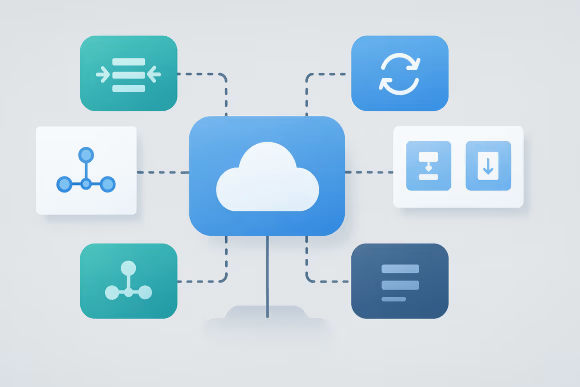
As organizations expand digital channels and product lines, headless CMS and API ecosystems often grow organically. Teams add services, integrate SaaS tools, and expose APIs to meet delivery timelines. Without an explicit composable strategy, capability boundaries are defined implicitly by project constraints rather than domain ownership, and the platform becomes a collection of tightly connected components.
This typically shows up as duplicated business logic across services, inconsistent content and data models, and APIs that reflect internal implementation rather than stable contracts. Integration patterns vary by team (direct service-to-service calls, ad-hoc webhooks, shared databases), making reliability and change management difficult. Over time, teams lose autonomy because changes require coordinated releases across multiple systems, and architectural decisions become hard to reverse.
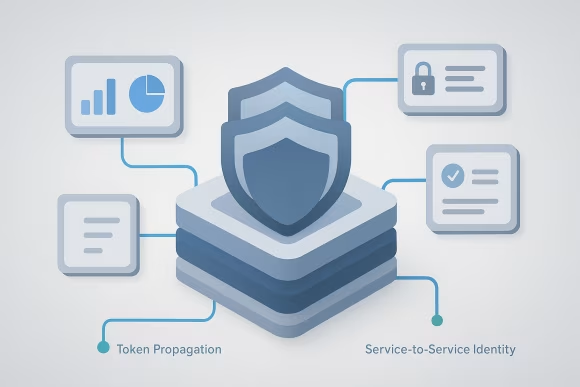
Operationally, the platform accumulates hidden dependencies that increase incident risk and slow delivery. Security and compliance controls are applied inconsistently, observability is fragmented, and ownership boundaries are unclear during outages. The result is higher maintenance overhead, longer lead times for new capabilities, and a platform that is difficult to evolve safely.



 [01]
[01]