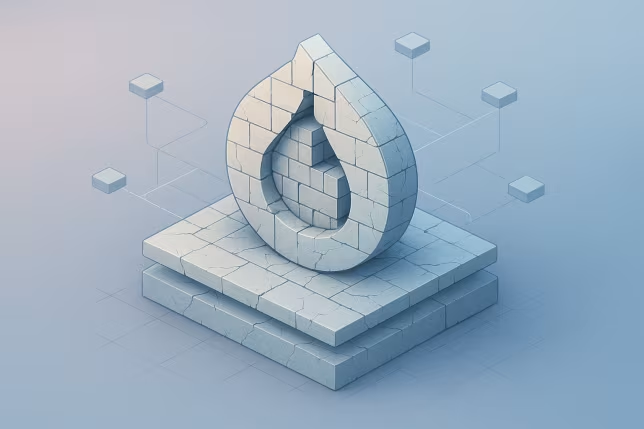
Upgrade Scope

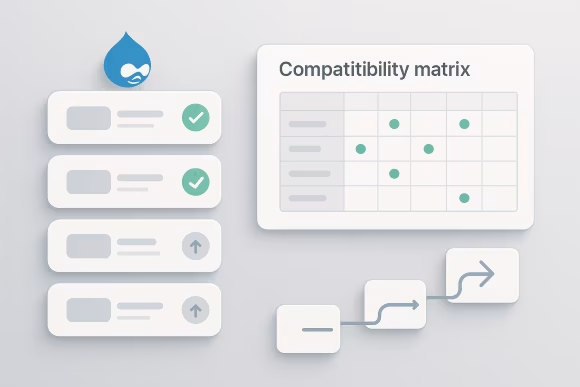
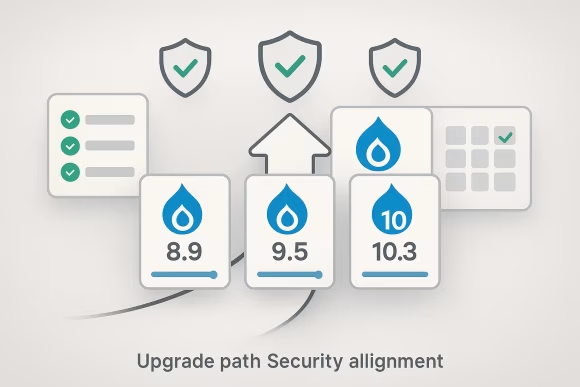
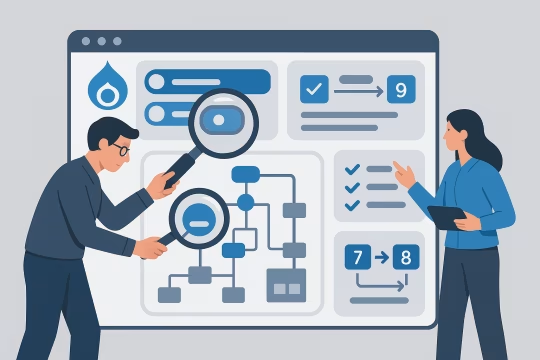
Drupal 8 → 11/12
Drupal 9 → 11/12
Drupal 10 → 11/12
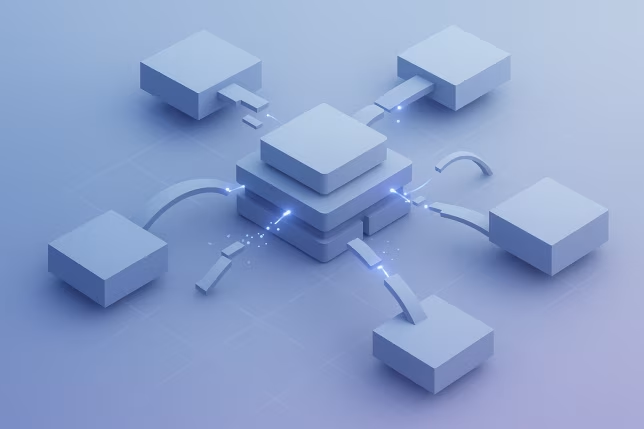
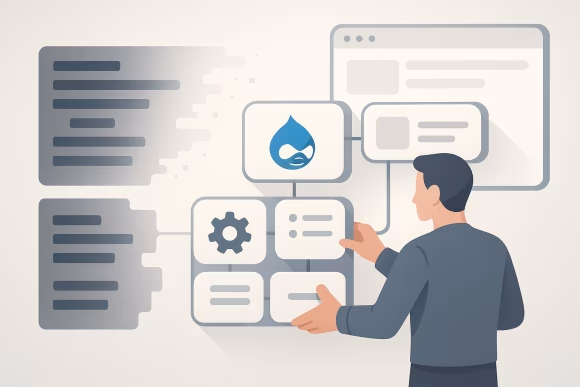
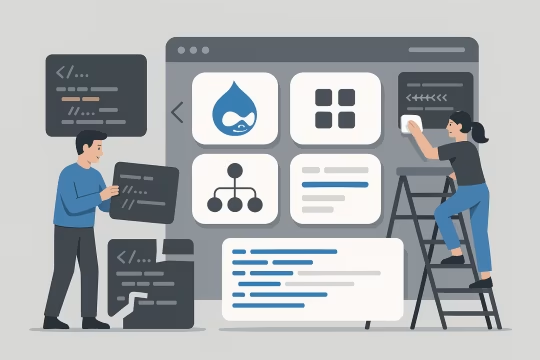
Legacy module refactoring
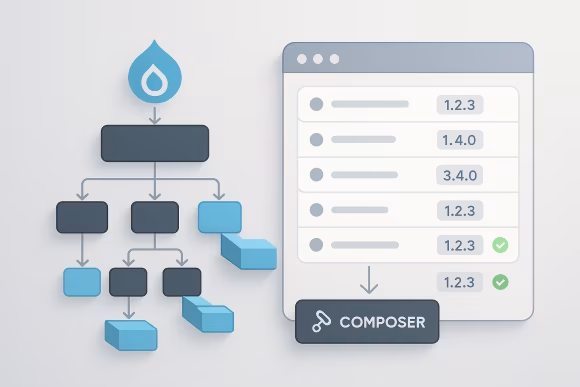
Composer modernization

Risk Mitigation

  • Pre-upgrade audits
  • Dependency analysis
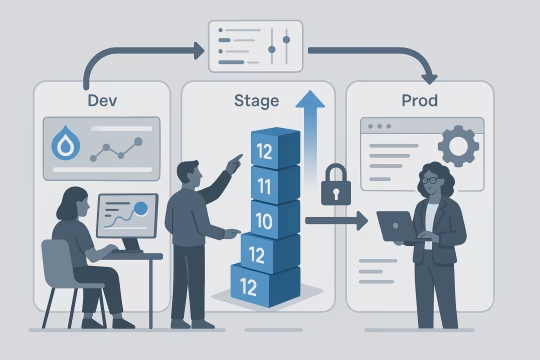
  • Staging & rollback strategy
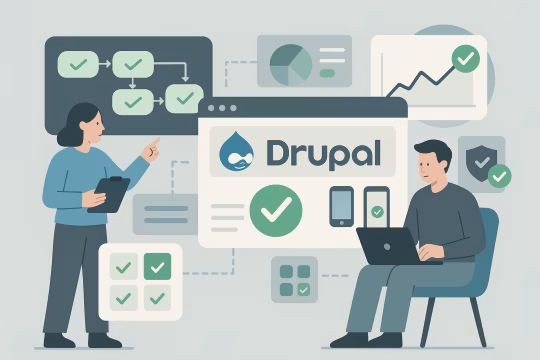
  • Regression testing

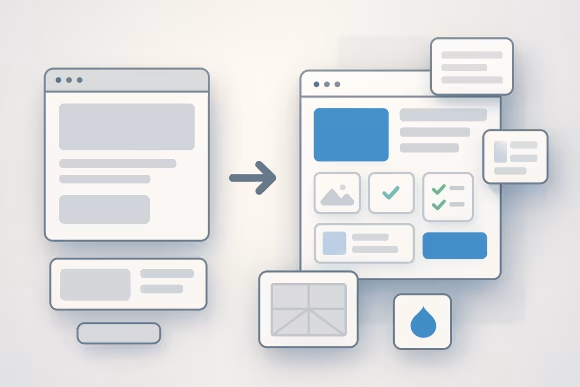
Architecture Improvements

  • Codebase cleanup
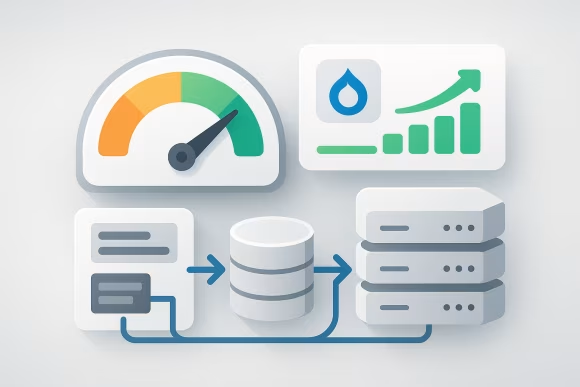
  • Performance tuning
  • Module consolidation
  • Security hardening

Best Fit For

  • Enterprise Drupal platforms
  • Government & regulated sectors
  • Multisite ecosystems
  • Long-running Drupal projects

Upgrading Drupal Is Often Risky & Disruptive

Many enterprise Drupal platforms stay on older core versions because the upgrade surface area is larger than it appears: contributed modules lag behind, custom code relies on deprecated APIs, and dependency trees become tightly coupled over years of incremental change. As Drupal 9 end of life approaches (or has passed for some environments), teams face increasing pressure to move quickly, often without a clear view of what will break or how much refactoring is required. The cost of a Drupal upgrade becomes harder to predict when ownership is fragmented across vendors, internal teams, and legacy build pipelines.

The risks of not upgrading Drupal compound over time. Unsupported core and dependencies increase exposure to vulnerabilities and make Drupal security upgrades harder to apply safely. Integration points (SSO, search, analytics, CRM, DAM, and custom APIs) can fail during a Drupal major version upgrade if configuration drift and environment inconsistencies are not controlled. Editorial workflows may be disrupted by theme and UI changes, while performance can regress when caching, database queries, or infrastructure assumptions no longer match current best practices. Operationally, delayed upgrades create delivery bottlenecks, higher maintenance overhead, and architectural inconsistency across multisite estates.

Our Structured Drupal Upgrade Approach

Technical Audit

Full module, dependency, and custom code analysis before starting.

Upgrade Roadmap

Clear scope, risk matrix, and phased delivery plan.

Environment Setup

Parallel staging with CI/CD and rollback capability.

Code Modernization

Refactor deprecated APIs and remove legacy patterns.

Testing & QA

Automated and manual regression testing.

Post-Upgrade Hardening

Security review, performance tuning, and monitoring setup.

Drupal Upgrade Capabilities (Core, Security & Module Upgrades)

Our Drupal upgrade capabilities support controlled Drupal major version upgrade and Drupal minor version updates for enterprise platforms. We refactor deprecated code, standardize dependency management with Composer, and run a structured Drupal module upgrade and compatibility review across contributed and custom components. The approach strengthens maintainability, improves performance baselines, and supports consistent Drupal security upgrade practices across environments.

What We Deliver
  • Drupal 5/6/7/8/9/10/11/12 platform review
  • Multisite & enterprise architecture assessment
  • Cloud & containerized infrastructure review
  • Performance & load diagnostics
  • Security hardening evaluation
  • Headless & API architecture review
Who This Is For
  • Organizations running Drupal 7, 8, 9 or 10
  • Enterprises with custom modules
  • Government & regulated sectors
  • Platforms requiring long-term stability
  • Multisite Drupal ecosystems
Technology Stack
  • Drupal 7/8/9/10/11/12
  • Composer
  • Drush
  • PHP 8.4+
  • MySQL / MariaDB / PostgreSQL
  • CI/CD (GitHub, Bitbucket, GitLab)
  • Cloud Infrastructure (AWS, DO, Acquia)

Delivery Process

Delivery follows a clear engineering sequence: discovery and dependency audit, roadmap and environment preparation, upgrade execution, refactoring, and validation through QA and release controls. We plan for Drupal major version upgrade and ongoing Drupal minor version updates with repeatable build and deployment practices, so changes can be introduced with minimal operational disruption.

Delivery card for Discovery & Audit[01]

Discovery & Audit

Comprehensive technical assessment of your current Drupal platform, including core version, contributed modules, custom code, integrations, hosting architecture, and security posture. We evaluate upgrade complexity, identify deprecated APIs, detect risks, and define a structured upgrade roadmap with clear milestones and effort estimates.

Delivery card for Upgrade Execution[02]

Upgrade Execution

Structured core and module upgrades performed in isolated development and staging environments. We follow best practices for dependency management, configuration synchronization, and database updates to ensure stability, compatibility, and minimal business disruption.

Delivery card for Refactoring Phase[03]

Refactoring Phase

Modernization of custom modules, themes, and legacy integrations to align with current Drupal standards. Deprecated functions are replaced, code is optimized for maintainability, and architecture is improved to support future scalability and long-term sustainability.

Delivery card for QA & Regression Testing[04]

QA & Regression Testing

Full validation of functionality, integrations, performance, and security across environments. Automated regression testing, manual validation, and cross-browser checks ensure that business workflows, user journeys, and content operations remain fully intact after upgrade.

Delivery card for Deployment & Monitoring[05]

Deployment & Monitoring

Carefully orchestrated production release with rollback strategies, zero-downtime techniques, and deployment automation. Real-time monitoring and log analysis confirm system stability and allow rapid response if unexpected behavior occurs.

Delivery card for Post-Launch Support[06]

Post-Launch Support

Stabilization period after launch including performance monitoring, fine-tuning, patch verification, and proactive issue resolution. We ensure your upgraded Drupal platform operates reliably and is fully prepared for future enhancements.

Business Outcomes

Upgrading to supported Drupal versions significantly reduces security exposure and compliance risk. A modernized, Composer-based architecture lowers long-term maintenance costs by simplifying dependency management and future updates. Performance optimizations introduced during the upgrade improve user experience and operational efficiency. Standardized code and deployment practices reduce upgrade friction in subsequent release cycles. For executive stakeholders, this provides predictable modernization costs and a stable foundation aligned with evolving technical and regulatory requirements.

Reduced Security Risk

Transitioning to supported Drupal core versions restores full security coverage and reduces vulnerability exposure.

Lower Maintenance Costs

Cleaner architecture and structured dependency management decrease long-term operational and upgrade overhead.

Improved Performance

Optimized caching, modern rendering practices, and refined infrastructure improve responsiveness and stability.

Long-Term Stability

Standardized architecture ensures smoother future upgrades and reduces disruption during release cycles.

Compliance Alignment

Modern PHP versions, supported modules, and updated security practices align with enterprise compliance standards.

Stronger Development Velocity

Modern tooling and clean codebases enable engineering teams to deliver enhancements more efficiently and with lower risk.

Frequently Asked Questions

These FAQs cover common questions about Drupal major version upgrade planning, Drupal 9 end of life upgrade timelines, risks of not upgrading Drupal, and how teams handle Drupal custom module upgrade work, testing, and release controls to upgrade Drupal without downtime.

When should we plan a Drupal core upgrade?

Drupal upgrades should be planned well before end-of-life dates for your current core version. Waiting until security support ends increases operational risk and compresses timelines under pressure. Proactive upgrades allow organizations to evaluate module compatibility, refactor deprecated APIs, and modernize infrastructure in a controlled manner. Strategic timing also enables architecture cleanup and performance improvements rather than executing a rushed version transition driven by compliance urgency.

Is upgrading Drupal the same as a full migration?

Not necessarily. Upgrades from Drupal 8, 9, or 10 to newer supported versions typically follow a modernization pathway rather than a full rebuild. However, heavy customizations or deprecated modules may introduce migration-like complexity. A technical audit determines whether your platform qualifies for a structured upgrade or requires partial re-architecture. The goal is to minimize disruption while ensuring long-term compatibility and maintainability.

What are the primary risks associated with Drupal upgrades?

The main risks include deprecated custom code, unsupported contributed modules, integration breakage, configuration drift, and deployment instability. Platforms with legacy patterns often require refactoring before upgrading safely. Without structured dependency analysis and regression testing, upgrades may impact editorial workflows, API integrations, or frontend rendering. Risk mitigation requires staging environments, automated testing, and clearly defined rollback procedures.

Will the Drupal upgrade process cause downtime?

Downtime can be avoided through parallel staging environments and controlled deployment strategies. Upgrades are executed and validated outside production before final release. Zero-downtime deployment techniques, configuration synchronization, and rollback planning reduce operational risk. When executed correctly, production impact is limited to a scheduled release window with minimal or no visible disruption to users.

How are custom modules handled during a Drupal upgrade?

Custom modules are reviewed for deprecated APIs, coding standards compliance, and architectural alignment with the target Drupal version. Refactoring is performed where required to remove legacy patterns. In some cases, functionality is consolidated or replaced with modern alternatives. The objective is not only compatibility but improved maintainability and reduced technical debt moving forward.

Why is Composer-based architecture important during upgrades?

Composer enables structured dependency management, predictable builds, and version control alignment. Without proper Composer integration, upgrades become inconsistent and difficult to reproduce across environments. Transitioning to a clean Composer workflow improves deployment reliability and simplifies future upgrades. It also ensures alignment with modern Drupal development standards and CI/CD practices.

Can a Drupal upgrade improve performance?

Yes. Newer Drupal versions introduce performance improvements, modern PHP compatibility, and enhanced caching capabilities. During the upgrade process, performance bottlenecks can also be identified and addressed. Refactoring deprecated code, optimizing queries, and modernizing frontend layers often lead to measurable improvements in response times and scalability. Performance enhancement is frequently integrated into the upgrade roadmap.

How is functionality validated after upgrading Drupal?

Validation includes automated regression testing, manual QA workflows, integration verification, and performance benchmarking. Critical business journeys and editorial processes are tested across environments. Security configuration, caching behavior, and deployment pipelines are also reviewed to ensure stability. Comprehensive testing ensures that the upgrade strengthens the platform rather than introducing hidden regressions.

Should we treat a Drupal upgrade as a modernization opportunity?

Yes. An upgrade provides a natural checkpoint to evaluate architecture, remove unused modules, improve code quality, and strengthen DevOps maturity. Rather than executing a minimal compatibility adjustment, many organizations use upgrades to clean technical debt and prepare for future growth. A structured modernization layer reduces future upgrade friction and improves long-term platform health.

What is the first step in initiating a Drupal upgrade project?

The process begins with a technical audit covering core version, contributed modules, custom code, integrations, and infrastructure setup. This assessment defines upgrade complexity and identifies risk areas. Based on the findings, a phased upgrade roadmap is created, including refactoring scope, testing strategy, and deployment planning. This structured preparation ensures a controlled, predictable upgrade aligned with business priorities.

Drupal Platform Modernization and Upgrade Case Studies

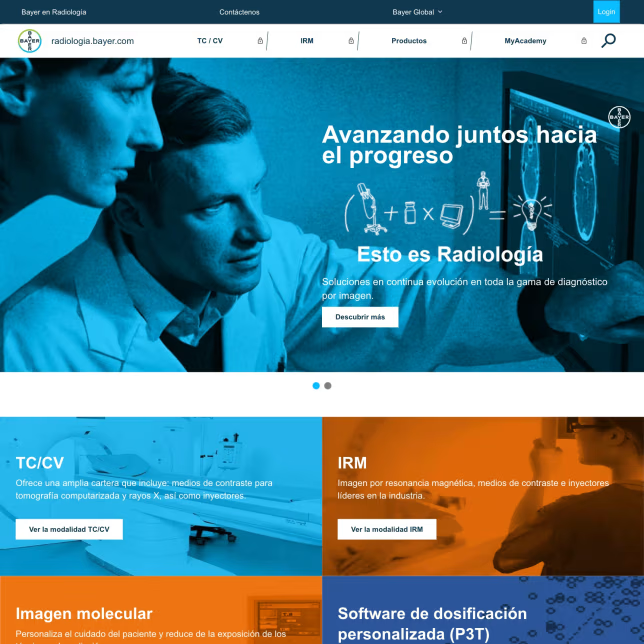
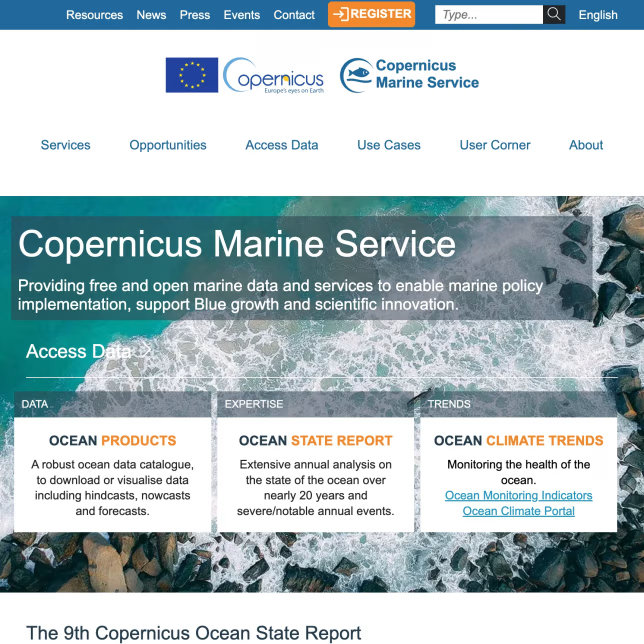
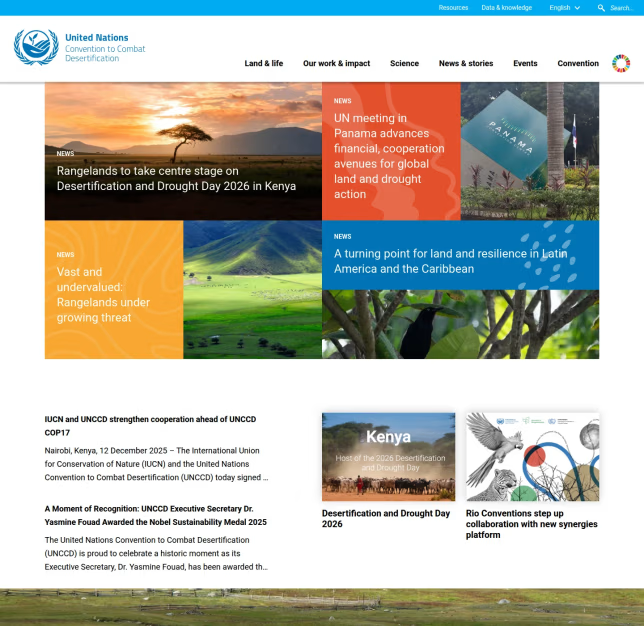
These case studies showcase comprehensive Drupal platform upgrades and modernizations that align closely with Drupal upgrade consulting. They highlight real-world delivery of major version migrations, architecture modernization, performance improvements, and security enhancements, demonstrating measurable outcomes in maintainability and scalability.

What Clients Say

Further reading on Drupal upgrade planning and platform modernization

These articles expand on the planning, refactoring, and governance work that makes Drupal upgrades successful beyond a simple version change. They cover enterprise migration planning, deprecated code and compatibility strategy, multisite standardization, and dependency mapping that often shape upgrade scope, risk, and long-term maintainability.

Ready to Upgrade Your Drupal Platform?

Let’s assess your current Drupal version and create a structured upgrade plan that minimizes risk and prepares your platform for the future.

Oleksiy (Oly) Kalinichenko

Oleksiy (Oly) Kalinichenko

CTO at PathToProject

Do you want to start a project?