Architecture

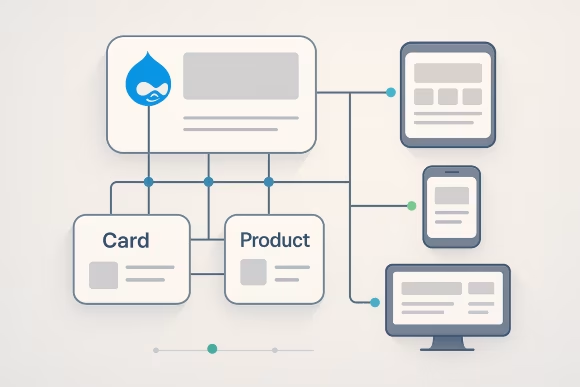
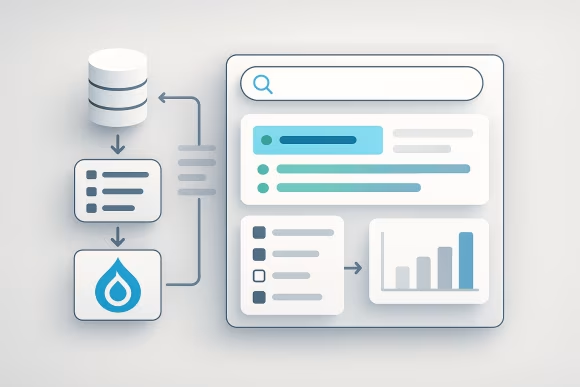
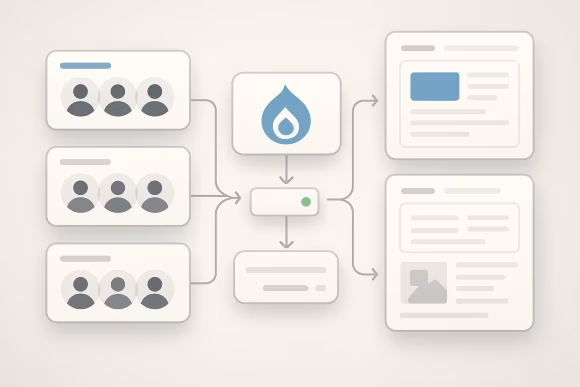
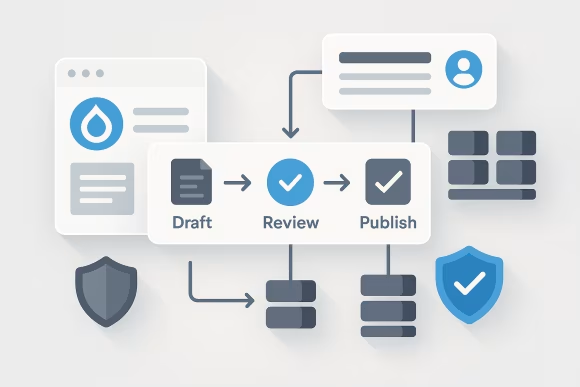
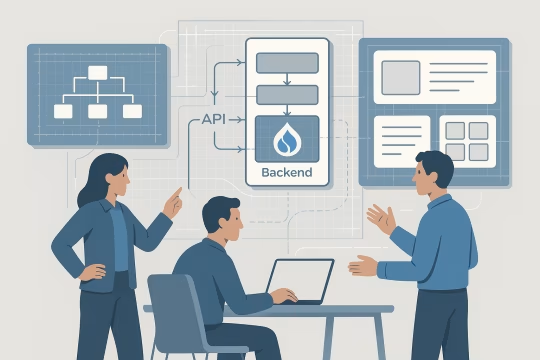
Fully decoupled (Headless)
Hybrid (Progressive Decoupling)
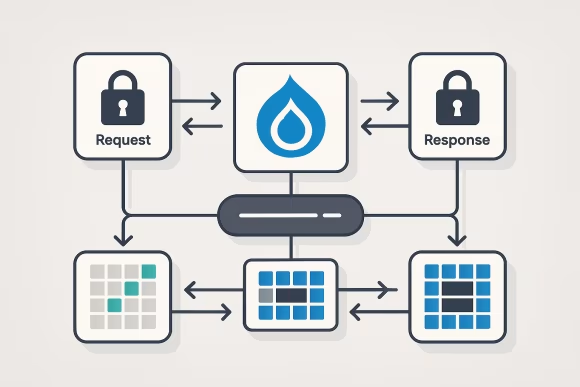
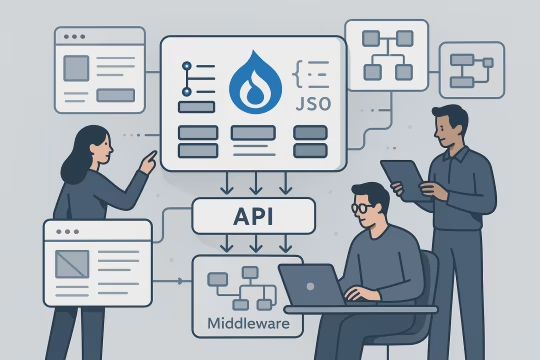
API-first design

Front-End Stack

  • Next.js
  • React
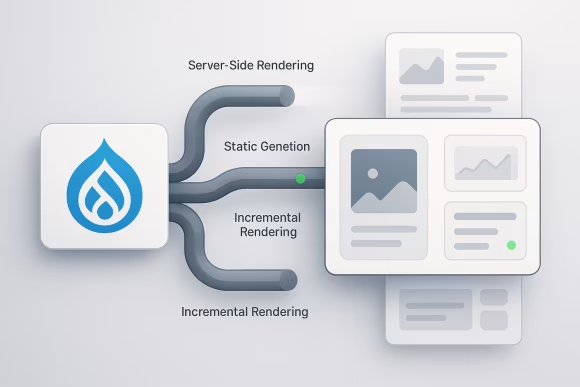
  • Static site generation (SSG)
  • Server-side rendering (SSR)

Enterprise Ready

  • Structured content modeling
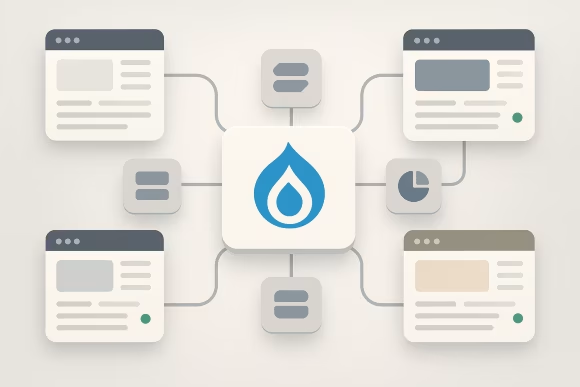
  • Multisite support
  • CDP & CRM integrations
  • Cloud-native deployment

The Challenge

Traditional monolithic CMS architectures often limit front-end flexibility and performance. Marketing teams demand dynamic, fast-loading experiences across multiple channels, while engineering teams require scalable, maintainable systems.

Without a properly designed headless strategy, organizations face API bottlenecks, content inconsistencies, preview limitations, and complex deployment pipelines.

Headless Drupal solves these challenges — but only when the architecture, content model, and integration strategy are designed correctly from the start.

Our Approach

Content Model Engineering

Design scalable, structured content schemas optimized for API delivery.

API Strategy

JSON:API and custom endpoint architecture for performance and security.

Front-End Integration

Seamless integration with Next.js, React, and composable frameworks.

Preview & Editorial Experience

Real-time preview systems for confident content publishing.

Performance Optimization

Caching layers, CDN strategy, and optimized API responses.

DevOps & Deployment

Cloud-native pipelines with CI/CD automation and scalable hosting.

Core Features

Headless Drupal provides a structured, API-first foundation for multi-channel digital delivery. The architecture separates content management from presentation layers while preserving governance, security, and performance standards at scale. Through structured content modeling, optimized APIs, modern frontend integration, and enterprise-grade workflows, the platform supports scalable, composable digital ecosystems. Built-in support for multisite strategies, search optimization, and personalization readiness ensures that content operations remain centralized while experiences evolve independently. This enables modernization without sacrificing control, compliance, or architectural clarity.

What We Bring
  • Enterprise Drupal architecture design
  • Decoupled front-end engineering
  • Next.js performance optimization
  • API performance tuning
  • Security & compliance hardening
Who This Is For
  • Enterprises modernizing legacy Drupal
  • Organizations building multi-channel platforms
  • Marketing teams requiring fast performance
  • Technology leaders adopting composable architectures
Technology Ecosystem
  • Drupal 10 / 11 / 12
  • JSON:API / REST
  • Next.js / React
  • Vercel / AWS / CloudFront
  • ElasticSearch
  • CDP & Analytics integrations

Delivery Model

Our Headless Drupal delivery process is structured to ensure technical clarity, performance excellence, and long-term scalability. We combine backend architecture, API engineering, and modern frontend implementation into a unified workflow that minimizes risk and accelerates time-to-market. Each phase — from discovery to post-launch support — is designed to create a composable, future-ready platform that evolves alongside your business needs.

Delivery card for Discovery & Architecture[01]

Discovery & Architecture

We start with a structured discovery phase to align technical architecture with business goals and content strategy. This includes system analysis, content modeling planning, integration mapping, and defining scalable boundaries between backend and frontend layers to ensure long-term flexibility.

Delivery card for Content Modeling & API Layer[02]

Content Modeling & API Layer

We engineer a clean, structured Drupal backend with reusable content entities, well-defined taxonomies, and optimized API endpoints. The API layer is designed for performance, security, and multi-channel delivery across web, mobile, and external platforms.

Delivery card for Front-End Implementation[03]

Front-End Implementation

Our team builds a high-performance Next.js front-end using a modular, component-based architecture. The UI layer consumes structured APIs, supports SSR/SSG strategies, and is optimized for scalability, maintainability, and user experience excellence.

Delivery card for Testing & Performance Validation[04]

Testing & Performance Validation

We implement automated testing pipelines, API validation checks, and performance benchmarking. Lighthouse optimization, caching validation, and regression testing ensure your headless architecture delivers measurable speed, stability, and reliability.

Delivery card for Deployment & DevOps[05]

Deployment & DevOps

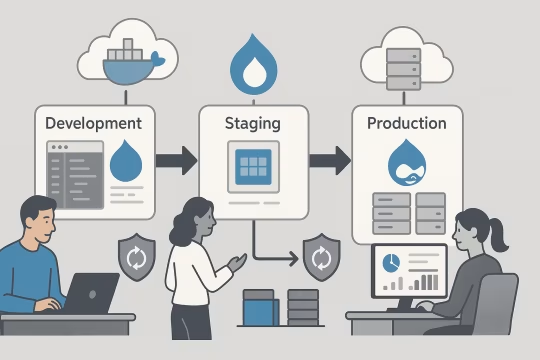
Cloud-native CI/CD pipelines enable safe, repeatable deployments across development, staging, and production environments. Infrastructure automation, containerization, and rollback strategies guarantee controlled releases with minimal operational risk.

Delivery card for Ongoing Support[06]

Ongoing Support

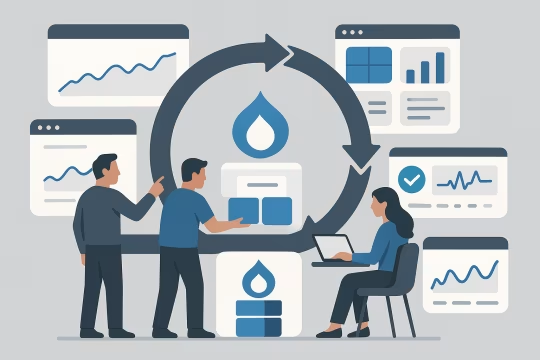
Post-launch, we provide continuous optimization, monitoring, and feature evolution. From API enhancements to frontend improvements and security updates, we ensure your headless Drupal platform remains performant, secure, and aligned with business growth.

Business Impact

A headless Drupal architecture improves performance, flexibility, and long-term scalability across digital channels. Faster load times and optimized rendering strategies enhance user engagement and SEO performance. Structured content governance reduces duplication and improves editorial efficiency across brands and regions. API-driven integration lowers the cost of connecting new frontends, applications, and enterprise systems. For executive stakeholders, this translates into accelerated innovation cycles, reduced re-platforming risk, and a digital foundation capable of adapting to evolving business requirements.

Improved Performance

Server-side rendering, static generation, and optimized APIs deliver faster load times and stronger Core Web Vitals, improving user experience and search visibility.

Scalable Growth

Decoupled architecture supports expansion into new brands, markets, and digital channels without restructuring the underlying content foundation.

Editorial Efficiency

Structured content models and preview workflows enable confident publishing across multiple frontends while maintaining governance and consistency.

Future-Proof Architecture

Composable, API-first design reduces re-platforming risk and allows gradual evolution of frontend technologies without disrupting content operations.

Integration Flexibility

Clean API layers simplify connections to CDPs, CRMs, analytics platforms, and emerging technologies, supporting faster innovation initiatives.

Lower Long-Term Technical Risk

Separation of concerns between backend and frontend reduces architectural coupling, improving maintainability and long-term platform sustainability.

Related Projects

What Clients Say

Ready to Modernize Your Drupal Architecture?

Let’s design a headless Drupal platform tailored to your business goals.

Oleksiy (Oly) Kalinichenko

Oleksiy (Oly) Kalinichenko

CTO at PathToProject

Do you want to start a project?