Core Focus

Next.js application architecture
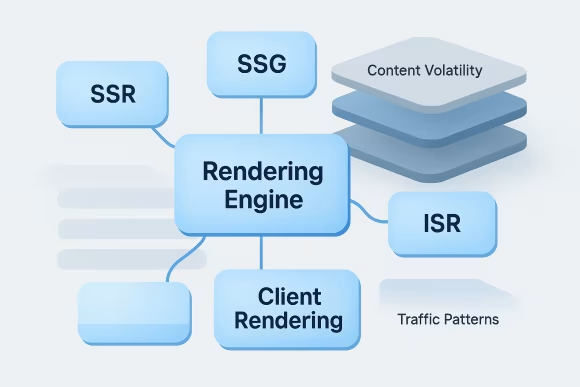
SSR, SSG, ISR strategy
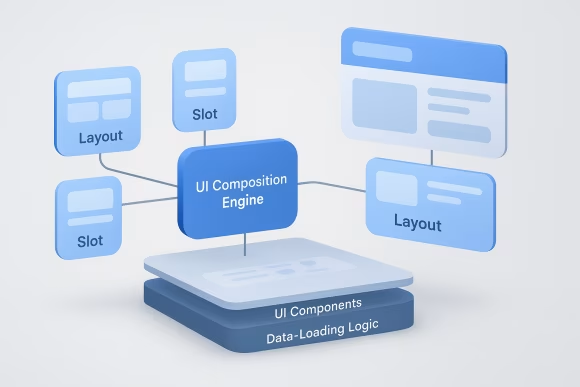
API-driven page composition
Component-based UI engineering

Best Fit For

  • Headless CMS migrations
  • Multi-site web platforms
  • High-traffic marketing sites
  • Product-led web applications

Key Outcomes

  • Predictable release workflows
  • Improved runtime performance
  • Reduced frontend rework
  • Clear integration boundaries

Technology Ecosystem

  • Next.js and React
  • Node.js runtime services
  • Vercel or container hosting
  • TypeScript-first codebases

Platform Integrations

  • Headless CMS APIs
  • GraphQL and REST backends
  • CDN caching layers
  • Identity and SSO providers

Inconsistent Rendering and Data Access Create Delivery Bottlenecks

As headless platforms grow, frontend teams often add features quickly without converging on a shared model for routing, rendering, and data access. Pages end up mixing SSR, client-side fetching, and ad-hoc caching rules, while multiple integration patterns emerge for the same backend capabilities. Over time, the frontend becomes a collection of special cases rather than a coherent application platform.

These inconsistencies create architectural friction. Engineers spend time diagnosing why certain routes behave differently, why cache invalidation is unpredictable, or why build times and deploy times increase with each release. Integration code becomes tightly coupled to specific endpoints and response shapes, making backend evolution risky. Without clear boundaries, changes in content models or APIs propagate into UI components, increasing regression risk and reducing reuse.

Operationally, the platform becomes harder to run. Performance issues are difficult to attribute without consistent instrumentation, and reliability suffers when rendering strategies are not aligned with traffic patterns and infrastructure limits. Release management becomes more complex across environments, and teams compensate with manual checks, slowing delivery and increasing the likelihood of production incidents.

Next.js Delivery Workflow

Platform Discovery

Review current frontend architecture, content and API landscape, traffic patterns, and operational constraints. Identify rendering requirements, integration boundaries, and non-functional needs such as performance budgets, security controls, and release cadence.

Architecture Design

Define routing, rendering strategy (SSR/SSG/ISR/hybrid), data-fetching patterns, and caching model. Establish conventions for component composition, error handling, and environment configuration aligned to enterprise deployment and observability requirements.

Foundation Setup

Implement repository structure, TypeScript configuration, linting, formatting, and baseline CI checks. Set up environment management, secrets handling, and local developer workflows to reduce drift between development and production.

Feature Engineering

Build pages, layouts, and shared UI components with a consistent composition model. Implement accessibility and internationalization patterns where required, and ensure components remain decoupled from backend response shapes through mapping and adapters.

API Integration

Integrate headless CMS and backend services via REST or GraphQL with typed clients, retries, and timeouts. Implement caching and revalidation rules, handle partial failures gracefully, and standardize data contracts to support backend evolution.

Quality Engineering

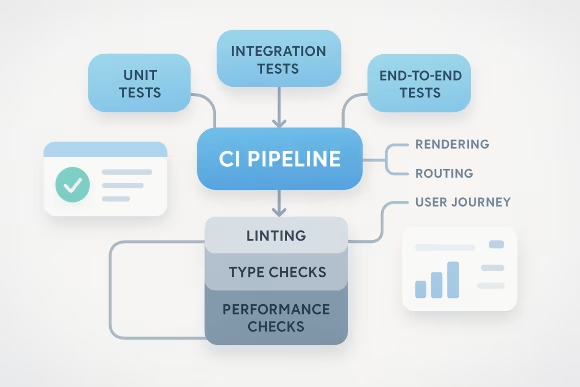
Add unit, integration, and end-to-end tests for critical journeys, including rendering modes and edge cases. Validate performance budgets, implement static analysis, and ensure build pipelines produce deterministic artifacts across environments.

Deployment Readiness

Configure deployment pipelines for preview, staging, and production with safe promotion and rollback. Implement runtime configuration, CDN behavior, and logging/metrics so teams can operate the platform with clear signals and runbooks.

Governance and Evolution

Establish coding standards, architectural decision records, and review gates for rendering and integration changes. Plan iterative improvements for performance, dependency updates, and platform capabilities without disrupting delivery.

Key Next.js Engineering Capabilities

This service delivers the technical foundations needed to run Next. js as a dependable frontend layer in a headless ecosystem. The focus is on rendering strategy, integration architecture, and operational readiness rather than one-off page builds. Capabilities include consistent data access patterns, cache and revalidation design, performance engineering, and test automation. The result is a frontend codebase that supports multiple teams, predictable releases, and long-term maintainability as APIs and content models evolve.

Capabilities
  • Next.js application architecture
  • SSR/SSG/ISR implementation
  • Headless CMS integration patterns
  • GraphQL and REST client engineering
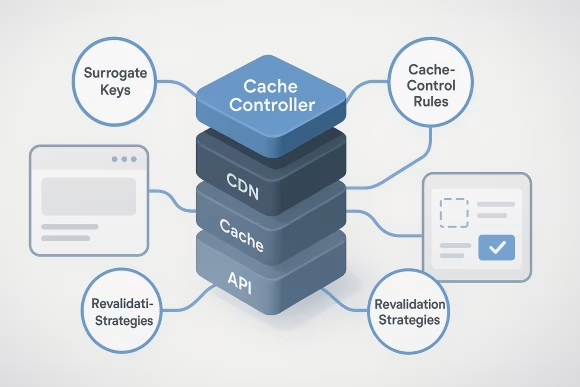
  • Caching and revalidation design
  • Performance budgets and profiling
  • Automated testing pipelines
  • Deployment and environment governance
Who This Is For
  • Frontend Engineers
  • Product Teams
  • Engineering Managers
  • Platform Architects
  • CTO and engineering leadership
  • Digital platform owners
  • QA and release managers
Technology Stack
  • Next.js
  • React
  • Node.js
  • Vercel
  • TypeScript
  • GraphQL
  • REST APIs
  • Edge/CDN caching
  • Playwright or Cypress
  • GitHub Actions or GitLab CI

Delivery Model

Engagements are structured to establish a stable Next. js foundation first, then iterate through integration and feature work with measurable quality gates. Delivery emphasizes repeatable patterns, automated verification, and operational readiness so the platform can be owned by internal teams long term.

Delivery card for Discovery and Audit[01]

Discovery and Audit

Assess the current frontend, API dependencies, and content workflows. Produce a prioritized backlog covering architecture decisions, integration risks, and operational gaps, with clear acceptance criteria for the first release increment.

Delivery card for Architecture and Standards[02]

Architecture and Standards

Define rendering strategy, routing conventions, and data access patterns. Establish coding standards, environment configuration rules, and documentation that enable consistent implementation across multiple engineers and teams.

Delivery card for Implementation Sprints[03]

Implementation Sprints

Deliver features and platform foundations in small increments with code review and automated checks. Focus on reusable patterns for page composition, integration adapters, and shared UI components to reduce long-term maintenance cost.

Delivery card for Integration and Migration[04]

Integration and Migration

Integrate headless CMS and backend services, including preview workflows and content model alignment. Where applicable, migrate routes or features from legacy frontends with controlled cutover and regression protection.

Delivery card for Testing and Verification[05]

Testing and Verification

Implement automated tests for critical journeys and integration points, plus non-functional checks such as performance budgets. Validate behavior across environments and ensure deterministic builds and deploys.

Delivery card for Deployment and Release[06]

Deployment and Release

Set up CI/CD pipelines, preview environments, and safe promotion to production. Implement rollback strategies, runtime configuration, and operational runbooks so releases are repeatable and low-risk.

Delivery card for Operational Enablement[07]

Operational Enablement

Add observability signals, dashboards, and alerting aligned to user experience and dependency health. Provide handover sessions and documentation so internal teams can operate and extend the platform confidently.

Delivery card for Continuous Improvement[08]

Continuous Improvement

Plan iterative improvements for performance, dependency updates, and architectural refactoring. Maintain a governance loop for rendering changes, integration evolution, and platform standards as the ecosystem grows.

Business Impact

A well-architected Next. js frontend reduces delivery friction in headless ecosystems by standardizing rendering, integration, and operational practices. The impact is primarily seen in release predictability, platform performance, and reduced risk when APIs and content models change.

Faster Feature Delivery

Standardized routing, data access, and component composition reduce time spent reinventing patterns. Teams can implement new pages and integrations with fewer architectural debates and less rework across releases.

Lower Operational Risk

Clear rendering policies, predictable caching, and automated quality gates reduce production regressions. Observability and runbooks improve incident response and make platform behavior easier to understand under load.

Improved Performance Consistency

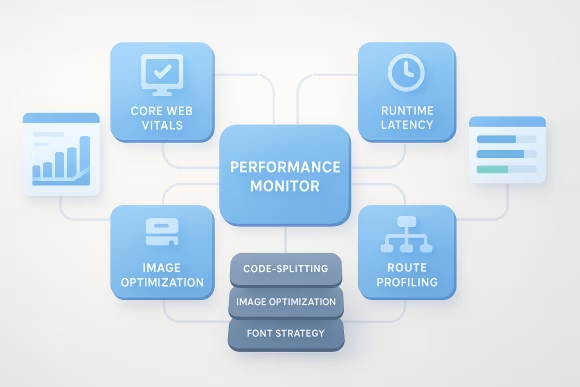
Performance budgets and route-level profiling keep Core Web Vitals measurable and enforceable. Optimizations such as code-splitting and image strategy are applied systematically rather than as one-off fixes.

Safer API and CMS Evolution

Typed integration layers and mapping reduce coupling between UI components and backend contracts. Backend teams can evolve APIs and content models with clearer impact analysis and fewer breaking changes reaching production.

Better Multi-Team Maintainability

Shared conventions and governance reduce fragmentation as more engineers contribute. The codebase remains navigable, and architectural decisions are documented to support onboarding and long-term ownership.

Predictable Release Workflows

CI/CD pipelines with preview environments and promotion steps reduce manual checks and last-minute surprises. Releases become repeatable across staging and production with clear rollback paths.

Reduced Technical Debt Accumulation

Consistent patterns for rendering, caching, and integration prevent the growth of special-case implementations. Refactoring becomes incremental and planned rather than forced by incidents or performance failures.

Improved Developer Productivity

Reliable local workflows, deterministic builds, and automated checks reduce time lost to environment drift. Engineers spend more time on product work and less on debugging inconsistent platform behavior.

FAQ

Common architecture, operations, integration, governance, risk, and engagement questions for Next. js development in headless enterprise environments.

How do you choose between SSR, SSG, ISR, and client-side rendering in Next.js?

We choose rendering modes per route based on content volatility, personalization, SEO requirements, and operational constraints. SSR is typically used when responses depend on per-request data (authentication, personalization, rapidly changing inventory) and when time-to-content must be consistent. SSG is appropriate for stable content where build-time generation is acceptable and predictable. ISR is often the default for headless CMS pages that need SEO and fast delivery while still updating on a schedule or via on-demand revalidation. We document route policies so teams don’t mix patterns arbitrarily. That includes cache-control alignment between Next.js, the CDN, and upstream APIs; revalidation rules; and failure behavior when upstream services are slow or unavailable. We also consider build times and deploy frequency: if SSG causes long builds or frequent rebuilds, we shift to ISR or hybrid strategies. The outcome is a deliberate rendering architecture that supports performance budgets, predictable caching, and operational stability rather than a one-size-fits-all approach.

Do you build with the App Router or the Pages Router, and how do you decide?

We can work with either router, but we decide based on the platform’s constraints and the team’s roadmap. For new builds, the App Router is often preferred because it provides a clearer model for server components, nested layouts, and route-level data loading. It can reduce client bundle size when used carefully and supports more explicit separation of server and client concerns. For existing platforms, the Pages Router may be the pragmatic choice when there is significant legacy code, established patterns, or dependencies that assume the older routing model. In those cases, we focus on consistency and incremental modernization rather than forcing a disruptive migration. Regardless of router choice, we define conventions for where data fetching lives, how errors are handled, how caching is configured, and how shared layouts and UI composition work. The goal is a maintainable architecture with predictable behavior across routes and environments.

What production observability do you implement for a Next.js frontend?

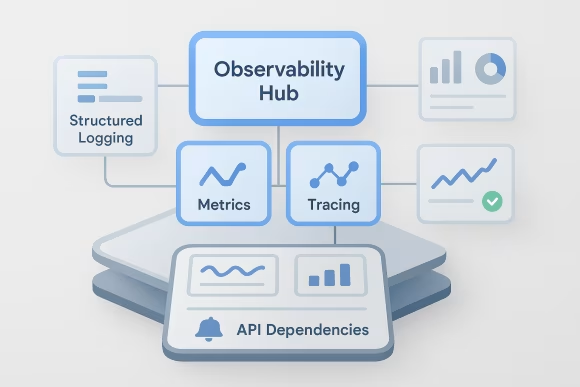
We implement observability that connects user experience to platform dependencies. At minimum, that includes structured application logs (with correlation IDs), request/response timing for server-rendered routes, and visibility into upstream API latency and error rates. For client-side experience, we instrument Core Web Vitals and key navigation timings so performance can be tracked over time and tied to releases. We also define actionable signals: error budgets for critical routes, alert thresholds for elevated 5xx rates, and dashboards that separate rendering latency from API latency. Where tracing is available, we propagate trace context from the edge/CDN through the Next.js runtime to backend services. Operationally, we ensure the signals are aligned with runbooks: what to check first, how to identify whether the issue is caching, rendering, or an upstream dependency, and what safe mitigations exist (rollback, feature flags, cache adjustments).

How do you handle deployments across preview, staging, and production environments?

We design an environment model that supports safe change validation and predictable promotion. Preview environments are used for per-branch validation and stakeholder review, including CMS preview modes when applicable. Staging mirrors production configuration as closely as possible, including environment variables, CDN behavior, and authentication integration, so performance and integration issues are detected before release. For production, we implement a promotion workflow with clear rollback. That can be a Vercel-based flow or a container-based pipeline depending on enterprise constraints. We ensure secrets are managed through approved mechanisms, and we avoid environment drift by making configuration explicit and versioned. We also define release checks: automated tests, type checks, linting, and performance checks where feasible. The objective is to reduce manual steps and make deployments repeatable across teams and time.

How do you integrate Next.js with a headless CMS without coupling the UI to content models?

We introduce an integration layer that maps CMS content types to UI view models rather than binding components directly to CMS responses. This typically includes typed queries, schema validation, and adapters that normalize fields, handle optionality, and provide defaults. Components then consume stable view models, which reduces churn when content models evolve. For page composition, we define a predictable pattern for resolving CMS-driven layouts into component trees, including how to handle unknown components, missing references, and partial failures. We also implement preview workflows so editors can validate changes safely, and we align caching and revalidation with editorial needs. When multiple content sources exist, we standardize how data is merged and how precedence rules work. The goal is a frontend that remains maintainable even as the CMS schema changes and as new content types are introduced.

How do you manage API contracts and versioning for frontend integrations?

We treat API contracts as explicit dependencies and make them visible in code through typed clients and contract tests where appropriate. For REST, we often use generated types from OpenAPI or a shared schema package; for GraphQL, we use schema-driven code generation. This reduces runtime surprises and makes breaking changes detectable during CI. We also implement resilience patterns: timeouts, retries (where safe), circuit-breaking behavior at the edge or server layer, and consistent error mapping so the UI can degrade gracefully. For versioning, we prefer additive changes and explicit deprecation windows, with the frontend integration layer handling transitional states. Where multiple backend teams are involved, we document integration boundaries and ownership. This helps coordinate changes, reduces accidental coupling, and supports parallel delivery across teams without destabilizing the frontend platform.

What governance do you put in place to keep a Next.js codebase consistent across teams?

We establish lightweight but enforceable standards: repository structure, naming conventions, routing and rendering rules, and a clear data access pattern. These are backed by automated checks (linting, formatting, type checks) and code review guidelines that focus on architectural consistency rather than personal preference. We also document key decisions using short architectural decision records so future changes have context. For larger platforms, we define ownership boundaries (for example, shared UI libraries vs. product routes) and contribution rules that prevent fragmentation. Governance also includes dependency management and upgrade policies. Next.js and React ecosystems move quickly, so we plan regular updates, define how to validate them, and ensure the platform can evolve without large, risky upgrade projects. The intent is maintainability through repeatable engineering constraints.

How do you align Next.js development with a design system or component library?

We align by separating concerns: the design system provides reusable, accessible UI primitives and patterns, while the Next.js application provides routing, data loading, and page composition. We define integration rules so application components consume design system components rather than re-implementing UI patterns per route. In practice, this includes establishing a shared component API, token usage (typography, spacing, color), and accessibility requirements. We also define how CMS-driven components map to design system building blocks, so editorial flexibility doesn’t lead to inconsistent UI behavior. Operationally, we recommend versioning the design system and using a controlled release process so application teams can adopt updates predictably. This reduces UI drift, improves accessibility consistency, and keeps the frontend platform maintainable as multiple teams ship features in parallel.

How do you prevent performance regressions as the Next.js application grows?

We prevent regressions by making performance measurable and enforceable. That starts with budgets for bundle size, route-level latency, and Core Web Vitals, plus instrumentation that tracks these metrics per release. We then integrate checks into CI where feasible, such as bundle analysis thresholds and automated lighthouse-style audits for key routes. Architecturally, we reduce risk by standardizing rendering and data-fetching patterns. Many regressions come from accidental client-side fetching, unbounded data queries, or disabling caching. Clear route policies and shared integration utilities reduce these failure modes. We also implement ongoing profiling practices: identifying slow server-rendered routes, analyzing API dependency latency, and reviewing third-party scripts. When issues are found, we prioritize fixes that improve systemic behavior (caching strategy, code-splitting, image pipeline) rather than one-off optimizations that don’t scale.

What are the key security considerations for Next.js in a headless environment?

Key considerations include protecting secrets and tokens, controlling what executes on the server vs. the client, and ensuring integrations don’t expose sensitive data through logs or client bundles. We implement secure headers, dependency scanning, and supply-chain controls, and we ensure environment variables are handled correctly so server-only secrets never reach the browser. For authentication, we design flows that match enterprise identity requirements (SSO/OIDC) and ensure session handling is consistent across SSR and client navigation. We also validate and sanitize inputs, especially when rendering content from a CMS, and we apply content security policies appropriate to the platform’s third-party scripts. Finally, we treat operational security as part of delivery: least-privilege access to deployment systems, auditable changes, and clear incident response procedures. The aim is a secure-by-design frontend runtime that fits enterprise governance expectations.

How do you work with internal frontend teams during delivery?

We typically embed with internal teams through a shared backlog and agreed technical standards. Work is organized into small increments with clear acceptance criteria, and we use code reviews and pairing sessions to transfer context on architecture decisions, integration patterns, and operational practices. We also align on ownership early: which parts of the codebase we will implement, which parts your team will own, and how decisions are documented. This prevents gaps where critical platform areas are left without a clear maintainer. Where multiple teams contribute, we help establish contribution rules and CI gates so the platform remains consistent. The goal is not to create a dependency on external delivery, but to leave behind a codebase, tooling, and operational model that your teams can extend confidently after the engagement.

What does success look like for a Next.js development engagement?

Success is defined by measurable platform behaviors and team enablement rather than feature count alone. Typical criteria include: a documented rendering and caching strategy that is consistently applied; a stable integration layer with typed contracts; automated tests covering critical journeys; and a CI/CD pipeline that supports preview, staging, and production with predictable promotion and rollback. We also look for operational readiness: dashboards and alerts that reflect user experience and dependency health, plus runbooks that make incidents diagnosable. Performance targets should be explicit, such as Core Web Vitals thresholds and route latency budgets. Finally, success includes maintainability outcomes: clear conventions, decision records, and a contribution model that supports multiple engineers without fragmentation. If internal teams can ship changes safely, understand platform behavior in production, and evolve integrations without fear of cascading regressions, the engagement has achieved its purpose.

Can you support monorepos and shared packages for Next.js platforms?

Yes. For enterprise platforms, monorepos can be a good fit when multiple applications share UI libraries, integration clients, or configuration. We design package boundaries so shared code is genuinely reusable and versioned appropriately, and we ensure build and test workflows remain fast enough for daily development. We typically standardize TypeScript configuration, linting rules, and testing utilities across packages, and we define how shared components and API clients are consumed by applications. We also address deployment concerns: whether apps deploy independently, how environment variables are managed, and how changes to shared packages are validated before they affect multiple products. The key is governance and tooling: clear ownership, automated checks, and dependency rules that prevent circular coupling. Done well, a monorepo reduces duplication and improves consistency without creating a single point of delivery friction.

How do you design CDN and edge behavior for Next.js with headless APIs?

We design CDN behavior as part of the rendering and caching architecture. That includes deciding which routes can be cached at the edge, how cache keys are constructed (including locale, device, or auth state), and how cache-control headers align with Next.js revalidation. For headless APIs, we also consider upstream caching and rate limits so the frontend doesn’t amplify load. Where on-demand revalidation is used, we define secure mechanisms for triggering it and ensure invalidation is scoped to the right content. We also plan for failure modes: what happens when the CMS or APIs are slow, and how the edge should respond to protect user experience and platform stability. The result is a coherent caching model across browser, CDN, Next.js runtime, and upstream services, with predictable freshness and measurable performance under real traffic patterns.

How does collaboration typically begin for a Next.js development project?

Collaboration usually begins with a short discovery phase to align on scope, constraints, and success criteria. We start by reviewing the current architecture (or target architecture if greenfield), the headless CMS and API landscape, deployment constraints, and non-functional requirements such as SEO, performance budgets, accessibility, and security controls. From that, we produce a delivery plan that identifies the first thin-slice release: the minimum set of routes, integrations, and operational capabilities needed to validate the approach in a real environment. We also agree on working practices: repository access, branching strategy, code review expectations, definition of done, and how architectural decisions will be documented. Once alignment is in place, we move into implementation sprints with regular checkpoints. Early work typically focuses on the platform foundation (routing, rendering strategy, integration layer, CI/CD) so feature delivery can proceed without accumulating inconsistent patterns.

Let’s review your Next.js architecture and delivery constraints

We can assess rendering strategy, API integration patterns, caching, and operational readiness, then define a practical implementation plan aligned to your headless platform roadmap.

Oleksiy (Oly) Kalinichenko

Oleksiy (Oly) Kalinichenko

CTO at PathToProject

Do you want to start a project?