Security Focus

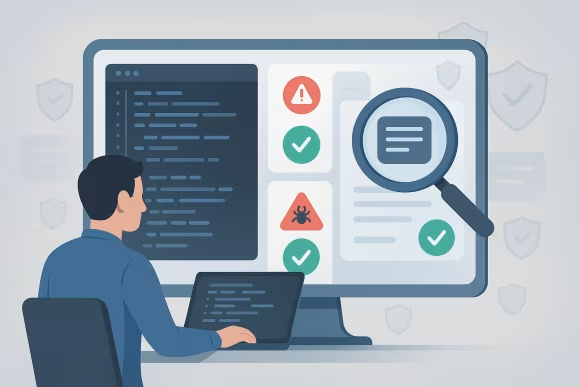
Core & contributed module review
Custom code security audit
Infrastructure configuration checks

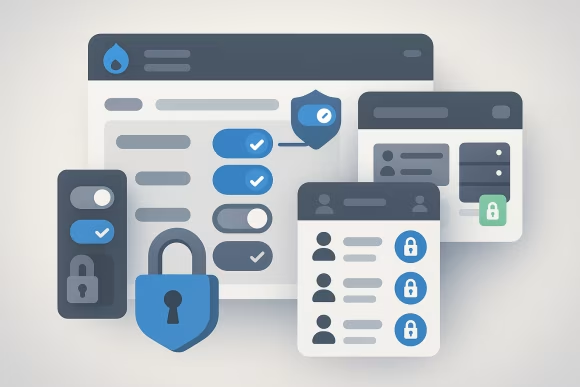
Compliance Alignment

  • GDPR-aware architectures
  • HIPAA-ready platform design (architecture-level)
  • Enterprise governance policies

Ongoing Protection

  • Security update management
  • Vulnerability monitoring
  • Incident readiness planning

Is Your Drupal Platform Truly Secure?

Many Drupal platforms run with outdated modules, weak access controls, misconfigured permissions, or infrastructure gaps. Even minor misconfigurations can lead to data leaks, downtime, or compliance exposure. In regulated industries, insufficient documentation or governance processes can create significant legal and reputational risk.

Without a structured security strategy, organizations often rely on reactive patching instead of proactive risk management.

Our Security-First Approach

Comprehensive Security Audit

We assess core, contributed modules, custom code, and configuration against Drupal security best practices.

Infrastructure & Access Review

We analyze hosting, environment separation, permissions, and deployment workflows to eliminate common risk vectors.

Hardening & Remediation

We implement security patches, tighten configurations, and remove unnecessary exposure across the stack.

Compliance Mapping

We align platform architecture and processes with GDPR and other regulatory requirements at an architectural level.

Core Security & Compliance Capabilities

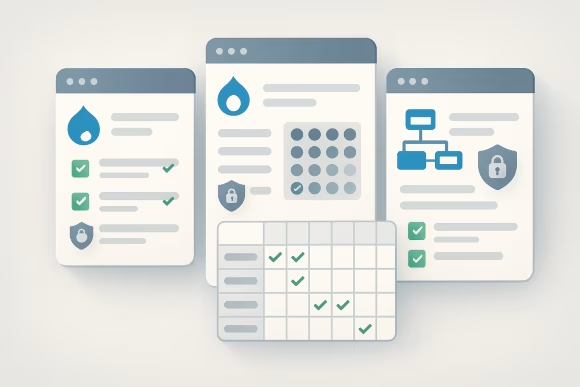
Drupal Security & Compliance establishes a structured protection framework across code, configuration, infrastructure, and governance layers. The service combines in-depth module and custom code reviews with configuration hardening, environment isolation, and strict access control optimization. A formalized security update governance model ensures that patches and advisories are assessed and applied in a controlled, auditable manner. Clear documentation and role-based access strategies strengthen operational accountability and long-term maintainability. This approach reduces attack surface while aligning platform operations with enterprise compliance expectations.

What We Deliver
  • Security assessment report with prioritized findings
  • Risk classification and remediation roadmap
  • Hardened Drupal configuration
  • Patch & update workflow documentation
  • Compliance-aligned architecture recommendations
Best Fit For
  • Enterprise organizations
  • Healthcare & regulated industries
  • Government & public sector
  • Global brands handling sensitive data
  • Teams preparing for internal or external audits
Security & Monitoring Tooling
  • Drupal Security Advisories
  • Composer-based dependency management
  • Static code analysis tools
  • Server-level firewalls & WAF
  • CI/CD security checks

How We Engage

Our delivery model is designed to strengthen your Drupal platform through structured security assessments, continuous monitoring, and compliance alignment. We combine proactive risk mitigation with clear documentation, defined response processes, and enterprise-grade governance practices. Whether you require a focused security sprint or long-term protection, we ensure your platform remains resilient, compliant, and operationally secure.

Delivery card for Security Audit Sprint (2–4 weeks)[01]

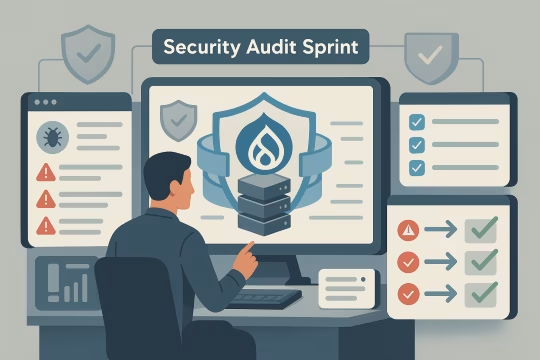
Security Audit Sprint (2–4 weeks)

A focused, time-boxed security assessment designed to quickly identify vulnerabilities, configuration gaps, outdated dependencies, and architectural risks. We deliver a prioritized remediation roadmap with actionable recommendations and implementation guidance tailored to your Drupal platform.

Delivery card for Ongoing Security Retainer[02]

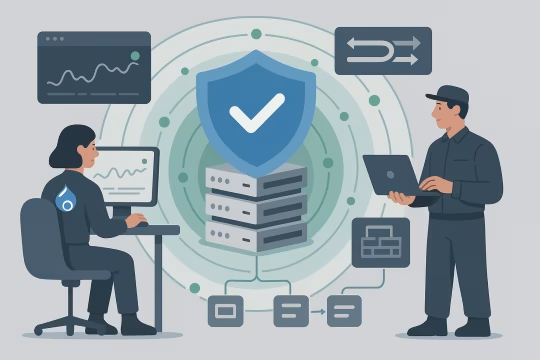
Ongoing Security Retainer

Continuous monitoring, proactive patch management, and regular security reviews to keep your Drupal platform protected. We track core and module updates, review access controls, monitor logs, and maintain hardened configurations to reduce long-term risk exposure.

Delivery card for Pre-Compliance Readiness Program[03]

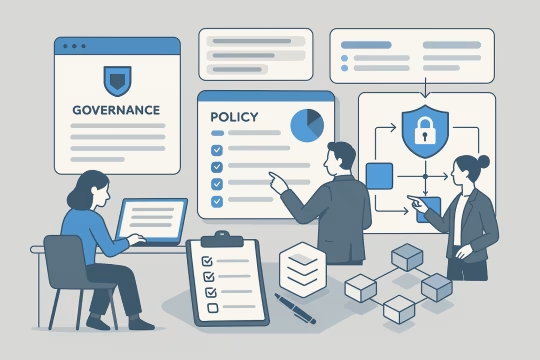
Pre-Compliance Readiness Program

Structured preparation for governance and compliance audits such as GDPR, HIPAA, SOC 2, or ISO-related requirements. We align your Drupal architecture, data handling practices, logging policies, and documentation to meet regulatory expectations before formal audit processes begin.

Delivery card for Incident Preparedness Planning[04]

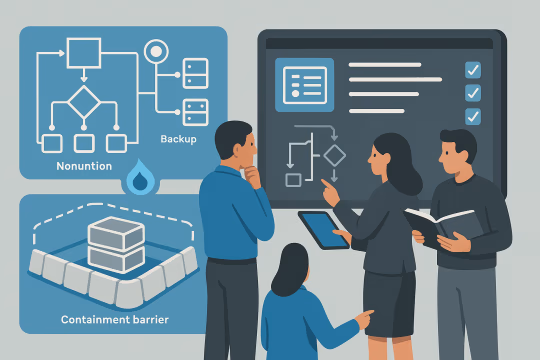
Incident Preparedness Planning

Defined escalation paths, response playbooks, backup validation, and containment procedures to ensure your team is prepared for potential security incidents. We help establish clear communication workflows, recovery strategies, and post-incident review processes.

Business Impact

A structured security framework significantly reduces the likelihood and impact of vulnerabilities, breaches, and compliance failures. Proactive code reviews and governance-driven update processes lower operational risk while preserving platform stability. Strengthened access control and environment isolation protect sensitive data and maintain trust among customers, partners, and regulators. Clear documentation and defined security procedures improve audit readiness and executive visibility into platform risk posture. For leadership teams, this translates into controlled exposure, stronger stakeholder confidence, and long-term operational resilience.

Reduced Risk Exposure

Proactively identify and remediate vulnerabilities before they escalate into security incidents or service disruptions.

Improved Trust

Strong security governance reinforces confidence among customers, partners, and internal stakeholders.

Compliance Readiness

Structured policies and documentation support regulatory requirements, audits, and enterprise governance standards.

Operational Stability

Controlled update processes and environment isolation reduce disruption during maintenance and change cycles.

Controlled Access Management

Least-privilege access models minimize internal risk and improve accountability across teams.

Long-Term Platform Integrity

Security-by-design architecture ensures sustainable, maintainable protection aligned with evolving standards.

Related Services

Security and compliance are closely tied to platform architecture, operational processes, and long-term maintenance practices. These related services help organizations strengthen the technical foundation of their Drupal platforms while ensuring secure deployments, continuous monitoring, and sustainable platform operations. Together they support governance, resilience, and risk management across enterprise Drupal environments.

Frequently Asked Questions

Enterprise Drupal security requires more than periodic patching — it demands structured governance, proactive monitoring, and architecture-level compliance alignment. For organizations operating in regulated or high-risk environments, security discipline directly impacts business continuity and legal exposure. These FAQs address the operational, technical, and compliance-related considerations involved in securing and hardening enterprise Drupal platforms.

How secure is Drupal by default for enterprise environments?

Drupal core is built with a strong security model and a dedicated security team that actively maintains advisories and patch releases. However, enterprise risk exposure rarely originates from core alone. It often stems from contributed modules, custom code, configuration drift, and infrastructure misalignment.

A secure Drupal platform requires controlled dependency management, access governance, environment isolation, and structured update workflows. Without these controls, even a technically secure core installation can become vulnerable over time. Security must be approached as a continuous operational process rather than a one-time configuration task.

What does a comprehensive Drupal security audit include?

A Drupal security audit evaluates core and contributed modules, custom code quality, configuration settings, access permissions, hosting environment setup, and deployment workflows. The objective is to identify vulnerabilities, insecure coding patterns, misconfigurations, and governance gaps.

The audit also reviews dependency management practices, patch compliance status, logging strategy, and environment separation. Findings are prioritized based on risk impact and remediation complexity. The outcome is a structured remediation roadmap aligned with enterprise security standards and operational capacity.

How are Drupal security updates managed without disrupting production?

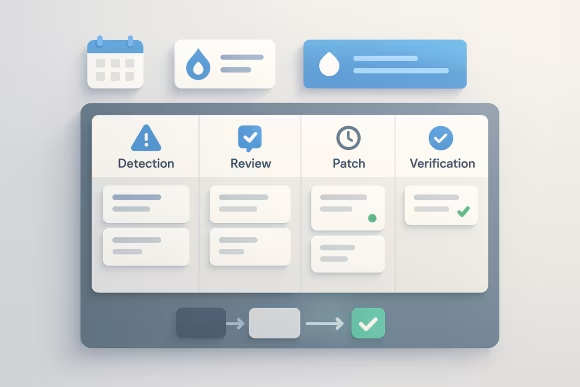
Security updates are monitored continuously through official advisories and dependency scanning. Patches are applied first in controlled staging environments, validated through regression testing, and then deployed using structured release workflows.

This governance model prevents reactive patching in production and reduces the risk of regression or downtime. Clear documentation and approval checkpoints ensure that updates are both timely and stable. The objective is to maintain compliance with security advisories while preserving operational continuity.

Can Drupal support GDPR and HIPAA compliance requirements?

Drupal can support GDPR-aligned and HIPAA-ready architectures when properly configured. Compliance is not achieved by software alone; it requires structured data handling policies, logging controls, access restrictions, and documented governance processes.

For GDPR, this includes data retention management, consent tracking, and controlled personal data exposure. For HIPAA-aligned architectures, infrastructure isolation, encryption strategies, and strict access controls are critical. Compliance readiness must be addressed at the architectural and operational level rather than solely within application code.

How do you reduce the attack surface of a Drupal platform?

Attack surface reduction involves disabling unused modules, restricting administrative endpoints, enforcing least-privilege access models, and hardening configuration settings. Server-level protections such as firewalls and Web Application Firewalls complement application-level controls.

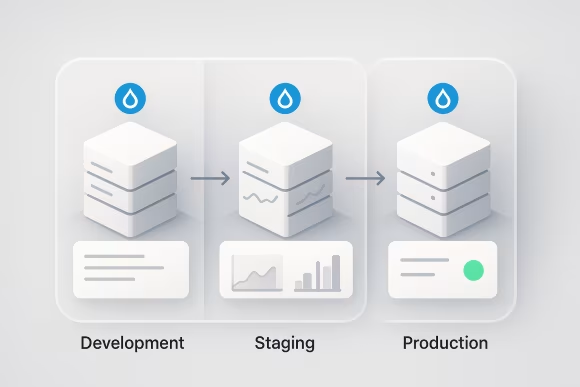
Environment isolation between development, staging, and production prevents accidental exposure of sensitive data. Secure dependency management through Composer and removal of outdated packages further minimizes risk. The objective is to systematically eliminate unnecessary exposure across all layers of the stack.

How is access control structured in enterprise Drupal security models?

Access control is structured around the principle of least privilege. Each role — editorial, administrative, or technical — is granted only the permissions required to perform its function. Privilege escalation paths are minimized and logged.

Regular audits of roles and permissions ensure that access does not accumulate over time. Separation of duties between deployment, content publishing, and system administration further reduces internal risk. A clearly documented access governance model strengthens accountability and audit readiness.

How do you prepare a Drupal platform for potential security incidents?

Incident preparedness includes defining escalation paths, validating backup and restoration procedures, and implementing structured logging and monitoring. Clear communication protocols and response timelines are documented in advance.

Backup systems are tested regularly to ensure data integrity and recovery speed. Monitoring tools are configured to detect anomalies in authentication, traffic spikes, or suspicious behavior. Proactive preparation reduces recovery time and limits operational disruption if an incident occurs.

Does strengthening Drupal security impact performance?

Properly implemented security controls should not negatively affect performance. In fact, structured caching, controlled access layers, and optimized configurations often improve stability and predictability.

Some protective layers such as firewalls or additional authentication checks may introduce minimal overhead, but this is typically negligible compared to the risk mitigation benefits. Performance and security are aligned through architecture design rather than treated as opposing priorities.

What engagement models are available for Drupal security and compliance?

Engagement models typically include a focused security audit sprint followed by optional remediation implementation. For organizations requiring continuous protection, an ongoing security retainer supports update governance, monitoring, and periodic reassessment.

The model is adapted to the platform’s risk profile, regulatory environment, and internal team capacity. Security is treated as an evolving operational discipline rather than a one-time project.

What is the first step in strengthening our Drupal security posture?

The first step is a structured security assessment that evaluates codebase health, configuration hygiene, infrastructure exposure, and governance processes. This establishes a measurable baseline of current risk.

Based on findings, a phased remediation roadmap is defined, prioritizing high-impact vulnerabilities and compliance gaps. Structured execution, documentation, and monitoring then transform security from a reactive activity into a controlled, ongoing operational framework.

Related Projects

What Clients Say

Secure Your Drupal Platform

Let’s evaluate your Drupal platform and build a structured security and compliance roadmap tailored to your organization.

Oleksiy (Oly) Kalinichenko

Oleksiy (Oly) Kalinichenko

CTO at PathToProject

Do you want to start a project?

with him.\"}]]\n"])