Unclear SSG/ISR and CDN Caching Create Delivery Risk
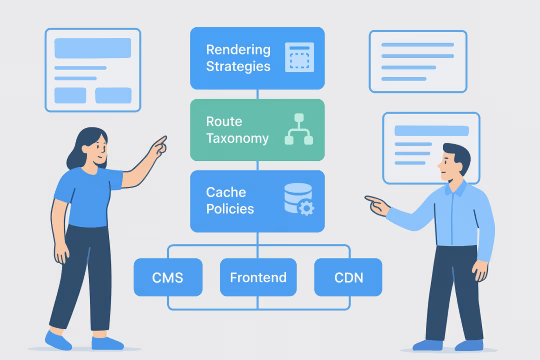
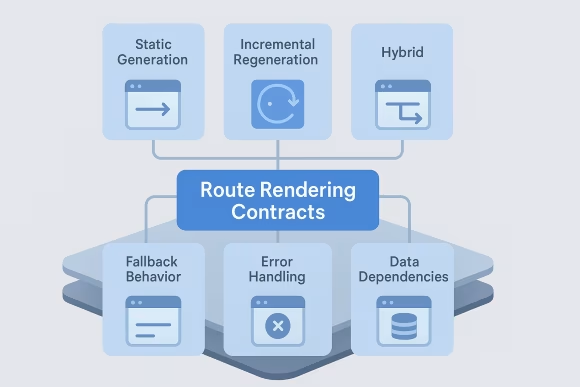
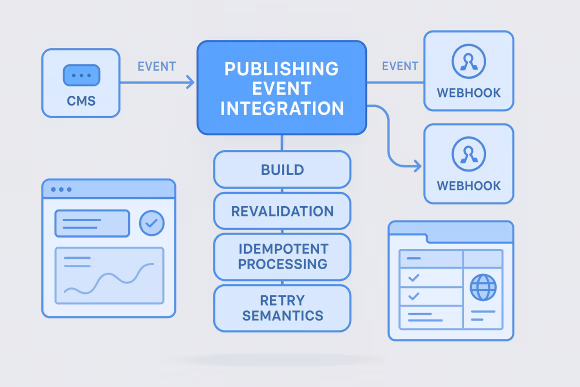
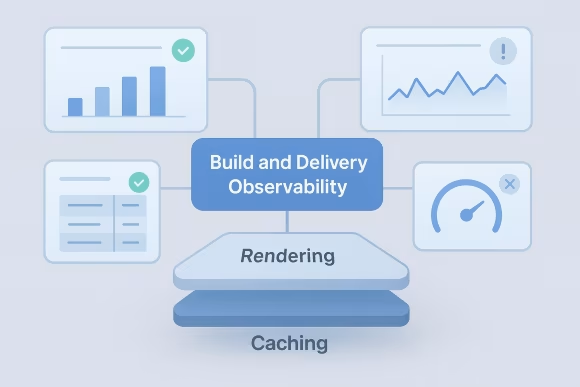
As headless platforms grow, teams often accumulate multiple rendering approaches across routes, sites, and environments. Some pages are generated at build time, others at request time, and caching rules evolve organically. In practice, this creates an inconsistent Next.js SSG and ISR architecture across the estate: different squads make different assumptions about revalidation, fallback behavior, and what “fresh” means. Publishing becomes a chain of implicit dependencies between CMS events, build pipelines, and CDN behavior, with limited observability into where latency or staleness is introduced.
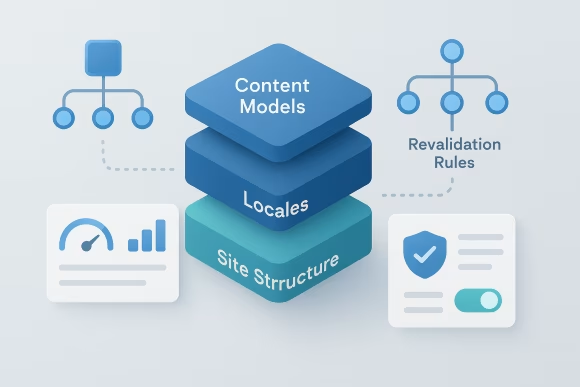
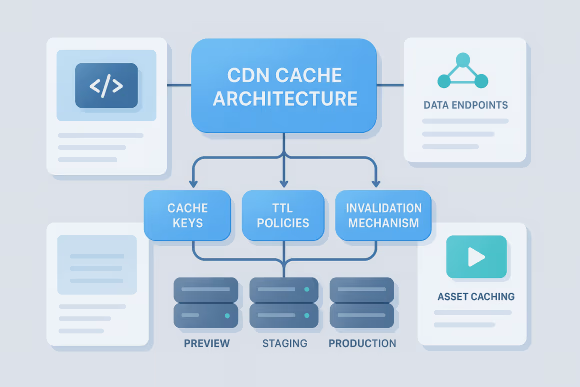
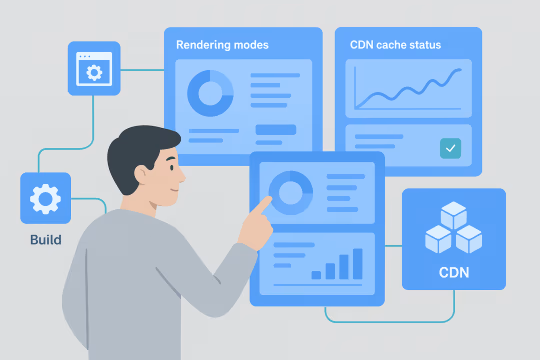
This fragmentation impacts engineering teams in several ways. Build times increase as content volume grows, while partial rebuild and incremental static regeneration strategy choices are inconsistently applied. Preview environments diverge from production, making QA unreliable. CDN caching and invalidation for static sites becomes a source of regressions: content appears updated in one region but stale in another, or critical metadata changes do not propagate, affecting indexing and social previews. Architectural decisions about routing, data fetching, and revalidation are made per feature rather than as platform standards, which increases maintenance overhead and makes performance tuning reactive.
Operationally, these issues create release bottlenecks and incident risk. Teams compensate with manual cache purges, emergency rebuilds, and conservative deployment windows. Over time, the platform becomes harder to evolve because rendering and delivery behavior is not governed as a first-class part of the static site generation architecture, increasing operational risk and technical debt.






 [01]
[01]