Core Focus

Major version upgrade planning
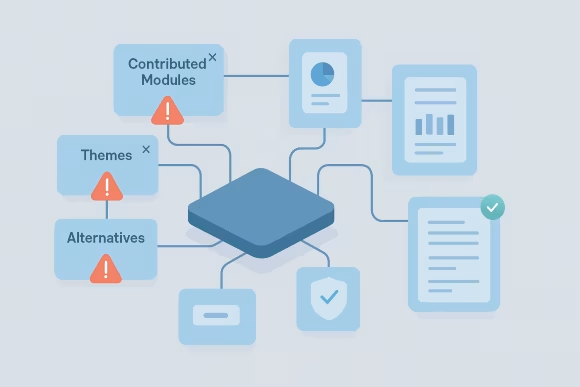
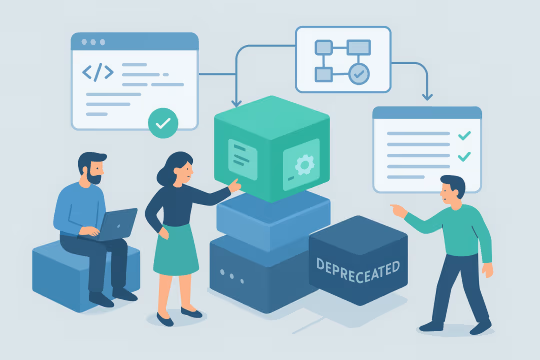
Module and theme remediation
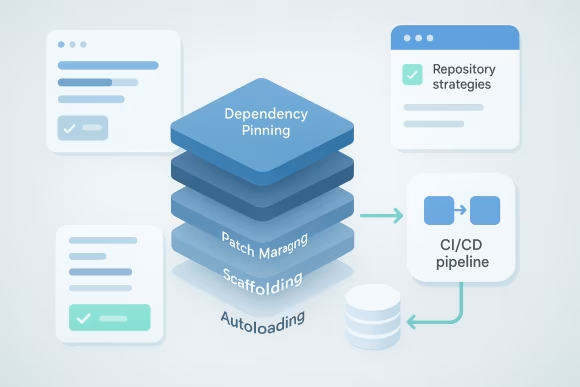
Composer-based build standardization
Cutover and rollback design

Best Fit For

  • Drupal 7 end-of-life estates
  • Complex multi-site platforms
  • High-integration enterprise stacks
  • Regulated security requirements

Key Outcomes

  • Supported Drupal and PHP baseline
  • Reduced upgrade and release risk
  • Improved maintainability and testing
  • Clear dependency governance

Technology Ecosystem

  • Drupal 7, 9, 10, 11
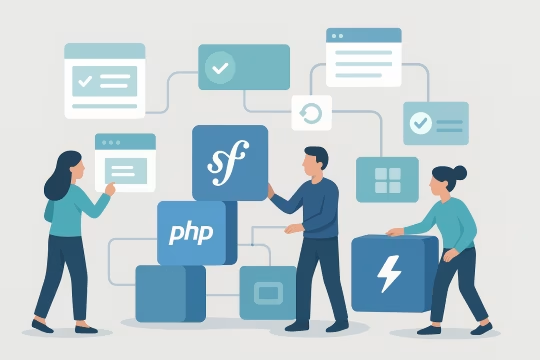
  • PHP and Symfony alignment
  • Composer and Drush tooling
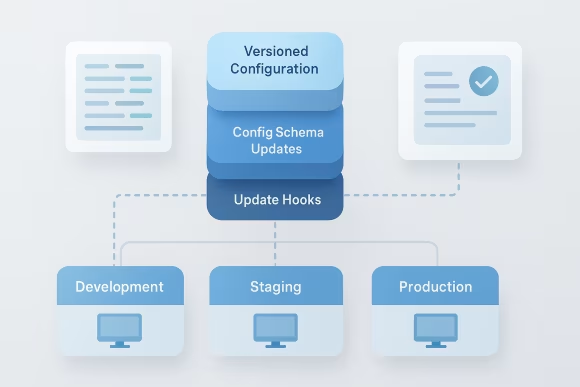
  • Configuration management

Platform Integrations

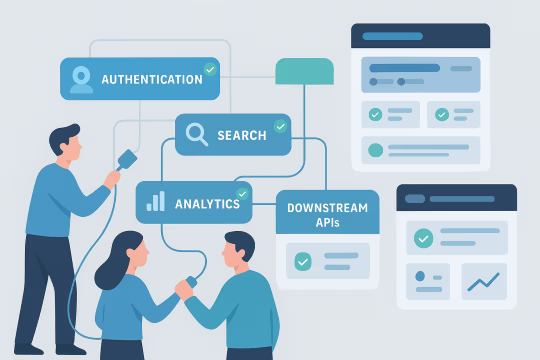
  • SSO and identity providers
  • Search and indexing services
  • Analytics and tag management
  • External APIs and webhooks

Unsupported Drupal Baselines Increase Platform Risk

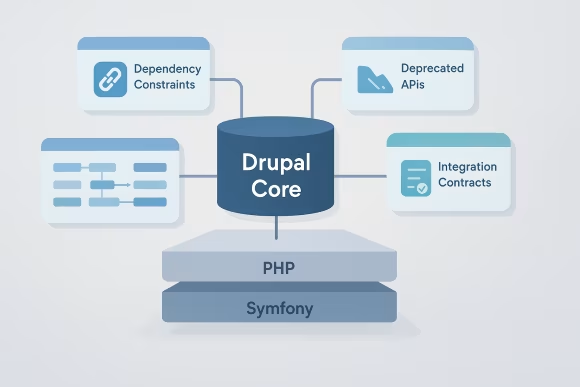
As Drupal platforms mature, they accumulate custom modules, legacy themes, and integration contracts that were built against older core APIs and dependency versions. When the underlying runtime changes (PHP, Symfony, database drivers) or when Drupal reaches end-of-life, teams are forced to keep aging stacks running with limited security coverage and shrinking ecosystem support.

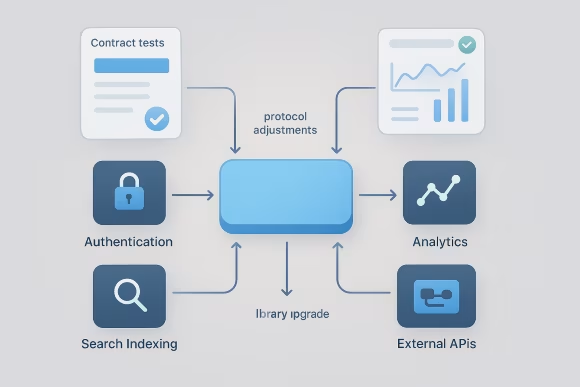
Engineering teams then face a compounding set of constraints: modules become unmaintained, patches conflict, and dependency updates cascade into unexpected regressions. Build and deployment processes often drift across environments, making it difficult to reproduce issues or validate changes reliably. Integrations such as SSO, search, and analytics can fail subtly due to protocol changes, library upgrades, or altered request/response behavior.

Operationally, this creates delivery bottlenecks and elevated incident risk. Release cycles slow down because verification becomes manual and incomplete, while remediation work competes with product delivery. Over time, the platform becomes harder to evolve, and the cost of change increases as architectural inconsistencies and technical debt accumulate across code, configuration, and infrastructure.

Drupal Upgrade Delivery Process

Platform Discovery

Inventory core version, custom code, contributed modules, themes, and integrations. Assess hosting/runtime constraints, release processes, and current test coverage. Produce an upgrade map that identifies blockers, unsupported dependencies, and high-risk areas.

Target Baseline Design

Define the target Drupal/PHP baseline and compatibility constraints for modules, themes, and integrations. Specify build and configuration standards (Composer, config management) and agree on migration versus remediation decisions for legacy functionality.

Dependency Remediation

Rebuild dependency management around Composer and align libraries with the target runtime. Replace or refactor incompatible modules, resolve patch strategy, and establish reproducible builds across local, CI, and production environments.

Code and Config Updates

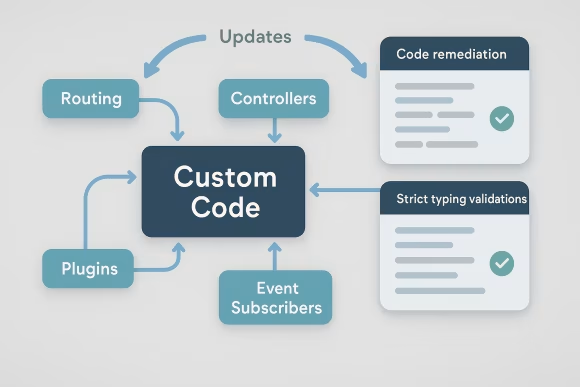
Refactor custom modules and themes for updated APIs and deprecations. Normalize configuration management, update routing, services, and plugin definitions, and address content model or field changes required by the target version.

Integration Compatibility

Validate and update integration points such as SSO, search, analytics, and external APIs. Update client libraries, authentication flows, and data contracts, and add contract tests or monitoring hooks where integration risk is high.

Automated Verification

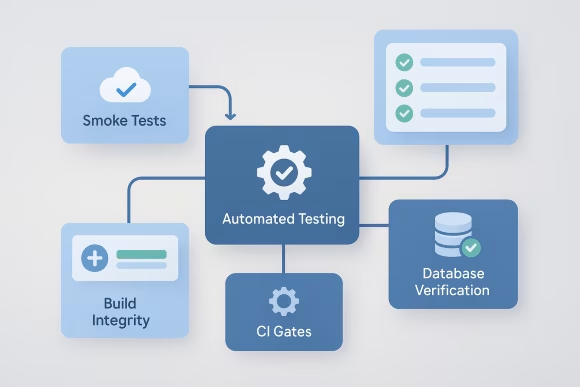
Introduce or extend automated testing to cover critical user journeys and regression-prone areas. Add static analysis and upgrade checks, and ensure CI executes builds, database updates, and smoke tests consistently.

Cutover Planning

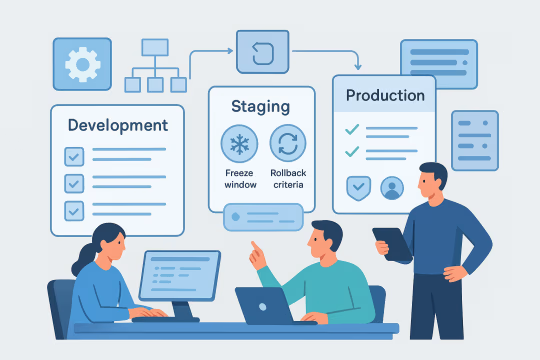
Design the deployment and cutover approach, including content freeze windows, data synchronization, and rollback strategy. Rehearse the release in production-like environments and document operational runbooks for the change window.

Post-Upgrade Governance

Stabilize the platform with a short hardening period, then establish ongoing dependency governance. Define update cadence, patch review workflow, and observability baselines so future upgrades become incremental and predictable.

Core Upgrade Engineering Capabilities

Drupal major upgrades require more than core updates; they require a controlled evolution of dependencies, custom code, configuration, and integration contracts. This service focuses on establishing a supportable baseline with reproducible builds, validated compatibility, and automated verification. The result is a platform that can accept security updates and future version changes with less disruption, clearer governance, and lower operational risk.

Capabilities
  • Drupal major version upgrade planning
  • Composer and dependency remediation
  • Custom module and theme refactoring
  • Configuration management normalization
  • Integration compatibility validation
  • Automated regression and smoke testing
  • Cutover, rollback, and runbook design
  • Post-upgrade governance and update cadence
Who This Is For
  • CTO
  • Platform Teams
  • Drupal Architects
  • Engineering Managers
  • Digital Platform Owners
  • Security and Risk Stakeholders
Technology Stack
  • Drupal 7
  • Drupal 9
  • Drupal 10
  • Drupal 11
  • PHP
  • Symfony
  • Drush
  • Composer

Delivery Model

Delivery is structured to reduce uncertainty early, then execute remediation and verification in controlled increments. Work is typically organized around a target baseline, a prioritized remediation backlog, and rehearsed cutover steps. The model supports parallel workstreams for code, configuration, and integrations while maintaining a single release plan.

Delivery card for Discovery and Audit[01]

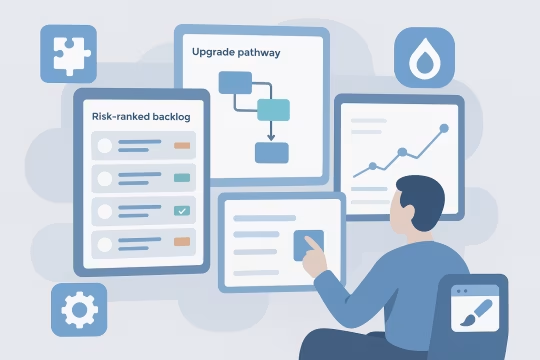
Discovery and Audit

Review the current Drupal estate, including custom modules, themes, contributed modules, and integrations. Assess runtime constraints, hosting, and CI/CD maturity. Output is a risk-ranked backlog and an upgrade pathway recommendation.

Delivery card for Upgrade Plan and Scope[02]

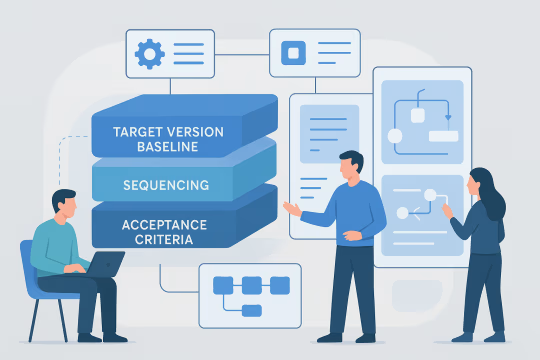
Upgrade Plan and Scope

Define the target version baseline, sequencing, and acceptance criteria. Agree on what is remediated, replaced, or retired, and document integration touchpoints. Establish the cutover approach and the environments required for rehearsal.

Delivery card for Build and Dependency Work[03]

Build and Dependency Work

Implement or harden Composer builds, patch management, and environment parity. Align PHP/Symfony constraints and update tooling such as Drush. Ensure CI can build and deploy consistently from a clean state.

Delivery card for Application Remediation[04]

Application Remediation

Refactor custom code and update configuration to match the target Drupal version. Replace incompatible modules and resolve deprecations. Maintain functional parity through incremental merges and frequent validation.

Delivery card for Integration Validation[05]

Integration Validation

Update integration libraries and validate authentication, search, analytics, and API contracts. Run end-to-end checks for critical flows and data pipelines. Add targeted monitoring or contract tests where integration risk is concentrated.

Delivery card for Testing and Hardening[06]

Testing and Hardening

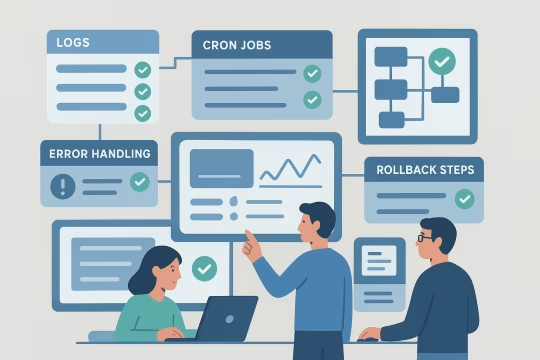
Execute regression testing, performance checks where relevant, and operational verification (logs, error handling, cron, queues). Fix upgrade regressions and stabilize the platform. Confirm rollback steps and operational runbooks.

Delivery card for Deployment and Cutover[07]

Deployment and Cutover

Rehearse the release in production-like environments, then execute the cutover with defined freeze windows and rollback criteria. Validate post-deploy health checks and key user journeys. Document outcomes and residual risks.

Delivery card for Post-Upgrade Evolution[08]

Post-Upgrade Evolution

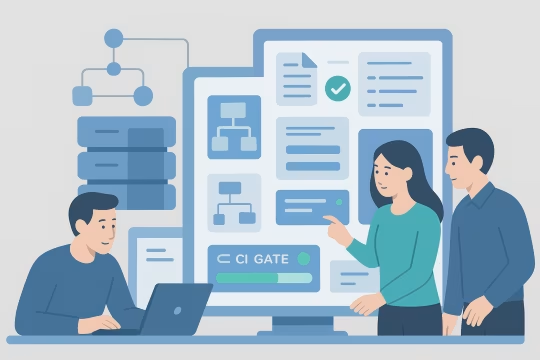
Transition to a sustainable update cadence for core and dependencies. Establish governance for module selection, patch review, and CI gates. Plan follow-on modernization work based on the upgraded baseline.

Business Impact

A major Drupal upgrade reduces exposure created by unsupported software and restores the ability to evolve the platform safely. The primary impacts are operational: predictable releases, lower incident risk, and improved maintainability. It also creates a stable baseline for future initiatives such as headless delivery, design system adoption, or broader platform modernization.

Reduced Security Exposure

Moving to a supported Drupal and PHP baseline reduces reliance on end-of-life components. Security updates become feasible within normal release cycles. This improves auditability and lowers the operational burden of emergency patching.

Lower Upgrade Risk

A structured remediation plan and rehearsed cutover reduce uncertainty during major changes. Clear rollback criteria and runbooks improve operational control. Teams can execute releases with fewer last-minute decisions.

Improved Platform Maintainability

Refactored custom code, updated dependencies, and normalized configuration reduce the cost of change. Engineers spend less time diagnosing environment drift and legacy incompatibilities. Maintenance work becomes more predictable and easier to estimate.

Faster Release Cycles

Reproducible builds and CI verification reduce manual steps and rework. Regression testing becomes more targeted and repeatable. This shortens the time between change request and production deployment.

Integration Stability

Validated integration contracts reduce the likelihood of subtle failures after runtime or library changes. Monitoring and contract tests improve detection when external systems change. This lowers incident rates tied to authentication, search, and API dependencies.

Clear Dependency Governance

Composer baselines and patch strategy create transparency around what runs in production. Teams can manage module lifecycle decisions with evidence and policy. This reduces long-term lock-in to unmaintained ecosystem components.

Reduced Technical Debt

Upgrades force explicit decisions on legacy modules, themes, and customizations. Retiring or replacing outdated components reduces complexity. The platform becomes easier to extend without accumulating fragile workarounds.

FAQ

Common questions from enterprise teams planning Drupal major version upgrades, including architecture, operations, integrations, governance, risk, and engagement.

How do you decide between an in-place upgrade and a rebuild approach?

The decision is driven by the current platform’s technical constraints and the target version gap. For Drupal 7 to Drupal 10/11, an “in-place” upgrade is typically not feasible because the underlying architecture and APIs changed significantly; the effort becomes a combination of content migration, code remediation, and rebuild of the build pipeline. For Drupal 9 to Drupal 10, an in-place upgrade is often viable if deprecations were managed and dependencies are healthy. We evaluate: custom module surface area, theme approach, contributed module support status, data model complexity, integration contracts, and the current build/deploy maturity. We also look at how much of the existing implementation is still aligned with current Drupal patterns (Composer, config management, services). The output is a recommended path with trade-offs: time-to-baseline, risk profile, and what can be preserved versus reimplemented. The goal is to choose the approach that produces a supportable platform, not just a version number change.

What architecture changes are typical when moving to Drupal 10 or 11?

Most architecture changes relate to dependency management, configuration discipline, and how custom functionality is structured. Composer becomes the authoritative dependency and build mechanism, which affects how modules, libraries, and patches are managed. Configuration management typically becomes stricter, with a stronger emphasis on eliminating config drift and ensuring deployments are reproducible. On the application side, custom code often needs refactoring to align with modern Drupal patterns: service container usage, event subscribers, plugins, and updated entity APIs. Themes may require significant work depending on whether the platform uses legacy theming approaches or modern component-based patterns. Operationally, the upgrade often triggers runtime alignment (PHP version, Symfony compatibility) and may require updates to caching, cron/queues, and deployment orchestration. We treat these as architectural concerns because they directly affect reliability and the ability to evolve the platform safely after the upgrade.

How do you minimize downtime during a major Drupal upgrade cutover?

Downtime is minimized by designing the cutover as an operational procedure rather than a single deployment step. We start by defining the cutover model: content freeze window, data synchronization approach, and the exact sequence of actions required to switch traffic safely. For some platforms, this includes running parallel environments and rehearsing the cutover multiple times. We also focus on reducing unknowns before the change window: reproducible builds, automated smoke tests, and production-like staging environments. Critical operational checks are defined upfront (health endpoints, logs, queue processing, cron, authentication flows, search indexing) so the team can validate the platform quickly after deployment. Finally, we define rollback criteria and a rollback path that is realistic within the time window. The objective is not “zero downtime at all costs,” but a controlled, rehearsed cutover with predictable impact and a clear recovery plan.

What changes are usually required in CI/CD and environments for upgrades?

Major upgrades often expose weaknesses in build reproducibility and environment parity. Common changes include moving fully to Composer-based builds, standardizing PHP extensions and runtime versions across local/CI/staging/production, and ensuring database update steps are automated and repeatable. Drush and deployment scripts frequently need updates to match the target Drupal version. CI/CD pipelines typically add gates for dependency integrity, static analysis, and automated smoke tests. For platforms with multiple sites or complex configuration, we also add validation steps around configuration import/export and database updates to reduce environment-specific failures. Environment work can include updating container images, adjusting web server and caching configuration, and ensuring file storage and private/public file handling remain consistent. The goal is to make the upgrade verifiable in CI and staging so production cutover is execution, not experimentation.

How do you handle integrations like SSO, search, and analytics during upgrades?

We treat integrations as contracts that must be revalidated under the new runtime and dependency set. First, we inventory integration points: identity (SAML/OIDC), search/indexing, analytics/tag management, payment or CRM connectors, and any custom APIs. Then we identify what changes with the upgrade: library versions, request/response handling, authentication middleware, and event hooks. During implementation, we update client libraries and configuration, then validate behavior using a combination of environment-based testing and targeted automated checks. For high-risk integrations, we add contract tests or synthetic monitoring so failures are detected quickly after deployment. We also plan operational tasks that are easy to overlook: reindexing search, validating webhook endpoints, rotating credentials if required, and ensuring analytics events still fire as expected. Integration readiness is a core acceptance criterion for go-live.

What is your approach to contributed module compatibility and replacements?

We start with a module inventory and classify each dependency by support status, compatibility with the target Drupal version, security posture, and functional criticality. For modules that are compatible and maintained, we plan straightforward upgrades. For modules that are unmaintained or incompatible, we evaluate replacement options, including alternative modules, core capabilities, or targeted custom implementations. We also look at the “hidden” dependency graph: modules that pull in libraries or rely on deprecated APIs. Composer makes this more visible, but it also means version constraints must be managed carefully to avoid conflicts. The replacement strategy is documented as part of the upgrade plan, including functional parity expectations and any behavior changes. The goal is to reduce long-term risk by limiting reliance on fragile dependencies while keeping the platform’s critical capabilities intact.

How do you set governance so future Drupal upgrades are easier?

Governance is established by making dependency and configuration changes explicit, reviewable, and automated. We typically implement a Composer strategy that defines how versions are pinned, how patches are managed, and how security updates are applied and tested. This is paired with CI gates that verify builds, run automated checks, and prevent unreviewed dependency drift. On the Drupal side, we reinforce configuration management discipline: configuration is versioned, environment differences are minimized, and deployment procedures include predictable config import and database update steps. We also recommend module lifecycle policies: criteria for adopting new modules, rules for handling unmaintained dependencies, and ownership for security advisories. The outcome is a platform that can accept incremental updates continuously. Instead of “big bang” upgrades every few years, teams can plan smaller, lower-risk version steps with clear operational controls.

How do you document decisions and ensure maintainability after the upgrade?

We document decisions where they matter operationally and architecturally: dependency strategy, module replacement rationale, integration changes, and cutover procedures. This typically includes an upgrade decision log, a dependency governance guide (Composer/patch approach), and operational runbooks for deployment and rollback. Documentation is kept close to the codebase where possible so it evolves with the platform. Maintainability is also enforced through automation: CI checks, consistent build steps, and test coverage around critical flows. We aim to reduce “tribal knowledge” by making the platform verifiable through repeatable processes. After go-live, we recommend a short stabilization period with clear ownership for defect triage and a defined update cadence. This helps teams avoid slipping back into ad-hoc patching and ensures the upgraded baseline remains supportable over time.

What are the biggest risks in Drupal major version upgrades?

The largest risks are usually concentrated in three areas: hidden dependency constraints, custom code surface area, and integration behavior changes. Dependencies can fail in non-obvious ways when PHP/Symfony versions change or when modules rely on deprecated APIs. Custom modules and themes often embed assumptions about Drupal internals that no longer hold in the target version. Integrations are another common risk because they depend on external systems and libraries that may change simultaneously. Authentication flows, search indexing, and analytics instrumentation can appear “working” while silently degrading data quality or user experience. Operational risk is often underestimated: environment drift, manual deployment steps, and incomplete testing can turn a planned cutover into an incident. We mitigate these risks by auditing early, prioritizing remediation, standardizing builds, and rehearsing cutovers with explicit rollback criteria. The goal is to convert unknowns into managed work items before the change window.

How do you validate functional parity and avoid regressions?

We define functional parity as a set of measurable acceptance criteria tied to critical user journeys, content workflows, and integration outcomes. Early in the engagement, we identify the highest-value flows (authentication, search, key forms, publishing, personalization rules if present) and the highest-risk areas (custom modules, complex configuration, multi-site behavior). Validation combines automated and manual methods. Automated smoke tests and regression checks provide repeatability and fast feedback in CI and staging. Manual testing is focused on edge cases and editorial workflows that are difficult to automate quickly. We also validate non-functional behavior where relevant: performance baselines, caching behavior, and operational tasks like cron and queues. For integrations, we validate both “does it work” and “is the data correct,” especially for analytics and downstream APIs. The objective is to make regression detection systematic rather than dependent on ad-hoc testing near go-live.

What does a typical upgrade engagement look like for enterprise teams?

A typical engagement starts with a short discovery and audit phase, followed by a structured implementation plan with clear milestones. Work is usually organized into parallel tracks: build/dependency remediation, application refactoring (custom modules/themes/config), and integration validation. This allows progress even when specific blockers exist in one area. We align with enterprise delivery constraints by defining environments, release governance, and acceptance criteria early. Regular technical checkpoints are used to review risks, confirm scope decisions (replace vs refactor), and ensure the upgrade remains aligned with operational requirements. The engagement typically includes at least one full cutover rehearsal in a production-like environment, plus a stabilization period after launch. Throughout, we aim to leave the platform with documented runbooks and a sustainable update cadence so the organization can maintain the baseline without recurring “rescue” projects.

How do you work with internal teams and existing vendors during the upgrade?

We can operate as an embedded engineering partner or as a lead implementation team coordinating multiple contributors. The collaboration model is defined by ownership boundaries: who owns infrastructure, who owns custom modules, who owns integrations, and who approves releases. We establish shared working agreements for branching strategy, code review, and CI standards to avoid duplicated effort. For internal teams, we prioritize knowledge transfer through pairing, documented decisions, and making the build and deployment process transparent. For existing vendors, we align on interface contracts and deliverables, such as integration updates, theming changes, or content migration tasks. We also recommend a single source of truth for the upgrade plan and risk register, with regular technical reviews. This reduces coordination overhead and ensures that architectural decisions (dependency strategy, module replacements, cutover steps) remain consistent across teams.

How do you manage patches and security advisories during and after the upgrade?

During the upgrade, we establish a patch strategy that is compatible with Composer and auditable in version control. Patches are tracked explicitly, reviewed like code, and applied through the build pipeline rather than manually in environments. Where possible, we prefer upstream fixes or maintained alternatives to reduce long-term patch burden. Security advisories are handled by defining an update cadence and a triage process: identify affected components, assess exposure, apply updates in a controlled branch, and validate via CI and smoke tests. This process is easier once the platform is on a supported baseline with reproducible builds. After the upgrade, we recommend governance that includes ownership for monitoring advisories, criteria for accepting dependency updates, and CI gates that prevent unreviewed drift. The objective is to make security updates routine operational work rather than disruptive emergency projects.

Can you upgrade Drupal while also modernizing the frontend or moving to headless?

Yes, but it requires careful sequencing to avoid compounding risk. In many cases, it is safer to first establish a supported Drupal baseline (core, dependencies, build, and integrations) and then modernize the frontend or introduce headless delivery as a follow-on phase. This reduces the number of variables during the cutover and makes troubleshooting more deterministic. That said, there are scenarios where combining efforts is efficient, such as when a legacy theme is a major blocker or when a decoupled frontend is already in place. In those cases, we define clear boundaries: what changes are required for the upgrade versus what is optional modernization. We typically recommend an architecture plan that separates concerns: Drupal as content and workflow platform, frontend delivery layer (if applicable), and integration layer. This keeps the upgrade measurable and prevents modernization goals from obscuring upgrade acceptance criteria.

How does collaboration typically begin for a Drupal version upgrade?

Collaboration typically begins with a focused discovery and audit to establish facts: current Drupal version, custom code inventory, contributed module landscape, integration map, hosting/runtime constraints, and the maturity of build and deployment processes. We request access to the codebase, CI logs (if available), and a representative environment so we can validate assumptions rather than relying on documentation alone. From that audit, we produce an upgrade pathway recommendation with a risk-ranked backlog and a proposed target baseline (for example, Drupal 10 with a defined PHP version). We also outline sequencing, environment needs, and acceptance criteria for functional parity and integration readiness. Once the plan is agreed, we set up working agreements (branching, code review, release governance) and start remediation in increments that can be validated continuously. The first implementation milestone is usually a reproducible build and a running target-version environment to support iterative remediation and testing.

Plan your next Drupal major upgrade

We can assess your current Drupal estate, identify upgrade blockers, and define a controlled path to a supported baseline with reproducible builds, verified integrations, and a cutover plan.

Oleksiy (Oly) Kalinichenko

Oleksiy (Oly) Kalinichenko

CTO at PathToProject

Do you want to start a project?