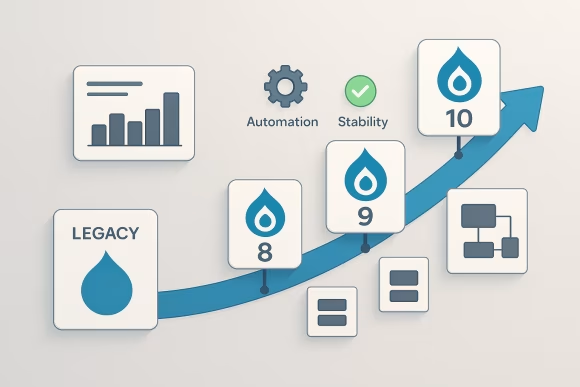
Upgrade Path

Drupal 7 → Drupal 11
Drupal 7 → Drupal 12 (future-ready)
Replatforming & architecture redesign

Migration Scope

  • Content migration
  • Custom module refactoring
  • Theme redesign or modernization

Risk Mitigation

  • Security-first approach
  • Compliance alignment
  • Controlled release process

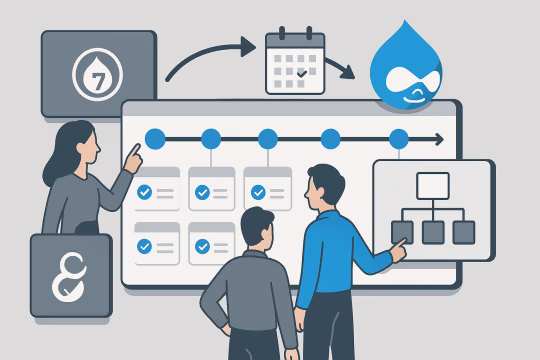
Performance Boost

  • Core Web Vitals optimization
  • Modern caching strategies
  • Infrastructure modernization

Drupal 7 End of Life: Risks of Staying on Drupal 7

With Drupal 7 end of life, the platform no longer receives community security updates. That immediately increases exposure to known vulnerabilities, audit findings, and policy exceptions—especially in regulated environments where unsupported software is treated as a material risk. Over time, teams often compensate with compensating controls and emergency patching, which raises operational overhead and makes incident response more complex.

Legacy Drupal 7 architecture also creates delivery bottlenecks. Older module patterns, custom code that has drifted from current standards, and limited configuration management make changes harder to test, deploy, and roll back safely. Integrations can become fragmented as surrounding systems evolve (identity, search, analytics, marketing tooling), increasing the effort required to keep data flows reliable and secure. Performance and scalability improvements may require disproportionate workarounds, and modernization initiatives such as headless delivery or API-first patterns can become costly to implement on a legacy foundation.

As postponement continues, technical debt compounds: undocumented customizations accumulate, dependencies age out, and the cost of a Drupal legacy upgrade rises. This is why many organizations formalize an enterprise Drupal 7 migration strategy early—so scope, risk, and sequencing are understood before constraints force a rushed replatforming decision.

Our Migration Approach

Comprehensive Audit

Full technical audit of modules, custom code, integrations, and content structure to define an enterprise Drupal 7 migration strategy.

Architecture Redesign

We evaluate whether a direct Drupal 7 website upgrade path or Drupal 7 to Drupal 10 replatforming delivers better long-term value.

Structured Content Migration

Drupal 7 content migration services using automated, tested migrations with validation checkpoints and rollback options.

Custom Code Refactoring

Drupal 7 custom module migration: legacy PHP modules are rewritten or refactored to align with modern Drupal standards.

Performance & Security Hardening

Modern caching, infrastructure tuning, and security best practices implemented to reduce operational risk after Drupal 7 support ends.

Controlled Go-Live

Staged deployment, QA validation, redirect checks, and post-launch monitoring to protect business continuity.

What You Gain After Migration

Drupal 7 modernization replaces unsupported legacy architecture with a modern, structured Drupal foundation built for long-term sustainability. The platform is engineered around modular architecture, standardized configuration management, API readiness, and security-first practices. Performance optimization, dependency modernization, and technical debt reduction are integrated so the result is maintainable, upgrade-ready, and integration-friendly. This supports stronger governance, scalability, and operational reliability across enterprise teams.

Migration Capabilities
  • Multisite migrations
  • Multi-language platforms
  • Enterprise integrations
  • Custom workflows
  • Complex content models
Best Fit For
  • Enterprise organizations
  • Government institutions
  • Universities & research bodies
  • Healthcare & regulated industries
Technology Stack
  • Drupal 10 / 11 / 12
  • PHP 8.4+
  • Solr / Elasticsearch
  • Cloud infrastructure (AWS / Acquia / DigitalOcean)
  • CI/CD pipelines

Delivery Model

Delivery follows an engineering sequence from discovery and audit through build, migration, validation, and controlled cutover. We plan the upgrade path (including Drupal 7 to Drupal 10/11/12 migration when appropriate), implement Drupal data migration services and custom code refactoring in repeatable stages, and validate performance, security, and content integrity before go-live. The approach supports fixed-scope, phased, or parallel-build execution depending on platform complexity and risk tolerance.

Delivery card for Fixed-Scope Migration[01]

Fixed-Scope Migration

A clearly defined migration plan with agreed scope, timeline, and deliverables. We analyze your current Drupal 7 setup, define upgrade paths, and execute the migration in a controlled environment with transparent milestones and predictable outcomes. Ideal for organizations seeking certainty in budget and execution.

Delivery card for Phased Migration[02]

Phased Migration

A structured, step-by-step transition approach designed for complex enterprise platforms. Critical modules, integrations, and content structures are migrated in prioritized phases, minimizing operational disruption while allowing continuous business activity during the upgrade.

Delivery card for Parallel Build Strategy[03]

Parallel Build Strategy

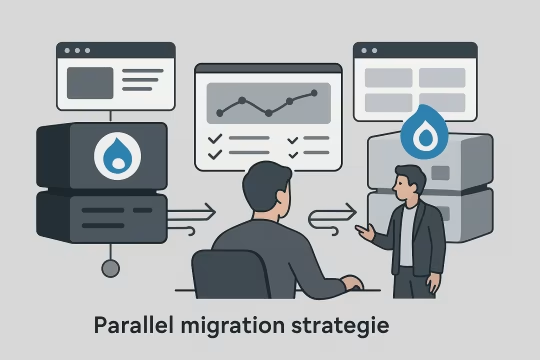
We build the new Drupal platform alongside your existing Drupal 7 system, ensuring uninterrupted service while development progresses. Content synchronization, integration testing, and validation happen in parallel before a carefully planned final switch-over.

Delivery card for Post-Migration Support[04]

Post-Migration Support

After launch, we provide stabilization, monitoring, and optimization support. Performance tuning, security validation, and regression checks ensure your newly upgraded platform operates reliably and efficiently in production.

Business Impact

Migrating from Drupal 7 eliminates exposure to unsupported software risks while restoring full security coverage and compliance alignment. A modern architecture reduces long-term maintenance overhead and minimizes the cost of future upgrades. Improved performance and SEO strengthen user engagement and digital acquisition outcomes. Standardized workflows and API capabilities accelerate marketing execution and integration initiatives. For leadership, this transition transforms a legacy liability into a scalable, secure digital foundation aligned with long-term growth strategy.

Reduced Security Risk

Migrating away from unsupported Drupal 7 eliminates exposure to unpatched vulnerabilities and restores full security update coverage, reducing regulatory and reputational risk.

Lower Long-Term Maintenance Costs

A modernized architecture with standardized configuration and dependency management reduces emergency fixes, upgrade friction, and accumulated technical debt over time.

Improved Operational Efficiency

Cleaner workflows, better configuration control, and simplified deployments decrease internal effort required to maintain and evolve the platform.

Stronger Performance & SEO

Modern caching strategies and optimized rendering improve page speed, Core Web Vitals, and search engine visibility—supporting higher engagement and acquisition outcomes.

Future-Proof Upgrade Path

Structured migration planning ensures smoother transitions to future Drupal releases, reducing the likelihood of disruptive re-platforming efforts.

Scalable Digital Growth

API-ready architecture and integration-friendly design enable expansion into new channels, brands, and enterprise systems without architectural rework.

Frequently Asked Questions

These FAQs cover common questions about Drupal 7 end of life (what to do next), risks of staying on Drupal 7, migration approach and governance, custom module and content migration, downtime mitigation, and typical cost drivers for an enterprise Drupal migration.

Why is migrating from Drupal 7 now considered urgent?

Drupal 7 has officially reached end-of-life, meaning it no longer receives community security updates or active maintenance. Continuing to operate on unsupported software increases exposure to vulnerabilities, audit failures, and compliance risk. Beyond security concerns, legacy Drupal 7 architecture limits performance optimization, integration flexibility, and scalability. The longer migration is postponed, the more technical debt accumulates, making future upgrades more complex and expensive. A structured migration reduces risk and restores long-term platform viability.

Is migrating from Drupal 7 to Drupal 11/12 a simple version upgrade?

No. Drupal 7 to Drupal 11/12 is not a direct upgrade but a structured rebuild and migration process. Core architecture, module systems, configuration management, and theme layers differ significantly between versions. Successful migration requires auditing custom modules, refactoring legacy PHP code, redesigning content models where needed, and implementing modern deployment workflows. Treating the process as a modernization initiative rather than a minor upgrade ensures architectural clarity and long-term maintainability.

Will our website experience downtime during migration?

Downtime can be minimized or eliminated through parallel build and staged deployment strategies. In most enterprise migrations, the new Drupal platform is built and validated alongside the existing Drupal 7 system. Final cutover is carefully planned, tested, and executed during a controlled release window. Structured validation, rollback planning, and content synchronization reduce the risk of operational disruption during go-live.

What happens to our custom Drupal 7 modules?

Custom modules developed for Drupal 7 must typically be rewritten or significantly refactored to align with modern Drupal architecture. This includes adopting Symfony-based patterns, dependency injection, and updated APIs. During the audit phase, each custom component is evaluated for relevance, complexity, and future value. Some functionality may be replaced by contributed modules or modern alternatives, reducing technical debt and improving long-term supportability.

How is content migrated from Drupal 7 safely and accurately?

Content migration is handled through automated migration scripts with validation checkpoints. Data structures are mapped carefully to new content models, ensuring fields, relationships, and taxonomies remain intact. Multiple migration test runs are performed in staging environments to validate accuracy and completeness. Backup procedures and rollback mechanisms protect against data loss, ensuring integrity throughout the transition process.

Can we modernize architecture during the Drupal 7 migration?

Yes. Migration presents an opportunity to redesign information architecture, optimize performance layers, and adopt API-first or headless-ready approaches. Rather than replicating legacy structures, the platform can be rebuilt on clean, modular foundations with improved configuration management, caching strategies, and CI/CD automation. This ensures the new system is not only supported but strategically positioned for long-term digital growth.

How long does a Drupal 7 migration typically take?

Timelines vary depending on platform complexity, number of custom modules, integration depth, and content volume. Smaller platforms may migrate within a few months, while enterprise multisite ecosystems require phased approaches. A comprehensive audit provides realistic estimates based on scope and architectural requirements. Structured planning, milestone validation, and controlled testing ensure predictable progress rather than rushed execution.

How does Drupal 7 migration impact SEO and search rankings?

When executed correctly, migration can improve SEO performance. Modern Drupal versions support better Core Web Vitals optimization, structured data handling, and cleaner URL management. Proper redirect mapping, metadata preservation, and performance tuning are critical. A controlled migration strategy ensures that search equity is retained while benefiting from faster load times and improved technical SEO foundations.

What factors influence the cost of a Drupal 7 migration?

Cost is influenced by custom module complexity, integration depth, design changes, content restructuring, and infrastructure modernization. Platforms with significant technical debt or undocumented custom logic may require deeper refactoring effort. A structured audit phase identifies risk areas and optimization opportunities early, allowing budget forecasting based on real technical conditions rather than assumptions.

What is the first step to begin a Drupal 7 migration?

The process begins with a comprehensive technical audit of the existing Drupal 7 platform. This includes reviewing modules, integrations, content models, hosting setup, and security posture. Based on findings, a migration strategy is defined — whether fixed-scope, phased rollout, or parallel rebuild. Clear planning ensures alignment between business objectives, technical modernization goals, and risk mitigation requirements.

Drupal 7 Migration and Modernization Case Studies

These case studies showcase structured Drupal 7 to Drupal 10+ migrations and modernization efforts that improved architecture, security, and performance. They highlight real-world delivery of multisite and multilingual platform upgrades, custom workflow implementations, and integration stabilization. Together, they provide practical insights into future-proofing Drupal platforms while reducing technical debt and operational risks.

Client Feedback

Further reading on Drupal migration planning and platform modernization

These articles expand on the planning, architecture, and governance work that makes Drupal 7 migration successful beyond a simple code upgrade. They cover enterprise migration sequencing, content model readiness, dependency mapping, multisite standardization, and search considerations that often shape delivery risk and long-term maintainability.

Still Running Drupal 7?

Let’s assess your current platform and create a structured migration roadmap tailored to your organization.

Oleksiy (Oly) Kalinichenko

Oleksiy (Oly) Kalinichenko

CTO at PathToProject

Do you want to start a project?