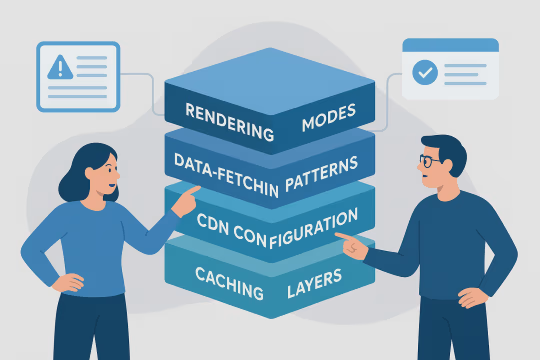
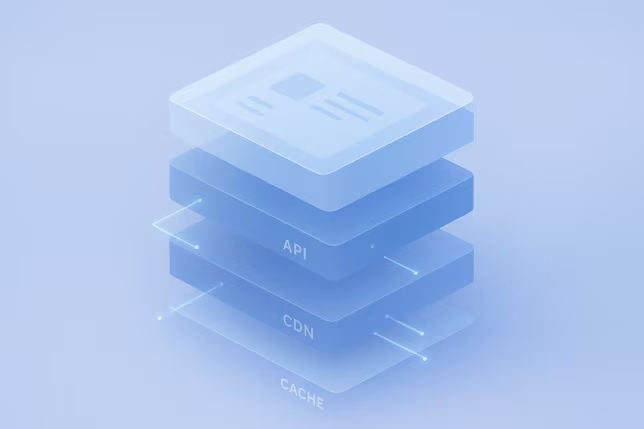
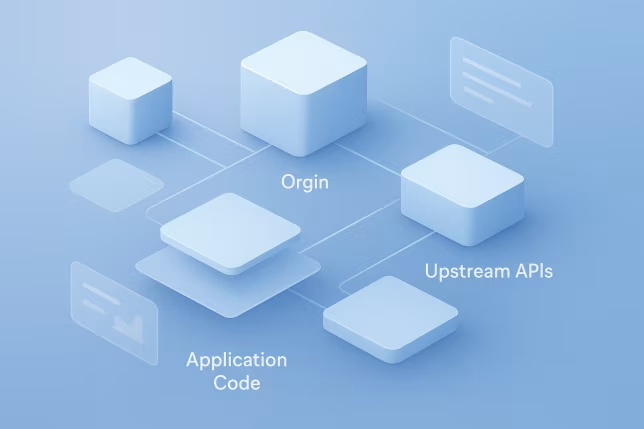
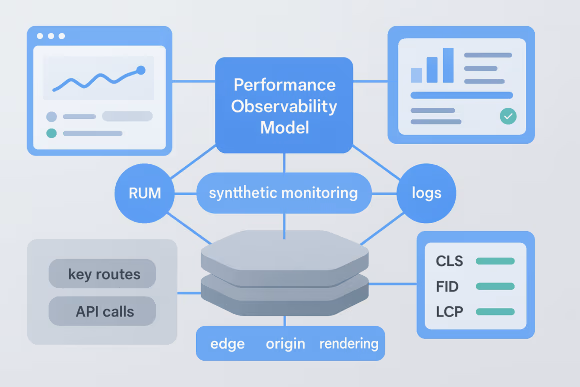
Headless architectures shift performance bottlenecks from a single monolith to a distributed path: frontend rendering, API aggregation, edge delivery, and cache behavior across multiple systems. How to optimize performance for headless platforms depends on understanding this end-to-end request path and making changes that hold up in production. Effective headless performance optimization services require more than isolated tuning; they require a measurable performance model, clear caching semantics, and operational controls that prevent regressions.
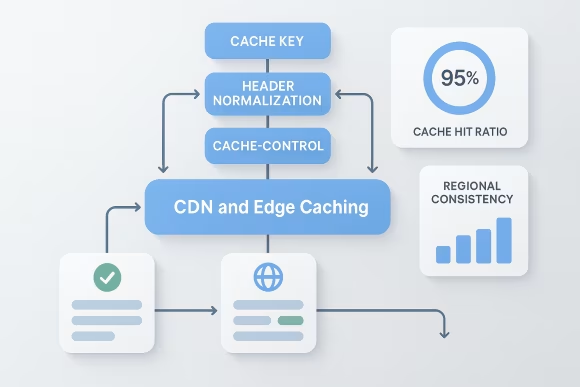
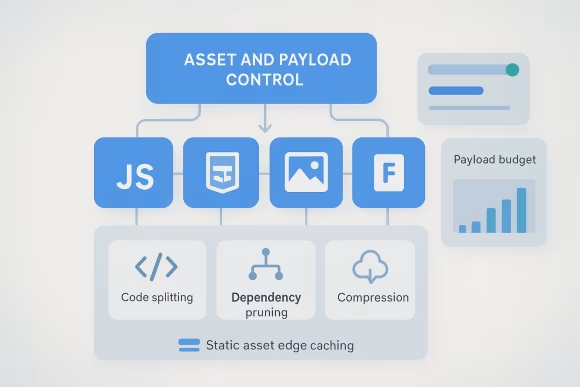
This capability focuses on diagnosing real-user and synthetic performance signals, mapping them to architectural causes (rendering mode, data fetching patterns, cache keys, invalidation, and CDN behavior), and implementing changes that improve time-to-first-byte, interaction latency, and stability. For Next.js-based frontends, this typically includes Next.js Core Web Vitals optimization services through SSR/ISR/SSG strategy selection, revalidation design, and payload optimization.
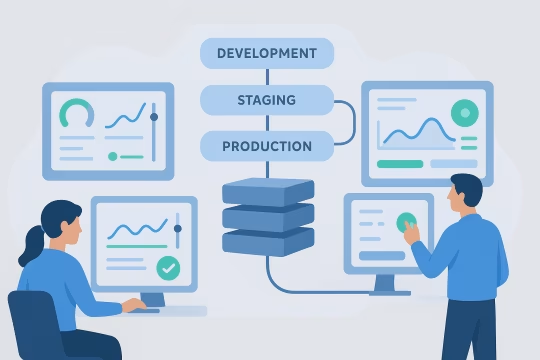
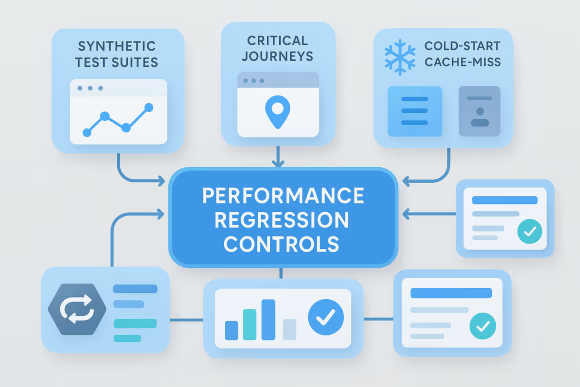
Performance work is treated as an operational discipline: instrumentation, budgets, runbooks, and CI checks are introduced so improvements persist as teams ship features. The result is a headless platform that remains fast under growth, predictable under load, and easier to operate across environments and releases.




 [01]
[01]