Legacy CMS to Drupal Migration Risk Starts with Fragmented Content
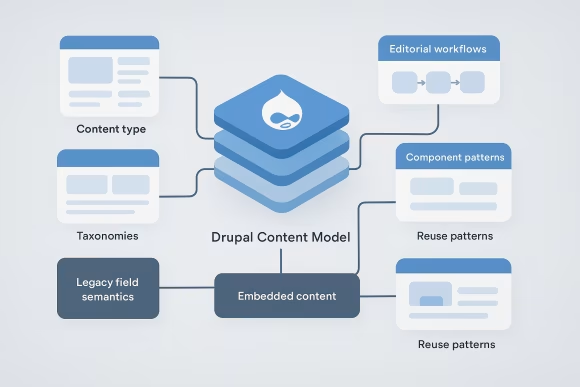
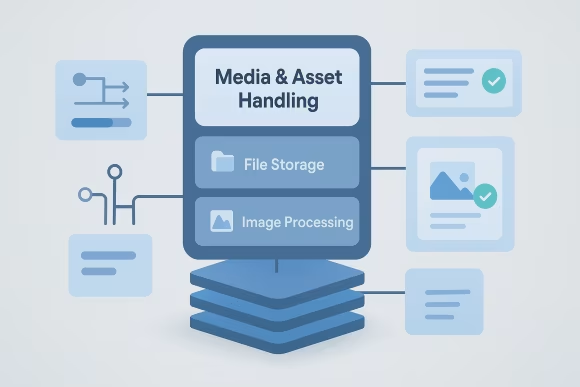
As digital platforms mature, content models tend to drift. Fields are added without governance, taxonomies are duplicated, and editorial workflows become embedded in templates or custom code. When a migration is initiated, teams often discover that the source system does not represent content consistently, and that critical relationships (references, translations, media usage, redirects) are implicit rather than modeled.
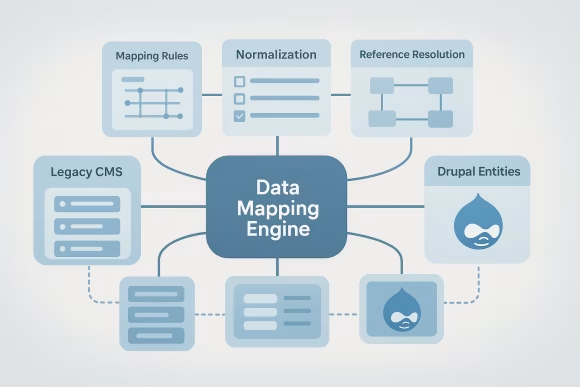
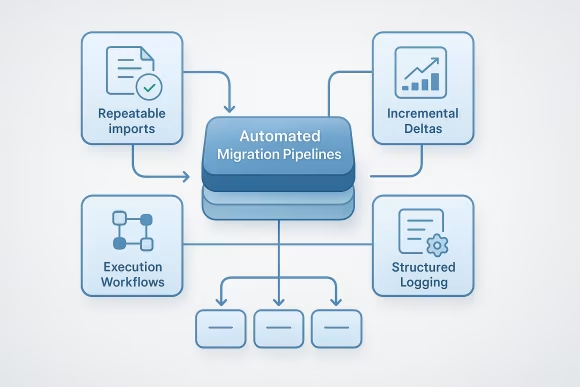
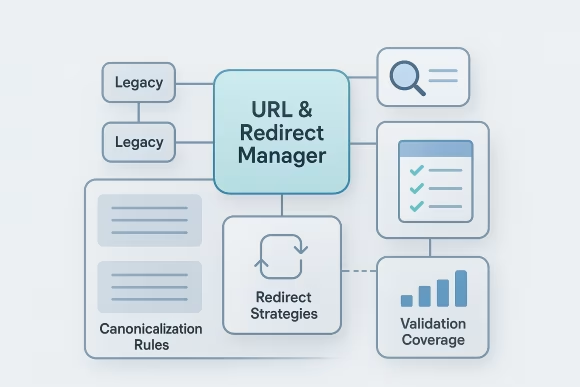
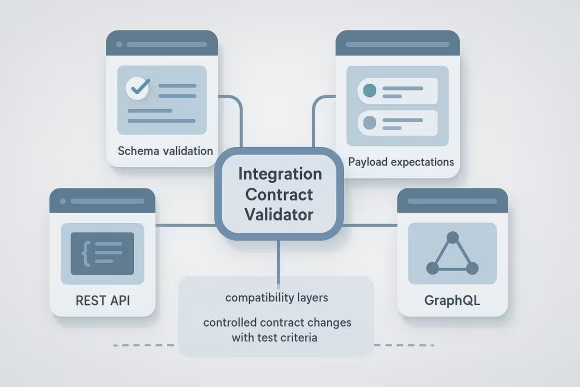
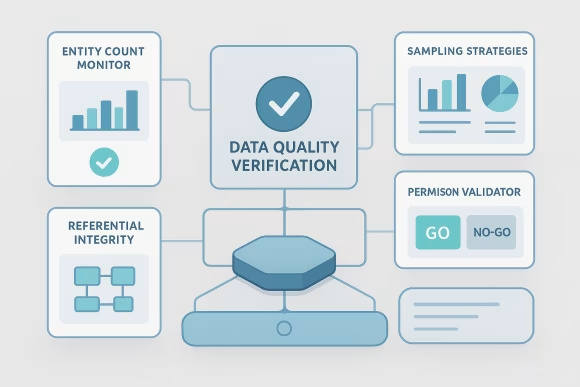
These conditions create architectural and delivery bottlenecks. Engineering teams spend time reverse-engineering data meaning, building one-off scripts, and repeatedly re-running partial imports to fix edge cases. Without a repeatable pipeline and validation strategy, it becomes difficult to prove completeness, maintain URL parity, or ensure that downstream integrations continue to function. The result is a migration that is hard to test, hard to audit, and hard to operate.
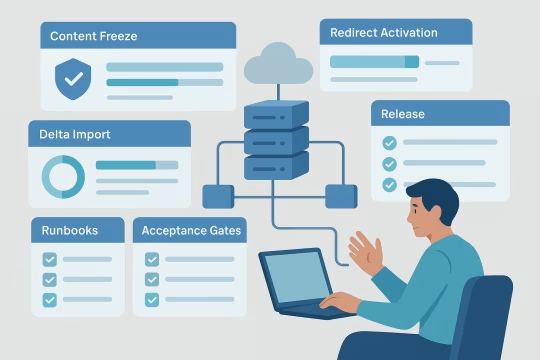
Operationally, this increases cutover risk. Late discovery of data quality issues forces scope changes, delays launch windows, and creates long stabilization periods where content teams cannot reliably publish. The platform may go live with broken references, missing media, inconsistent permissions, or incomplete redirect coverage, which then becomes ongoing technical debt.



 [01]
[01]