Multisite Growth Creates Uncontrolled Platform Coupling
As WordPress Multisite platforms expand, teams often add new sites quickly by copying patterns, introducing one-off plugins, and modifying shared themes to meet local needs. Over time, the platform becomes a collection of implicit rules: which sites can diverge, how domains are mapped, what is shared, and who is allowed to change core components. These rules are rarely documented and are frequently enforced only through tribal knowledge.
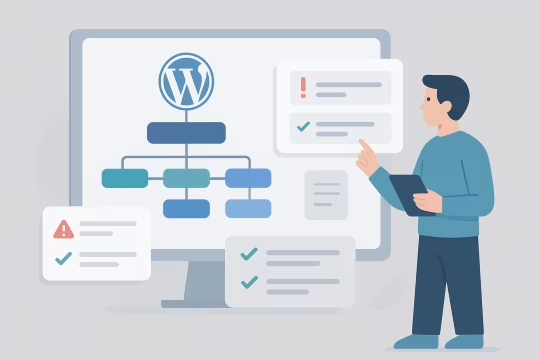
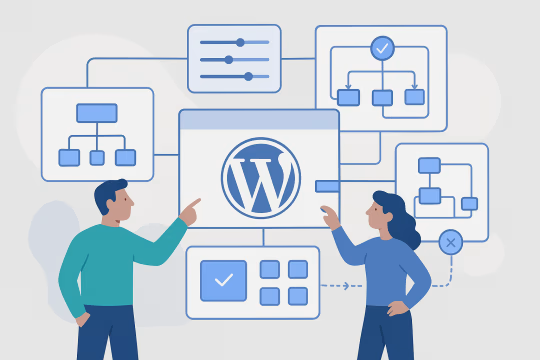
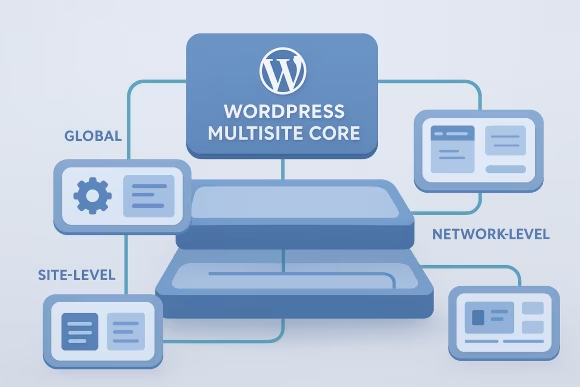
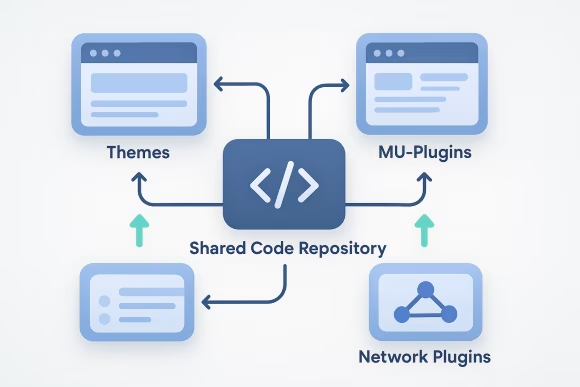
This ambiguity creates architectural coupling. A change intended for one site can impact others because shared code paths, network-activated plugins, and global configuration are not governed by clear boundaries. Engineering teams struggle to reason about blast radius, and platform architects lack a consistent model for tenancy, environment separation, and deployment topology. Editorial and product teams experience inconsistent capabilities across sites, while security teams face difficulty proving control effectiveness and patch coverage.
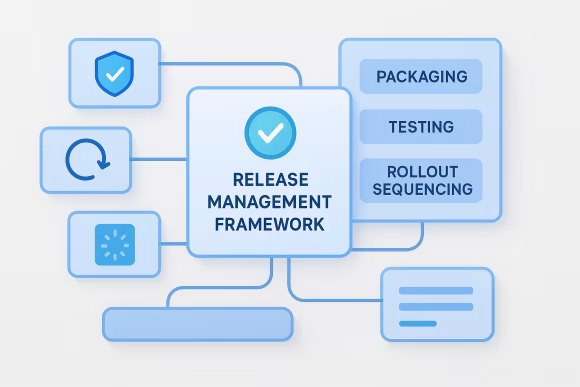
Operationally, releases slow down as coordination overhead increases. Hotfixes compete with planned work, upgrades are deferred due to uncertainty, and onboarding new sites becomes expensive because each addition increases complexity. The platform can still function, but it becomes harder to evolve safely and predictably.








 [01]
[01]